Bruce Catton

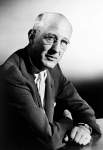
Bruce Catton's picture

Bruce Catton (1899 – 1978) was the Founding Editor of American Heritage and arguably the most prolific and popular of all Civil War historians. He wrote an astonishing 167 articles for the magazine, and won a Pulitzer Prize for history in 1954 for A Stillness at Appomattox, his study of the final campaign of the war in Virginia.

"There is a near-magic power of imagination in Catton's work that seemed to project him physically into the battlefields, along the dusty roads and to the campfires of another age," wrote Oliver Jensen, who succeeded him as American Heritage's Editor.

Catton was offered the editorship of American Heritage in 1954 and helped define its style of “narrative history.” In the first issue, he wrote: "We intend to deal with that great, unfinished and illogically inspiring story of the American people doing, being and becoming. Our American heritage is greater than any one of us. It can express itself in very homely truths; in the end it can lift up our eyes beyond the glow in the sunset skies."

Among Catton’s books were: The War Lords of Washington (1948), Mr. Lincoln's Army (1951), Glory Road (1952), U. S. Grant and the American Military Tradition (1954), Banners at Shenandoah: A Story of Sheridan's Fighting Cavalry (1955), This Hallowed Ground (1956), America Goes to War (1958), The American Heritage Picture History of the Civil War (1960), The American Heritage Short History of the Civil War (1960), The Coming Fury (1961),  Terrible Swift Sword (1963), Two Roads to Sumter (1963), Never Call Retreat (1965), Grant Moves South (1960), Four Days: The Historical Record of The Death Of President Kennedy (1964), Grant Takes Command (1969), Waiting for the Morning Train (1972), Gettysburg: The Final Fury (1974), Michigan: A Bicentennial History (1976), and The Bold & Magnificent Dream: America's Founding Years, 1492–1815 (1978).

Catton received the Presidential Medal of Freedom, the nation's highest civilian honor, from Pres. Gerald Ford, in 1977, the year before his death. Ford noted that the historian "made us hear the sounds of battle and cherish peace."

Articles by this Contributor

June 1964

From the start, Niagara has been over publicized, but somehow its authentic majesty has survived

August 1964

When Harry Truman was President of the United States he kept on his desk a little sign with the reminder: “The buck stops here.” This was his way of telling himself that when the responsibility for decision conies to a President, he has to meet it all alone. He can ask for all kinds of advice, and any amount of briefing, but he has to make up his mind by himself. Once in a generation or so his decisions send powerful echoes down the years. They may take the country along a path never before followed, enlarge the powers of the American government itself, or commit the whole nation to a policy or a program that will have permanent and vital effect. At such moments the President has to have vision, courage, and a sense of historic mission. To illustrate the matter, we consider below five moments in time in which a President made a decision whose consequences to the republic still endure.

October 1964

A Union veteran talks of life in a prison camp: it was bad, yet there were times one could recall happily