
It's the only industrial nation in which the possession of rifles, shotguns, and handguns is lawfully prevalent among large numbers of its population.
-
October 1970
15 years ago By admin Volume21Issue6
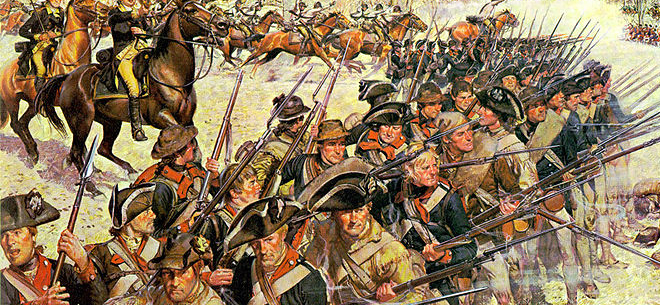
Senator Joseph Tydings of Maryland, appealing in the summer of 1968 for an effective gun-control law, lamented: “It is just tragic that in all of Western civilization the United States is the one country with an insane gun policy.”
In one respect this was an understatement: Western or otherwise, the United States is the only modern industrial urban nation that persists in maintaining a gun culture. It is the only industrial nation in which the possession of rifles, shotguns, and handguns is lawfully prevalent among large numbers of its population. It is the only such nation that has been impelled in recent years to agonize at length about its own disposition toward violence and to set up a commission to examine it, the only nation so attached to the supposed “right” to bear arms that its laws abet assassins, professional criminals, berserk murderers, and political terrorists at the expense of the orderly population — and yet it remains, and is apparently determined to remain, the most passive of all the major countries in the matter of gun control.
Many otherwise intelligent Americans cling with pathetic stubbornness to the notion that the people’s right to bear arms is the greatest protection of their individual rights and a firm safeguard of democracy — without being in the slightest perturbed by the fact that no other democracy in the world observes any such “right” and that in some democracies in which citizens’ rights are rather better protected than in ours, such as England and the Scandinavian countries, our arms control policies would be considered laughable.
Laughable, however, they are not, when one begins to contemplate the costs. Since strict gun controls clearly could not entirely prevent homicides, suicides, armed robberies, or gun accidents, there is no simple way of estimating the direct human cost, much less the important indirect political costs, of having lax gun laws.
But a somewhat incomplete total of firearms fatalities in the United States as of 1964 shows that in the twentieth century alone we have suffered more than 740,000 deaths from firearms, embracing over 265,000 homicides, over 330,000 suicides, and over 139,000 gun accidents. This figure is considerably higher than all the battle deaths (that is, deaths sustained under arms but excluding those from disease) suffered by American forces in all the wars in our history. It can, of course, be argued that such fatalities have been brought about less by the prevalence of guns than by some intangible factor, such as the wildness and carelessness of the American national temperament, or by particular social problems, such as the intensity of our ethnic and racial mixture. But such arguments cut both ways, since it can be held that a nation with such a temperament or such social problems needs stricter, not looser, gun controls.
See also: Images of Gun History from American Heritage Archives
One can only make a rough guess at the price Americans pay for their inability to arrive at satisfactory controls for guns. But it can be suggested in this way: there are several American cities that annually have more gun murders than all of England and Wales. In Britain, where no one may carry a firearm at night, where anyone who wants a long gun for hunting must get a certificate from the local police chief before he can buy it, and where gun dealers must verify a buyer’s certificate, register all transactions in guns and ammunition, and take the serial number of each weapon and report it to the police, there are annually about .05 gun homicides per 100,000 population. In the United States there are 2.7.
What this means in actual casualties may be suggested by the figures for 1963, when there were 5,126 gun murders in the United States, twenty-four in England and Wales, and three in Scotland. This country shows up about as badly in comparative gun accidents and, to a lesser degree, in suicides. There is not a single major country in the world that approaches our record in this respect.
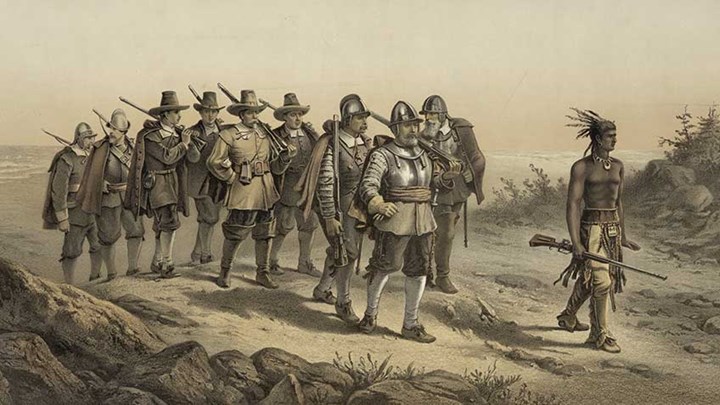
Americans nowadays complain bitterly about the rising rate of violent crime. The gun is, of course, a major accessory of serious premeditated crime. Appealing for stronger gun controls in 1968, President Johnson pointed out that in the previous year there had been committed, with the use of guns, 7,700 murders, 55,000 aggravated assaults, and more than 71,000 robberies. Plainly, stronger gun controls could not end crime, but they would greatly enhance enforcement of the law (as New York’s Sullivan Law does) and would reduce fatalities. Out of every one hundred assaults with guns, twenty-one led to death, as compared with only three out of every one hundred assaults committed by other means. In five states with relatively strong gun laws the total homicide rate per 100,000 population — that is, homicides from all causes — runs between 2.4 and 4.8. In the five states with the weakest gun laws this rate varies from 6.1 to 10.6.
In 1968, after the assassinations of Robert F. Kennedy and Martin Luther King, Jr., there was an almost touching national revulsion against our own gun culture, and for once the protesting correspondence on the subject reaching senators and representatives outweighed letters stirred up by the extraordinarily efficient lobby of the National Rifle Association. And yet all that came out of this moment of acute concern was a feeble measure, immensely disappointing to advocates of serious gun control, restricting the mail-order sales of guns. It seems clear now that the strategic moment for gun controls has passed and that the United States will continue to endure an armed populace, at least until there is a major political disaster involving the use of guns.
Today the urban population of the nation is probably more heavily armed than at any time in history, largely because the close of World War II left the participating countries with a huge surplus of militarily obsolescent but still quite usable guns. These could be sold nowhere in the world but in the United States, since no other country large enough and wealthy enough to provide a good market would have them. More weapons became available again in the 1950’s, when NATO forces switched to a uniform cartridge and abandoned a stock of outmoded rifles. These again flooded the United States, including about 100,000 Italian Carcanos of the type with which John F. Kennedy was killed. Imported very cheaply, sometimes at less than a dollar apiece, these weapons could be sold at enormous profit but still inexpensively — the one that killed Kennedy cost $12.78.
It has been estimated that between five and seven million foreign weapons were imported into the United States between 1959 and 1963. Between 1965 and 1968 handgun imports rose from 346,000 to 1,155,000. Domestic industries that make cheap handguns are approaching an annual production of 500,000 pistols a year.
Thus a nation in the midst of a serious political crisis, which has frequently provoked violence, is afloat with weapons — perhaps as many as fifty million of them — in civilian hands. An Opinion Research poll of September, 1968, showed that 34 per cent of a national sample of white families and 24 per cent of blacks admitted to having guns. With groups like the Black Panthers and right-wing cranks like the Minute Men, not to speak of numerous white vigilante groups, well armed for trouble, the United States finds itself in a situation faced by no other Western nation.
One must ask: What are the historical forces that have led a supposedly well-governed nation into such a dangerous position?
It is very easy, in interpreting American history, to give the credit and the blame for almost everything to the frontier, and certainly this temptation is particularly strong where guns are concerned. After all, for the first 250 years of their history Americans were an agricultural people with a continuing history of frontier expansion. At the very beginning the wild continent abounded with edible game, and a colonizing people still struggling to control the wilderness and still living very close to the subsistence level found wild game an important supplement to their diet. Moreover, there were no enforceable feudal inhibitions against poaching by the common man, who was free to roam where he could and shoot what he could and who ate better when he shot better. Furthermore, all farmers, but especially farmers in a lightly settled agricultural country, need guns for the control of wild vermin and predators. The wolf, as we still say, has to be kept from the door.
Finally, and no less imperatively, there were the Indians, who were all too often regarded by American frontiersmen as another breed of wild animal. The situation of the Indians, constantly under new pressures from white encroachments, naturally commands modern sympathy. But they were in fact, partly from the very desperation of their case, often formidable, especially in the early days when they were an important force in the international rivalries of England, France, and Spain in North America. Like the white man they had guns, and like him they committed massacres.
Modern critics of our culture who, like Susan Sontag, seem to know nothing of American history, who regard the white race as a “cancer” and assert that the United States was “founded on a genocide,” may fantasize that the Indians fought according to the rules of the Geneva Convention. But in the tragic conflict of which they were to be the chief victims, they were capable of striking terrible blows. In King Philip’s War (1675-76) they damaged half the towns of New England, destroyed a dozen, and killed an estimated one out of every sixteen males of military age among the settlers.
Later the Deerfield and other frontier massacres left powerful scars on the frontier memory, and in the formative days of the colonial period wariness of sudden Indian raids and semimilitary preparations to combat them were common on the western borders of settlement. Men and women, young and old, were all safer if they could command a rifle. “A well grown boy,” remembered the Reverend Joseph Doddridge of his years on the Virginia frontier, “at the age of twelve or thirteen years, was furnished with a small rifle and shot-pouch. He then became a fort soldier, and had his port-hole assigned him. Hunting squirrels, turkeys and raccoons, soon made him expert in the use of his gun.”
See also: "A History of Gun Rights in America," by Patrick J. Charles
That familiarity with the rifle, which was so generally inculcated on the frontier, had a good deal to do with such successes as Americans had in the battles of the Revolution. The Pennsylvania rifle, developed by German immigrants, was far superior to Brown Bess, the regulation military musket used by British troops. This blunt musket, an inaccurate weapon at any considerable distance, was used chiefly to gain the effect of mass firepower in open field maneuvers at relatively close range.
The long, slender Pennsylvania rifle, which had a bored barrel that gave the bullet a spin, had a flatter and more direct trajectory, and in skilled hands it became a precision instrument. More quickly loaded and effective at a considerable distance, it was singularly well adapted not only to the shooting of squirrels but to the woodsman’s shoot-and-hide warfare. It struck such terror into the hearts of British regulars as to cause George Washington to ask that as many of his troops as possible be dressed in the frontiersman’s hunting shirt, since the British thought “every such person a complete Marksman.” The rifle went a long way to make up for the military inconsistencies and indifferent discipline of American militiamen, and its successes helped to instill in the American mind a conviction of the complete superiority of the armed yeoman to the military professionals of Europe.
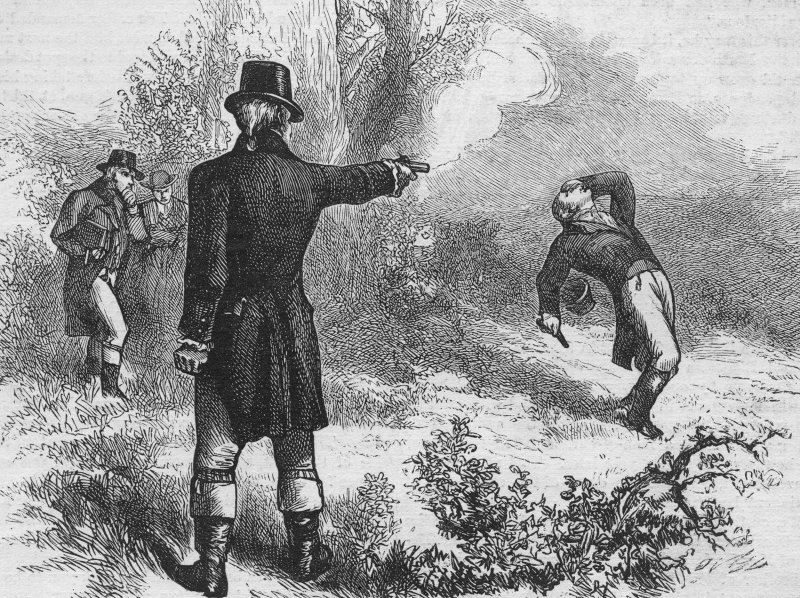
What began as a necessity of agriculture and the frontier took hold as a sport and as an ingredient in the American imagination. Before the days of spectator sports, when competitive athletics became a basic part of popular culture, hunting and fishing probably were the chief American sports, sometimes wantonly pursued, as in the decimation of the bison.
But for millions of American boys, learning to shoot and above all graduating from toy guns and receiving the first real rifle of their own were milestones of life, veritable rites of passage that certified their arrival at manhood. (It is still argued by some defenders of our gun culture, and indeed conceded by some of its critics, that the gun cannot and will not be given up because it is a basic symbol of masculinity. But the trouble with all such glib Freudian generalities is that they do not explain cultural variations: they do not tell us why men elsewhere have not found the gun essential to their masculinity.)
What was so decisive in the winning of the West and the conquest of the Indian became a standard ingredient in popular entertainment. In the penny-dreadful Western and then in films and on television, the western man, quick on the draw, was soon an acceptable hero of violence. He found his successors in the private eye, the F.B.I, agent, and in the gangster himself, who so often provides a semi-legitimate object of hero worship, a man with loyalties, courage, and a code of his own — even in films purporting to show that crime does not pay.
All mass cultures have their stereotyped heroes, and none are quite free of violence; but the United States has shown an unusual penchant for the isolated, wholly individualistic detective, sheriff, or villain, and its entertainment portrays the solution of melodramatic conflicts much more commonly than, say, the English, as arising not out of ratiocination or some scheme of moral order but out of ready and ingenious violence. Every Walter Mitty has had his moment when he is Gary Cooper, stalking the streets in High Noon with his gun at the ready. D. H. Lawrence may have had something, after all, when he made his characteristically bold, impressionistic, and unflattering judgment that “the essential American soul is hard, isolate, stoic, and a killer.” It was the notion cherished also by Hemingway in his long romance with war and hunting and with the other sports that end in death.
However, when the frontier and its ramifications are given their due, they fall far short of explaining the persistence of the American gun culture. Why is the gun still so prevalent in a culture in which only about 4 per cent of the country’s workers now make their living from farming, a culture that for the last century and a half has had only a tiny fragment of its population actually in contact with a frontier, that, in fact, has not known a true frontier for three generations? Why did the United States alone among industrial societies cling to the idea that a substantially unregulated supply of guns among its city populations is a safe and acceptable thing?
This is, after all, not the only nation with a frontier history. Canada and Australia have had theirs, and yet their gun control measures are far more satisfactory than ours. Their own gun homicide rates, as compared with our 2.7, range around .56, and their gun suicide and accident rates are also much lower. Again, Japan, with no frontier but with an ancient tradition of feudal and military violence, has adopted, along with its modernization, such rigorous gun laws that its gun homicide rate at .04 is one of the world’s lowest. (The land of hara-kiri also has one of the lowest gun suicide rates — about one fiftieth of ours.) In sum, other societies, in the course of industrial and urban development, have succeeded in modifying their old gun habits, and we have not.
One factor that could not be left out of any adequate explanation of the tenacity of our gun culture is the existence of an early American political creed that has had a surprisingly long life, albeit much of it now is in an underground popular form. It has to do with the antimilitaristic traditions of radical English Whiggery, which were taken over and intensified in colonial America, especially during the generation preceding the American Revolution, and which became an integral part of the American political tradition. The popular possession of the gun was a central point in a political doctrine that became all but sacrosanct in the Revolution: a doctrine that rested upon faith in the civic virtue and military prowess of the yeoman; belief in the degeneration of England and in the sharp decline of “the liberties of Englishmen” on their original home soil; and a great fear of a standing army as one of the key dangers to this body of ancient liberties. The American answer to civic and military decadence, real or imagined, was the armed yeoman.
By the same reasoning the answer to militarism and standing armies was the militia system. It had long been the contention of those radical Whig writers whose works did so much to set the background of American thought, that liberty and standing armies were incompatible. Caesar and Cromwell were commonly cited as the prime historical examples of the destructive effects of political generals on the liberties of the people. The Americans became confident that their alternative device, an armed people, was the only possible solution to the perennial conflict between militarism and freedom. Their concern over the evils of repeated wars and institutionalized armies was heightened by the eighteenth-century European wars in which they were inevitably involved. Blaming the decay that they imagined to be sweeping over England in good part on the increasing role of the military in the mother country, they found their worst fears confirmed by the quartering of troops before the Revolution. John Adams saw in the Boston Massacre “the strongest proof of the danger of standing armies.” The Virginian George Mason, surveying the history of the nations of the world, remarked: “What havoc, desolation and destruction, have been perpetrated by standing armies!” The only remedy, he thought, reverting to one of the genial fictions of this school of thought, was the ancient Saxon militia, “the natural strength and only stable security of a free government.” Jefferson reverted to the idea of a popular Saxon militia by providing in his first draft of the Virginia Constitution of 1776 that “no freeman shall ever be debarred the use of arms.”
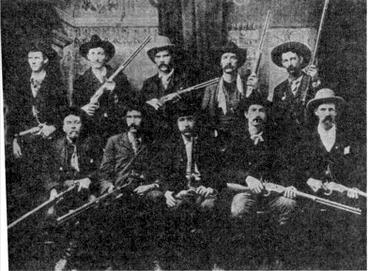
Washington, who had to command militiamen, had no illusions about them. He had seen not a single instance, he once wrote, that would justify “an opinion of Militia or raw Troops being fit for the real business of fighting. I have found them useful as light Parties to skirmish in the woods, but incapable of making or sustaining a serious attack.” Despite the poor record of militia troops in the Revolution, as compared with the courage and persistence of Washington’s small and fluctuating Continental Army, the myth persisted that the freedom of America had been won by the armed yeoman and the militia system, and the old fear of a standing army was in no way diminished now that it was not to be under the command of an English aristocracy but of native American generals. In the mid-1780’s, when the Americans had won their independence and were living under the Articles of Confederation, Secretary of War Henry Knox found himself the administrator of an army of about seven hundred men. In the 1790’s, when it was proposed under the Constitution to add only about five hundred more, Pennsylvania Democrat Senator William Maclay anxiously observed that the government seemed to be “laying the foundation of a standing army”! Only the disastrous performance of militiamen in the War of 1812 persuaded many American leaders that the militia was a slender reed upon which to rest the security of the nation.
In the meantime the passion for a popular militia as against a professional army had found its permanent embodiment in the Second Amendment to the Constitution: “A well regulated Militia, being necessary to the security of a free State, the right of the people to keep and bear Arms, shall not be infringed.” By its inclusion in the Bill of Rights, the right to bear arms thus gained permanent sanction in the nation, but it came to be regarded as an item on the basic list of guarantees of individual liberties. Plainly it was not meant as such. The right to bear arms was a collective , not an individual, right, closely linked to the civic need (especially keen in the absence of a sufficient national army) for “a well regulated Militia.” It was, in effect, a promise that Congress would not be able to bar the states from doing whatever was necessary to maintain well-regulated militias.
The Supreme Court has more than once decided that the Second Amendment does not bar certain state or federal gun controls. In 1886 it upheld an Illinois statute forbidding bodies of men to associate in military organizations or to drill or parade with arms in cities or towns. When Congress passed the National Firearms Act of 1934 forbidding the transportation in interstate commerce of unregistered shotguns, an attempt to invoke the Second Amendment against the law was rejected by the Court in what is now the leading case on the subject, United States v. Miller (1939). In this case the Court, ruling on the prosecution of two men who had been convicted of violating the National Firearms Act by taking an unregistered sawed-off shotgun across state lines, concluded that the sawed-off shotgun had no “reasonable relationship to the prevention, preservation, or efficiency of a well-regulated militia.” The Court ruled that since the gun in question was not part of ordinary military equipment, its use was unrelated to the common defense. The Court further found that the clear purpose of the Second Amendment was to implement the constitutional provision for “calling forth the Militia to execute the Laws of the Union, suppress insurrections and repel invasions” and declared that the Second Amendment “must be interpreted and applied with that end in view.”
While the notion that “the right to bear arms” is inconsistent with state or federal gun regulation is largely confined to the obstinate lobbyists of the National Rifle Association, another belief of American gun enthusiasts enjoys a very wide currency in the United States, extending to a good many liberals, civil libertarians, and even radicals. It is the idea that popular access to arms is an important counterpoise to tyranny. A historian, recently remonstrating against our gun policies, was asked by a sympathetic liberal listener whether it was not true, for example, that one of the first acts of the Nazis had been to make it impossible for the nonparty, nonmilitary citizen to have a gun—the assumption being that the German people had thus lost their last barrier to tyranny. In fact Nazi gun policies were of no basic consequence: the democratic game had been lost long before, when legitimate authorities under the Weimar Republic would not or could not stop uniformed groups of Nazi terrorists from intimidating other citizens on the streets and in their meetings and when the courts and the Reich Ministry of Justice did not act firmly and consistently to punish the makers of any Nazi Putsch according to law. It is not strong and firm governments but weak ones, incapable of exerting their regulatory and punitive powers, that are overthrown by tyrannies. Nonetheless, the American historical mythology about the protective value of guns has survived the modern technological era in all the glory of its naïveté, and it has been taken over from the whites by some young blacks, notably the Panthers, whose accumulations of arms have thus far proved more lethal to themselves than to anyone else. In all societies the presence of small groups of uncontrolled and unauthorized men in unregulated possession of arms is recognized to be dangerous. A query therefore must ring in our heads: Why is it that in all other modern democratic societies those endangered ask to have such men disarmed, while in the United States alone they insist on arming themselves?
See also: A Special Issue on The Right to Bear Arms, September/October 2019
A further point is of more than symptomatic interest: the most gun-addicted sections of the United States are the South and the Southwest. In 1968, when the House voted for a mild bill to restrict the mail-order sale of rifles, shotguns, and ammunition, all but a few of the 118 votes against it came from these regions. This no doubt has something to do with the rural character of these regions, but it also stems from another consideration: in the historic system of the South, having a gun was a white prerogative. From the days of colonial slavery, when white indentured servants were permitted, and under some circumstances encouraged, to have guns, blacks, whether slave or free, were denied the right. The gun, though it had a natural place in the South’s outdoor culture, as well as a necessary place in the work of slave patrols, was also an important symbol of white male status. Students in the Old South took guns to college as a matter of course. In 1840 an undergraduate at the University of Virginia killed a professor during a night of revelry that was frequently punctuated by gunfire. Thomas Hart Benton, later to be a distinguished Missouri senator, became involved, during his freshman year at the University of North Carolina, in a brawl in which he drew a pistol on another student, and was spared serious trouble only when a professor disarmed him. He was sixteen years old at the time. In the light of the long white effort to maintain a gun monopoly, it is hardly surprising, though it may be discouraging, to see militant young blacks borrowing the white man’s mystique and accepting the gun as their instrument. “A gun is status- that’s why they call it an equalizer,” said a young Chicago black a few years ago. “What’s happening today is that everybody’s getting more and more equal because everybody’s got one.”
But perhaps more than anything else the state of American gun controls is evidence of one of the failures of federalism: the purchase and possession of guns in the United States is controlled by a chaotic jumble of twenty thousand state and local laws that collectively are wholly inadequate to the protection of the people and that operate in such a way that areas with poor controls undermine those with better ones. No such chaos would be tolerated, say, in the field of automobile registration. The automobile, like the gun, is a lethal instrument, and the states have recognized it as such by requiring that each driver as well as each car must be registered and that each driver must meet certain specified qualifications. It is mildly inconvenient to conform, but no one seriously objects to the general principle, as gun lobbyists do to gun registration. However, as the United States became industrial and urban, the personnel of its national and state legislatures remained to a very considerable degree small town and rural, and under the seniority system that prevails in Congress, key posts on committees have long been staffed by aging members from smalltown districts—worse still, from small-town districts in regions where there is little or no party competition and hence little turnover in personnel. Many social reforms have been held back long after their time was ripe by this rural-seniority political culture. Gun control is another such reform: American legislators have been inordinately responsive to the tremendous lobby maintained by the National Rifle Association, in tandem with gunmakers and importers, military sympathizers, and far-right organizations. A nation that could not devise a system of gun control after its experiences of the 1960’s, and at a moment of profound popular revulsion against guns, is not likely to get such a system in the calculable future. One must wonder how grave a domestic gun catastrophe would have to be in order to persuade us. How far must things go?