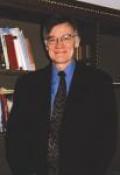
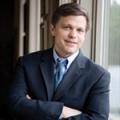
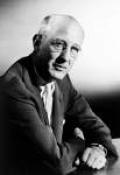
Rick Atkinson is the author of dozens of best-selling books on American military history, including The Long Gray Line, a narrative saga about the West Point class of 1966; Crusade, a narrative history of the Persian Gulf War, and In the Company of Soldiers, an account of his time with General David H. Petraeus and the 101st Airborne Division during the invasion of Iraq in 2003. He has also written a three-part narrative history of the U.S.
Kai Bird is a historian and Executive Director of Leon Levy Center for Biography at the City University of New York. He is best known for writing about the bombings of Hiroshima and Nagasaki, the Vietnam War, US-Middle East relations and biographies of political figures.
Bird is the author of American Prometheus: The Triumph and Tragedy of J. Robert Oppenheimer, for which he won a Pulitzer Prize, and The Good Spy: The Life and Death of Robert Ames, a New York Times bestseller. His most recent book is The Outlier: The Unfinished Presidency of Jimmy Carter.
David W. Blight is the Class of 1954 Professor of American History and Director of the Gilder Lehrman Center for the Study of Slavery, Resistance & Abolition at Yale University. Recently, Blight has written A Slave No More: Two Men Who Escaped to Freedom, Including Their Narratives of Emancipation, and Race and Reunion: The Civil War in American Memory, which won the Bancroft Prize, the Abraham Lincoln Prize, and the Frederick Douglass Prize.
Douglas Brinkley, a distinguished professor of history at Rice University and Contributing Editor of American Heritage, has written more than 20 books, most recently The Wilderness Warrior: Theodore Roosevelt and the Crusade for America (Harper 2009) and The Reagan Diaries (HarperCollins 2007).
Brinkley earned his B.A from Ohio State University University in 1982, and his Ph.D. from Georgetown University in 1989.
Bruce Catton (1899 – 1978) was the Founding Editor of American Heritage and arguably the most prolific and popular of all Civil War historians. He wrote an astonishing 167 articles for American Heritage, and won a Pulitzer Prize for history in 1954 for A Stillness at Appomattox, his study of the final campaign of the war in Virginia.
Catton received the Presidential Medal of Freedom, the nation's highest civilian honor, from President Gerald Ford, in 1977, the year before his death.