
From The Souls of Black Folk to The New Jim Crow, these texts are essential for anyone trying to understand the black experience in America.
-
July/August 2020
6 years ago By Edwin S. Grosvenor Volume65Issue4
Editor's Note: Amid nationwide protests over racial injustice and a resurgent Black Lives Matter movement, understanding the experience of African Americans in the U.S. is more relevant than ever. So we asked Gerald Early, Merle Kling Professor of Modern Letters in the African and African American Studies Department at Washington University in St. Louis, to recommend his favorite books on the history of black America. What follows is a definitive collection of U.S. black scholarship, from one of the subject's preeminent experts.
African-Americans have experienced a cultural paradox, or a contradiction. For many years, until World War II, they were largely excluded from the official history of the United States. Not in the sense that they went unmentioned; after all, one can hardly conceive a history of the United States that does not deal with slavery, abolitionism, the Civil War, and Reconstruction. But it was certainly possible to talk about blacks largely as objects, not agents, as primitives, as an unfortunate population whose presence was largely an annoyance, a misfortune, or a tragedy. Blacks were usually presented as a people without a history in Africa, and they were presented as contributing nothing historically important to American life. Indeed, Western slavery had brought blacks into the loop of civilization and so was something of a perverse gift.
This neglect, this denial, however, did not stop blacks from being an object of fascination for whites, with stage minstrelsy, with books and commentaries about race and the meaning of racial characteristics and traits, with ritualized lynching and acts of terrorism, with laws against miscegenation and socializing between the races, and against blacks exerting any sort of political presence in the land. Their being a people without a history made them, in the eyes of whites, a people unworthy of respect, which whites reinforced by making them a people without power, but they were not, by any means, a people devoid of interest. Indeed, they had a deviant allure, largely because what whites saw in black people was what they feared to see in themselves. As Ralph Ellison put it, “The white American has charged the Negro American with being without past or tradition (something which strikes the white man with a nameless horror), just as he himself has been so charged by European and American critics with a nostalgia for the stability once typical of European cultures.…”
It was the abolitionist movement in the United States that generated the first histories of blacks. One of the earliest was the white abolitionist and children’s writer Lydia Maria Child’s An Appeal in Favor of That Class of Americans Called Africans, first published in 1833, tracing the history of slavery, the general status of the condition of blacks in the United States, their past in Africa, and their contributions to world civilization. It is largely a moral and political defense of the slaves’ right to be free based in good measure on an assessment of their history. So controversial was the subject at the time that Child wrote in her preface: “I am fully aware of the unpopularity of the task I have undertaken; but though I expect ridicule and censure, I cannot fear them.”
In 1836 the abolitionist Robert Benjamin Lewis published what is credited with being the first black history by a black: Light and Truth: Collected From the Bible and Ancient and Modern History, Containing the Universal History of the Colored Man and Indian Race, From the Creation of the World to the Present Time. This was followed in 1841 by the fugitive slave J. W. C. Pennington’s A Textbook of the Origin and History of the Colored People. Yet another black abolitionist writer, William C. Nell, wrote The Colored Patriots of the American Revolution in 1855. William Wells Brown, who wrote the first black American novel, play, and travel book, produced The Black Man: His Antecedents, His Genius, and His Achievements in 1863, followed by The Negro in the American Rebellion: His Heroism and His Fidelity (1867) and The Rising Son; or The Antecedents and Advancement of the Colored Race (1874). (Incidentally, Benjamin Quarles’s Black Abolitionists, published in 1969, remains a very solid account of black involvement in the abolitionist movement.)
The first truly professional black historian, or the first black to write something like a professional history of African-Americans, was George Washington Williams, with his two-volume work History of the Negro Race in America From 1619 to 1880, published in 1882. The American Negro Academy, founded in 1897, with members including William H. Crogman, Alain Locke, Carter G. Woodson, James Weldon Johnson, and W. E. B. Du Bois, was something like a combination of salon and think tank. Its members made presentations at the meetings, and although they were not exclusively devoted to history, it was a major topic. After all, Johnson was to write a history of Harlem, and Locke a history of black music; Du Bois and Crogman were to write histories of African-Americans, and Woodson was to become the father of Negro history.
Woodson, who, like Du Bois, earned a doctorate from Harvard, founded the Association for the Study of Negro Life and History in 1915 and the Journal of Negro History four months later. He introduced the idea of Negro history into the mainstream of the culture in 1926 by starting Negro History Week, which became Black History Month in 1976. He also published a number of books dealing with African and African-American history. His most famous and widely read book is The Mis-Education of the Negro, an account of how the Negro has been educated against understanding his or her history and his or her best interest, which was published in 1933.
Historically black colleges were important in developing the study of black history, not only by introducing courses in the subject but also by having faculty members who devoted themselves to it: August Meier, Rayford Logan, Alrutheus Taylor, and Charles H. Wesley, among others. John Hope Franklin, the dean of African American historiography with his seminal text, From Slavery to Freedom: A History of African Americans, which has gone through many editions, taught for a time at a black college and was a graduate from one.
There has always been a populist strain running through some black historiography that largely consists of the idea that the redemption of the African-American mind, as well as the political salvation of the African-American, will come with a proper understanding of a history that has not only been denied by whites but distorted and stolen. A variety of writers would fit in this school. Du Bois contributed a major volume to this school of history entitled Black Folk Then and Now: An Essay in the History and Sociology of the Negro Race which appeared in 1939. Other works are J. A. Rogers (Nature Knows No Color-Line and Sex and Race), George G. M. James (Stolen Legacy: Greek Philosophy Is Stolen Egyptian Philosophy, a work that directly inspired Martin Bernal’s two-volume Black Athena), John Henrik Clarke, St. Clair Drake (Black Folk Here and There: An Essay in History and Anthropology), Chancellor Williams, Afrocentric and nationalist-oriented scholars like Molefi Asante, Yosef ben-Jochannan, and Tony Martin, and works like the Nation of Islam’s highly controversial The Secret Relationship Between Blacks and Jews. Recent interest in the racial origins of the Jews and in the black presence in the Bible have made books like The Black Biblical Heritage by Dr. John Johnson, We, the Black Jews: Witness to the “White Jewish Race” Myth by Yosef ben-Jochannan, and a series of books by Gert Muller on the secret, suppressed history of black Hebrews popular with black readers. The best historical accounts of this school of black history are Wilson J. Moses’s Afrotopia: The Roots of African American Popular History and Clarence Walker’s We Can’t Go Home Again.
There are today far too many able historians, both white and black, who write about black history, from Barbara Fields to Robin D. G. Kelley, from Darlene Clark Hine to Patricia Sullivan, for anyone to be able to pick out just a few. What follows is my list of what I think are classic or essential works.
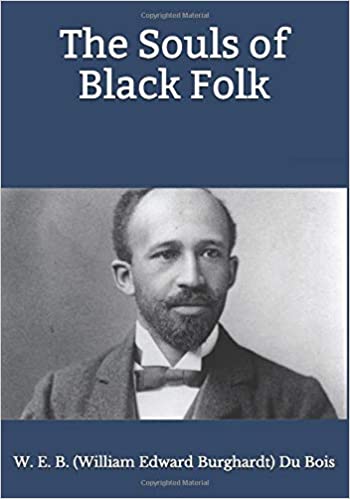 1. The Souls of Black Folk
by W. E. B. Du Bois (1903; many editions)
W. E. B. Du Bois's is probably the most influential or, at least, most discussed book published by a black American intellectual in the twentieth century, although The Crisis of the Negro Intellectual by Harold Cruse and a few others might rate closely being this masterwork. It is not strictly a history of African-Americans; indeed, it is almost a synthesis of forms: biography, fiction, historical and economic analysis, and autobiography. One might think of some other Du Bois books that are more strictly historical, like The Suppression of the African Slave-Trade to the United States of America, 1638–1870 and Black Reconstruction, but none seem to have captured the major issues facing the black masses and the black elite as this work did, and none of his other books were as widely read. This is Du Bois’s analysis of the New South and race.
2. White Over Black: American Attitudes Toward the Negro, 1550–1812
by Winthrop Jordan (1968; University of North Carolina)
Winthrop Jordan's White Over Black is still the most detailed and richly researched account of the development of race as an idea and the creation of racial attitudes and beliefs in the United States during the era of the rise and dominance of slavery.
 3. The Myth of the Negro Past
by Melville Herskovits (1941; Beacon)
The anthropologist Melville Herskovits’s path-breaking study of the retention of African heritage in the New World, meant to refute the work of the sociologist E. Franklin Frazier, who postulated that slavery had destroyed slaves’ African culture and forced them to organize an entirely new one. It should be read with a lesser-known but important book by Du Bois, Black Folk Then and Now: An Essay in the History and Sociology of the Negro Race, published in 1939, which deals with some of the same issues but mostly complements Herskovits’s work.
4. When and Where I Enter: The Impact of Black Women on Race and Sex in America
by Paula Giddings (HarperTrade)
First published in 1984, Paula Giddings wrote the best single-volume history of black women in the United States.
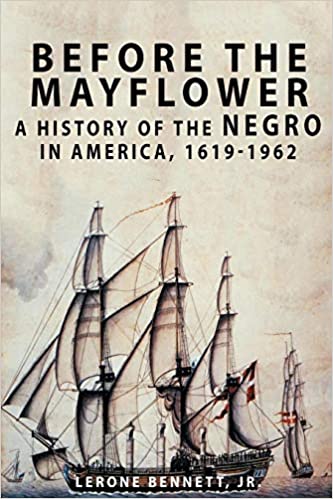 5. Before the Mayflower
by Lerone Bennett (1962; Johnson Publishers)
Lerone Bennett's is one of the most popular single-volume histories of blacks ever written. Bennett, the executive editor at Ebony for many years, writes with considerable narrative skill. Also, I would mention here, once again, John Hope Franklin’s From Slavery to Freedom, first published in 1947 and, like Bennett’s book, reissued many times. It remains the gold standard as the one-volume history of African-Americans. It has probably been read by more students than any other black history book.
6. Blues People
by Amiri Baraka (1963; HarperTrade)
Ralph Ellison never liked this book, and Amiri Baraka is certainly not a historian. Yet the book has held up well over the years. There are points that one can argue with, but on the whole this is a compelling account of the development of African-American people through their music, their transition from African to American, from non-Christian to Christian, from slave to “citizen.” There are certainly others who knew more about black folklore and the blues —Langston Hughes, Zora Neale Hurston, Howard Odum, and Alan Lomax—and sometimes Baraka is a bit superficial. Nevertheless, this book is an important account of the African-American experience in an expressive art that seemed to capture the complexity of that journey more accurately than any other.
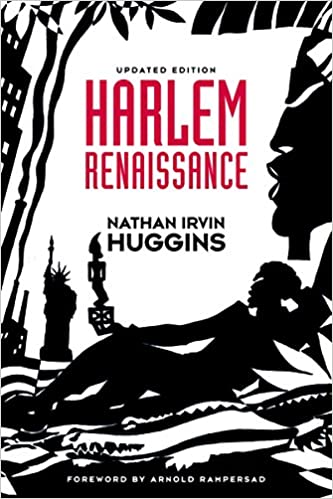 7. Harlem Renaissance
by Nathan Huggins (1971; Oxford)
There have been many books published about the Harlem Renaissance, but this early one by Nathan Huggins remains one of the best interdisciplinary studies of the period. David Levering Lewis’s When Harlem Was in Vogue , first published in 1981, is still the most popular single-volume history of the era, and more broadly comprehensive than Huggins’s book, but Huggins’s astute judgments of the era have yet to be matched by any historian.
8. Parting the Waters: America in the King Years, 1954–63
by Taylor Branch (1988; Simon & Schuster)
This initial volume in Taylor Branch’s epic history is the most compelling, gripping, altogether most powerful narrative available of the first stage of the civil rights movement, an absolutely stunning book.
9. Paul Robeson: A Biography
by Martin Duberman (1988; New Press)
Martin Duberman’s biography of Paul Robeson has incredible historical sweep, telling a textured, amazingly well-researched story of a powerful, uncompromising, and tragic figure in American cultural and political life. It is complemented nicely by Gerald Home’s Black and Red: W. E. B. Du Bois and the Afro-American Response to the Cold War, 1944–1963, published in 1986 (State University of New York).
10. Labor of Love, Labor of Sorrow: Black Women, Work, and the Family From Slavery to the Present
by Jacqueline Jones (1985; Knopf)
Jacqueline Jones is one of the finest labor historians of her generation, and this work is a definitive social and economic history of black women and the family. It should be read together with Giddings’s book.
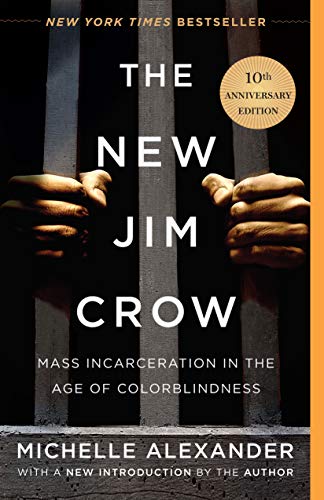 11. The New Jim Crow: Mass Incarceration in the Age of Colorblindness
by Michelle Alexander (2010; The New Press)
Michelle Alexander's The New Jim Crow is almost certainly the most influential book published by a black scholar in the 21st century. It holds that the mass incarceration of black males in the United States since the end of the civil rights era, largely as part of the unsuccessful War on Drugs, amounts to a “new” Jim Crow system. The book has clearly challenged the assumptions of the American criminal justice and has clearly led to the social justice of ending incarceration and defunding police departments.
12. The Broken Heart of America: St. Louis and the Violent History of the United States
by Walter Johnson (2020; Basic Books)
This is a powerful account of the history of systemic racism and racial violence that characterized the history of St Louis. A compelling companion to Andy Theising’s The Rise and Fall of an Industrial River Town—Made in the U.S.A., a history of East St. Louis, one of the poorest black urban communities in America. For more about the historical roots of racism and resistance in St. Louis, George Lipsitz’s A Life in the Struggle: Ivory Perry and the Culture of Opposition is a useful book. Classic works on black life in Midwestern cities is Joe Trotter’s Black Milwaukee: The Making of an Industrial Proletariat, 1915-1945 and Allan Spear’s Black Chicago: The Making of a Negro Ghetto, 1890-1920.
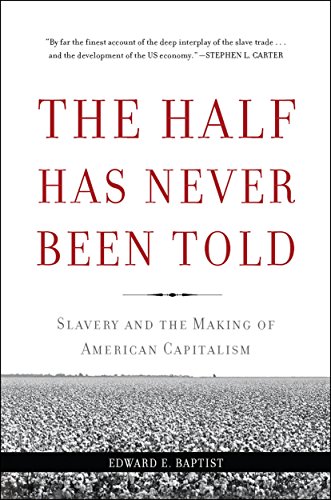 13. The Half Has Never Been Told: Slavery and the Making of American Capitalism
by Edward E. Baptist (2014; Basic Books)
Here is a book that extends and particularizes Eric Williams’s classic 1944 work, Capitalism and Slavery, the basic thesis being that slavery in the United States was not an economic outlier or anomaly but rather the major force and source for the country’s wealth and economic supremacy.
14. The Slave Ship: A Human History
by Marcus Rediker (2007; Penguin)
One of the best of the recent book on the history of the transatlantic slave trade. Sowande' Mustakeem’s Slavery at Sea: Terror, Sex, and Sickness in the Middle Passage (2016: University of Illinois) is an excellent complement.
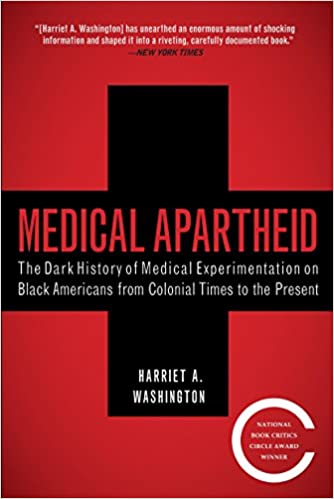 15. Medical Apartheid: The Dark History of Medical Experimentation on Black Americans from Colonial Times to the Present
by Harriet A. Washington (2008; Anchor)
A shocking historical study of how blacks were used and abused by medical researchers, often with the subjects’ consent, usually without their knowledge. The book reveals how eugenics, propelled by the strong belief in Social Darwinism, not only promoted experimentation on and poor medical treatment for blacks, but justified it as inevitable entitlement of whites to rule as the dominant race.