
Trusted Writing on History, Travel, and American Culture Since 1949
SEARCH 75 YEARS OF ESSAYS!
January 2011
The principal difference between history and life is that history is simpler. Things are themselves in history; in life they are generally something else. Take, for obvious example, the New England sea captain of the early 1800’s. In history he is a sea captain and nothing more: the master of magnificent brigs and ships on all the oceans, survivor of dreadful storms, proud and often successful adversary of the swiftest patrols the British or the French could send against him.
In life, however, if my great-grandfather, Captain Moses Hillard, was at all typical of his colleagues, he was a great deal more besides: he was a buyer and seller of goods of all kinds, from castor oil and cowitch through rum, coffee, and cotton to garden seeds of curious kinds and the best stockings and shawls to be purchased on the Paris market; he was a dealer in foreign exchange in a number of currencies, including, together with the Russian and the usual European varieties, the complicated coinages of the Spanish Main and those domestic American valuations which were expressed in such terms as “27½ Lawfl money is £13.2.6 or $43.75 cts.”
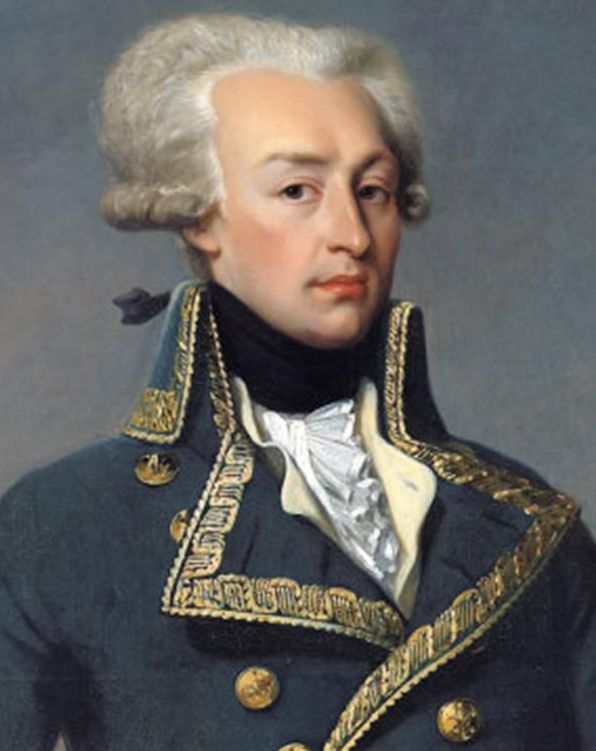
Lafayette, at the head of a group of young French nobles, first landed on American soil amid the live oaks hung with Spanish moss on the swampy shores of the little port of Georgetown in the southern Carolinas, in the early summer of 1777. He came in his own private brig, chartered from a Spaniard. He had slipped out of France with a lettre de cachet at his heels amid a welter of bureaucratic intrigue that had all Versailles in an uproar. In the two seasick months at sea he had managed to elude the British cruisers specially detailed to intercept him. Immediately he rode north posthaste to place himself under Washington’s command.
One hundred and fifty years ago the story of America was a story of the open country—of rural people, living for the most part in villages or on farms. A great part of the country had not even been explored, and huge sections of it did not belong to the United States. By 1830, although the number of Americans living west of the Alleghenies was last approaching the number east of them, many intelligent men seriously believed that it would take anywhere from 500 to 2,000 years to settle and develop the country.
Today, in contrast, the story of America has become very largely a story of the city. Of all the changes that have come to America, one of the most striking has been the country’s amazing urbanization. A few generations ago the average American was a farmer; today he is a city dweller.
“The hurry of life in the Western part of this country, the rapidity, energy, and enterprise with which civilization is there being carried forward, baffles all description, and, I think, can hardly be believed by those who have seen it. Cities of magnificent streets and houses, with wharves, and quays, and warehouses, and storehouses, and shops full of Paris luxuries, and railroads from and to them in every direction, and land worth its weight in gold by the foot, and populations of fifty and hundreds of thousands, where, within the memory of men, no trace of civilization existed, but the forest grew and the savage wandered.
“I was at a place called Milwaukee, on Lake Michigan, a flourishing town where they invited me to go and read Shakespeare to them, which I mention as an indication of advanced civilization, and one of the residents, a man not fifty years old, told me that he remembered the spot on which stood the hotel where I was lodging, a tangled wilderness through which ran an Indian trail. Does not all that sound wonderful?”
There is widespread agreement in the American museum community that there should be greater online access to historical collections. Only about 2% of history museums have their collections online, and data in most of these systems cannot be seen by search engines. Other countries are far ahead of the U.S. in these types of efforts. The British Museum alone has nearly 2,000,000 objects online. Furthermore, there needs to be a gateway that provides easy access to multiple collections. Most museums in Canada have been linked together for years, for example, in the Canadian VirtualMuseum. The National Portal has received numerous letters of support, and eleven respected leaders in the history museum field have agreed to serve on its Advisory Board chaired by the former Archivist of the United States, Allen Weinstein.
Albert Davis Lasker made no speeches and wrote almost nothing for publication, and when he died, on May 30, 1952, very few people paused to read the obituaries; yet the newspapers and magazines in which they appeared carried his monument, in a sense, on nearly every page, for Lasker was accounted by many the father of modern advertising. He put over many of its great coups and slogans; he taught it how to frighten, tempt, cajole and sell —that above all. Born in Germany in 1880, he was precociously successful as a newspaper reporter and tried advertising in Chicago in 1898 only to please his father, who thought the latter profession more respectable. He would have quit the distasteful job but for his misfortune in incurring a debt of $500—which he did not possess. It was necessary to stay to work off the debt and stay he did, for the rest of his life. Soon he owned the agency and it became one of the richest and most fabled advertising enterprises of this century.