The revolution in film that had begun the year before with the institution of a ratings system had brought immediate effects: swearing and increasingly naked and exotic situations in American film. November saw the release of The Killing of Sister George , a seduction story about two women (Coral Browne and Susannah York). What was different about the film was its established director, Robert Aldrich (known for another offbeat story about two women, What Ever Happened to Baby Jane? ), and its presentation as mainstream cinema. In Life magazine Richard Schickel reviewed the film as the biggest and boldest of the recent “flock of films on lesbianism,” which included Les Biches and Thérèse et Isabelle . Aldrich hoped to dare Americans into the theater by promising that Sister George ’s wicked denouement, “Scene 176,” was “the most erotic, provocative English-language sex scene ever filmed.”

Trusted Writing on History, Travel, and American Culture Since 1949
SEARCH 75 YEARS OF ESSAYS!
January 2011
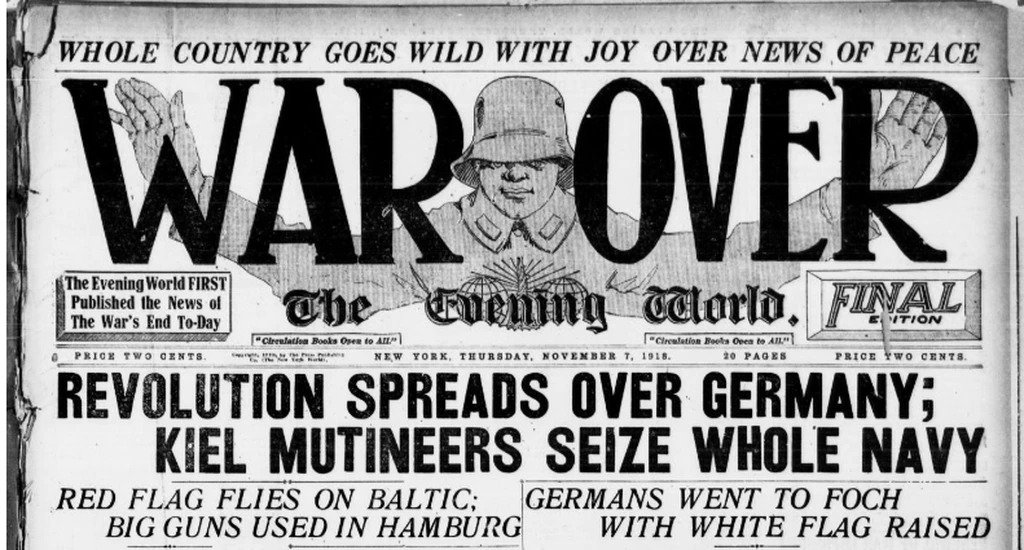
At war’s end—a comparatively brief war for the Americans—there were at least 100,000 men named Smith left in the Army, 1,500 of them answering to “William Smith,” plus 1,000 John Smiths. Some 15,000 Millers were also serving, along with as many Wilsons and 1,000 John Browns. And of the 262 John J. O’Briens, 50 were returning to wives named Mary.
With the peace, a slew of the year’s best martial tunes were doomed to become strange old songs that fathers sang in the backyard. Nineteen-eighteen had been the year of the bellboy hat, the ditty of an infatuated boy entitled “K-K-K-Katy,” and the instructional “Ev’rybody Ought to Know How to Do the Tickle Toe.” Soldiers brought back the war’s popular marching tune, “Hinky-Dinky Parlez-Vous,” and that year on Broadway the songwriters had turned out “Hello, Central! Give Me No Man’s Land,” “I’d Like to See the Kaiser With a Lily in His Hand,” “If He Can Fight Like He Can Love, Good Night Germany!” and scads of other martial anthems.
When he finally signed a treaty with federal representatives on November 6, after two years of guerrilla assaults against three Powder River forts and the Bozeman Trail, the Oglala chief Red Cloud became the only leader in any of the Indian wars ever to win any kind of concession from the United States government. Red Cloud traveled to Fort Laramie to sign the treaty following the abandonment of Fort Reno and the partial burning of Forts Kearney and C. F. Smith. The three forts were supposed to have secured the Bozeman Trail, which wound through Powder River country, home to the Brublé, Oglala, and Teton Sioux, Arapahos, and Cheyennes who had joined together under Red Cloud for the campaign. Such an alliance of native peoples was rare in the history of the Indian wars and—along with the later defeat of Custer—uniquely effective. Wagon trains along the Bozeman Trail and even government mowing details outside the forts weren’t safe from attack during Red Cloud’s campaign, from the end of 1866 to November 1868.

1993_7_102
Our column “History Happened Here” in the July/August 1993 issue described the steamboat Delta Queen ’s World War II career ferrying troops from Sacramento to San Francisco. This rang a bell with Alan Hall of Hopkinton, New Hampshire: “The lively article on the Delta Queen solved a minor mystery that has plagued me since 1946,” he writes.
A peregrine falcon nesting on top of City Hall in Long Beach, California, in 1991 scowls at a photographer coming too close. In the early 1970s, after decades of exposure to chemical pesticides, the birds were extinct in the East and rare in the West—only two pairs could be located in all of California. Now thanks to zealous conservation programs that hatched eggs in captivity and then returned the birds to the wild, there are more than 150 pairs in the state and peregrines are coming back to the East as well. The gradual return of the endangered bird is one of many signs that we may finally be making progress in rescuing our environment. In this issue John Steele Gordon chronicles our nation’s erratic stewardship of a natural bounty that once seemed inexhaustible.
“He sat in the full realization of all that soldiers dream of—triumph; and as I looked upon him in the complete fruition of the success which his genius, courage, and confidence in his army had won, I thought that it must have been from such a scene that men in ancient times rose to the dignity of gods.”
What a concept. Magnificent, isn’t it? Artillery blasts are shaking the earth as masses of smoke- and powder-blackened Confederates fire at the fleeing enemy, and Robert E. Lee, on Traveller, rides into the clearing where the Chancellorsville mansion flames. An immediate common impulse possesses his men, and one long, great cheer rises unbroken over the roar of battle. Even the wounded on the ground shout. What Lee’s biographer Douglas Southall Freeman will call the supreme moment of his subject’s life has arrived. Looking on is Lee’s aide Colonel Charles Marshall, who decades in the future will suggest to his young relative George C. Marshall that he try for Virginia Military Institute and an officer’s life.
They didn’t all make the journey at once, but it’s nice to imagine it—a panorama of wagon trains jumping and jiving along the Yellow Brick Road as optimistic musicians from all over the country headed for California in the great Music Rush of 1928. In October of the previous year, Al Jolson had gone down on one knee to sing “Mammy” in The Jazz Singer , but it should have been “California Here I Come,” because no sooner had the movies begun to talk than they began to sing—and dance, and play the fiddle and even, at Sam Goldwyn’s famous request, the French horn (Sam’s reaction on hearing that a certain song was set in Paris).
Sadie and I get a kick out of things that happened a long, long time ago. We talk about folks who turned to dust so long ago that we’re the only people left on this earth with any memory of them. Why, we still have a birthday party for Papa, even though he’s been gone since 1928. We cook his favorite birthday meal, just the way he liked it: chicken and gravy, rice and sweet potatoes, ham, macaroni and cheese, cabbage, cauliflower, broccoli, turnips, and carrots. For dessert we’ll have a birthday cake—a pound cake—and ambrosia, made with oranges and fresh coconut.
Generally, we stay away from liquor. Except once in a while we make Jell-O with wine. It’ll relax you, but you won’t get drunk. The truth is, I have never been drunk in my life.