
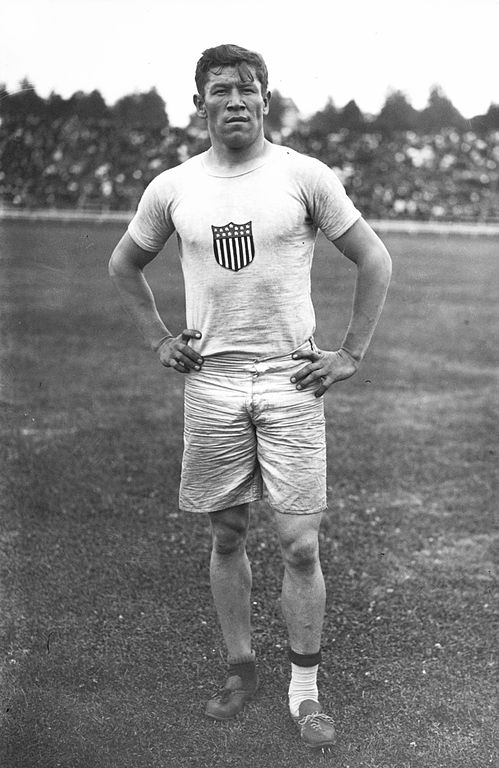
Americans have always demanded that their heroes be more than human. George Washington had to have thrown the dollar across the Potomac, Davy Crockett had to have wrestled a grizzly, Babe Ruth had to have come through for a dying boy with a promised home run. We all know that these stories are Sunday truths, but somehow the men wouldn’t be the same without them.
Mr. Ward replies: My object was not to trash anyone. Lee Considered represents, as I wrote, the case for the prosecution. But Lee’s next biographer will clearly have to respond to the charges it specifies.
Charles Royster should not be blamed for my error. I am sorry that my sloppy writing suggested that Jackson’s Valley Campaign somehow set the standard for savagery against civilians. It clearly did not—and Royster never claims it did. But Jackson’s enthusiasm for killing in what he believed to be a righteous cause seems indisputable. Even before the shooting began he was urging that, should Virginia be invaded, no prisoners be taken, and when, after Jackson had helped direct the slaughter of Union troops at Fredericksburg, a young officer asked him “What can we do?” about Federal looters, he responded, “Do? Why, shoot them.”
I was disappointed but not surprised to see a fine writer like Geoffrey Ward succumb to the current fad of Confederate bashing. In reviewing three books on the War Between the States (“The Life and Times,” April), he attempts to trash two truly heroic Americans.
To err is human, so we have editors; editors are human, so we have nitpickers. That came to mind reading the review of The American Magazine (“Editors’ Bookshelf,” April), where I learned that a magazine “opened our eyes to Carson McCullers’s ‘silent spring.’” The magazine was The New Yorker and the author was Rachel Carson.
?Many ingenious lovely things are gone that seemed sheer miracle to the multitude…" — W. B. Yeats
A few years ago, I wrote a book called The Scarlet Woman of Wall Street about a place and a people that flourished in the nineteenth century: the New York City of the 1860s and 1870s. We might call it Edith Wharton’s New York. Mrs. Wharton herself wrote late in her life, in the 1930s, that the metropolis of her youth had been destined to become “as much a vanished city as Atlantis or the lowest level of Schliemann’s Troy.” To those of us who know the modern metropolis—what we might call Tom Wolfe’s New York—that city of only a century ago seems today as far away and nearly as exotic as Marco Polo’s Cathay.
As the Cold War seemingly came to an end with the disintegration of the Soviet Union in December of 1991, I recalled your December 1986 issue and the article by John A. Garraty entitled “101 Things Every College Graduate Should Know about American History.” Entry 78 of that article contained the 1947 quotation by George F. Kennan on containment, which was the seed of the policy that our government adhered to for the next fortyfour years while it waged the not entirely cold Cold War.
It now appears that the policy of containment worked. Maybe other policies would have achieved the same or a better result, but that is something we cannot clearly tell as yet. Because it did work, I think it is time we took a new look at the Korean War and the Vietnam War and view them not as wars but as battles in that longer Cold War.
No nation expects to win every battle of a war. It only expects to attain ultimate victory. We did achieve that end. People who view the Korean War as not a victory and the Vietnam War as a defeat might well now readjust those conclusions.
Just outside Denver, a small family-run amusement park is clanging and sparkling its way through its 84th season. It shares the raffish, plaintive charm of its counterparts across the country, but there is a good deal more to Lakeside. The little park is a superb collection of Art Deco architecture, as striking in its way as the much-heralded Moderne district in Miami Beach.
Lakeside didn’t start out that way. It began by billing itself, like many amusement parks of the era, as the White City. Its owner and promoter was Adolph Zang, a prosperous Denver brewer; on opening day—May 30, 1908—a public still awed by lavish displays of electricity turned out fifty thousand strong to cheer as Denver’s mayor pressed a button in his downtown office and illuminated the park’s hundred thousand bulbs. As the lights blazed on, Zang’s daughter Gertrude smashed a bottle of champagne against Lakeside’s showpiece, the 150-foot Tower of Jewels.
A Standard introductory text is Edwin H. Porter’s The Fall River Tragedy: A History of the Borden Murders (Geo. R. H. Buffington, 1893). It contains incriminating information suppressed at the trial, and it became famous and rare, allegedly because Lizzie bought up all available copies. A facsimile edition was published in 1985. Many people read Edmund Pearson’s The Trial of Lizzie Borden (Doubleday, 1937) as a transcript, but it has been edited to demonstrate Lizzie’s guilt. In Lizzie Borden: The Untold Story (Simon & Schuster, 1961), Edward D. Radin reveals Pear- son’s bias and builds a case against Bridget Sullivan, the maid.
For legal critiques of the trial, try to get hold of John H. Wigmore’s “The Borden Case,” American Law Review 27 (Nov.-Dec. 1893) and Robert Sullivan’s Goodbye Lizzie Borden (Greene Press, 1974), which concludes that the trial judge was biased in Lizzie’s favor.
From the moment Julia Trotman came to us as an assistant in our copy department, she made it clear that her first goal—for the time being anyway—was to compete in the 1992 Summer Olympics, at the helm of a Europe Dinghy, an eleven-foot, one-person, single-sail vessel. Nearly two years ago Julia left our calmer waters to launch a grueling series of competitions worldwide, her performance in which we have just learned has landed her the coveted spot on the Barcelona-bound team. Her energy and determination impressed all of us—we’d also like to think that our good wishes and that snappy top-of-the-line sail bearing the American Heritage logo also ensured Julia a fair following wind.
Thank you for the article on the rivalry between Vermont and New Hampshire. There has always been a lot of goodnatured ribbing between the two states. In fact, Governor Gregg and I recently competed in a series of ski races to determine who had better snow- Vermont or New Hampshire!