
January 2011

Of all the great commanders in the Civil War, the most consistently underrated and overlooked is General George H. Thomas, the big Virginia cavalryman who fought for the Union. From January 1862 at Mill Springs, where he won the first major Federal victory of the war, through December 1864 at Nashville, where he destroyed the Army of Tennessee, Thomas never lost a battle when he was in command.

If ever one man altered the course of a war in a single afternoon, it was Thomas, who took scraps of units from a beaten army and pulled them together into a defensive perimeter that held the line at Chickamauga and saved the Western command. Two months later, at Chattanooga, Thomas’s Army of the Cumberland put the Union in position to break the rebellion with one of the most stunning assaults in military history.

Although Thomas won many honors and promotions and there is an impressive bronze equestrian statue of him in Washington today, it is unlikely many of the motorists who drive by him on Massachusetts Avenue know who he was. His fame, one historian said, “never really caught up with his talents.”

The struggle for Chattanooga reveals itself in David Greenspan’s panorama. After replacing Rosecrans as commander of the Army of the Cumberland, Thomas fortified Chattanooga (1). Bragg, holding Missionary Ridge and Lookout Mountain, commanded the supply lines to the city until troops under Thomas and Hooker opened the “cracker line” (2), a route that let supplies reach Chattanooga from the depot at Bridgeport. Grant, the new theater commander, then moved to dislodge Bragg. On November 23 Thomas took the high ground of Orchard Knob (3) in front of Missionary Ridge. The next day Hooker stormed Lookout Mountain (4) and threatened Bragg’s left while Sherman crossed the Tennessee River (5) to strike his right (6). On November 25 Grant made his major effort. When Sherman got bogged down in hard fighting on the Rebel right (7), Grant ordered Thomas to take the Confederate line at the foot of Missionary Ridge (8). Thomas’s men did—and then kept on going. Without orders, they scrambled up the steep sides of the ridge, swept across the crest (9), and completely routed Bragg’s army.


Allan Nevins . Ordeal of the Union , 2 vols. (New York: Charles Scribner’s Sons, 1947). The Emergence of Lincoln , 2 vols. (New York: Charles Scribner’s Sons, 1950). The War for the Union , 4 vols. (New York: Charles Scribner’s Sons, 1959–71). These eight volumes are a magisterial account of the crisis-laden years from the Mexican War to Appomattox, covering social, economic, political, and military events in compelling prose.

David M. Potter . The Impending Crisis, 1848–1861 (New York: Harper & Row, 1976). The best single-volume survey of the political events that led to secession and war.

Shelby Foote . The Civil War: A Narrative , 3 vols. (New York: Random House, 1958–74). A superbly readable military history by a novelist who did a massive amount of historical research.

Three issues back the critic Paul Fussell explained that Americans have altogether too sunny and vapid a view of the world. Since nothing very terrible ever happened to them, they have no tragic sense: ‘They can’t even imagine it. If they would read more Oedipus Rex and King Lear, under decent instruction, it would help.”

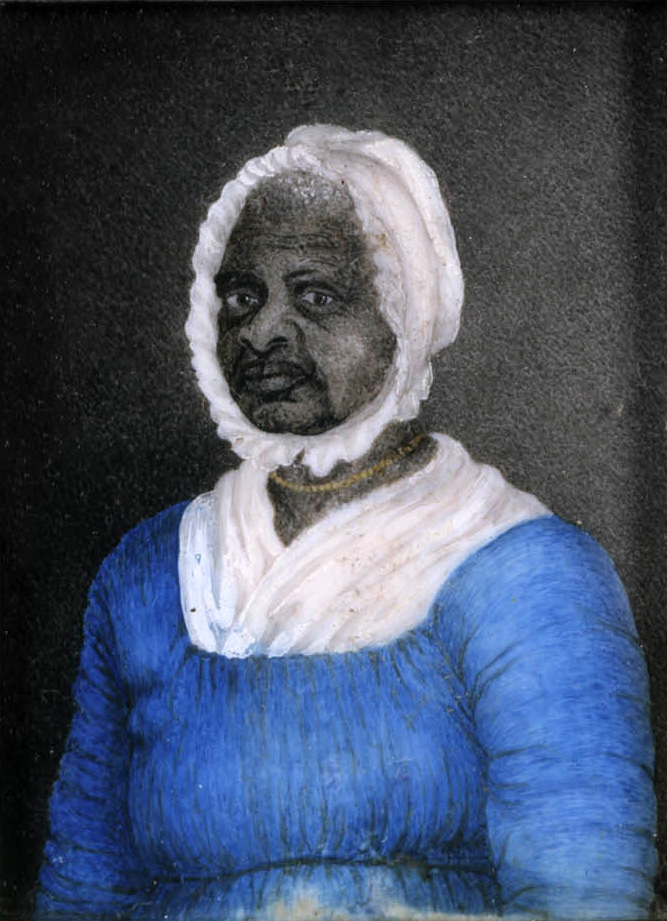
mum bett
Mum Bett, aka Elizabeth Freeman, aged 70. Painted by Susan Ridley Sedgwick, Massachusetts Historical Society

Early during the year 1781, having heard a lot of talk about the “rights of man,” a black slave woman named Mum Bett walked out of her master’s house in western Massachusetts to tell a lawyer that she wanted to sue for her freedom. After asking her what had put such an extraordinary idea into her head and being satisfied by her reply, the lawyer agreed to represent her. The case is a reminder of the fact that slavery existed even in the cradle of abolitionism, and it is a testament to the hopes inspired by revolutionary rhetoric. But it is most fascinating, perhaps, for the glimpse it yields of a singular woman who was determined to be free.

The calamity was already full blown when Abraham Lincoln took office on March 4, 1861. South Carolina had left the Union three months back, and six states had followed her out. By early February, a secessionist congress had convened in Montgomery, Alabama, declared a provisional government, and voted Jefferson Davis president of the Confederate States of America. Lincoln was facing the gravest presidential crisis in the nation’s history: the collapse of the republic.

At the moment, there was hardly anything Lincoln could do to prevent it. The United States Army in the spring of 1861 was a tiny organization of some 16,000 regulars in dusty, isolated posts cast along the Western frontier and behind the ramparts of coastal forts; 322 of its 1108 officers had already resigned their commissions and decamped 58 south. The concentration of even one mixed brigade for immediate service against the Rebels was impossible.

Best Words Brushes with History Brushes with History Thirty-five Years Thirty-five Years Thirty-five Years Census Records Lamp Light Silver Scenes Against Emasculation Near Beer Revolutionary Trail Not Athens Gerald Carson: In Memoriam

Great Britain paid a high price to drive French arms from North America. The French and Indian War doubled the national debt and brought to the British Empire vast new territory populated with Indians and Frenchmen who remained hostile to British rule. Parliament decided that the colonies should begin to pay for their own defense and passed two acts in March designed to support a ten-thousand-man army. On March 22 King George III signed the Stamp Act, requiring colonists to pay a tax on all legal documents, newspapers, almanacs, and even playing cards and dice. Two days later the Quartering Act, George III’s arrangment for the army’s lodging, went into effect.

March 4 was Inauguration Day in Washington, D.C., for Abraham Lincoln and his new Vice President, Andrew Johnson. Precisely at noon Johnson entered the Senate to take his oath of office and to make an unscheduled address. “I am made the presiding officer of this body,” Johnson told the Senators assembled before him. “I therefore present myself here in obedience to the high behests of the American people to discharge a constitutional duty, and not presumptuously to thrust myself in a position so exalted. … Deem me not vain or arrogant; yet I should be less than man if under such circumstances I were not proud of being an American citizen… .”

“All this is in wretched bad taste,” said Lincoln’s friend Joshua Speed to Gideon Welles, the Secretary of the Navy. “Johnson is either drunk or crazy,” Welles whispered back. “I hope it is sickness.” Grasping the Bible as he took his oath, Johnson bellowed, “I kiss this Book in the face of my nation of the United States.”

The Birth of a Nation , D. W. Griffith’s epic film of the Civil War and Southern Reconstruction, opened on March 3 at the Liberty Theater in New York City. The film’s $110,000 budget and fifteen-week schedule were unheard of at a time when most features cost $10,000 and took one week to shoot. Griffith sank his entire personal fortune as well as his weekly paychecks into the project, in the belief that it would be the greatest and most profitable film of all time.

The director’s search for a monumental subject for his masterpiece led him to The Clansman , Thomas Dixon’s novel and play celebrating a former Confederate soldier’s role in the formation of the Ku Klux Klan. The story appealed to Griffith’s romantic vision of the antebellum South. President Woodrow Wilson, himself a scholar of the Reconstruction era, watched a private screening in the White House and said: “It is like writing history with Lightning. And my only regret is that it is all so terribly true.”

Help us keep telling the story of America.

Now in its 75th year, American Heritage relies on contributions from readers like you to survive. You can support this magazine of trusted historical writing and the volunteers that sustain it by donating today.

Donate