
Trusted Writing on History, Travel, and American Culture Since 1949
SEARCH 75 YEARS OF ESSAYS!
November 2025
From award-winning journalist Henry Moscow, here is the story of one of America's greatest presidents. Jefferson wrote America's Declaration of Independence, but he also was an anthropologist, architect, astronomer, botanist, diplomat, farmer, inventor, lawyer, mathematician, and musician. He spoke French, Greek, Italian, Latin, and Spanish. He founded the University of Virginia and today's Democratic Party. During his eight years in office, he doubled the country's size.
In this indispensable volume, one of America's ranking scholars combines a life's work of research and teaching with the art of lively narration. Both authoritative and beautifully told, The Middle Ages is the full story of the thousand years between the fall of Rome and the Renaissance - a time that saw the rise of kings and emperors, the flowering of knighthood, the development of Europe, the increasing power of the Catholic Church, and the advent of the middle class. With exceptional grace and wit, Morris Bishop vividly reconstructs this distinctive era of European history in a work that will inform and delight scholars and general readers alike. "Mr. Bishop, the sage of Cornell, says here almost everything of transending importance about the Middle Ages and says it better than it has ever been said before. One feels great sympathy for those who must follow him...." -- Louisville Courier-Journal
At the height of their power in the ninth and tenth centuries, the Vikings seemed invincible – conquering, well-armed warriors whose ships were the ultimate in seafaring technology. From island bases near the deltas of major rivers, they used the waterways to scour the countryside, looting and burning towns, plundering merchant shipments, and stripping churches and monasteries of their gold, silver, and jeweled treasures.
The Norsemen eventually penetrated all of England and Scotland, founded cities in Ireland, gained a powerful province in France, controlled Frisia and the modern Netherlands, and raided lands around Spain, passing into the Mediterranean to attack Italy and North Africa. They established the first Russian kingdom, challenged Constantinople, and provided a personal guard for the Byzantine emperor.
They settled Iceland, where they developed Europe's first republic, founded two colonies on Greenland, and explored parts of North America five centuries before Christopher Columbus landed in the Americas. Then, like the abrupt end of a summer thunderstorm, their adventures ceased.
Here is their dramatic story.
In 1815, the British controlled the seas. Before the end of the nineteenth century, they ruled Australia, India, New Zealand, half of Africa, half of North America, and islands all around the globe. Theirs was the most powerful empire the world has ever known. Here is the story of how the English acquired their vast domain; how they ruled, maintained, and exploited it; and how, within decades, they presided over its dissolution. Here are Britain's triumphs and also her stinging defeats, her heroes and her scoundrels. It is a full and fascinating chronicle of the growth of the British Empire and its people and of the impact that empire had on the rest of the world.
Some of America's foremost historians - including James M. McPherson, Allan Nevins, Harold Holzer, and Stephen B. Oates - recount the extraordinary life of Abraham Lincoln in this collection of the best essays from sixty years of American Heritage.
Lincoln, the book argues, "evolved into nothing less than an apostle for the sanctity of the Union, the ethic of majority rule, and the dreams of freedom and equality of opportunity. Who could have so predicted when Lincoln had seemed the least qualified candidate for the presidency?” Lincoln comes to life in this selection from America's leading history magazine, chosen by its current editor-in-chief, Edwin S. Grosvenor.
In Napoleon, National Book Award winner J. Christopher Herold tells the fascinating story of a legendary leader who changed the world in every aspect - political, cultural, military, and commercial. Napoleon Bonaparte's rise from common origins to the pinnacle of power, as well as his defeat at Waterloo, still influences our daily lives, from the map of Europe to the metric system. Here's the fascinating story of the great soldier-statesman.
National Book Award winner Richard Winston explores life in the Middle Ages - from the fifth to the fifteenth centuries, beginning with the fall of the Roman Empire to the dawn of the Renaissance. In both countryside and towns, from peasants to the bourgeoisie to nobility, no aspect of life in this era is left unexplored.
Award-winning historian Lionel Casson paints a vivid portrait of life in ancient Rome - for slaves and emperors, soldiers and commanders alike - during the empire's greatest period, the first and second centuries A.D.
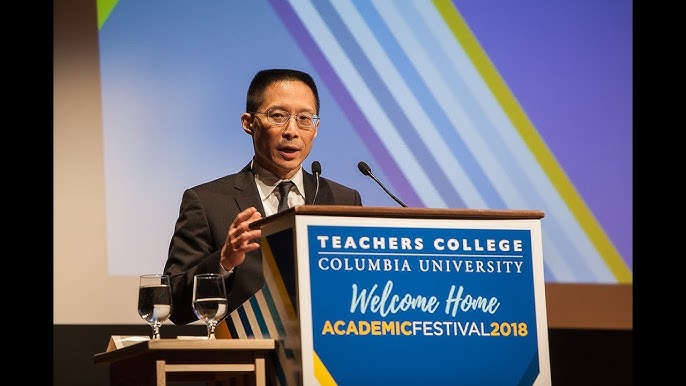
Editor’s Note: Eric P. Liu is the CEO and co-founder of Citizen University, a non-profit organization promoting civic empowerment, and the author of numerous books on civic engagement. Portions of this essay were used in talks at a TED Conference and the National Summit on Civic Education sponsored by the Jack Miller Center.
I bring you greetings from the 54th-freest nation on earth.