
Trusted Writing on History, Travel, and American Culture Since 1949
SEARCH 75 YEARS OF ESSAYS!
December 2005
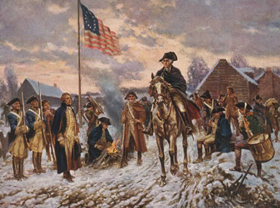
At the feet of Mt. Misery and Mt. Joy in southeastern Pennsylvania, where Valley Creek joins the Schuylkill River, a bustling ironworks operated in the 1740s. But all that remained of it by the time the Continental Army arrived on December 19, 1777, were the skeletons of buildings burned by the British and the name it gave the neighborhood: Valley Forge. The army would know a lot more of misery than of joy in the six months it wintered there. But taking a cue from the land around them, they would mine iron from that misery, wresting food and shelter from a frozen landscape and forging a unified fighting force from a crowd of men lucky to have a pair of shoes, let alone a musket.