
Trusted Writing on History, Travel, and American Culture Since 1949
SEARCH 75 YEARS OF ESSAYS!
June 2017
After the President’s inspiring speech, Soviet leaders were left to wonder: Was Kennedy a peacemaker or aggressor?
Anticipating a West German tour that on June 26, 1963, would take him to Berlin, President John F. Kennedy expressed worry. Charles de Gaulle had recently gone to Germany and won wide acclaim there. Kennedy didn’t want to just follow in the French presidents footsteps.
"My money's on you, Mr. President," the ambassador to Germany, Walter C. Dowling, reassured him.
"We’ll see, we’ll see, we’ll see," Kennedy replied.
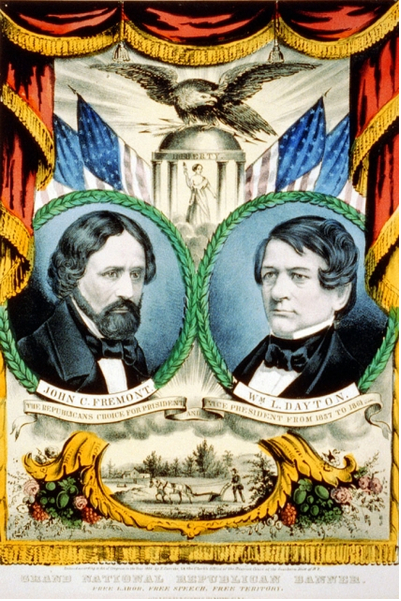
A hundred and fifty years ago today, delegates from every free (non-slavery) state in the Union converged on Philadelphia to select the new Republican party’s first presidential and vice-presidential candidates. The Musical Fund Hall, which housed the convention, could scarcely accommodate the 2,000 delegates and observers. The air in the hall was thick and muggy, and outside an overflow crowd stood in a light summer drizzle, eager for news about the proceedings.
. . . Anything you say can and will be used against you in a court of law. That mantra, a Supreme Court justice once estimated, is familiar to two billion people around the world, mostly from its regular recitation in television crime dramas. Of all the rights guaranteed under our Constitution, no other is pointed out as often or as clearly. Why?

A bronze memorial to the 343 New York City firefighters who lost their lives on September 11 has become a place of quiet pilgrimage for Americans, similar to the Vietnam Memorial in Washington. They will come to remember what former mayor Rudy Giuliani called the worst day in the history of the city, for the tragedy we suffered, but also its greatest day, for the response of New Yorkers to that tragedy.
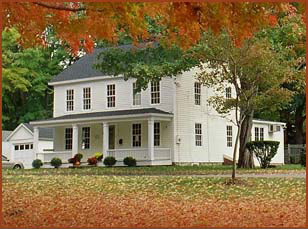
3 Liberty Street Clinton, CT 06413 http://www.3liberty.com/history.html
In his posting of June 12, John Steele Gordon speaks of the bronze freize that Commodore Vanderbilt commissioned to celebrate his life and works on the facade of his new freight depot in downtown Manhattan. It is perhaps not surprising that this project wasn't unanimously embraced by the shareholders of the Hudson River Railroad, who, after all, had footed the bill; many would have agreed with George Templeton Strong’s condemnation of this hideous group of molten images. But I tend to agree with the New York Herald writer that John quotes: This beautiful work is a monument of the genius and progress of the age.
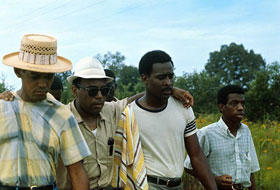
(Bettmann/Corbis)
Hit the dirt! The cry came 51 years ago today, at 4:15 p.m. on June 6, 1966, just before three shotgun blasts exploded from the bushes along Highway 51 near Hernando, Mississippi. Two of the rounds found their target: James Meredith, a 32-year-old black law student who had the day before embarked on a protest march from Memphis to Jackson, Mississippi. Forty years ago today, as Meredith fell to his knees on the ground, the civil rights movement found itself at a turning point.