Editor's Note: We asked Patrick J. Charles, the author of numerous articles and books on gun control, legal history and the Constitution, to give us an overview of the history of gun rights. Numerous judges have cited his writings on the Second Amendment in their opinions, including the U.S. Supreme Court in the landmark decision McDonald v. City of Chicago. Charles serves as Senior Historian for the U.S. Air Force Special Operations Command and is author of the recent, seminal book Armed in America: A History of Gun Rights from Colonial Militias to Concealed Carry.

Trusted Writing on History, Travel, and American Culture Since 1949
SEARCH 75 YEARS OF ESSAYS!
August 2019
With the 75th Anniversary of the liberation of Paris this month, we did a search through the digital archives of American Heritage to see what we had published previously on this momentous event.
A comprehensive website about historic taverns is much needed — there’s no info in one place on the Internet.
Some taverns from the Colonial era sit on street corners where ancient Indian trails once crossed. Others survive in the center of major cities, their welcome signs standing out incongruously against skyscrapers looming overhead.
If you do the research, you'll find more than 200 taverns still existing that served the first generation of Americans. Some of them, like the White Horse Tavern in Newport, RI, have hosted patrons for more than three centuries.
Watch our announcement video:
But that research is not easy to do because, surprisingly, there is not a single place on the Internet where you can find a definitive list of these living museums. American Heritage is going to fix that deficiency.
Bruce Watson is a Contributing Editor at American Heritage and has authored several critically acclaimed books. He writes a history blog at The Attic.
As the sun set over the Pacific on the longest day of the year, a dozen revelers on a San Francisco beach propped up a wooden man. The first Man.
The Golden Gate Bridge loomed in the distance, but the Sixties cast a longer shadow. The year was 1986, and America was consumed with shopping channels and strip malls. The revelers on Baker Beach felt, as one said, like “remainders on the shelf in Reagan’s America.” One brought gasoline. Another brought matches.
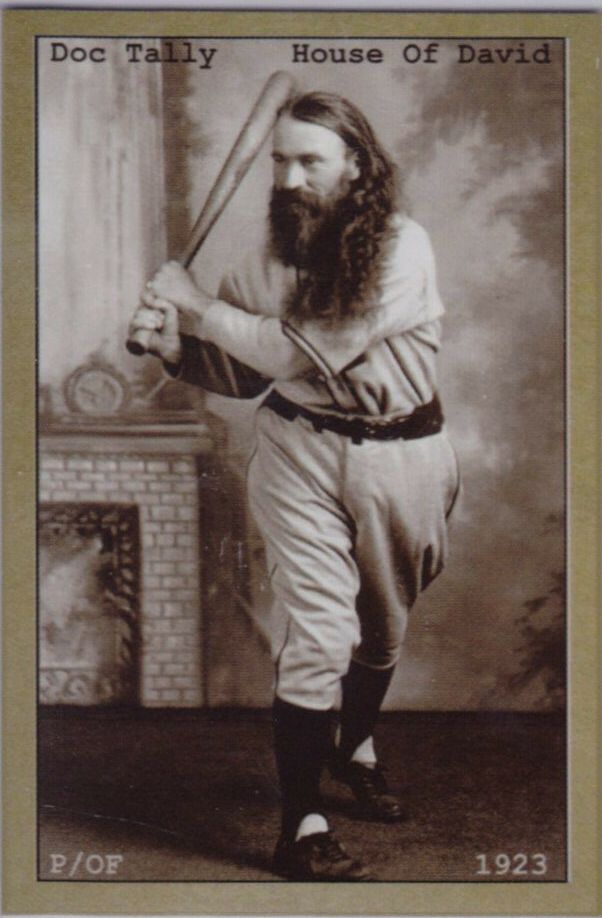
I was especially thrilled to see the article "The House of David: A Midwest Cult REALLY Good at Baseball" in your Summer 2019 issue.
I am now 82 years old and grew up in Jefferson City, Missouri. I distinctly remember those summers when the House of David baseball team would arrive for their annual visit to play the "town team," our Red Birds. I attended those games as a boy dreaming of a baseball career, but mostly curious about the appearance of the team and their baseball acumen.
Excerpted from the George Washington Book Prize finalist Rush: Revolution, Madness, and Benjamin Rush, the Visionary Doctor Who Became a Founding Father, by Stephen Fried.
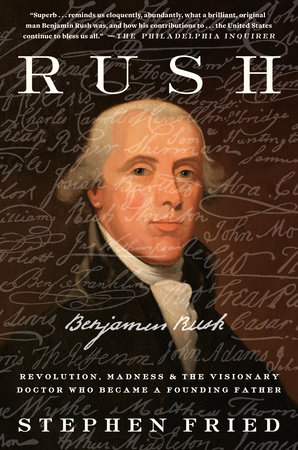
In the late morning of August 29, 1774, a well-worn carriage made its way down dusty King’s Highway, along the Pennsylvania side of the Delaware River just below Trenton.

In the last days of August, 22 years ago, the Soviet Union imploded.
Many current interpretations of the Second Amendment largely ignore the first half of its short text, "A well regulated Militia, being necessary to the security of a free State, the right of the people to keep and bear Arms, shall not be infringed." The men who wrote the Constitution, unlike today's pundits, certainly understood what the meaning of the Second Amendment was.
To get a better understanding of what the Founders thought at the time the Second Amendment was drafted and ratified in 1791, we consulted all of the state constitutions that were in force at the time -- that is, written before the U.S. Constitution. We found, for example, that every state except Georgia and North Carolina had explicit regulations on militias into their state constitutions. They were, very specifically, "well-regulated militias."
In the Massachusetts constitution, the meticulous John Adams wrote more than 900 words about the regulation of militias.
In reviewing these constitutions, we searched for the words:
CONTENTS
SYLLABUS
OCTOBER TERM, 2007
DISTRICT OF COLUMBIA V. HELLER
SUPREME COURT OF THE UNITED STATES
DISTRICT OF COLUMBIA et al. v. HELLER certiorari to the United States Court of Appeals for the District of Columbia Circuit
No. 07–290. Argued March 18, 2008—Decided June 26, 2008
Bruce Watson, a contributing editor of American Heritage, writes blogs for our website and his own at TheAttic.space.
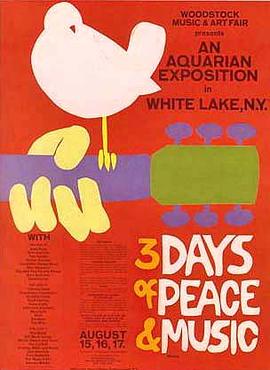
WOODSTOCK, NY — Thirty miles down the road, on a slope so green and sweeping that it looked like God’s own amphitheater, the crowds poured in over a half century ago. But the human hordes of Woodstock are long gone now. In their memory, summer crowds pour into this Hudson Valley hamlet with the name that still sings.