October 2025

lincoln and the flag
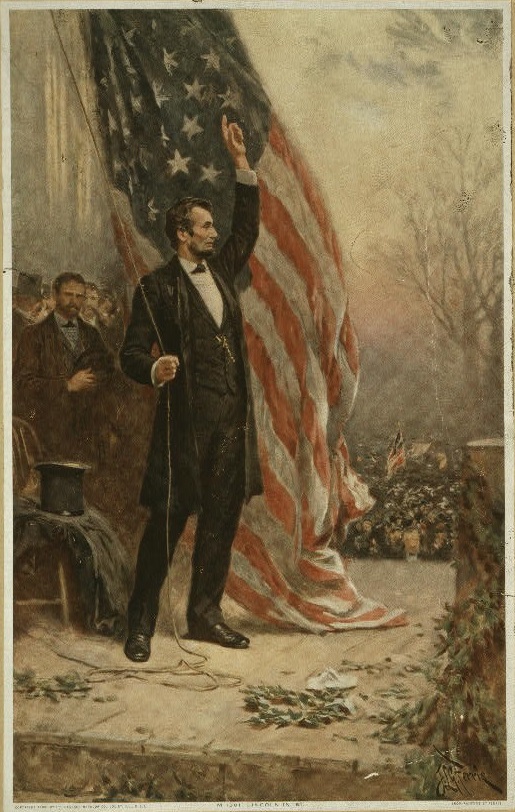
For Lincoln, American democracy best embodied “the great living principle of all Democratic representative government.” Library of Congress

Editor’s Note: Dr. Allen C. Guelzo is the Senior Research Scholar in the Council of the Humanities and Director of the Initiative on Politics and Statesmanship in the James Madison Program at Princeton University. He is the author of several award-winning books on Lincoln, including his most recent, Our Ancient Faith: Lincoln, Democracy, and the American Experiment, from which portions of this essay were taken.

Washington
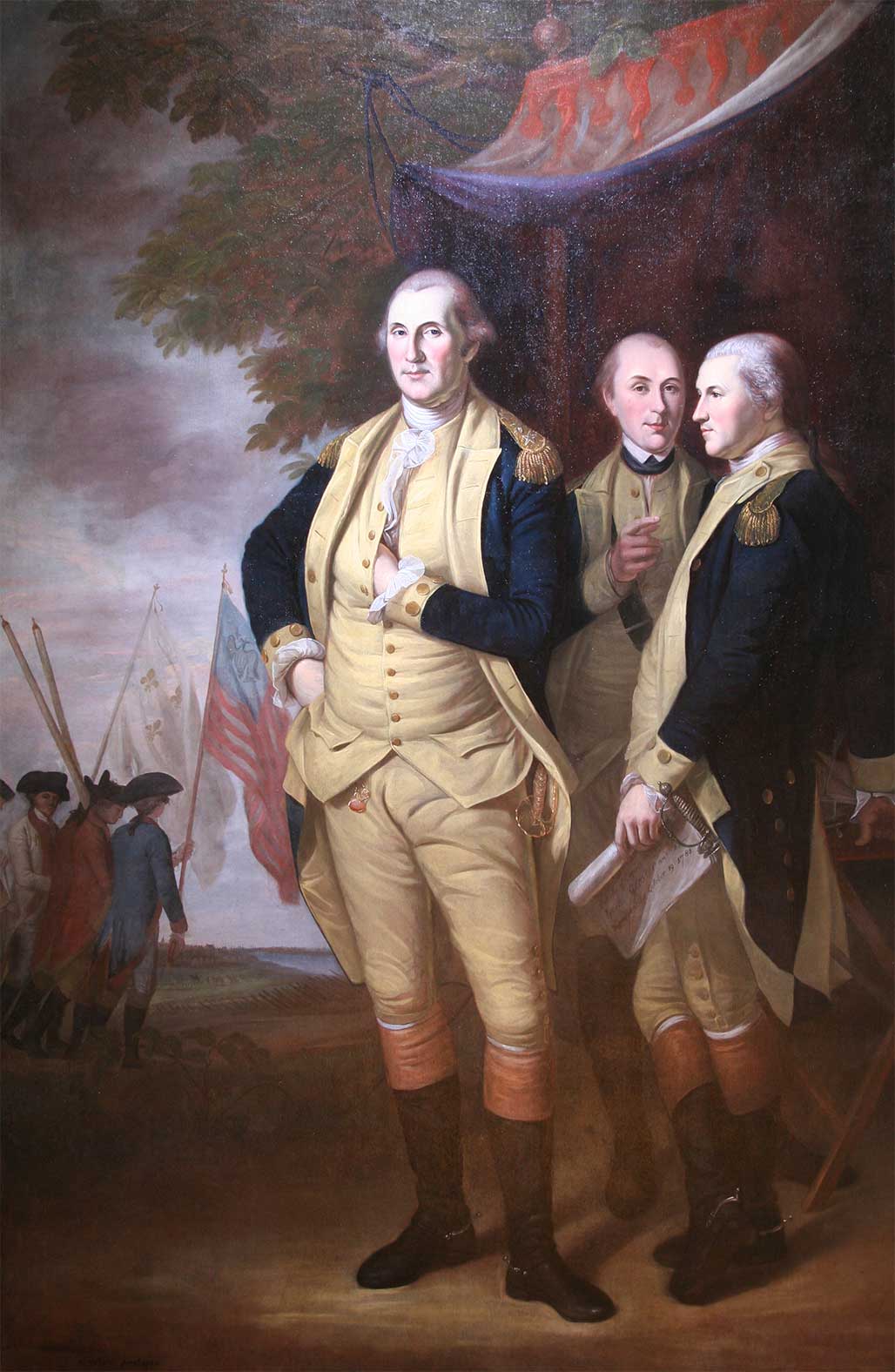
Washington, portrayed alongside the Marquis de Lafayette and Colonel Tench Tilghman at Yorktown, warned after the final battle that Americans would have only themselves to blame if they could not realize their freedom and promise as an independent nation. Maryland Statehouse

On May 14, 1804, a party of explorers dispatched by President Thomas Jefferson set off up the Missouri River into America's newly acquired Louisiana Territory. Under the leadership of Meriwether Lewis and William Clark, the men of the Corps of Discovery would cross the continent and into history. Here, from award-winning historian Ralph K. Andrist, is the dramatic story of their epic journey.

Andrew Jackson - war hero and spokesman for the frontier, the first president from west of the Alleghenies, the first born in a log cabin - fought his way to the White House. Once there, he stood for the rights of common citizens, founded the Democratic Party, expanded the powers of the presidency, paid off the national debt, and postponed civil war by prevailing against the advocates of states’ rights.

Here, from New York Times bestselling historian Richard Russell, is the dramatic story of Germany - from the rise of Charlemagne to the age of Martin Luther, from the Thirty Years' War to the iron rule of Otto von Bismarck, and from the formation of the Weimar Republic to the fighting of two world wars.

The American Heritage History of World War II was first published in 1966. At the time, author and Pulitzer Prize-winning journalist C.L. Sulzberger received widespread praise for his authoritative account of the six-year war that involved more than fifty-six nations, resulted in the death of some 22 million people, and shaped the course of history. His work became a standard reference on the war. Stephen E. Ambrose, one of the most highly regarded historians of our time, oversaw a major revision of this classic work. Seamlessly incorporating new material and insights, Ambrose produced a comprehensive and riveting account of the war’s key characters and events.

In planes and foxholes, in deserts and jungles, on ships and beaches, Ambrose shines a light on the people involved - the leaders, the fighters, the victims. He also added new chapters on the atrocities of the Holocaust and revelations about the secret war of espionage. Ambrose’s analysis also offers insight into the events that precipitated the Cold War.

In this rich and inspiring book, acclaimed historian Douglas Brinkley takes us on the incredible journey of the United States - a nation formed from a vast countryside on whose fringes thirteen small British colonies fought for their freedom, then established a democratic nation that spanned the continent, and went on to become a world power. This book will be treasured by anyone interested in the story of America.

Reviews

"Douglas Brinkley and American Heritage have done a grand job. This is a first-rate book: fair, clear, and enormously welcome." -- David McCullough

Here, from American Heritage, is the story of our presidents. From George Washington's reluctant oath-taking through George W. Bush's leadership challenges after September 11, 2001, we view ambitious and fallible men through the new lens of the twenty-first century. Where did they succeed? Where did they fail? And what do we know now that we could not have known at the time?

The American Heritage History of the American Revolution is the complete chronicle of the Revolutionary War told in full detail. Lancaster starts his story with an examination of Colonial society and the origins of the quarrel with England. He details the ensuing battles and military campaigns from Lexington and Concord to the surrender of Lord Cornwallis at Yorktown, as well as the tense political and social situation of the new nation.

Reviews

"A magnificent book. . . . Bruce Lancaster's text is terse, rapid, lucid, and dramatic . . . filled with the color and excitement of a grim and bloody war." – The New York Times

Here, from New York Times bestselling historian Francis Russell is the vivid story of America's confident years - those days of exuberant growth in population, industry, and world prestige beginning with the end of the Civil War and ending with the outbreak of World War I. Here are the stories of political power struggles, Reconstruction, Western expansion, Ellis Island, the rise of American tycoons and labor unions, and the entry into World War I.

Help us keep telling the story of America.

Now in its 75th year, American Heritage relies on contributions from readers like you to survive. You can support this magazine of trusted historical writing and the volunteers that sustain it by donating today.

Donate