
Trusted Writing on History, Travel, and American Culture Since 1949
SEARCH 75 YEARS OF ESSAYS!
April 2007
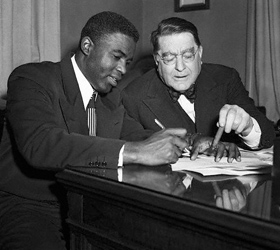
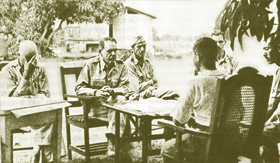
Sixty-five years ago today, on April 9, 1942, Maj. Gen. Edward P. King rode toward the Japanese lines in the Philippines to carry out the largest surrender of U.S. forces in history, ending the three-month siege of the Bataan peninsula. A Georgian whose grandfather had fought in the Civil War, King was acutely aware that April 9 was the date on which Robert E. Lee had set out on a similar journey to Appomattox Courthouse in 1865.
King’s capitulation was the prelude to the infamous “Death March,” one of the most brutal chapters of a cruel war. But on that sweltering Thursday morning, the general, acting on his own initiative, was interested only in preventing the wholesale slaughter of his men.
Sixty-five years ago today, on April 9, 1942, Maj. Gen. Edward P. King rode toward the Japanese lines in the Philippines to carry out the largest surrender of U.S. forces in history, ending the three-month siege of the Bataan peninsula. A Georgian whose grandfather had fought in the Civil War, King was acutely aware that April 9 was the date on which Robert E. Lee had set out on a similar journey to Appomattox Courthouse in 1865.
King’s capitulation was the prelude to the infamous “Death March,” one of the most brutal chapters of a cruel war. But on that sweltering Thursday morning, the general, acting on his own initiative, was interested only in preventing the wholesale slaughter of his men.
If horror films have lost their sting in recent years, it’s in large part because the easy availability of photographic equipment has put genuine horror so much in front of us that fiction seems tame by comparison. The films we saw on television of actual terrified fleeing peasants will linger in our memories longer than any feature film on the Vietnam War. The footage of tsunami-ravaged Indonesia and Katrina-devastated New Orleans moved the world in a way Hollywood special effects never could. It will be interesting to see how viewers react to Jonestown: The Life and Death of Peoples Temple, airing on PBS’s The American Experience this Monday, April 9. The film contains footage of the Reverend Jim Jones and the Jonestown massacre never before seen. It may the most horrifying documentary ever televised.
Boise, Idaho, like all American cities, has its ethnic groups—Germans, Irish, Mexicans, Greeks, and more. But unlike almost all other American cities, its main ethnic group is one much less familiar to most of us—Basques.
Boise is home to the only Basque-language immersion preschool in the United States, as well as a college-level Basque studies program at the local state university. The current mayor, David Bieter, has Basque ancestors, and so does Ben Ysursa, the Idaho secretary of state. The city has one of North America’s largest concentrations of people who can trace their heritage to the Basque country of northern Spain, and their hospitality beguiles visitors. A stretch of Grove Street between Capitol Boulevard and 6th Street downtown is the heart of the community. Locally known as “the Basque Block,” it offers Basque-themed bars and restaurants, a museum, take-out food, and even a boarding house.
As you may remember from William Gibson’s 1959 play The Miracle Worker and the movie based on it, Helen Keller was an Alabama girl who was struck blind and deaf by illness in her infancy but learned to communicate when she was only six, with the help of her devoted teacher Annie Sullivan. In the play’s climactic scene, the little girl makes a connection between water running from a pump and the word waterspelled out in sign language on her palm. The remarkable events of that day, April 5, 1887—120 years ago today—end most people’s knowledge of Helen Keller’s life. The rest of her story, however, is hardly less inspiring.
“Jesse James was a lad who killed many a man.” So went the opening line of the popular song, author unknown, that did much to spread the legend of Jesse Woodson James after his death on April 3, 1882—125 years ago today. Jesse and his brother Frank were already legends in their own time, but the last two lines in the verse cemented Jesse’s image in American folklore:
“He stole from the rich and gave to the poor,
He’d a hand and a heart and a brain.”
There is no surviving evidence that justifies the James brothers’ reputation as American Robin Hoods, but as the journalist says in John Ford’s The Man Who Shot Liberty Valance, “When the legend becomes fact, print the legend.”