
Trusted Writing on History, Travel, and American Culture Since 1949
SEARCH 75 YEARS OF ESSAYS!
January 2008
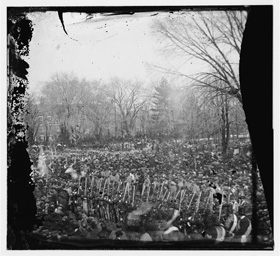
This past December, Civil War enthusiast, Carl Jennings of Berthoud, CO, was online gathering photographic material for his “American Civil War Library,” when he discovered three miscataloged photographs taken at the scene of Lincoln’s second inaugural address.
“My first thought was ‘No way!’” said Jennings, a former high-tech executive from South Carolina, who is not a professional scholar of American history, but has made Civil War collecting his life’s work. While many images of the Lincoln presidency exist, it is extremely rare to find a “new” image.
Thirty-five years ago this week, Supreme Court Justice Harry Blackmun delivered the majority opinion in the case of Roe v. Wade, finding for Norma McCorvey, a 23-year-old divorced mother who had challenged the constitutionality of a Texas statute that criminalized abortions except when the life of the expectant mother was at stake. The Court’s ruling barred states from interfering with abortion rights during the first trimester of pregnancy and placed sharp restrictions on the states’ say on women’s reproductive rights before the point of fetal viability, which Blackmun—a former general counsel for the Mayo Clinic in Rochester, Minnesota—located somewhere between six and seven months. From the start, the decision proved an ideological lightning rod.
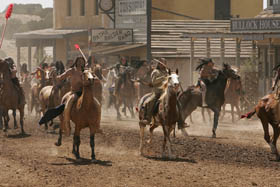
Successful literary collaborations are rare. The few exceptions—Mark Twain and Charles Dudley Warner (The Gilded Age), Charles Nordhoff and James Norman Hall (Mutiny On The Bounty), Lou Abbott and Bud Costello (“Who’s On First?”), Randy Roberts and James Olson (A Line In The Sand)—do not usually reach beyond a single genre. Larry McMurtry and Diana Ossana have now mastered two: the novels, Pretty Boy Floyd and Zeke and Ned; and their Academy-Award-wining screenplay for Brokeback Mountain, adapted from Annie Proulx’s short story.
“In this job I am not worried about my enemies,” President Warren G. Harding once famously quipped. “It is my friends that keep me awake at nights.” He wasn’t joking.
Even though it lasted only from 1921 to 1923, Harding’s administration became the most scandal-ridden to date, thanks to several of his old political pals. Attorney General Harry Daugherty was accused of profiting from the sale of government alcohol supplies during Prohibition, as well as selling pardons. Harding’s head of the Veteran’s Bureau, Charles Forbes, was sentenced to two years in prison for bribery and corruption. Other scandals involved appointees in the Shipping Bureau and Alien Property Custodian’s office. And, 85 years ago this week, Harding’s Secretary of the Interior, Albert B. Fall, announced his resignation in the midst of an unfolding scandal that would become known as Teapot Dome.