June 2026

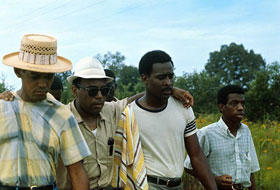
James Meredith, second from right, on June 27, 1966, after rejoining the march.
James Meredith, second from right, on June 27, 1966, after rejoining the march. Bettmann/Corbis

Hit the dirt! The cry came at 4:15 p.m. on June 6, 1966, just before three shotgun blasts exploded from the bushes along Highway 51 near Hernando, Mississippi. Two of the rounds found their target: James Meredith, a 32-year-old black law student who had the day before embarked on a protest march from Memphis to Jackson, Mississippi. Sixty years ago, as Meredith fell to his knees on the ground, the civil rights movement found itself at a turning point.

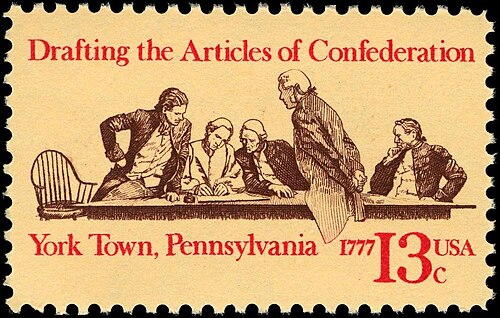
In June 1776, while Thomas Jefferson was writing the Declaration of Independence, a committee of the Continental Congress began work on another document. Thirteen delegates, most of whom had just two years’ experience in continental politics, were charged with an unprecedented task: They had to invent a brand-new government for a brand-new nation. On November 15, 1777—230 years ago today—Congress approved the finished product and sent it to the states for ratification. Called the Articles of Confederation and Perpetual Union, the charter was the brainchild of many of the same minds that would go on to author the Constitution, but it is rarely mentioned in the same breath. After its ratification, the weak, inefficient system it created would last only seven and a half years before the nation’s fathers scrapped it and started over. Derided when it is remembered at all, the Articles was nevertheless an important, if halting, step toward an enduring republic. The earliest formal bond of “perpetual union” between the erstwhile colonies, it announced from its first lines that “The name of this Confederacy shall be the United States of America.”

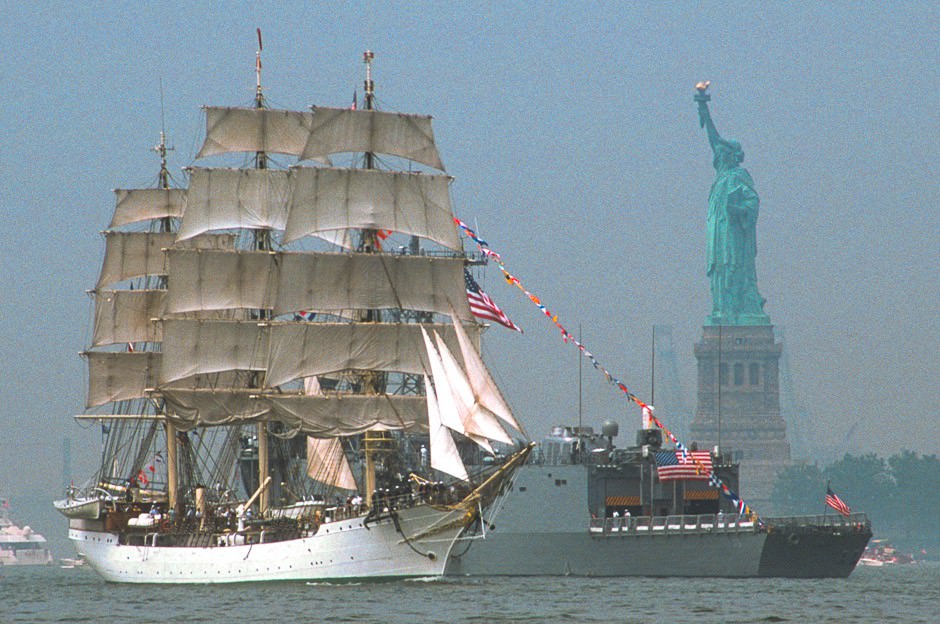
A Tall Ship passes the reviewing ship and Statue of Liberty, Op Sail
The beautiful Danish training ship "Denmark" sailed past the Statue of Liberty and dignitaries on the reviewing ship, one of 200 tall ships that celebrated the Bicentennial in New York. Op Sail

On the 200th anniversary of the Boston Tea Party — December 16, 1973 — protestors descend on the celebration demanding "environmental protection, racial justice, an end to corporate profiteering. . ."  Several throw empty oil barrels into the harbor.  Others hang President Nixon in effigy. America’s Bicentennial is off to a bad start.

On May 9, 1754 an article was published in Benjamin Franklin’s newspaper, the Pennsylvania Gazette, calling for the British colonies on North America’s eastern seaboard to unite against the threat of French aggression from the western interior. This rousing exhortation was echoed by an accompanying illustration depicting the British colonies as a snake cut into segments and was captioned, “JOIN, or DIE.”

Although often cited as the first political cartoon published in an American newspaper, Franklin’s Join or Die cartoon has since become an iconic symbol of America’s founding struggle. Its progeny were numerous, because the cartoon was immediately copied in other colonial newspapers. It also went on to inspire other powerful artwork associated with American independence, most famously including the Gadsden flag, the war banner created by South Carolina delegate Christopher Gadsden in 1775, on which a similar rattlesnake figure—this one intact—appeared coiled above the words: “Dont Tread on Me.”

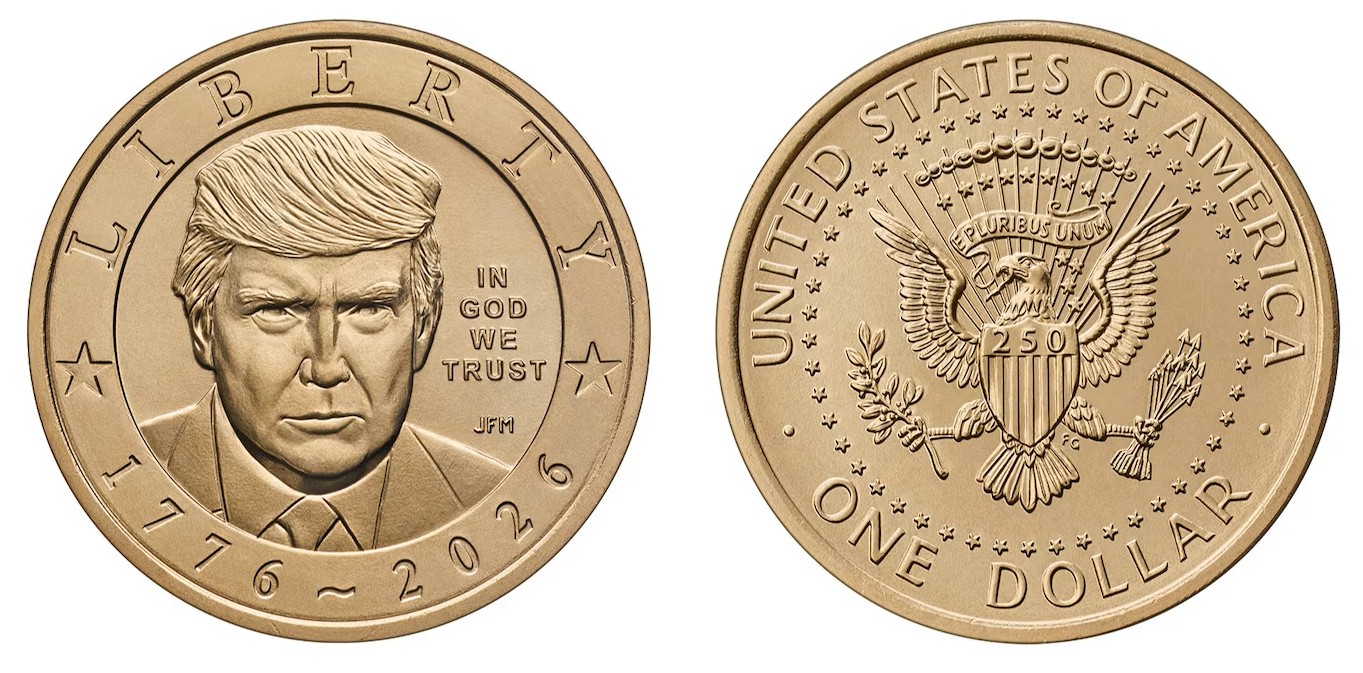
The U.S. Mint is producing a new $1 coin featuring President Trump's image. Treasury Dept.
The U.S. Mint plans to circulate a new $1 coin featuring a portrait of President Trump. Treasury Dept

Treasury Secretary Scott Bessent recently unveiled designs for a commemorative $1 gold-colored coin with President Trump's face on the front, which he said the U.S. Mint will produce in honor of the country's 250th birthday. Two months earlier, Bessent had also announced the Mint was planning for a possible $250 note with the president's likeness. Would the issuance of these be legal? Are commemorative coins and bills different from standard ones? It turns out the controversies around images of living persons on currency date back millennia.

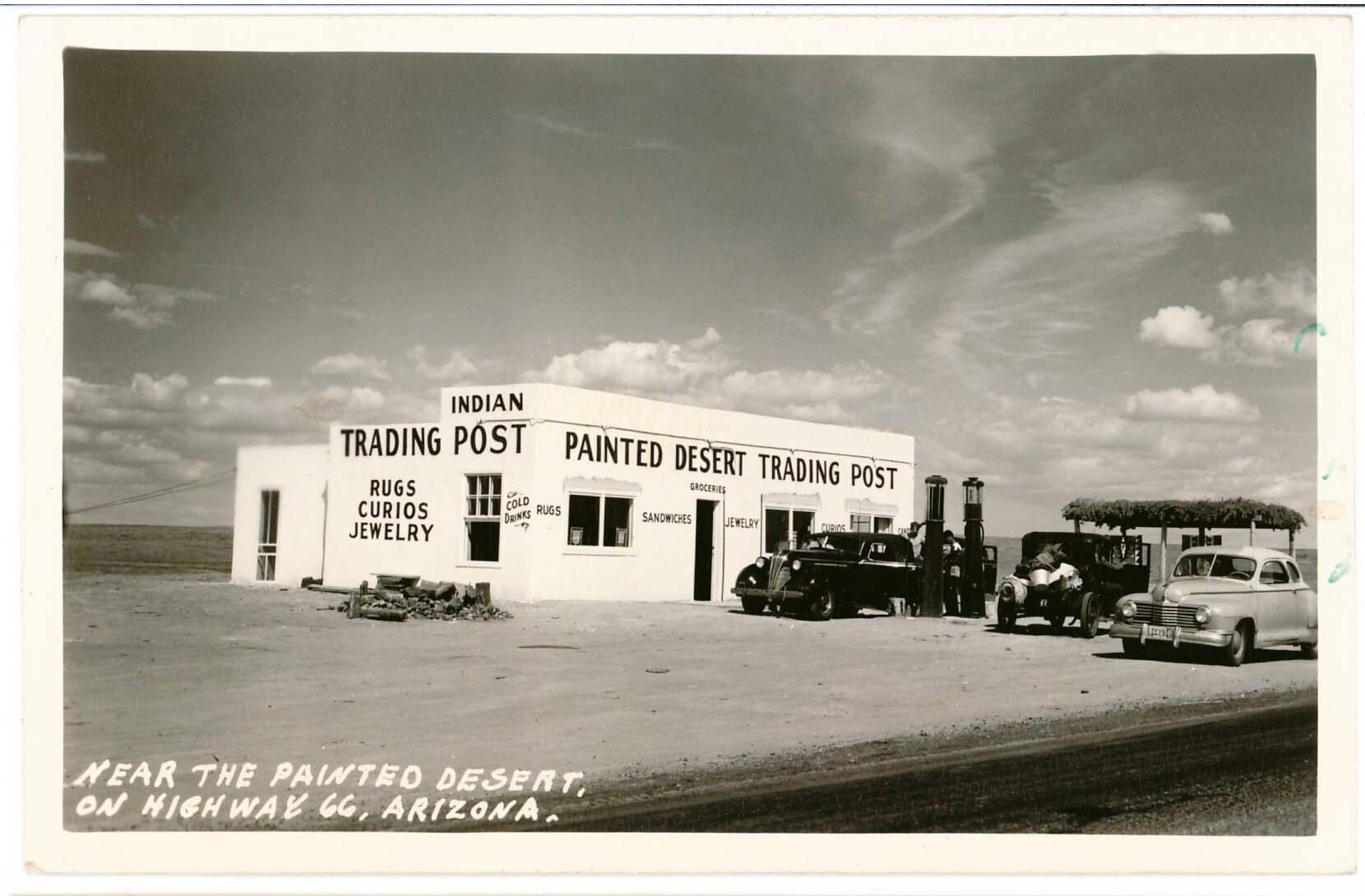
painted trading post
Built around 1940 by cattleman Dotch Garland Windsor in Arizona, the Painted Desert Trading Post was restored in 2018 and remains an iconic site along historic Route 66. Mike Ward

Around 2005, my wife Marion and I were on vacation, touring the Four Corners area (New Mexico, Arizona, Utah, and Colorado) and I picked up a book by Russell A. Olsen titled, Route 66 Lost & Found.

On the cover was a photo of a trading post somewhere in the Arizona desert. When I saw that photo, I somehow knew that I really wanted to visit and see it with my own eyes.

It took me until 2009 when we went on our first Route 66 tour. It was just the two of us on one Harley, crossing the United States from Chicago to Los Angeles. It was a holiday we both still think was the best we ever had.

Help us tell the story of America.

For over 75 years, American Heritage has chronicled our nation's history like no other publication. Please support our trusted, non-partisan historical writing and the volunteers that sustain it by donating today. We rely on contributions from readers like you to survive.
Donate