
Established 100 years ago, the famous highway remains a quintessential American experience for countless enthusiasts both at home and abroad.
-
Summer 2026
8 months ago By Edwin S. Grosvenor Volume71Issue3
Editor's Note: To celebrate the 100th anniversary of the founding of Route 66, Quarto Publishing Group recently published Jim Hinckley's Route 66: 100 Years, which chronicles the history of the highway through the voices of various historians and artists who've sought to promote and preserve it. The following is adapted from a chapter by Dries Bessels, a Dutch amateur historian and Route 66 enthusiast who once led tours along the historic route.
Around 2005, my wife Marion and I were on vacation, touring the Four Corners area (New Mexico, Arizona, Utah, and Colorado) and I picked up a book by Russell A. Olsen titled, Route 66 Lost & Found.
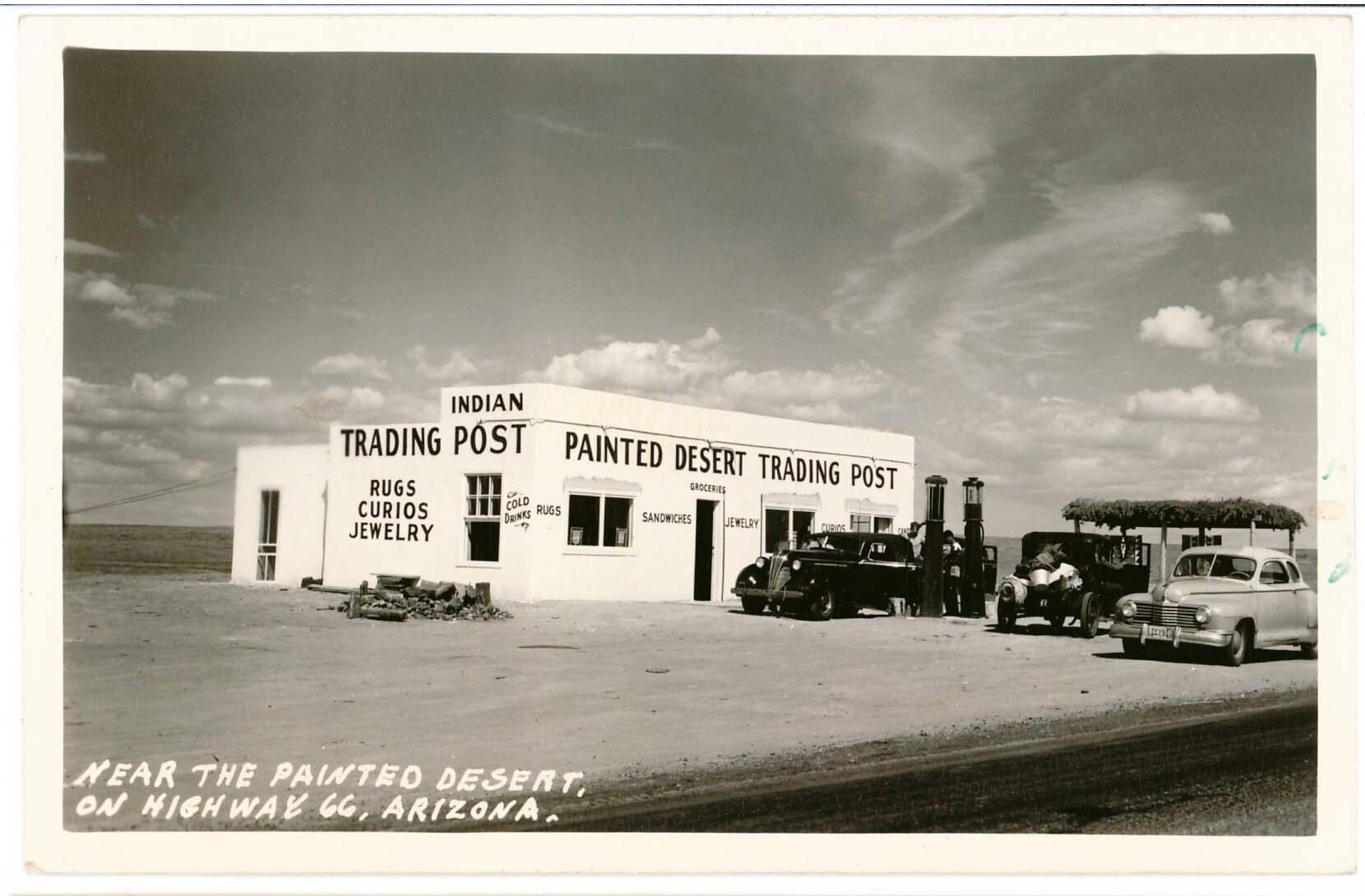
On the cover was a photo of a trading post somewhere in the Arizona desert. When I saw that photo, I somehow knew that I really wanted to visit and see it with my own eyes.
It took me until 2009 when we went on our first Route 66 tour. It was just the two of us on one Harley, crossing the United States from Chicago to Los Angeles. It was a holiday we both still think was the best we ever had.
On the 15th day of the trip the moment was there, and we took the right exit from I-40. After a bit of struggling, we reached old, abandoned Route 66 and after just a short ride we finally got to the Painted Desert Trading Post. It was a magical moment.
We spent quite some time there, a large part of it just sitting and staring but also wandering around in the area. The silence, remoteness, and solitude of the place were overwhelming, scary, and wonderful, all at the same time.
Upon returning to the Netherlands, I had the Painted Desert Trading Post tattooed on my left forearm. In 2010, I started guiding motorcycle tours along Route 66 for Dutch tourists, and of course the trading post was part of the tour. I watched tourists visit “my” trading post and noticed they were likewise impressed by the place, even though it was just a crumbling old building.
In the era of renaissance, romanticism has added a new and vibrant dynamic to the Route 66 experience. Route 66 has morphed into a living time capsule where the American experience, or the perception of that experience derived from television programs, from movies, and from books, has transformed Route 66 into a destination.
For countless international enthusiasts, Route 66 is viewed as the quintessential American experience. People from throughout the world now view an adventure on Route 66 as an opportunity to experience and discover real America. And that is why the centennial era is, perhaps, the most exciting period in the iconic highways storied history.
A Little Bit of History
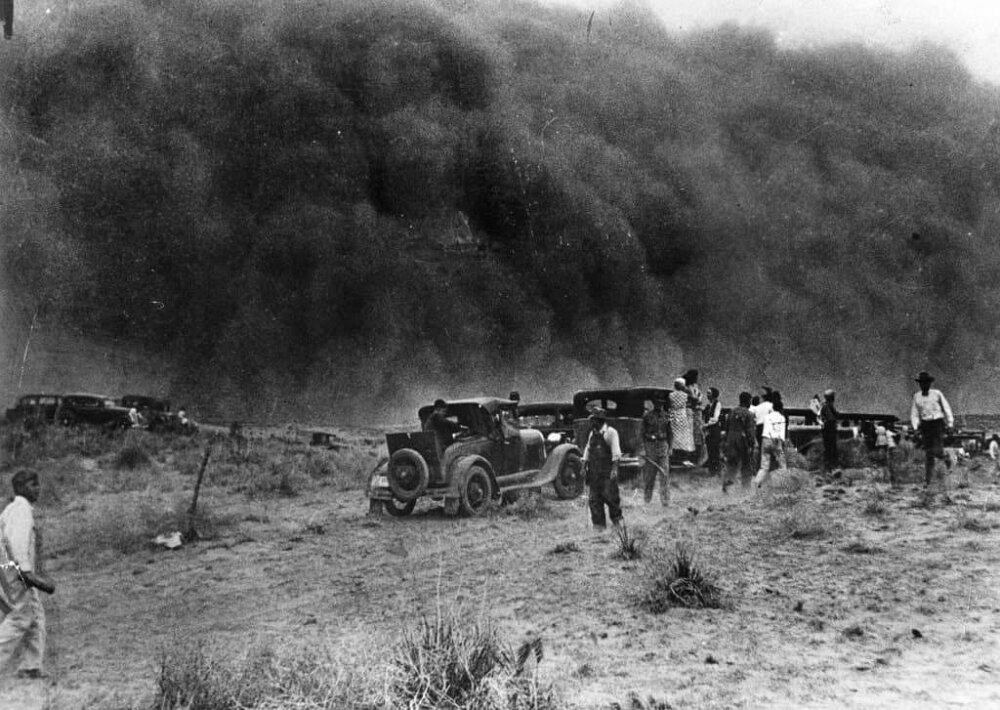
Many Europeans think they know the United States, but this knowledge comes mainly from TV, movies, and social media. What is not part of this knowledge is the poverty, the hardship of the Dustbowl days (in the 1930s), or the abandonment of sometimes complete towns after Route 66 was realigned. That is the history that they will only learn about in the museums or while talking to people while driving Route 66.
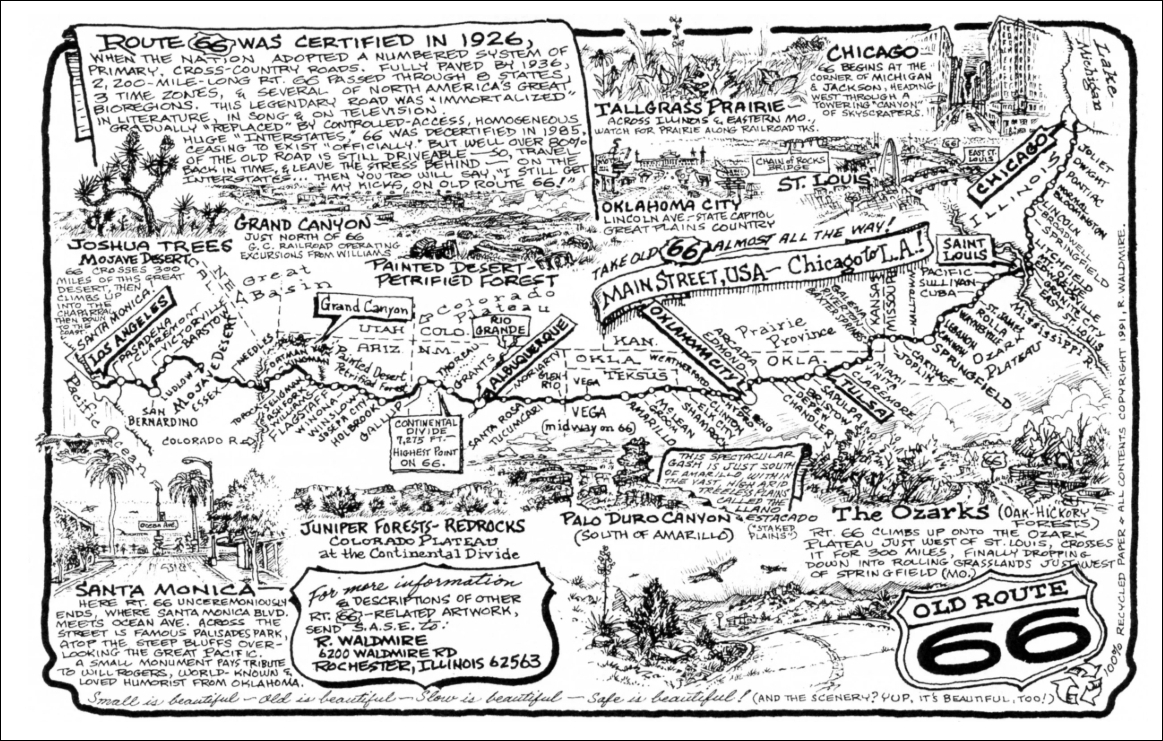
Route 66 was established in 1926. It was built by connecting many local roads together and calling the end result Route 66. It was a mix of sometimes very bad and unpaved roads, illogical routes through the center of small towns, and wide, paved roads through or between larger towns. The logic of the route was often dictated by the need for food, fuel, and car maintenance.
But Route 66 was so successful that it soon became very busy. Many of the town centers got clogged with traffic. It got so bad that in some towns, pedestrian tunnels had to be built as it was not safe to cross the streets.
From the very beginning the route was subject to change. This started in 1928 in the town of Depew, Oklahoma, the first community bypassed when the highway was realigned in 1928. This caused almost all traffic to avoid downtown Depew, which in turn caused the local economy to virtually collapse.
Depew was not the only town where this happened. The list is long, but the most dramatic impact from bypass might be the entire state of Kansas and the towns of Las Vegas and Santa Fe in New Mexico.
Kansas has the sad honor to have the shortest stretch of Route 66 (13.2 miles [21.2 kilometers]) and it originally ran through Galena, Riverton, and Baxter Springs. When Interstate 40 opened early in the 1960s, not only were the towns bypassed, but the whole state was also bypassed!
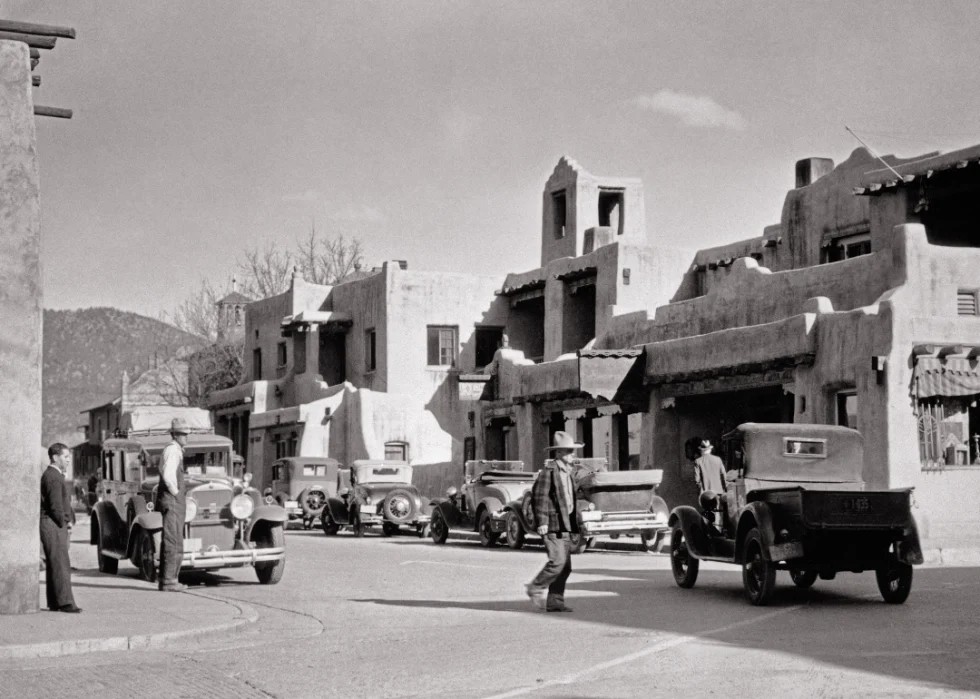
In New Mexico, the situation was different. Route 66 originally ran in a loop from Santa Rosa north to near Romeroville just west of Las Vegas, and then to the capital, Santa Fe, before turning south to Albuquerque.
In 1926, the governor from New Mexico was Arthur T. Hannett. According to stories, after losing the election to Richard Dullon, he straightened Route 66 to go directly from Santa Rosa to Albuquerque as a final act of revenge. This cut off a few major towns (including to Santa Fe) and many minor towns from Route 66.
The process of optimizing the route (and thus bypassing towns) accelerated when the network of interstates was put into place. Ultimately, Route 66 was completely bypassed by I-55 from Chicago to St. Louis; by I-44 from St. Louis to Oklahoma City; by I-40 from Oklahoma City to Barstow; and by I-15 from Barstow to Los Angeles.
An effect of all those bypasses and realignments are some weird situations like in downtown Albuquerque where Route 66 going east-west crosses Route 66 going north-south. What began in 1928 in Depew, Oklahoma, ended in 1984 in Williams, Arizona, the town that has the dubious honor of being the last town that was bypassed.
Starting in the 1950s and escalating in the 1980s, it seemed as if the role of Route 66 had played out and it was destined to fade from memory. But in a number of bypassed towns people were not very happy with the local economy left in such a sad state.
In 1987, the first Route 66 Association was formed in Seligman, Arizona, by local barber Angel Delgadillo and a group of local business owners. Seligman had been bypassed on September 22, 1978, and the result was that almost instantly, virtually all traffic followed the interstate, leaving the gas stations, restaurants, and motels alone and empty.
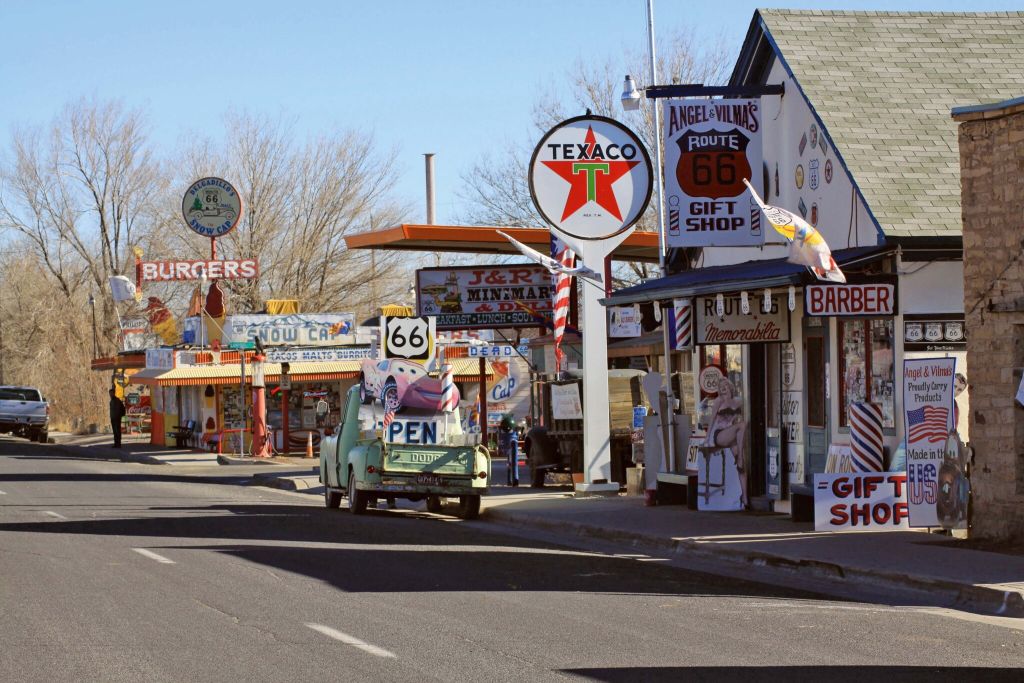
The State of Arizona labeled the old stretches of Route 66 as “Historic Route 66” in November 1987. That title along with the help of the Historic Route 66 Association of Arizona revived the interest in Route 66 tourism. The town is now thriving, and once again groups of travelers are looking for food, fuel, and souvenirs to help boost the town’s economy.
Since then, all eight Route 66 states have started associations, and they are often successful. They organize tours of the route in their state and run license plate programs for funding. In several states the associations run welcome centers and Route 66 museums. And in many places, they support the rehabilitation of restaurants, motels, and neon signs with grants as well as with volunteers.
International Fascination with Route 66
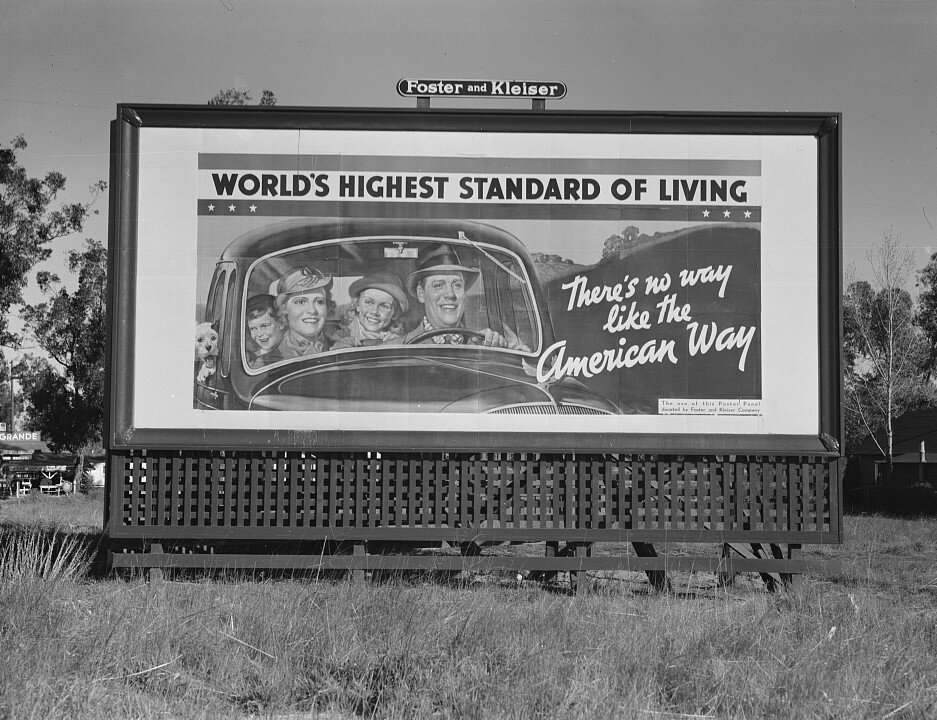
In his book, The Life and Times of the Thunderbolt Kid, Bill Bryson wrote,
At a time when Europe was still recovering from large-scale destruction and widespread poverty because of World War II, in America in the 1950s it was quite normal for a family to have one if not two cars. Not just any cars, however—they were large and extremely advanced with features like “Strato-Streak” V8 engines, Torsion-Aire suspension, and Strato-FlightHydra-Matic transmissions. And cross-country family holidays were an annual pilgrimage.
A Lincoln from 1958 was almost six meters (approximately 230 inches) long and had a six-liter (366-cubic inch) engine. In the same year in the Netherlands, the happy few could buy a DAF, 3.9 meters long (approximately 150 inches) with a 0.59-liter (36-cubic inch) engine. It would seat four but only if they were sufficiently skinny and loved each other. Mind you, this car was not for the average worker—you had to have serious money to be able to buy one.
Later in the 1950s, it was becoming quite normal for Americans to have a color TV. It would not be until 1967 that the first color TVs became available in Western Europe. The same is true for refrigerators, stereo equipment, and even everyday items like coffee and tobacco. In 1952 in the Netherlands, coffee was the last item to become available without coupons.
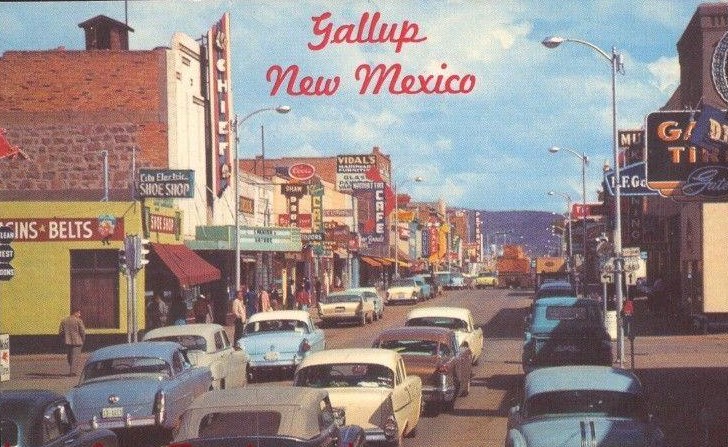
Considering these differences, it is not surprising that most Europeans considered America as a very wealthy and prosperous country. This view has largely stayed the same since then. Of course there is poverty, but many Europeans are reasonably convinced that the average American drives a huge pickup truck and lives in a big house (and of course wears or owns at least several guns).
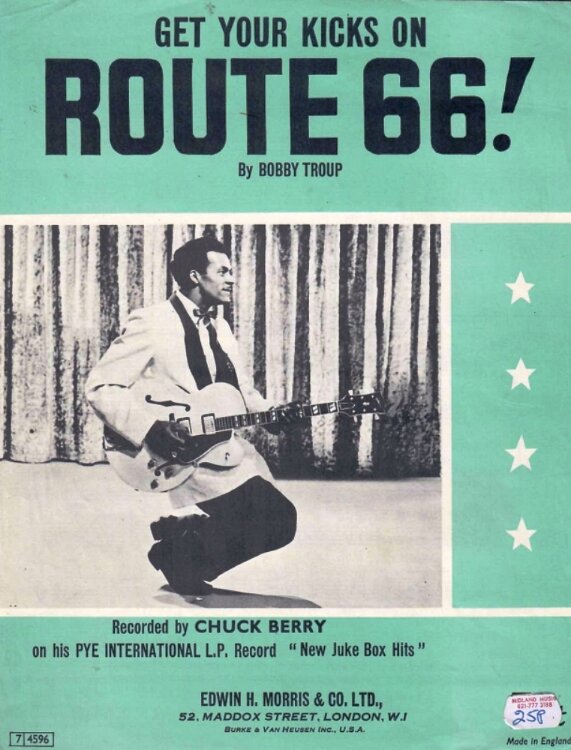
Through music and movies, the great American road trip came to symbolize freedom for the postwar generation in Europe. The song about getting your kicks on Route 66 sharpened the focus on that romanticized image of the United States. It was listened to on Radio Free America behind the Iron Curtain. And the song was recorded in variations and even different languages.
Today, ask almost any European about Route 66 and they will know about the road, even if only from Bobby Troup’s song. In 1946, after his relocation to California, he wrote it based on a string of names of towns along the route. Most Europeans will be able to mention at least a few of those towns, whether they have ever been to the United States or not. Just mentioning the name “Route 66” conjures up pictures of large tail-finned Cadillacs and drive-in burger joints with waitresses on roller skates.
Route 66 is an American highway. But as with the Statue of Liberty and similar landmarks, the highway is also international in nature.
In 2014, the city of Kingman, Arizona, hosted the International Route 66 Festival. This event proved to be a milestone in Route 66 history. The Crossroads of the Past & Future Conference featured speakers from European and state Route 66 associations, the Historic Electric Vehicle Foundation, economic development directors from various communities, and the National Park Service.
This was the cornerstone for the development of the annual Miles of Possibility Conference, the only event that is centered on the business of Route 66.
Discussions with representatives from European Route 66 associations led to the launching of the first European Route 66 Festival that took place in Ofterdingen, Germany. In 2018, a larger festival was held in Zlin, Czechia. And the 2024 festival took place in Prague, Czechia.
After meeting with representatives from Tesla at the Kingman festival, Larry Clounts, economic development director in Shamrock, Texas, installed charging stations at the iconic U-Drop Inn Café. The embryonic Route 66 Electric Vehicle Museum opened in Kingman during the festival.
At the European Route 66 Festival in 2018, Marian Pavel, a passionate Route 66 enthusiast and the owner of Bratislava, Slovakia-based Touch Media, introduced the innovative Route 66 Navigation app. Additional facets of this project, such as a trip planning guide available in eight languages and the Mother Road Route 66 Passport designed as a customizable souvenir that supports visitor centers in Route 66 communities, were introduced shortly afterwards.
Rehabilitation Projects
With the growth in tourism, it is once again worth the time and money to rejuvenate business along the route. The Blue Swallow Motel in Tucumcari, New Mexico, has stayed in business since it was opened in 1939. Other examples are the Blue Whale in Catoosa, Oklahoma, and the complete town of Oatman in Arizona.
These were never really abandoned but lack of tourists caused them to deteriorate, sometimes quite badly. The Mueller family bought the neglected Blue Swallow Motel and while it stayed open, they completely renovated the complex to a level that made it famous all over the world.
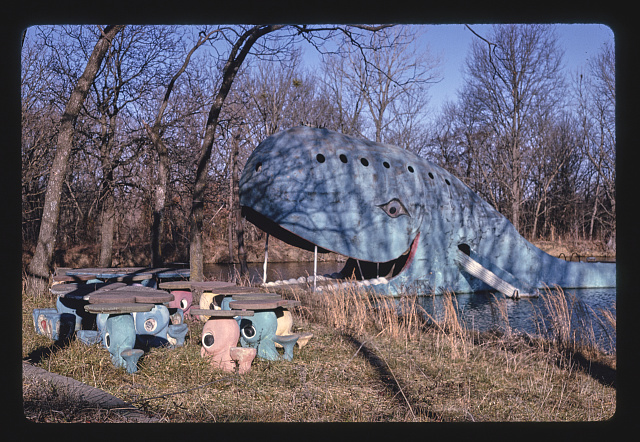
The Blue Whale was “fixed up” and is now a celebrity along Route 66. It draws many visitors from all over the world.
In Arizona, the town of Oatman started as a mining camp around 1903 and at one stage had numerous stores, bars, hotels, and even its own stock exchange. The first setback came when the mines shut down, but the final straw was in 1953 when it was bypassed by I-40.
In the 1960s, the entire town was all but abandoned. But with the revival of Route 66 it bounced back and is thriving today. Many call it a tourist trap, but hey, it offers free roaming donkeys and staged cowboy fights almost every day. Besides, the road from Kingman to Oatman is widely regarded as one of the most beautiful stretches of Route 66, and that road alone makes a visit well worth it.
These are situations where it was never completely abandoned. There are, however, plenty of examples along the route where sites like empty hotels, forgotten restaurants, and sometimes entire towns appear as if the inhabitants simply locked up and left.
Fine examples of these are (were!) the Gardenway Motel and the Diamonds restaurant, both close to the town of Pacific, Missouri. When the interstate opened, they tried to hang on, but the fact that the number of visitors went to almost zero caused them to shut down practically overnight. The Diamonds restaurant still stands shuttered, but the Gardenway Motel was recently razed and all that remains are the original sign and concrete slabs that now form a parking lot.
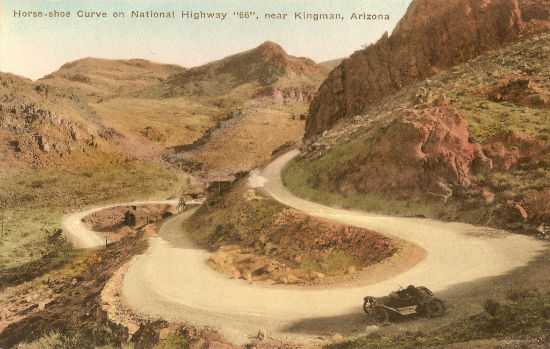
Along Route 66 you can even find a few towns that are abandoned with almost no inhabitants left. The town of Glenrio began as a railroad camp in 1903 on the border of New Mexico and Texas. At one stage it had several hotels, shops, a school, a newspaper, and even a post office. In the 1960s there were seven fuel stations, and the story goes that all of them regularly had queues of cars waiting to be served. In 1975, the interstate was opened and within a week most of the businesses were closed since there were no customers left.
These examples are sadly not suitable for a rehabilitation project since the investment would be huge, and there would be no way that money could ever be earned back.
There is also international component in some of these projects. Entrepreneurs and investors from South Africa, Netherlands, New Zealand, Austria, Israel, Germany, and other countries have transformed abandoned buildings into cafes and restaurants or renovated vintage motels.
Because Route 66 in its entirety is a destination, business have been opened in unlikely places such as Texola, Oklahoma, a ghost town on the Texas/Oklahoma state line. And communities such as Pontiac, Illinois, have used Route 66 to showcase what makes the town unique.
From its inception, Route 66 has been in a state of flux. That trend continues into the centennial and beyond as evidenced by repurposed service stations that also offer EV charging stations, abandoned segments of the highway being converted to bicycle trails, and innovative initiatives that renovate old bridges while preserving their historic attributes.
The Painted Desert Trading Post
There is, however, one factor that makes Route 66 interesting to foreign travelers. In a country like the Netherlands, you will have trouble finding an abandoned building, let alone an abandoned town. Therefore, visiting an abandoned town like Texola—with houses and cars standing vacant and, in one case, a house where there are even clothes left hanging in a cupboard—is a weird and new experience.
Of course, it is a story of sadness and poverty but at the same time it is of great fascination for many tourists. Perhaps one of the most talked about rehabilitation projects is the restoration of the Painted Desert Trading Post in Arizona.
The Trading Post was built in the early 1940s by Dotch Windsor and his wife Alberta. He chose a remote and lonely spot in the Painted Desert overlooking the Dead River where he sold food, cold drinks, fuel, American Indian rugs, and other souvenirs. The building consisted roughly of the front shop and living quarters in the rear. There was no water or electricity, and they relied upon a wind-powered generator and a well.
In 1948 they divorced. Dotch remarried Joyce Nevin in 1950, and in 1952, their only daughter was born. In 1958, the new interstate was completed, and Route 66 was bypassed. Business dried up almost completely. For a while, a living was made by tending cattle. But soon the trading post and the highway in front of it were abandoned and left to the harsh climate.
When interest in Route 66 returned in the early 1990s, the trading post was still there but deteriorating at a steady rate. The delicate building was regarded as one of the most special places you could visit on Route 66.
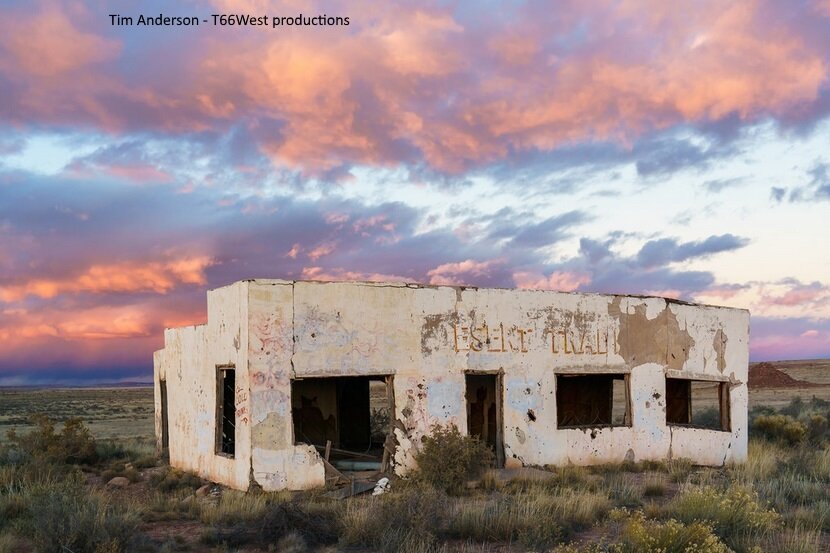
The owner of the property, a dentist living in Bakersfield, California, put it up for sale several times but it never sold. The owners initially wanted a ridiculous price for a building that is very remote. Besides the price, the building and the land it stands on are surrounded by a fenced-off active cattle farm. Because of that it is difficult to reach.
In 2018 the building once again came up for sale and a group of preservationists started the “Route 66 Co-Op,” a non-profit organization set up to protect the building and its history. In November 2018, the group started stabilizing the walls. And in September 2021 the work was finished by painting and lettering the outside.
The trading post will very likely never be used again as a location for any commercial enterprise, nor will it ever be used as a home again. Still, preserving the building is important as it stands as a memorial to the hardship, the hope, and the hard work experienced by the people in this remote location.
Visiting the Painted Desert Trading Post now is highly recommended, if only to view the crumbling roadbed and the abandoned building. Standing outside the building you can hear almost complete silence while imagining the hundreds of thousands of people who have travelled along this road and bought food, fuel, and souvenirs at places like this. It’s truly a special experience.