Trusted Writing on History, Travel, and American Culture Since 1949
SEARCH 75 YEARS OF ESSAYS!
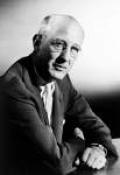
John Kenneth Galbraith

John Kenneth Galbraith (1908-2006) was an American economist, diplomat, and public intellectual. He was a longtime professor of economics at Harvard University and author of dozens of books on American history and economics, among them the best-selling trilogy American Capitalism (1952), The Affluent Society (1958), and The New Industrial State (1967). He also wrote several novels and published more than a thousand articles and essays for various publications, including for American Heritage.
Galbraith was active in politics, serving in the administrations of Franklin D. Roosevelt, Harry S. Truman, John F. Kennedy, and Lyndon B. Johnson. Under the Kennedy administration he served as U.S Ambassador to India. A proponent of post-Keynesian economics, Galbraith also served as deputy director of the Office of Price Administration (OPA) during World War II, where he helped to stabilize prices and wages in the economy during a time of shortages and rationing.
Galbraith received both the World War II Medal of Freedom (1946) and Presidential Medal of Freedom (2000) for public service and contributions to science.
Featured Authors