
Trusted Writing on History, Travel, and American Culture Since 1949
SEARCH 75 YEARS OF ESSAYS!
August 2006
The picture of John Brown that has come down through time is largely that of a madman, a fanatic. The leader of the failed 1859 raid on the U.S. arsenal at Harpers Ferry, Virginia, who hoped to touch off a massive slave rebellion, was deranged, a violent psychotic, “a brutal murderer if ever there was one,” wrote the historian Bruce Catton in 1961. But Evan Carton, an English professor at the University of Texas, argues otherwise in his thoughtful, well-researched new biography of Brown, Patriotic Treason: John Brown and the Soul of America.
Pork is not a partisan issue and not a new one. The term “pork barrel” is over a century old in its political sense, an allusion to the regular handing out of joints of salted pork, stored in barrels, by plantation owners to slave families before the Civil War. Because it is believed with nearly religious fervor among many politicians of all stripes that pork is the sure-fire means to lifelong reelection, it has proved impossible to kill. As Jesse Unruh, speaker of the California Assembly in the 1960s, famously explained, “Money is the mother’s milk of politics.”
Here’s a case in point.
The conservative Sen. Tom Coburn (R. Oklahoma) and the liberal Sen. Barak Obama (D. Illinois) have sponsored a bill, S. 2590, and have gathered 29 cosponsors of both parties.
In the last days of August, 15 years ago, the Soviet Union imploded.
The crash began with an abortive attempt to remove Mikhail Gorbachev from power, and it ended with a parliamentary decision to suspend the activities of the Soviet Communist Party. This last event was perhaps the most extraordinary of all: By a vote of 283 to 29, with 52 abstentions, the Soviet Parliament shut down the Communist party founded by Vladimir Lenin and his fellow revolutionaries. Citing party members’ roles in the “preparation and implementation of the state coup,” the government also assumed control of the party’s assets and archives.
A fatal blow had been struck against the tyrannical institution that had controlled Russia and the other Soviet republics for more than half a century. Margaret Thatcher, who had worked to undermine Communist Russia during the previous decade, triumphantly declared: “The forces of dictatorship and communism have been defeated, not only for now, but for a very long time to come.”
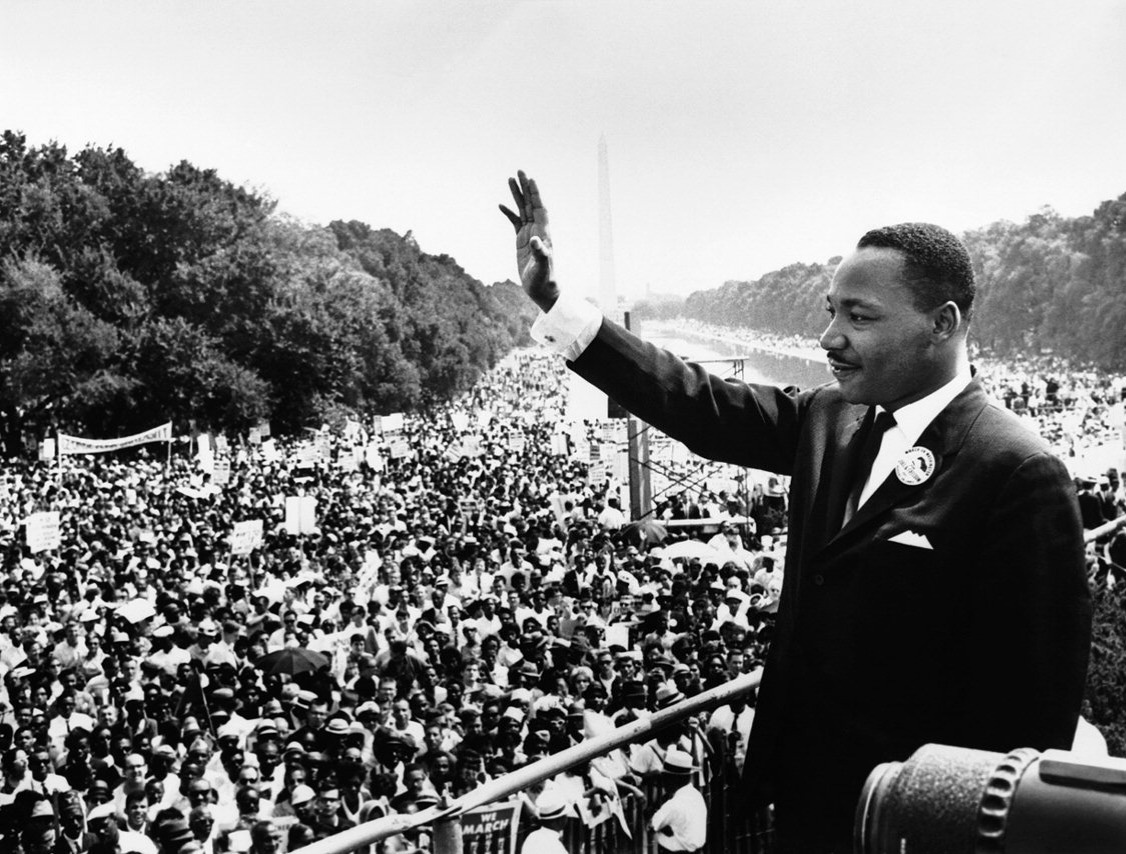
On August 28, 1963, at a mass gathering on the Mall in Washington, D.C., Martin Luther King, Jr., gave a speech that would become a beacon of the civil rights movement and that historians would rank with the greatest oratory in the nation’s history. Yet as he took the podium, he had no idea he was about to deliver an address for the ages. The most memorable parts of the speech weren’t even in his written text.
In the capsule biographies of Amelia Earhart, one brilliant highlight bleaches out the rest of 1932, her solo flight across the Atlantic in May. But on August 24, 1932, she completed an even longer trip, the fulfillment of a dream she had had for nearly a decade. Seventy-four years ago today, armed with a can of tomato juice, a couple hard-boiled eggs, and a bright-red Lockheed Vega monoplane, Earhart flew nonstop from coast to coast across the United States.
She had seen her first plane 25 years earlier, as a 10-year-old tomboy growing up in Kansas. “It was a thing of rusty wire and wood and looked not at all interesting,” she remembered. It wasn’t until she volunteered as a nurse at Spadina Military Convalescent Hospital in Toronto during World War I that she became intrigued by the aerial exercises of Canadian fliers all around that city. At the time planes were for her just something fun to watch, but the image of soaring wings against clouds would nag from the back of her mind for years to come.
In the years since the attacks of September 11, 2001, many declarations and taped messages from terrorist leaders have reached the American media. Not so long ago, however, such communications were rare. When terrorists released messages, they rarely reached audiences beyond the Muslim world. It was therefore very surprising when, 10 years ago, in August 1996, Osama bin Laden published a letter in a London newspaper directed specifically at the West. Printed in a pro-Palestinian paper called Al Quds Al Arabi, the message was titled “Declaration of War Against the Americans Occupying the Land of the Two Holy Places.”
In it bin Laden leveled criticism against the United States in a manner now familiar to most Americans, expressing rage at America’s military presence in Saudi Arabia and at continued sanctions against Iraq, and blasting the United States for supporting Israel. His declaration of war was an important indication of his rising power among Islamic fundamentalists, and it served to bring him further into the eye of the United States government.
John Hammond was the twentieth century’s greatest discoverer of popular musical talent, from Billie Holiday in 1933 to Stevie Ray Vaughan in 1982, with Count Basie, Charlie Christian, Aretha Franklin, Bob Dylan, and Bruce Springsteen in between. Nobody else in the music business ever had a string of discoveries remotely approaching Hammond’s.
“He seemed to know what America wanted to hear before America knew it,” writes Dunstan Prial, in his fine new biography, The Producer: John Hammond and the Soul of American Music (Farrar, Straus and Giroux, $27). When one stops to consider the difference between the worlds of Billie Holiday and Bruce Springsteen, one begins to grasp the uniqueness of what John Hammond accomplished. He had an amazing ear.
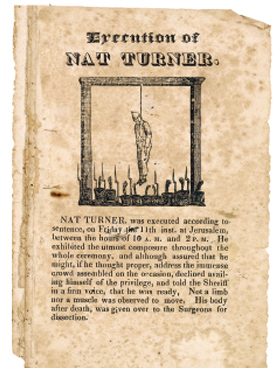
A hundred and seventy-five years ago today, a 30-year-old black slave named Nat Turner, supported by about 60 followers armed with guns, clubs, axes and swords, launched the bloodiest slave revolt in American history.
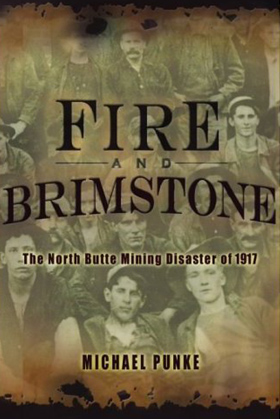
In June 1917, in a shaft in a copper mine in Butte, Montana, some miners were installing part of a new sprinkler system when one of them accidentally ignited a fire. An electrical cable insulated in oil-soaked rags caught flame, and the blaze spread up and down the mineshaft. Soon the mine began to fill with water and carbon monoxide. Within a few hours more than 160 miners were dead.
“Rum is an American term,” theProhibitionist’s Textbookproclaimed in 1877, “applied to an American invention.” Born in the seventeenth century, rum was one of the first mass-market products manufactured in the New World, and rum making was, after shipbuilding, one of the most important industries of the early colonies.
In his spirited new book, And a Bottle of Rum: A History of the New World in Ten Cocktails(Crown, $24), the travel writer Wayne Curtis enshrines rum in the pantheon of things American. “Rum,” he says, “is the history of America in a glass.”