
Trusted Writing on History, Travel, and American Culture Since 1949
SEARCH 75 YEARS OF ESSAYS!
September 2006
On this date in 1957, President Dwight D. Eisenhower ordered soldiers from the 101st Airborne Division into action. The enemy was not the Soviet menace in Europe but citizens of the United States—because they were intent on thwarting the court-ordered desegregation of public schools in Little Rock, Arkansas.
Images from Little Rock-of the violence that accompanied the crisis, the black youths confronted by hysterical hatred, the fixed bayonets that cleared the way for the children to attend classes-became enduring emblems of the struggle for civil rights.
In 1954, when 10 million children attended single-race schools throughout the South, the Supreme Court handed down its landmark Brown v. Board of Education ruling stating that “separate educational facilities are inherently unequal.” States were ordered to desegregate schools “with all deliberate speed.”
Frank Lloyd Wright described Kentuck Knob, a fieldstone and cypress dwelling he designed in 1953, as built “so hill and house . . . live together, each the happier for the other.” The house, nestled into a lush hill in Western Pennsylvania, remains out of view until you wend your way up a wooded rise and down a curving driveway. Then you are greeted by a wall of stone blocks broken only by a narrow file of windows running under the roof. It’s a little fortress-like. But inside, the rich interior opens up, for the southern wall is a continuous window that makes you feel as if you’re floating over the verdant landscape.
This remarkable home in the Laurel Highlands is a two-hour drive from Pittsburgh and ten minutes from Wright’s best known house, Fallingwater, which he designed in 1935. Kentuck Knob is less ostentatious but equally worth visiting. Fallingwater is austere in its elegance, while Kentuck Knob is warm, more an artful residence than an inhabitable work of art.
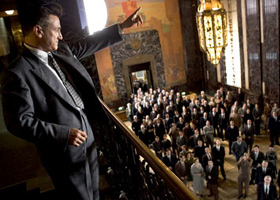
It was just ten years ago today, on September 21, 1996. A small group of people gathered on an island off the Georgia coast to celebrate a wedding. They had arrived there stealthily, with many of the members traveling under cover of night, over the course of several days. That was because the groom, aged 35, was a former assistant district attorney, the publisher of George magazine, and the son of a President—John F. Kennedy, Jr.
He was marrying Carolyn Bessette, a beautiful, fashionable 30-year-old who had recently left a public-relations job at Calvin Klein. Cumberland Island, accessible only by boat, is known for its natural beauty and its wild horses. If it had been a different couple, the wedding would probably have been notable only for its remote location.
Fame saved Andy Warhol. Lying in Columbus Hospital in New York City after being shot by Valerie Solanas, he was given up for dead, but when Mario Amaya, an art magazine editor, told the doctors that their patient was a famous artist, a specialist was brought in to revive him, giving him 19 more years of life—the years of Interviewmagazine, the cottage industry of commissioned portraits, and playing elder statesman to a new crop of pop artists, including Jean-Michel Basquiat.
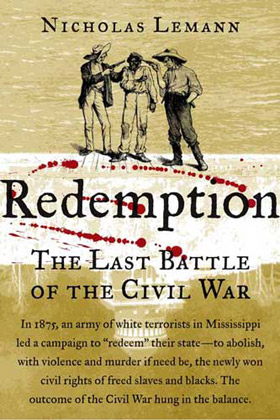
In his novel Sartoris, the great Mississippi writer William Faulkner asks his title character, Col. Sartoris, why he fought for the Confederacy. “Damned if I ever did know,” Sartoris answers.
The Black Dahlia brings together two of the most stylized masters of violence in American arts, Brian De Palma—it’s his first film in four years and just his third in this century—and the novelist James Ellroy, whose L.A. Confidential was made into a much-admired film by Curtis Hanson in 1997. De Palma has been known to overwhelm material by genre writers; his film of Stephen King’s Carriemade King’s talent seem small in comparison to his own. Ellroy’s novel, written in 1987, before he began his self-conscious attempt to become America’s Dostoyevsky, is very much a genre piece, but his often feverish sensibility is too powerful for even De Palma to tame.
The African-American past is an iceberg, still 90 percent submerged. Because so much material remains in family hands or lies piled in the unvisited attics and basements of libraries, newspapers, and even police stations, rich discoveries await. Currie Ballard, a historian in Oklahoma, has just made what he calls “the find of a lifetime”—29 cans of motion picture film dating from the 1920s that reveal the daily lives of some remarkably successful black communities.
The film shows them thriving in the years after the infamous Tulsa Riot of 1921, in which white mobs destroyed that city’s historic black Greenwood district, which was known as the Black Wall Street of America. Through the flickering eloquence of silent film we see a people resilient beyond anyone’s imagining, visiting one another’s country homes, parading through downtown Muskogee in some two dozen Packards, crowding an enormous church in Tulsa not long after the riots, during a gathering of the National Baptist Convention.
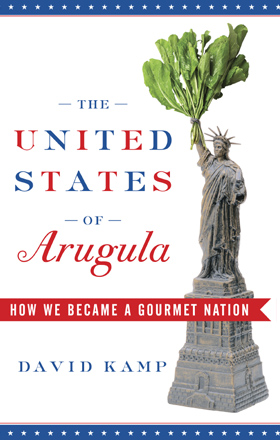
Is America at its culinary heart the land of fast food, of meals that are at once bland, uniform, and grossly unhealthy, as so many Europeans and disapproving Americans insist? Not according to David Kamp, author of The United States of Arugula: How We Became a Gourmet Nation (Broadway, $26). Kamp is beamingly upbeat about how our eating habits have evolved.
Five years ago today, 19 Al Qaeda terrorists armed with little more than box cutters seized control of four passenger airplanes, driving one of them into the Pentagon and two others into New York’s World Trade Center towers. The attacks killed more than 2,900 passengers, office workers, and first responders and forever altered Manhattan’s skyline, in the bloodiest foreign attack ever launched on America’s mainland. The fourth plane, United Airlines flight 93, crashed outside of Shanksville, Pennsylvania, after passengers wrestled back control of the plane. Everyone on board perished.