
Trusted Writing on History, Travel, and American Culture Since 1949
SEARCH 75 YEARS OF ESSAYS!
November 2006
People find all sorts of reasons to visit Frederick, Maryland. They go to browse through the many antiques stores and other little shops. To eat in the restaurants in the compact downtown area. To tour the 50-block historic district with its solid antebellum brick buildings and its elegant churches that led the poet John Greenleaf Whittier to call Frederick a city of “clustered spires.” They used to come to wage war.
“For three days I was nearly continually looking at the Rebel army passing,” noted Jacob Engelbrecht, a diarist and future Frederick mayor, in September 1862. The Rebels, soldiers of the Army of Northern Virginia under Gen. Robert E. Lee, passed through the town in the days before the bloody battle of Antietam. A photographer on a balcony of a downtown store took a picture of one Rebel column lined up in center of town where the old National Road crossed Market Street. In it the soldiers have their rifles on their shoulders, and a couple of them look quizzically up at the photographer.
Forty years ago today, Dr. Sam Sheppard carried an unloaded pistol in his pocket as he awaited the verdict in his second trial for having allegedly bludgeoned his wife to death. If convicted again, he planned to pull out the empty gun and die in the resulting fusillade from courtroom guards. Having spent 10 years behind bars, he said, “I wasn’t going back.”
His case has been called “the country’s most enduring murder mystery.” With its elements of wealth, violence, sex, conflicting stories, and dramatic reversals, it riveted the nation in the 1950s in a way that would not be repeated until the O. J. Simpson trial 40 years later.
On the evening of July 3, 1954, Sam and Marilyn Sheppard had dinner with a neighbor couple. Everything seemed normal in their suburban home, which sat on the shore of Lake Erie west of Cleveland. After dinner Dr. Sam, as he was called, dozed off on a downstairs couch. His wife, four months pregnant, and their seven-year-old son Chip slept upstairs.
Alger Hiss died 10 years ago today. The former State Department official and alleged Communist spy, who had served 44 months in a federal prison on perjury charges, had just turned 92, and he had failed in his lifelong quest to overturn his conviction and clear his name. But it must have given him a small measure of satisfaction to know that his chief tormenter, Richard Nixon, whom he outlived by two years, had died with a name little cleaner than his own.
At the time of his conviction, in 1950, Hiss had most recently been president of the Carnegie Endowment for Peace. He had degrees from Harvard and Johns Hopkins, past service as a law clerk to Supreme Court Justice Oliver Wendell Holmes, Jr., and cordial relationships with many of the nation’s most powerful. When Whittaker Chambers, an editor at Time magazine and ex-Communist, accused him in 1948 of having given classified documents to Soviet agents 10 years earlier, most of Washington loyally took Hiss’s side. Nixon, then a freshman congressman on the House Un-American Activities Committee, was one of Chambers’s few supporters.
In October 1851 a new novel titled The Whale was published in England. Almost nobody noticed. A little less than a month later, 155 years ago today, it came out in the United States with a different title, Moby-Dick. It got some good reviews, but it still didn’t bring its author fame or fortune.
Fifty years ago today, the nine justices of the United States Supreme Court struck down a local ordinance in Montgomery, Alabama, that mandated segregated seating on municipal buses. Affirming the earlier decision of a panel of three Circuit Court of Appeals judges, the justices effectively overturned the famous 1896 Plessy v. Ferguson decision allowing for “separate but equal” accommodations in public conveyances. Browder v. Gayle, the new ruling, signaled the successful end of the nearly year-long Montgomery bus boycott and ushered in a new era in civil rights activism.
The story of the Montgomery bus boycott has become legendary. On December 1, 1955, a black seamstress named Rosa Parks refused to yield her seat on a city bus to a white man. She was arrested and booked on charges of violating the city’s segregation ordinance. The black citizens of Montgomery then banded together and began a 381-day boycott of the city’s public-transit system. And during that boycott a previously unknown Baptist preacher named Martin Luther King, Jr., rose to national prominence at the age of 27.
This year marks the eightieth anniversary of the dedication of U.S. Route 66, born in 1926 and completed in 1938. What started as a link between Chicago and Los Angeles—a 2,400-mile hodgepodge of diagonal connections between farm towns across the Midwest and West—became a legend. Even half a century after the interstate system made it obsolete, Route 66 grips the public’s imagination like no other American highway. It has inspired a great novel, a chart-topping pop tune, a 1960s television series, and numberless road trips in search of America’s main street. Why?
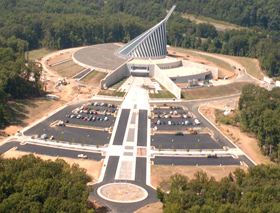
This Monday, November 13, 2006, the new National Museum of the Marine Corps Heritage Center opens in Quantico, Virginia, a 20-minute drive from Washington, D.C. Visitors to the 135-acre complex may be expecting an experience as somber as the Tomb of the Unknown Soldier and as buttoned up as a Marine dress uniform. If so, they’re in for a surprise.
I can’t think of a worse title for a movie than Fur, and I can’t think of a less appealing scene in any film ever made than the one in Fur where Diane Arbus, played by Nicole Kidman, shaves several pounds of hair from Robert Downey, Jr.’s body.
On November 9, 1906, a century ago today, The New York Timesran an article declaring that the President of the United States was about to violate “the traditions of the United States for over a hundred years.” Theodore Roosevelt had already done many daring and unexpected things. He had gained national renown for resigning his position in the Navy Department so he could fight in the Spanish-American War, and his brash personality remained a cornerstone of his popularity. On this particular November day, he was about to do something that no sitting President had ever attempted. He was going abroad.
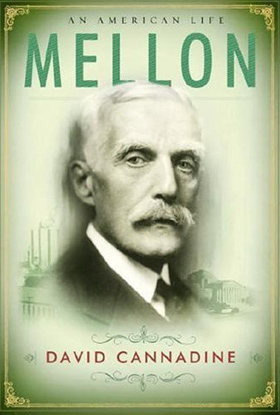
Andrew Mellon (1855-1937) was the most historically significant secretary of the treasury since at least Salmon P. Chase during the Civil War and perhaps since Alexander Hamilton himself. Appointed by Warren Harding in 1921 he served until 1932 and was so influential that Senator George Norris joked that “three presidents served under Mellon.”