Trusted Writing on History, Travel, and American Culture Since 1949
SEARCH 75 YEARS OF ESSAYS!
March 2007
The American Civil War was marked by a series of huge and bloody battles that did little to advance the cause on either side. A fight that took place on March 28, 1862, was the opposite—small but consequential. On this day 145 years ago the Confederate dream of establishing a Western empire fell victim to a Pyrrhic victory in rugged mountains of northern New Mexico.
Like their Northern counterparts, the Southerners imagined they had a “manifest destiny” to span the continent. Confederate president Jefferson Davis was convinced that a relatively small force led by an aggressive commander could push aside the Union troops on Indian duty in the West and take control of New Mexico, Colorado to the north, and perhaps even California.
Davis found his commander in Henry Hopkins Sibley, a 45-year-old veteran who had resigned his U.S. Army commission early in 1861. Brigadier General Sibley assembled a force of about 2,600 Texas volunteers and crossed the state to Fort Bliss, near El Paso. In December 1861 he began his winter invasion of New Mexico Territory, which included the present states of New Mexico and Arizona.
In his 1997 box-office hit Austin Powers: International Man of Mystery, Mike Myers plays an MI-6 agent cryogenically frozen in 1967 and awoken 30 years later. Boarding an airplane for the first time, he cries, “Here’s the stewardesses! Bring on the sexy stews!” “Excuse me,” one of them replies. “Did you say ‘stewardess’? We’re called ‘flight attendants’ now, thank you very much.”
Michael Wallis’s new book, Billy the Kid: The Endless Ride (W. W. Norton, 328 pages, $25.95), is the closest anyone has come to a definitive biography of the most mythical figure of the American frontier. On July 14, 1881, Billy the Kid was shot and killed by Pat Garrett in Fort Sumner, New Mexico. That is one of the few hard and concrete facts of his life—and even it has been challenged by generations of mythmongers.
Friday, April 29, 1961, was a big day for Bob Dylan. Dressed in his signature ragtag work clothes, and bearing a wide grin that only accentuated his soft, baby-faced features, the 20-year-old college-dropout-turned-troubadour sauntered into Studio A at the Columbia Records building, at Seventh Avenue and 52nd Street in Manhattan. He was going to cut his first album.
It wasn’t even a solo album. He had been invited to play backup harmonica for Carolyn Hester, a Texas-born folksinger who was laying down a collection of traditional songs. Hester didn’t need backup vocals, or even a backup guitarist. She could sing better than Dylan, and she had already enlisted the talents of Bill Langhorne, a guitarist with far superior skills to Dylan’s. She just needed a harmonica player.
As recently as the 1950s Virginia’s Natural Bridge was considered a great American landmark. It was advertised on barn sides as far south as Georgia and north into Pennsylvania. A limestone arch 40 feet thick and 100 feet long, it stands more than 200 feet high. It was carved out by a tributary of the James River over the course of 200 million years, and it has hardly changed since 1767, when the 24-year-old Thomas Jefferson got down on his hands and knees and crawled out onto a “parapet of fixed rocks” to peer over the edge of what he called “the most sublime of Nature’s works” and down at Cedar Creek 270 feet below. “Looking down from this height for about a minute,” he wrote, “gave me a violent head ache.”
The view up from below delighted him just as much. “It is impossible for the emotions, arising from the sublime, to be felt beyond what they are here,” he wrote, “so beautiful and arch, so elevated, so light, and springing as it were up to the heaven, the rapture of the spectator is really indescribable!”
At the end of the winter in 1964, just four months after the assassination of President John F. Kennedy, the nation’s eyes once again turned toward Dallas. On March 14, a jury there announced its verdict in the trial of Jack Ruby, the nightclub owner who had shot the President’s assassin.
Just days after Kennedy’s killing, Ruby had walked into the garage beneath the jail where Lee Harvey Oswald was being held, while police prepared to transfer the prisoner to another facility. At 12:20 p.m., as Oswald walked through a crowd of 70 police officers and some 40 or 50 reporters, Ruby stepped out from the throng and fired a single shot from a .38 caliber revolver into Oswald’s stomach. The President’s assassin was dead within hours, and Ruby was in police custody. Now, only four months later, he faced the judgment of his fellow citizens. At the end of a public and highly contentious trial, the court’s verdict was fierce: Ruby was guilty, and he must die.
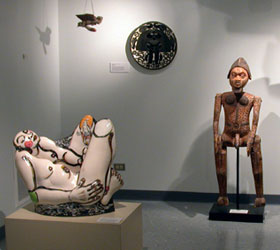
In 1938 the biologist Alfred Kinsey offered to teach a class on marriage at Indiana University—and stepped into a scientific vacuum. With human sexuality a subject never really discussed either inside or outside the academy, people knew next to nothing about actual sexual behavior. He spent the rest of his life trying to fill that void. The Kinsey Institute for Research in Sex, Gender, and Reproduction, now in its sixtieth year, continues his legacy by supporting pioneering research and sheltering a vast collection of materials related to sex. Nestled in Morrison Hall, an elegant brick and limestone building at the university, it also shows off its collections to the public, both in its gallery and on monthly tours.
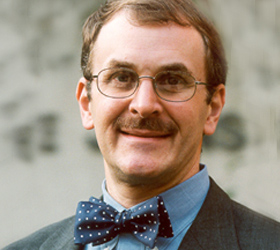
The new counsel to Secretary of State Condoleezza Rice talks about the uses of history, in Iraq and everywhere else wars are fought.
Up to a point, Eliot A. Cohen’s curriculum vitae looks like that of many high-flying American academics: a B.A., M.A., and Ph.D. at Harvard, academic posts at Harvard and Johns Hopkins, eight books, and so on. But he also was just named counselor to Secretary of State Condoleezza Rice.