
Trusted Writing on History, Travel, and American Culture Since 1949
SEARCH 75 YEARS OF ESSAYS!
October 2006
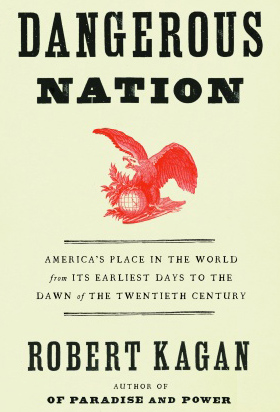
In 1813 one of America’s Founding Fathers wrote ebulliently about his nation’s untainted future. “Many hundred years must roll away before we shall be corrupted,” he declared. “Our pure, virtuous, spirited, federative republic will last forever, govern the globe and introduce the perfection of man.”
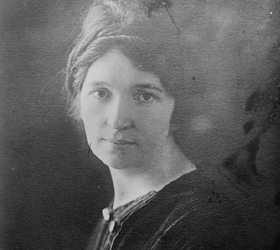
Ninety years ago today Margaret Sanger opened her first birth-control clinic, at 46 Amboy Street in Brooklyn, New York. With it she launched a new age for women’s reproductive rights and an enduring struggle over the role of the state in the private lives of Americans.
Soon after he landed in the New World, Christopher Columbus received from the natives a gift of some dried leaves. He wrote that the leaves “must be something of importance to these people,” but their significance remained a mystery—until two of his emissaries watched as the Indians rolled them into sticks that resembled toy muskets, “set one end on fire and inhaled and drank the smoke on the other . . . the people called these small muskets tobacco.”
Indians had cultivated and smoked tobacco for millennia; the explorers had never seen anything like it. Europeans burned herbs as incense and fumigant, but the notion of inhaling smoke into the lungs was exotic. Some considered the custom barbaric, the smoke a “wicked and pestiferous poison.”
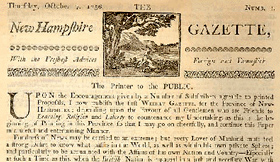
“Fondness for news may be carried to an extreme, but every Lover of Mankind must feel a strong Desire to know what passes in the World.” So wrote Daniel Fowle 250 years ago this week in the first issue of The New Hampshire Gazette, the oldest existing newspaper in the United States.
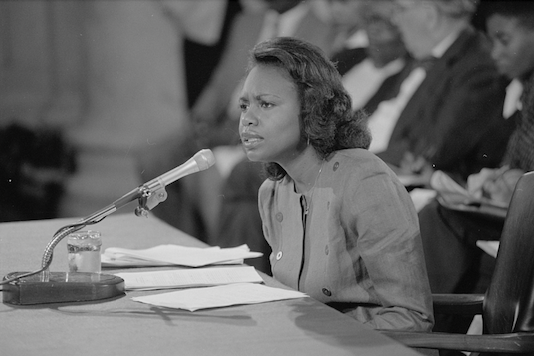
On October 11, 1991, fifteen years ago today, a witness gave testimony before the Judiciary Committee of the United States Senate of a kind never heard there before or since.
The Senate panel was deliberating on the nomination of Clarence Thomas, a 43-year-old appellate judge, to fill the seat on the U.S. Supreme Court left vacant by Thurgood Marshall. As in most confirmation hearings, the stakes were high and the atmosphere was tense. But on October 11, the hearings became more contentious than anyone would have imagined.
“I have killed the American,” Youssef Majed Molqi told the captain of the Achille Lauro. As Molqi delivered this news on the cruise ship’s bridge, the 69-year old Leon Klinghoffer’s corpse and wheelchair sank into the waters off the Syrian coast. It was October 8, 1985, day two of one of the most harrowing terrorist attacks of the 1980s.
The summer of 1985 had been bloody in the Mediterranean as the Arab-Israeli conflict spilled over into international waters. Palestinian terrorists killed several Israeli tourists in Cyprus; Israeli warplanes responded with a fierce attack on the Palestine Liberation Organization’s headquarters in Tunisia; and a Hezbollah-aligned organization hijacked a TWA flight and beat to death an American serviceman onboard. Despite this turmoil, the vacationers who embarked on the Achille Lauro in Genoa hardly imagined that the escalating violence would touch them.
When I first heard that a new multi-city Titanic exhibition was coming to San Francisco and several other places around the country, I had to wonder, is the public really still hungry for more details of the famous disaster? It’s not even the hundredth anniversary of the sinking, which will hit six years from now. Is the show premature? Or has this ship already sailed?
Martin Scorsese’s The Departedis a fascinating piece of Cuisinart filmmaking that brings together all the leading elements of gangster films in this young century. It has a plot from a Chinese film derived from a century of American gangster films—the monstrously successful (in the rest of the world that is; over here it’s a cult favorite) 2002 Hong Kong Chinese thriller Infernal Affairs.(The title was more than a pun, suggesting a descent to the lowest circle of Dante’s Hell, and I’m told the film’s Chinese title, Mou-gaan-dou, translates to the lowest level of Buddhist hell.) Scorsese claims not to have seen the Chinese film, directed by Wai Keung Lau and Siu Fai Mak, and worked from a translation of the original script. That’s probably true; certainly there is little to connect the two except for plot.
On October 3, 1955, two very different children’s programs made their television debuts. One was an extravaganza from an entertainment giant, the other a low-key affair dreamed up by a former television clown. Both were TV trendsetters, and both would be loved by successive generations of children.
The Mickey Mouse Club wasn’t the first children’s TV telecast, or even the first Disney one. Walt Disney himself had already been the host of Disneyland on ABC in July 1955, when the network had broadcast the opening of his revolutionary amusement park in a special cohosted by Ronald Reagan. That program had featured 24 young performers, the oldest of them 14. They had been introduced as the Mouseketeers, the stars of an upcoming children’s television show.