
The Painful Birth of the Sexual Revolution
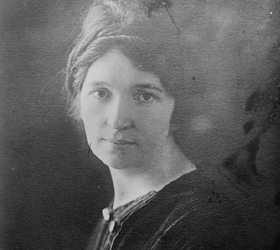
Ninety years ago today Margaret Sanger opened her first birth-control clinic, at 46 Amboy Street in Brooklyn, New York. With it she launched a new age for women’s reproductive rights and an enduring struggle over the role of the state in the private lives of Americans.
Sanger had earlier been a socialist organizer who worked with radical agitators like Emma Goldman, Mabel Dodge, Alexander Berkman, and “Big Bill” Haywood. When the militant Industrial Workers of the World (IWW)—the “Wobblies”—struck the textiles mills at Lawrence, Massachusetts, in 1912, Sanger was on the scene, helping evacuate the children of striking unionists. A year later, when the Wobblies called workers out of the mills in Paterson, New Jersey, she walked the picket line with other organizers and helped plan a famous benefit pageant at New York’s Madison Square Garden.
She was a trained nurse, and she showed an interest in women’s issues as early as 1912, when she began writing a regular column for the socialist New York Call titled “What Every Girl Should Know.” The following year officials at the U.S. Postal Service began monitoring and intercepting her columns on birth control and sexual hygiene, which violated the 1873 federal Comstock law prohibiting the use of the mails for the disseminating lewd or sexually explicit materials. In 1914 she stepped up her advocacy by starting a monthly newsletter, The Woman Rebel, which asserted the individual woman’s natural right to be “the absolute mistress of her own body,” and published “Family Limitation,” a 16-page pamphlet that outlined all the basic contraceptive strategies then available to women.
Indicted for violating federal obscenity laws, she jumped bail and fled to England, where she spent the better part of 1914 and 1915 as a welcomed celebrity among London radicals. Upon her return to the United States and the death from pneumonia of her five-year-old daughter, the federal government dropped all the charges against her, freeing her to test the limits of the law, which she did on October 16, 1916, when she opened America’s first birth-control clinic.
She urged women to triumph over “repression” and pursue “the greatest possible expression and fulfillment of their desires upon the highest possible plane.” This, she explained, was “one of the great functions of contraceptives.” A fiery propagandist who was, throughout her long career, a magnet for media attention, she saw her advocacy of family planning as linked to her various feminist and socialist commitments. Drawing on Emma Goldman’s speeches on population control, she called for working-class women to undertake a “birth strike” so as to deprive capitalists of the surplus labor that kept wages low and working conditions harsh.
Classical Marxists had urged the proletariat to be fruitful and multiply, the better to raise an international army of workers who would overthrow capitalism; Sanger and Goldman urged poor women to embrace “voluntary motherhood.” Only by limiting the size of their families could they stop providing “slaves to feed, fight and toil for the enemy—Capitalism.” By the 1920s Sanger had changed her approach. After flirting briefly with the eugenicist movement, she came to stress family planning as a personal matter. By eliminating the threat of unwanted pregnancy, she explained, birth control could help women realize their “love demands” and “elevate sex into another sphere, whereby it may subserve and enhance the possibility of individual and human expression.” Contraception wasn’t “merely a question of population,” she argued on another occasion. “Primarily it is the instrument of liberation and human development.”
In redefining sex as something legitimately pleasurable and personality-forming, rather than merely procreative, Sanger wasn’t necessarily breaking new ground. Since the turn of the century, American women had changed their sexual habits in profound ways. While only 14 percent of women born before 1900 had premarital sex before the age of 25, somewhere between 36 percent and 39 percent of women who came of age in the 1910s and 1920s lost their virginity before marriage. What’s more, the New Woman of the 1920s was more than twice as likely to experience an orgasm while having premarital sex as her mother before her. In short, a lot more women of the younger generation were having unmarried sex, regarding it as something not merely procreative, and enjoying it.
In more subtle ways, Americans had been redefining the meaning of sex for more than a century. Between 1800 and 1920 the number of children borne by the average American woman fell from roughly seven to three. This tells us that Americans were using a variety of crude birth control techniques, which included the rhythm method, prophylactics, coitus interruptus, and abortion. In a country that was experiencing rapid urbanization and industrial growth, parents no longer needed small armies of children to tend the family farm. In fact, in towns and cities, extra children often became an added expense rather than an economic asset. They cost money to feed, clothe, and shelter. Likewise as America’s economy grew more advanced, a great demand arose for managers, scientists, engineers, clerks, lawyers, salespeople, and other service-sector employees. These jobs required years of education and training. Parents who took these trends into account often had fewer children, and they could invest more time and resources in their smaller families.
As Margaret Sanger made birth-control information increasingly accessible, not everyone appreciated her efforts, of course. Nine days after she opened her clinic, the New York police shut it down. She was sentenced to, and served, 30 days in prison. She appealed, and in 1918 an appellate court affirmed the legality of doctor-prescribed contraception. It was a partial victory. Sanger could legally operate her clinic, but only under the supervision of a staff doctor. Insofar as there were few women in the medical profession in 1916, the ruling effectively entrusted the fate of women’s reproductive services to men.
Ninety years later, Americans continue to do political and rhetorical battle over the regulation of sex and reproductive services. The questions that Margaret Sanger raised in 1916 remain, as ever, a point of tremendous controversy. The war she started is not over.