
Trusted Writing on History, Travel, and American Culture Since 1949
SEARCH 75 YEARS OF ESSAYS!
November 2007
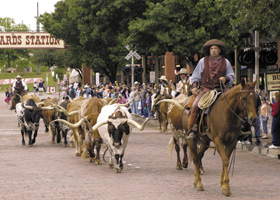
Dallas and Fort Worth sizzle like a double-yolked egg on the Texas plain, shaped by a history of vast open spaces, of cattle and oil and the fortunes they spawned. But the differences between the two are big, and they can be defined by Fort Worth’s claim to be “where the West begins.” That leaves a demarcation that would seem to float between the yolks, somewhere around the Dallas–Fort Worth airport, which the two share.
In May 1844 dozens of prominent Americans crowded into the chambers of the United States Supreme Court, then in the Capitol Building in Washington, to see Samuel F. B. Morse instantaneously send a message to a colleague in Baltimore. Morse’s device, a study in cogs and wires, represented a new age, in which information and ideas could jump a whole continent in seconds rather than weeks or months. It was appropriate that the first message he sent, lifted directly from the Old Testament, was, “What hath God wrought.” For Daniel Walker Howe, author of What Hath God Wrought: The Transformation of America, 1815-1848 (Oxford, 904 pages, $35), that transmission was a watershed event in the social and political development of the United States.
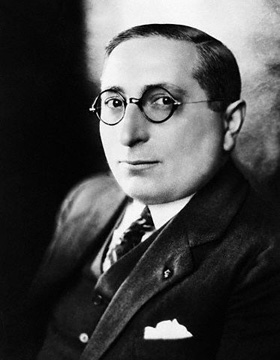
November 28, 1907, was a big day in the history of dreams. On that day, exactly 100 years ago, a half-educated scrap-metal dealer opened a 600-seat movie theater in a converted burlesque house in Haverhill, Massachusetts. It was the beginning of a climb that would take him to the top of the most important movie studio in the world. Two decades later, Louis B. Mayer would add his name to the company destined to set the pace for Hollywood through its golden years: Metro-Goldwyn-Mayer.
At about 10:25 on the morning of November 27, 1978—29 years ago today—William Melia, an engineer at San Francisco’s City Hall, noticed a man pacing nervously outside his first-floor window. He recognized the man as Dan White, until recently a San Francisco city supervisor—the equivalent of a city council member. Melia stepped out of the room to take a phone call, and he heard a window open and someone climb through it. He returned and saw that it was White. “I had to get in,” White said. “My aide was supposed to come down and let me in the side door, but she never showed up.” He turned and left, heading to the mayor’s office. Unknown to Melia or anyone else, White had a loaded .38 revolver in his jacket pocket. Over the next half-hour, he would murder the mayor and one other man.
Absent from the list of robber barons recently reconsidered has been Cornelius Vanderbilt, known to everyone as the Commodore. Indeed, the last major biography of him was Wheaton J. Lane’s Commodore Vanderbilt: an Epic of the Steam Age, published in 1942. This is a pity, as the Commodore was one of the first and one of the most remarkable of the men who made great fortunes in nineteenth-century America.
For longer than most of us can remember, the classic American Thanksgiving has combined three essential activities: watching the Macy’s parade in the morning, watching football in the afternoon, and eating turkey in the evening. Followed the next day by a trip to the mall to get a jump on Christmas shopping. Thanksgiving has come—or gone—a long way since whatever happened with the Pilgrims at the holiday’s traditional first appearance, at Plymouth Colony in 1621.
Before nylon—and before Lycra, Kevlar, and Teflon—DuPont meant gunpowder. For a hundred years after arriving in America, the du Pont family devoted itself exclusively to the manufacture of explosives. During the 1800s, powder making was a ubiquitous and at times highly lucrative industry across the United States. Few traces of the dangerous, dirty, and essential trade remain, but an important exception is the Hagley Museum and Library, just outside of Wilmington, Delaware, the site of the du Ponts’ first mill and the family’s center of operations for generations.
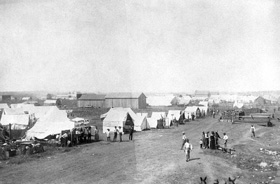
A century ago today, on November 16, 1907, Oklahoma became the forty-sixth state. Oklahoma City, the state capital, and Tulsa are both holding lavish events today, with parades and fireworks. So is Guthrie, which was once the state capital and, before that, the site of a hectic 1889 land rush. We can’t make it to any of those, but we’re saluting the occasion by letting you know of the best places to go anytime to take in Sooner State history.
On November 14, 1889, 118 years ago today, Nellie Bly, an intrepid reporter for Joseph Pulitzer’s New York World, set off to circle the world faster than Phileas Fogg in Jules Verne’s 1873 novel Around the World in Eighty Days. No one had ever tried such a thing. “’I wish I was at the other end of the earth!’” she later recalled thinking. “’And why not?’ the thought came: ‘I need a vacation; why not take a trip around the world?’”
She headed off as one woman alone, taking nothing but a carry-on-size bag, determined to move at lightning speed. Her dispatches to the World from the trip would cement her status as America’s most famous female journalist—if not America’s most famous journalist, period. She had done groundbreaking reporting before the journey, but this would be the zenith of stunt journalism, a genre she had single-handedly invented.