
Trusted Writing on History, Travel, and American Culture Since 1949
SEARCH 75 YEARS OF ESSAYS!
November 2007
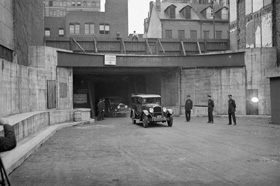
One Saturday in the autumn of 1927, 20,000 pedestrians walked through the brand-new Holland Tunnel shouting and singing and listening to their voices echo off the glistening white-tile walls. President Calvin Coolidge and a throng of dignitaries had that day dedicated one of the engineering marvels of the age. Then, just past midnight on Sunday, November 13—80 years ago today—the tunnel opened for traffic. A delivery truck bound for Bloomingdale’s, the department store, was the first paying vehicle to pass through the longest underwater vehicular tunnel in the world.
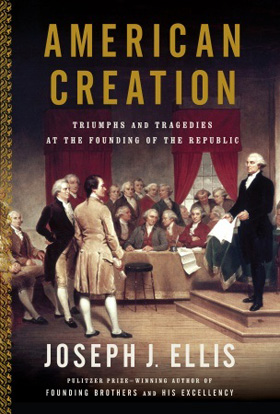
Raymond Chandler is the most influential mystery writer since Sir Arthur Conan Doyle. His leading advocates, including W. H. Auden, Clive James, and even, grudgingly, Edmund Wilson, have argued that he transcends the genre of detective fiction and that his books should be simply considered literature.
No one denies that Chandler’s influence on popular culture has been enormous: The Big Sleep, the Bogart-Bacall vehicle directed by Howard Hawks, is still regarded (along with John Huston’s film from Dashiell Hammett’s book The Maltese Falcon) as one of the two greatest American detective movies ever made, and Chandler’s books and film scripts (most notably for Billy Wilder’s Double Indemnity and Alfred Hitchcock’s Strangers on a Train) helped define the concept of film noir, which continues to influence writers as diverse as the Japanese novelist Haruki Murakami and the graphic novelist Frank Miller, who is set to direct a film version of Chandler’s Trouble Is My Business.
When engineers make mistakes, the results can be both spectacular and expensive. And if someone happens to be at the right place at the right time with a movie camera, immortality of the sort no engineer wants is inevitable. The collapse of the Tacoma Narrows Bridge on the morning of November 7, 1940, only four months after it opened (and 67 years ago today), is the perfect example. The film of itshot by the owner of a local camera store, Barney Elliott, made newsreels all over the world and has appeared endlessly on television and in physics classes ever since. It ranks right up there with the destruction of the Hindenburg, Pearl Harbor, and, more recently, the eruption of Mount St. Helens on the list of all-time great film clips.
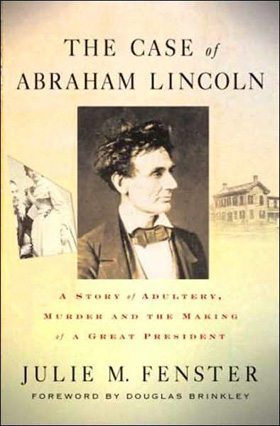
The message from President Abraham Lincoln was dated November 5, 1862—145 years ago today. It was terse and unadorned. “By direction of the President,” it said, “it is ordered that Major-General McClellan be relieved from the command of the Army of the Potomac, and that Major-General Burnside take the command of that army.” The recipient of the order, George B. McClellan, should not have been surprised.
Relations between Lincoln and McClellan had been strained for months. Lincoln favored a far more aggressive strategy against the Confederacy than McClellan wanted to adopt, and the two men increasingly disagreed on tactical matters as well. Still, less than two years into the Civil War, removing his commanding officer was a dramatic step for Lincoln to take. By doing so, the President cemented his antagonism with McClellan and enabled the general to act as an advocate for Lincoln’s political opponents. But at the same time, Lincoln brought the Union Army a little closer to a winning military strategy.
Ridley Scott’s American Gangster is based on such a remarkable real-life character that it’s amazing the story took so long to get to the big screen. Frank Lucas, played by Denzel Washington, was the second great black crime figure in America, the first being his mentor, the legendary Harlem gangster Ellsworth “Bumpy” Johnson (played by Laurence Fishburne twice, in The Cotton Club and Hoodlum), who died in 1968. Lucas, a country bumpkin from North Carolina who quickly adapted to an urban environment, did his boss one better: he became the first black criminal entrepreneur to beat the Mafia at its own game and become, in effect, a criminal CEO.
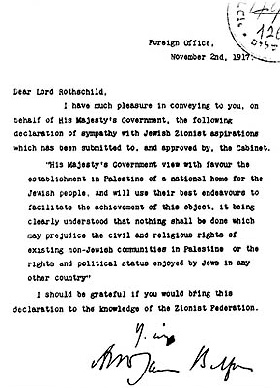
Ninety years ago today, on November 2, 1917, Arthur James Balfour, the British foreign secretary, sent to Lord Rothschild, an influential figure in the British Zionist Federation—a group advocating the creation of a Jewish homeland—what became known as the Balfour Declaration. The document is widely considered to have been the first step toward the birth of the nation of Israel. It also was the cause of worldwide puzzlement and disagreement about just what England was promising to whom.
The whole Balfour Declaration is only 129 words long:
Foreign Office
November 2nd, 1917
Dear Lord Rothschild,
On Friday, November 1, 1918, the deadliest rapid-transit crash in American history occurred in Brooklyn, New York. An elevated train driven by an unqualified and inexperienced motorman derailed in a tunnel and killed nearly 100 rush-hour commuters. The accident is largely forgotten today, but it was an enormous shock at the time.
New York City’s rapid-transit system was one of the first in the country, dating back to the 1860s. The Brighton Beach Line—the line of the Malbone Street Wreck—had been running since 1878. The safety of the city’s trains, however, was spotty at best. On August 7, 1899, The New York Timescontained seven separate stories of mass-transit-related injuries in one day—including the tragedy of a seven-year-old whose legs had been severed by a Brooklyn train. Nevertheless by 1918 the city’s subways and elevated lines were used by some 2 million passengers per day.