
Trusted Writing on History, Travel, and American Culture Since 1949
SEARCH 75 YEARS OF ESSAYS!
November 2006
This month has been a big one for video game enthusiasts, with the near-simultaneous releases of Sony’s PlayStation 3 and Nintendo’s Wii home game systems. And there are a lot of enthusiasts. According the video game industry’s trade group, the Entertainment Software Association, they spent a staggering $7 billion on video games last year. It’s hard to believe that such a popular pastime began just 34 years ago today, on November 29, 1972, with the release of Pong. The record-shattering popularity of that unassuming coin-operated tennis simulation established the nascent video game industry and launched it on its rise into a multi-billion-dollar entertainment powerhouse.
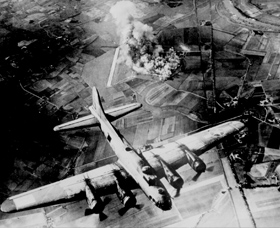
My father was an infantryman in World War II; his brother-in-law was a ball-turret gunner on a B-24. A few years ago my father invited his brother-in-law to a reunion of his infantry division. “I thought you might like to meet some people who fought in the war, before they all disappear,” he said. One of the merits of Donald L. Miller’s Masters of the Air: America’s Bomber Boys Who Fought the Air War Against Nazi Germany (Simon & Schuster, 688 pages, $35) is how completely it gives the lie to that little joke.
We are all born small, but given the right genes and a rich environment, even the tiniest can grow into giants. On November 26, 1976, the Office of the Secretary of State of New Mexico awarded a trademark to a four-man Albuquerque startup headquartered in a two-bedroom apartment. In the 30 years since the day its name was first registered, Microsoft has grown to be the highest-earning technology company in the world.
The decade of Microsoft’s birth, quite recent by most standards, is antiquity in the computer age. Yet a stereotype survives of the basic disco-era computer enthusiast: an unkempt, college-age male, hunched, fever-eyed, over a box of tangled wires and circuits in his garage. He may never make a dime from his efforts; he just wants to play around with the machine, find out what it can do, and share the results with his friends, computer hobbyists around the world.
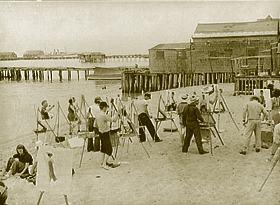
The Pilgrims they never were. That word came in long after they all were dead. They were instead Separatists, who took issue with England’s prevailing religious doctrines, and then, after migrating, Holland’s. They decided to get away to the New World. There were some 50 of them. With insufficient resources to finance an ocean trip, they took on a similar number of people with passage money who for one reason or another wanted to leave Europe. They called themselves the “saints,” their fellow travelers “strangers.”
“To see life; to see the world . . . to see and to take pleasure in seeing; to see and be amazed; to see and be instructed.” With these words, Henry Luce persuaded his board of directors at Time Inc. to risk starting a new magazine. He proposed that Dime (that was to be its newsstand price) rely almost exclusively on pictures to tell stories. Seventy years ago today, on November 23, 1936, the company published the first issue of what would turn out to be one of the most influential magazines in history. They had changed its name to Life. It was so successful it almost ruined the company.
Life lasted in its original form for 36 years, from the thirties through the sixties, filling the gap between rotogravure and television. It became an arbiter of American taste and left behind photographic images that remain emblems of their turbulent era.
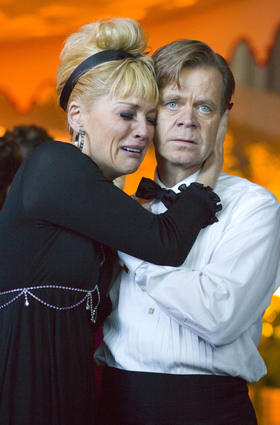
In the opening line of his new biography, Walt Disney: The Triumph of the American Imagination (Knopf, 880 pages, $35), Neal Gabler dispels what is assuredly the most enduring, and most bizarre, myth about his subject. Walt Disney was not—we repeat, not—cryogenically frozen upon his death in 1966.
His body was cremated, and his ashes were interred at the Forest Lawn Cemetery, in Glendale, California. Gabler writes that “the persistence of the rumor, however outlandish, testified . . . to a public unwillingness to let go of him, even to the point of mythologizing him as an immortal who could not be felled by natural forces.”
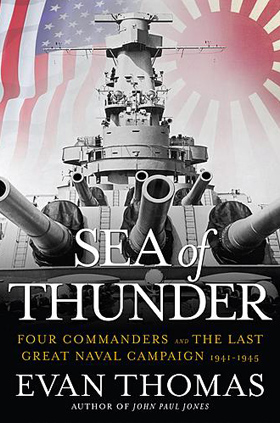
In the autumn of 1944 a battle was fought in the seas around the Philippines that was “confused, tragic, deadly, heroic, and it is largely forgotten.” It was the culmination of centuries of naval warfare, the swan song of the battleship, the final occasion on which massed ships confronted one another at gun range. It was, Evan Thomas declares in his masterly new book Sea of Thunder: Four Commanders and the Last Great Naval Campaign (Simon & Schuster, 432 pages, $27), an account of the naval war in the Pacific, “the last and largest naval battle in history.”
On November 26, 1863, the Centralia, Illinois Sentinelreported on a speech President Abraham Lincoln had made at the dedication of the Gettysburg National Cemetery the previous week. According to the paper, Lincoln’s address began: “Ninety years ago our fathers formed a Government consecrated to freedom.”