
Trusted Writing on History, Travel, and American Culture Since 1949
SEARCH 75 YEARS OF ESSAYS!
December 2007
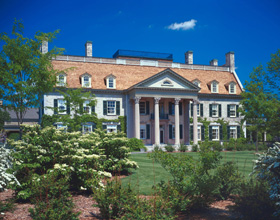
The day is fast approaching when a camera that records pictures on film seems as strange to young people as a wind-up Victrola. Someone who has grown up snapping images on a cell phone can hardly relate to sending film away for processing. Show them how this dated technology came about, how it evolved, and how it changed our world, with a visit to George Eastman House, in Rochester, New York.
It’s the world’s premier photography museum, and its curators have amassed a detailed and fascinating record of the history of photography. They continue to track developments even as pixels replace grains of silver iodide.
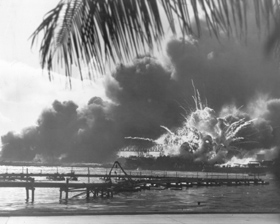
Franklin Roosevelt was right when he declared that December 7, 1941, was “a date which will live in infamy.” Today, 66 years later, the attack on Pearl Harbor continues to make its importance felt. Since the attacks of September 11, 2001, young Americans understand as never before what it means to be struck without warning, with devastating consequences. Few, though, can really imagine the awful proportions of that moment in the Pacific.
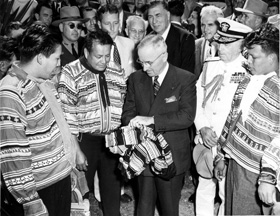
Harry Truman’s name does not usually appear at the top of lists of great conservationists. Sure, he ended World War II, guided America through the beginning of the Cold War, and led his country into the battle on the Korean peninsula. But he also was a leader in the struggle to protect the nation’s environmental birthright. On December 6, 1947—60 years ago today—the former Missouri senator stood in a small Florida town and dedicated America’s newest national park, a multimillion-acre marshland called the Everglades.
When Tom Brokaw began talking with longtime friends and colleagues about writing a book about Baby Boomers, many of them responded with nervous laughter: “What are you going to call this one? The Worst Generation?”
The reference, of course, is to his best-selling The Greatest Generation, which celebrated all those Americans who came of age during the Great Depression and fought and won the “good war,” World War II, both at home and abroad. Brokaw also encountered more than a few boomers who insisted that they, not their parents, were the greatest generation: “After all, they said, they were the largest, the best educated, and the wealthiest generation in American history. More important, many believed they had stopped a war, changed American politics, and liberated the country from the inhibited—and inhibiting—sensibilities of their parents.”
In Alfred Hitchcock’s 1959 classic North by Northwest, Cary Grant escapes from New York by train and meets Eva Marie Saint in an elegant dining car as the Hudson River rolls by in the background. The train was the 20th Century Limited, and when the film was made it was still the “Greatest Train in the World,” as the New York Central Railroad had long boasted. But eight years later, on this day in 1967, the 20th Century completed its final run. And that was the end of the line for regular luxury train travel in the United States.
Railroad executives had conceived the 20th Centuryduring the 1890s. It was the brainchild of George H. Daniels, the New York Central’s chief passenger agent. Fast limited-stop trains between New York and Chicago had been tried as early as 1875, but Daniels understood that combining speed with luxury would both attract customers and give the company cachet. He ordered a special train to carry New Yorkers to the 1893 Chicago World’s Columbian Exposition, making the 960-mile trip in an astounding 20 hours, at speeds sometimes approaching 100 miles an hour.