
Inside the Mansion of American Song
Most people couldn’t write a decent song if you held a gun to their head. Perhaps one in a million can write one that becomes a big hit before fading away or becoming a period piece. But to be able to write a song that is both catchy and imperishable, that the public never tires of hearing, that musicians never tire of playing, that lives forever in the human soul, outside of time, is the rarest of artistic gifts.
And yet for half a century, from the 1910s to the 1960s, the United States was home to an extraordinary number of geniuses who turned out such songs by the hundreds, songs that became the standards of a whole new musical genre, the American Popular Song.
There were of course the “big five,” Jerome Kern (born 1885), Irving Berlin (1888), Cole Porter (1891), George Gershwin (1898), and Richard Rodgers (1902). But there were many others, such as Harold Arlen (“Over the Rainbow”), Jule Styne (“Diamonds Are a Girl’s Best Friend”), Hoagy Carmichael (“Stardust”), Duke Ellington (“Solitude”), Leonard Bernstein (“Tonight”), and Frank Loesser (“Somebody, Somewhere”), who are only slightly less celebrated and often equally prolific. And, of course, there were the lyricists who inspired and were inspired by the composers who didn’t write their own lyrics, such as P. G. Wodehouse, Ira Gershwin, E. Y. Harburg, Dorothy Fields, Lorenz Hart, and Oscar Hammerstein II.
For some of us, these songs simply are music. Operas and symphonies and lieder and chamber music are all very nice, even thrilling at their best. But when it comes down to it, what we want to hear, need to hear, over and over and over, is “Someone to Watch Over Me,” “The Last Time I Saw Paris,” “So in Love,” “Cheek to Cheek,” and “If I Loved You.”
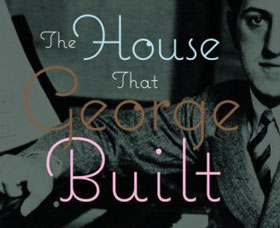
Many books have been written about these extraordinary men and women and the art they made into the poetry of their age. Now we have a new one, The House That George Built: With a Little Help from Irving, Cole, and a Crew of About Fifty, by the novelist and essayist Wilfrid Sheed (Random House, 368 pages, $29.95). The book is not so much a history as one man’s cheerfully idiosyncratic take on this vast and complex subject. As such, it is opinionated, somewhat curmudgeonly, less than comprehensive, sometimes erroneous about the facts, and a great pleasure to read. Reading The House That George Built is like spending the evening with a gifted raconteur as he monopolizes the conversation about a passion of his. It is an evening well spent, even if you disagree with much of what he says.
As the title makes clear, Mr. Sheed thinks George Gershwin stands above all the others, the Zeus of their musical Mount Olympus. Obviously Gershwin’s jazz-and-blues-dominated style particularly appeals to Sheed. And yet Gershwin was half a generation younger than Jerome Kern and a decade younger than Irving Berlin. When Gershwin was a teenager he heard a song at a wedding that so impressed him that he went up to the bandleader and asked for its name. It was Jerome Kern’s almost unbearably beautiful “They Wouldn’t Believe Me.” So who influenced whom?
Sheed is also clearly more interested in the music than in the lyrics, and he rather pooh-poohs the latter, stating that while a great tune can survive a mediocre lyric, the reverse is never true. That’s certainly correct, although much of the work of Lerner and Loewe tests that theory. But what differentiates the American Popular Song from all other song styles is not only its deep influences of jazz and blues and its syncopation—creating a sound and a style never heard before—but its lyrics.
In opera and lieder, after all, the singers much of the time might just as well be singing dumm-de-dumm-dumm for all the audience can understand (even when they speak the language). But in the American Popular Song, the lyrics are equal partners with the music, and the two together produce a powerful artistic synergy. Just consider one of Rodgers and Hart’s most famous songs, “Falling in Love with Love.” The music is a signature Rodgers waltz, as sunny and as beautiful as they come. But it is set in a minor key, to match Hart’s masterful lyric that is so achingly sad (“Caring too much is such/ A juvenile fancy./ Learning to trust is just/ For children in school”).
Sheed also cares more for the songs than for the media from which they came, if they did not stand alone. He clearly resents the fact, for instance, that Richard Rodgers stopped writing songs with Lorenz Hart that were merely dropped into plays—and in which the music always came first—and started writing musical plays with Oscar Hammerstein, where the songs arose from the drama and therefore the lyrics usually came first.
Indeed, he resents the fact that so many composers followed Rodgers in writing complete scores rather than single songs, especially where the plays involve characters and plots for which jazz and blues are an inappropriate musical language. He rarely misses a chance to dis the man he regards, correctly, as the chief fomenter of this change, Oscar Hammerstein, often getting it wrong. (Hammerstein, for instance, was a meticulous dialectician, not a user of “all-purpose slang.” Nor did he always write the lyrics first with Rodgers. “Edelweiss” is a famous case where the music came first.)
But none of this really matters. Sheed knows his stuff backwards and forwards, even if he sometimes lets his prejudices get the better of him (as which of us do not?). His short biographies of the major figures are psychologically astute and often spot-on, his anecdotes illustrative of his points as well as entertaining.
In this elegantly written and thoroughly enjoyable book, a man of passion and wit ponders a great question: how so much genius could have found itself in the same place at the same time and poured forth so much music that will live as long as people need to whistle a happy tune, or a sad one, or even a tune that is both at the same time.