
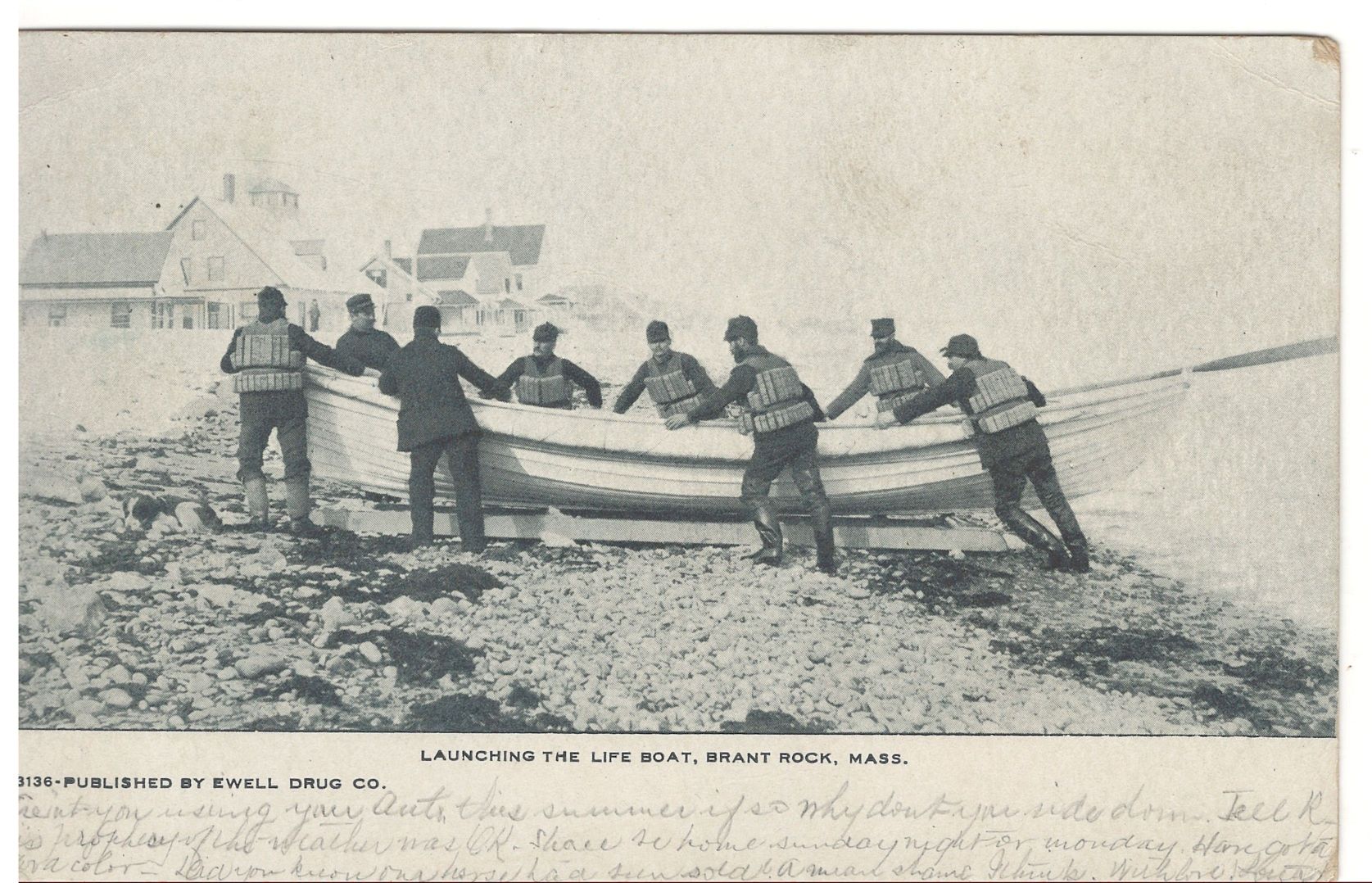
In 1803, members of the Humane Society began thinking about ways not merely to shelter shipwrecked seamen but to go out and rescue them. Inspired by the American whaleboat, they commissioned a Nantucket man named William Raymond to design a boat that could be launched into the surf and rowed out to a wreck. The first boat was built in 1807 by George Lawley & Son, and later a lighter and stronger design was invented by Marblehead boatbuilder William Eddy.
The lifeboats were not standardized but pretty much alike. They ranged in length from roughly 24 to 30 feet, were steered with a long oar, and were double-ended, reducing the chance of broaching on the return trip. Almost all the boats were clinker-built, or lapstraked, with the lower edge of each plank overlapping the top edge of the plank below. (The planks were cedar, which was both strong and lightweight, and the frames were white oak.)