
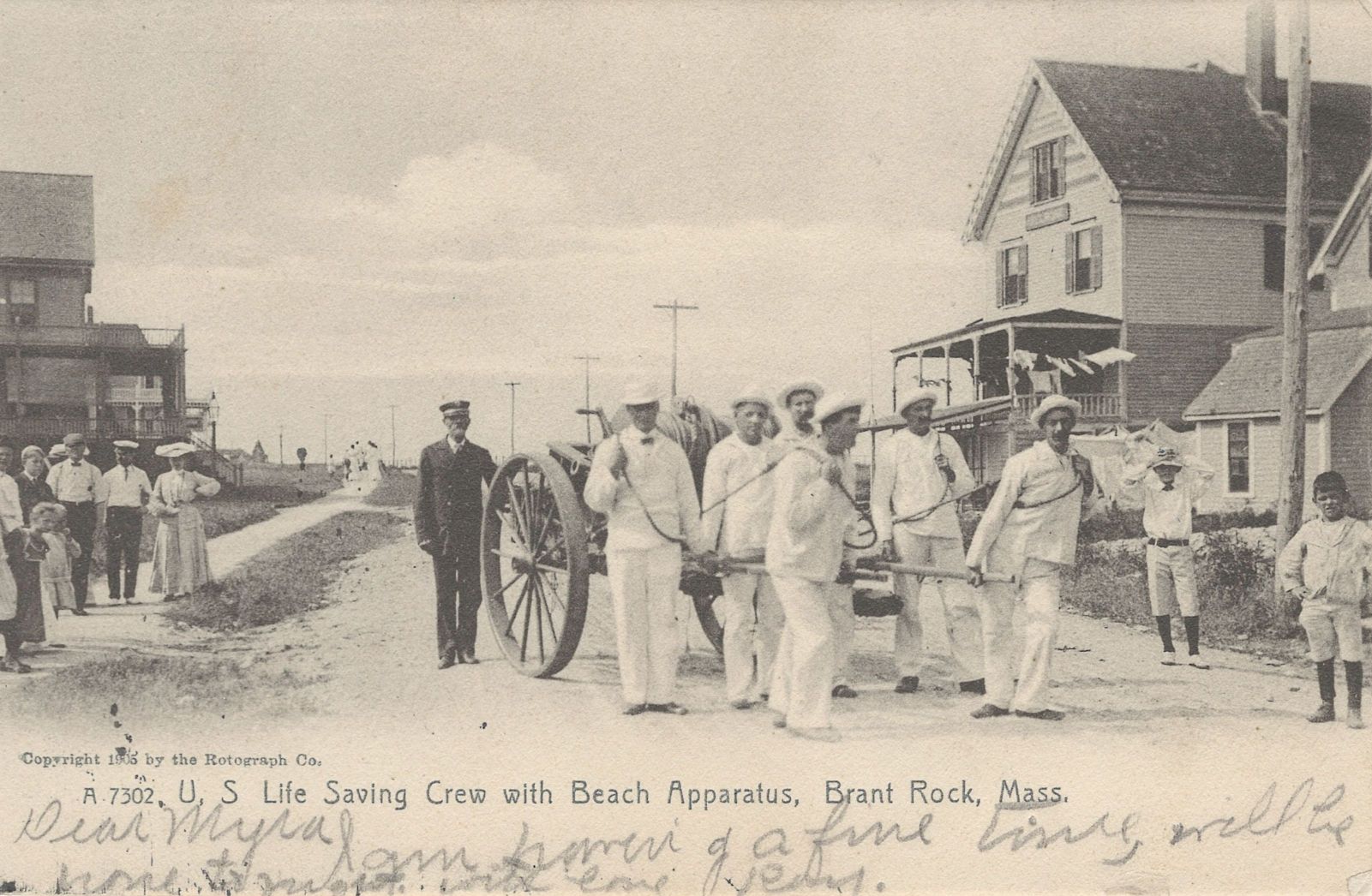
In addition to lifeboats, the Humane Society and USLSS also experimented with other ways to rescue people at sea — including by shooting a line out to a wrecked or stranded vessel. At the end of this line was a block and tackle and a tally board, a wooden plaque with instructions, in both French and English, for fastening the block high up on a mast and using it to pull aboard a sturdy hawser.
Meanwhile the crew on the beach would quickly erect a sturdy, ten-foot-tall X-shaped support, called a crotch, and anchor it in the sand. When the near end of the hawser was passed over the top, it created a kind of zip-line that could be used to ferry sailors to shore.