Fort Ticonderoga's expansive collection of 18th-century artillery — the largest in the Western Hemisphere — tells a complicated American story.
-
Fall 2026
4 months ago By Edwin S. Grosvenor Volume71Issue4
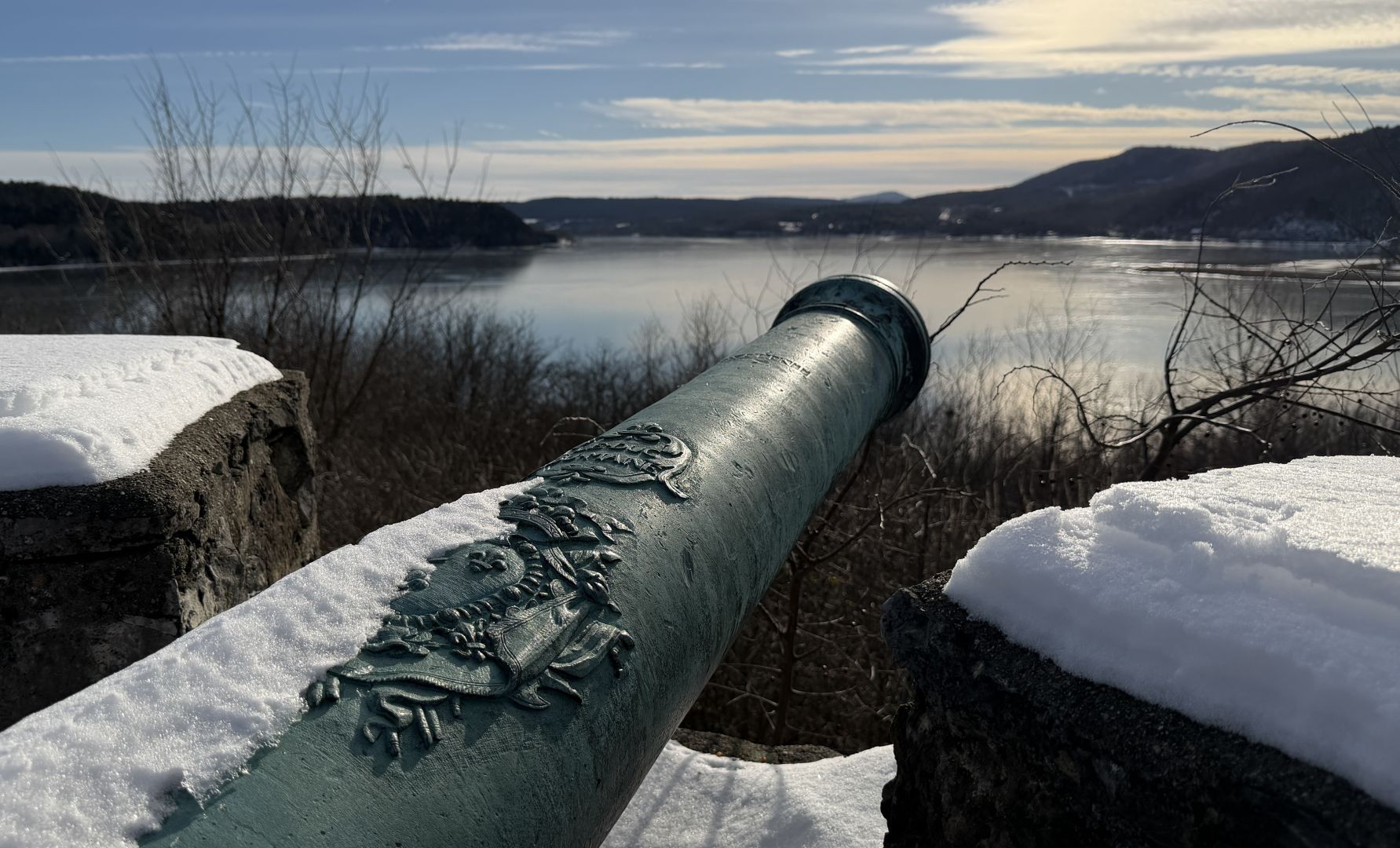
Fort Ticonderoga is known as “America’s Fort” for good reason. Its capture from the British in May 1775 was the first major American offensive victory in the Revolutionary War. More importantly, the following winter, Col. Henry Knox’s men hauled 60 tons of the fort’s artillery 300 miles to Boston to drive out the enemy. Historians rightly give those cannons some of the credit for America’s independence.
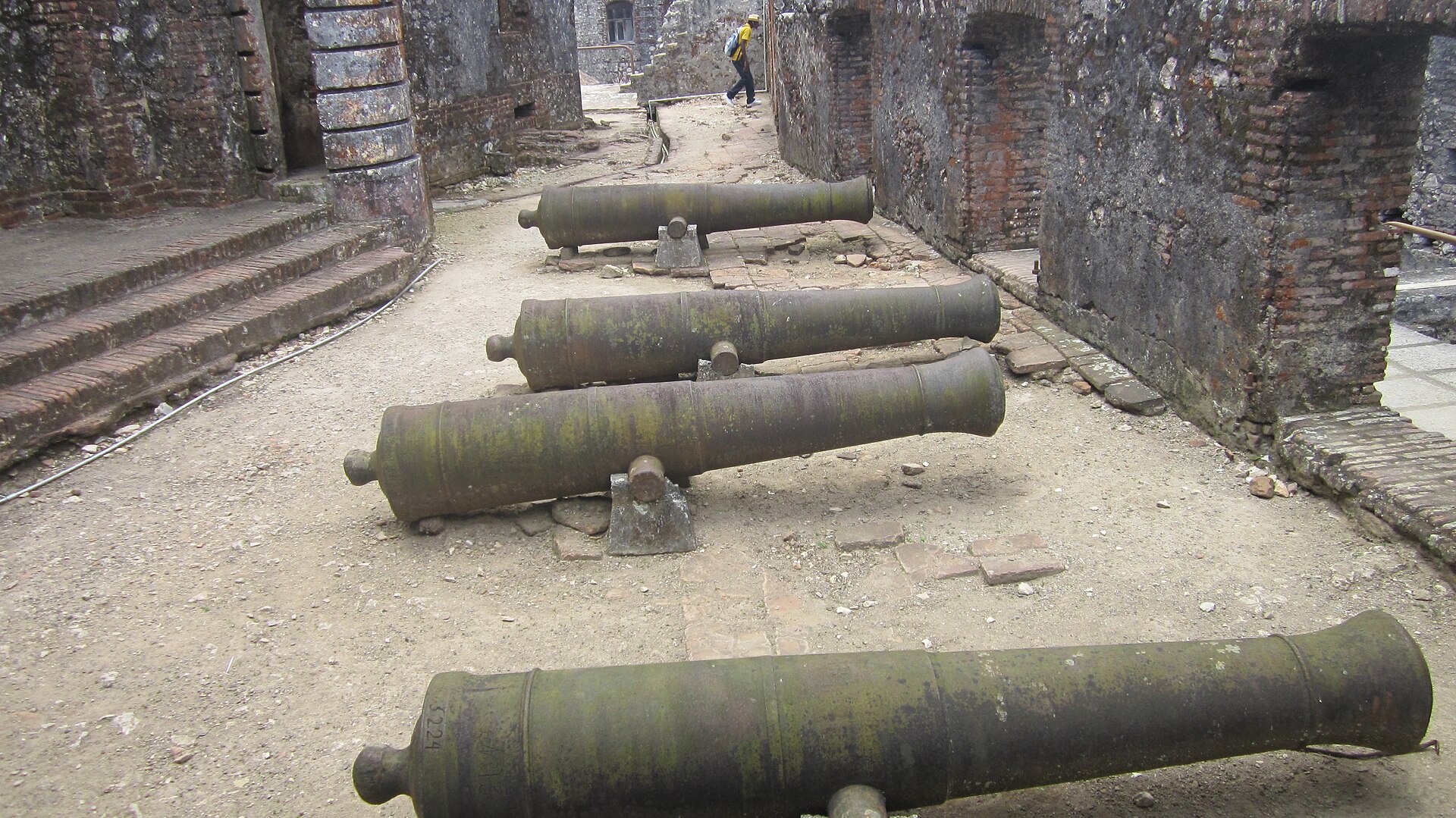
Too often overlooked, however, are the other cannons of Fort Ticonderoga – the ones that line the restored structure’s walls today and comprise the largest private collection of 18th-century artillery in the Western Hemisphere.
This disregard is a shame because of what the 156 cannons, mortars, and howitzers can teach us. Unlike the guns that went to Boston, these tell a more morally complicated American story – one that’s less about a country born from a fight for independence in the 1700s, and more about the imperial power the U.S. would become a century later. They also remind us that there were far more than one war of independence and 13 colonies in our hemisphere.
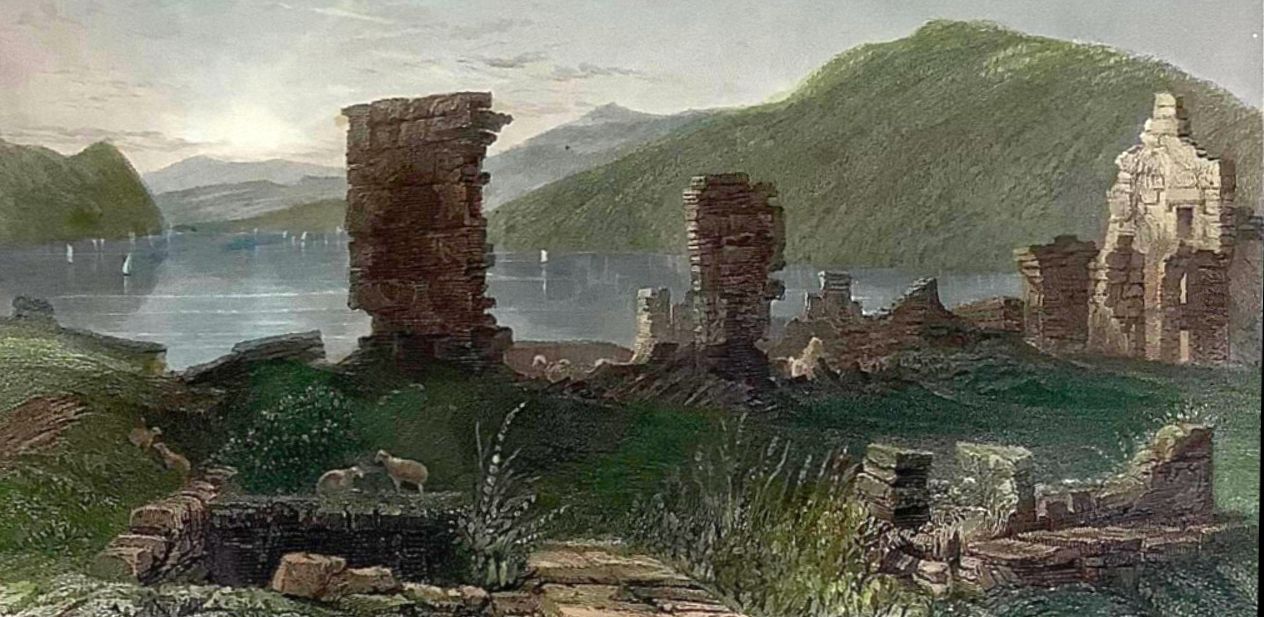
The artillery at the fort today arrived throughout the 20th century. The American Revolution had left Fort Ticonderoga in ruins, and by the time a wealthy New York businessman named William Pell purchased the land in 1820, there were no guns in sight. Except for one buried and discovered during excavation, all had been taken – either moved to battles elsewhere or melted down for scrap metal.
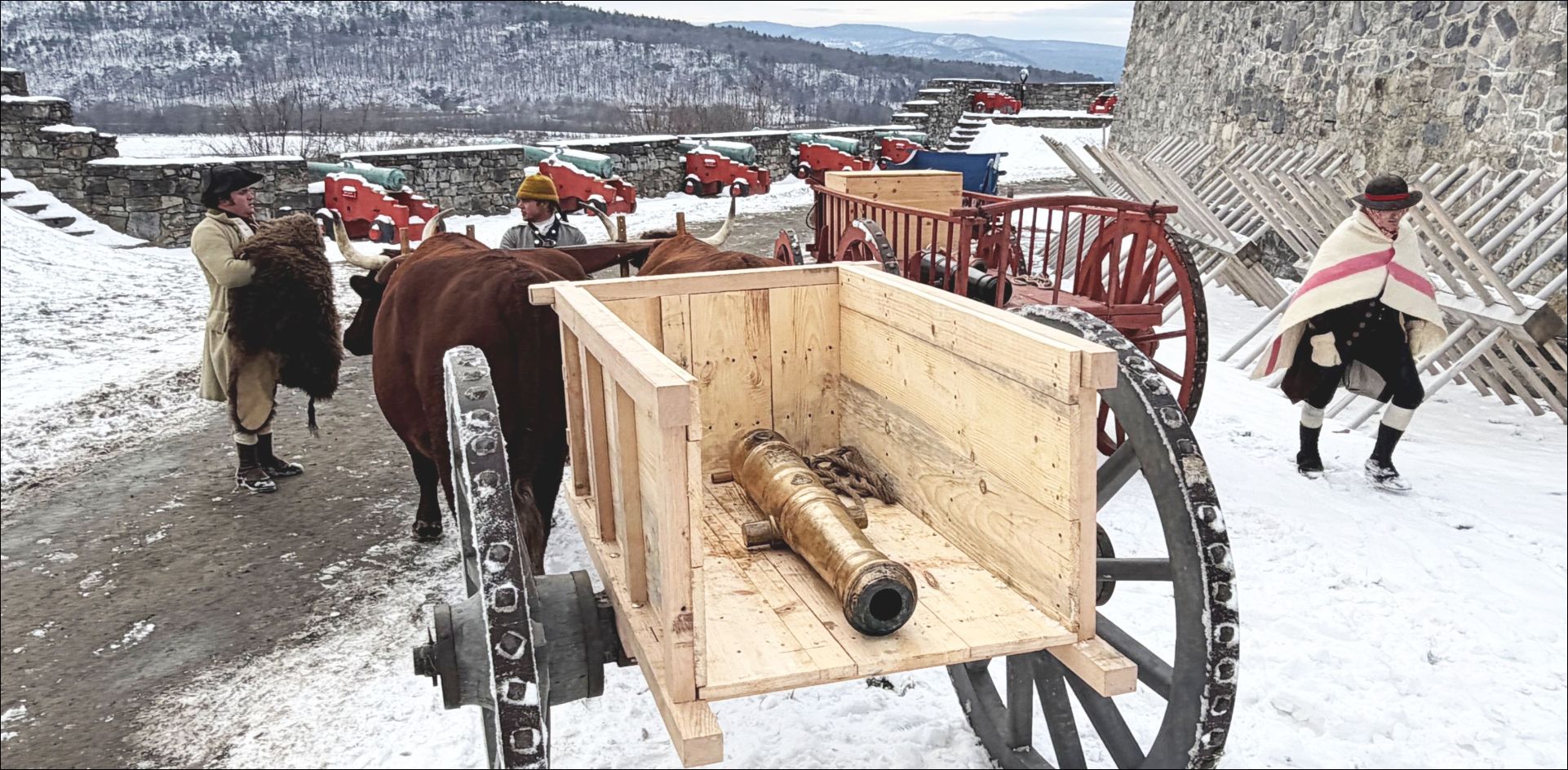
It was William’s great-grandson, Stephen, who began the process of restoration in the early 1900s, before heading off to World War I. He returned a hero, with a French Legion of Honor and Purple Heart. He resumed work on the fort, determined to bring it back to its days as “a 100% perfect Vauban-style fort of the period, with all its guns and equipment, standing on the shores of Lake Champlain,” he expressed in a letter. (The Marquis de Vauban was a legendary French military engineer who revolutionized siege warfare and military architecture during the reign of King Louis XIV, and whose philosophy influenced the original designs of Fort Ticonderoga.)
Replacing those guns, however, would prove challenging. Most in the U.S. had been destroyed, were on exhibit, or were in public hands and would require an act of Congress to give away. But Pell learned there were a good number of original French and English guns of the right period and sizes around Latin America and the Caribbean, and he had letters from Naval and Marine officers reporting the locations of many of them.
In 1929, Ticonderoga had 30 cannons, but Pell felt there needed to be scores more to fill the embrasures and make the fort complete.
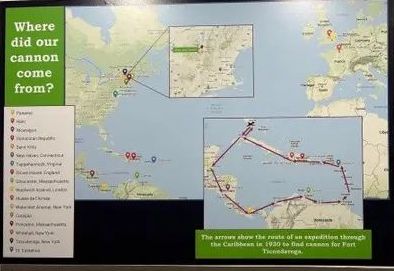
What happened next is touched on in a wall display inside Fort Ticonderoga. A poster lists 17 locations in 10 countries and colonies where the fort’s cannons once lived. To the right of the list is a map with arrows forming a circle around the Caribbean Sea. It’s the route of a 1930 “cannon-hunting” expedition undertaken by Stephen Pell’s field representative and so-called “gun man,” H. Jermain Slocum.
Slocum was the perfect person for the job, with his mix of military pedigree, wealth, and Indiana Jones-like thirst for adventure and conquest. His great-great-grandfather had been a major in the American Revolution. His grandfather was a Union Army colonel in the Civil War, a businessman, and an original member of the Society of Mayflower Descendants of New York. Slocum’s father, H. Jermain Sr., was also a colonel, serving in the Philippines, Cuba, and New Mexico.
H. Jermain Jr. himself likely benefited from confusion with his namesake, as when he was mistakenly called “Colonel” despite having served less than a year in the military, on the Mexico border, before being honorably discharged for a disability. Slocum went into business and lived well, maintaining membership in several elite New York and Connecticut social clubs even after filing for bankruptcy. In 1927, a court reversed a discharge of his debts on the grounds that he had falsely testified under oath. But when Slocum’s father died just months later, he inherited a million dollars (worth almost $19 million today). Soon he was working as a Fort Ticonderoga field agent for just a dollar a year and covering his own considerable travel expenses.
In early 1930, Slocum spent 10 weeks circumnavigating the Caribbean by airplane, steamship, yacht, and motorcar. It was an excellent time for an American with military clout to tour the region. The Monroe Doctrine had been around for a century, and the 25-year-old Roosevelt Corollary endorsed U.S. intervention to stabilize governments and economies, justifying military control in several countries of the region. In Nicaragua, Haiti, and the Dominican Republic, the Marines were ostensibly restoring stability while securing U.S. business interests, and in Panama they were guarding the canal zone. Slocum attained government donations of cannons from all of these places.
Generally, it worked like this: Slocum or Pell would make contact with an influential Marine on site and, through him, convince the given country’s president to hand over some weapons.
The hunt began in Nicaragua. Two days after landing in Managua, Slocum threw a dinner-dance at the city’s Grand Hotel Lupone in honor of Brigadier General Dion Williams, commander of the Marine Occupation Force in Nicaragua, and his wife. Slocum had sent out flowery white invitations to more than a dozen Marines' top brass and their spouses.
General Williams took Slocum to meet the U.S.-backed president, José María Moncada, who agreed to donate four 6,000-pound iron cannons. That was the easy part. The guns were at Fort San Carlos, on the far corner of Lake Nicaragua, and getting them would require hauling each one by human-powered carts to the shore; transporting them by boat, one at a time, across the length of the lake (almost 100 miles); then taking them by train to the Pacific Coast Port of Corinto. From Corinto, it took a steamship more than a fortnight, at a cost of $10,000 in today’s dollars, to carry the cannons to New York City, before they were taken by train and motorcar up to Fort Ticonderoga.
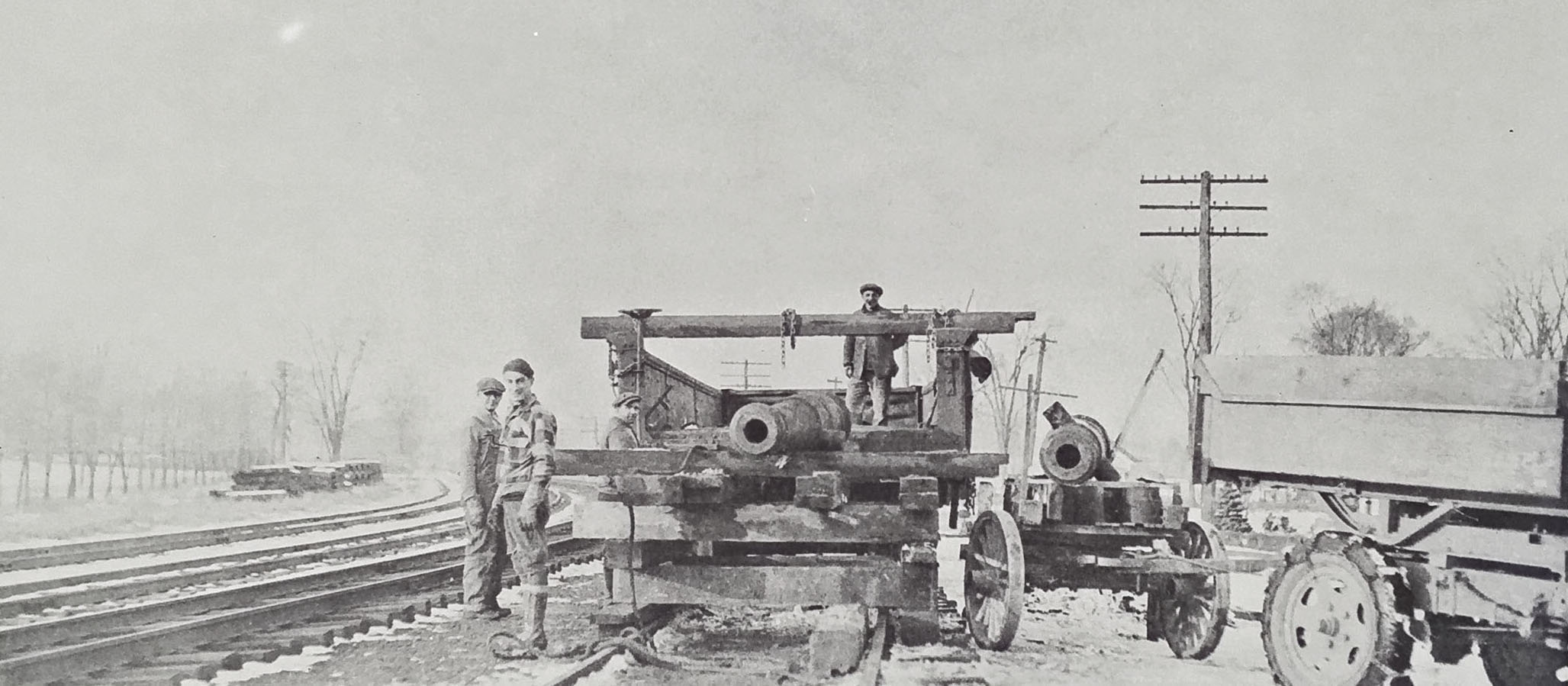
The journey would not have been possible without considerable assistance from the Marine Corps, as well as the Army Corps of Engineers, which was in the country to work on a plan for a proposed interocean Nicaragua canal. Major Dan Sultan, who led the Nicaragua Canal Project and commanded the US troops in the country, personally oversaw this arduous cannon transfer.
According to Slocum’s field report, the diplomatic part was relatively easy in Panama as well. He recalled having a friendly meeting with President Florencio Harmodio Arosemena, who granted him access to cannons. An ironic hitch, however, was that some of those guns seemed to be under American jurisdiction in the Canal Zone, and thus essentially off-limits.
Also off-limits were cannons in Puerto Rico, where the governor, Theodore Roosevelt Jr., said the territory’s cannons were national property and unavailable.
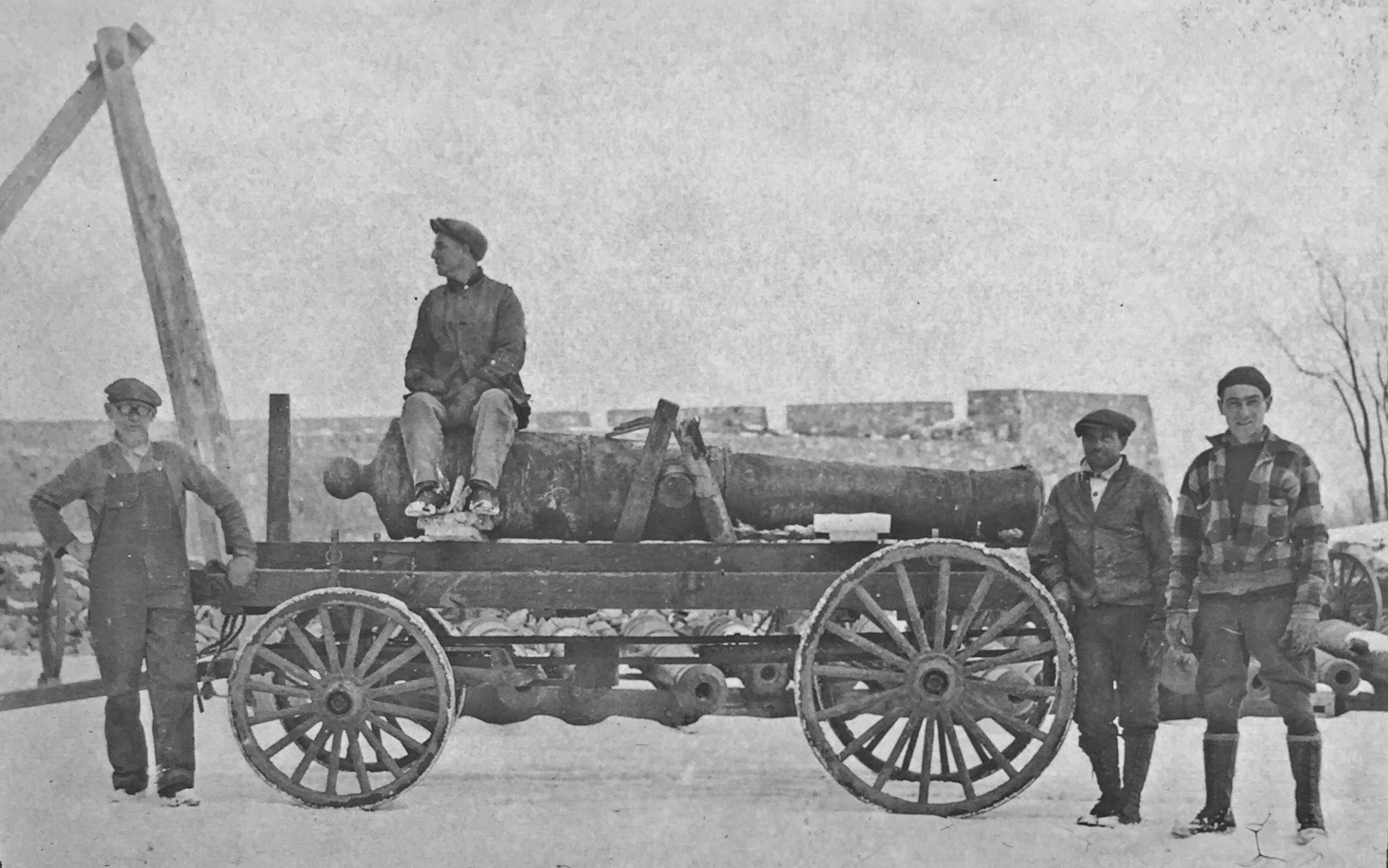
In Curaçao, the Dutch governor granted Slocum cannons, and in St. Kitts, a British colony at the time, Slocum reported purchasing 20 cannons “at a good price!” Preservationists there would later complain that a private citizen had sold artillery that didn’t belong to him.
Haiti was where Slocum spent the most time and had the most success, despite growing opposition there to a 15-year-old U.S. occupation marked by repression, violence, and mass displacement. In fact, Slocum made two trips to Haiti. The first, in early 1930, was largely a reconnaissance mission, in which he flew low over much of the country, including the Citadelle la Ferrière, the massive fortress in the North, eying an abundance of hard-to-reach cannons, before returning on foot.
In the challenging but potentially highly rewarding environment that was Haiti, Slocum embraced two strategies: requesting extensive assistance from high-level Marines, and carrying out an aggressive public relations campaign that involved two messages: One, a warning that Haiti alone could miss out on a great international initiative if it failed to contribute cannons, and two: a promise that Haiti’s donations would play a starring role at the historical site and tourist attraction that was Fort Ticonderoga.
Months before the second trip, Pell wrote to Marine Brigadier General Dion Williams, now back in Washington, to ask him to assign Lt. Faustin Wirkus to assist Slocum in his expedition for 30 days. Wirkus, who had come to be known as “the White King of La Gonave” (also the name of a book he would eventually write about his time in Haiti), was a Marine sergeant and a lieutenant in the Haitian Gendarmerie on the island of La Gonave. The Gendarmerie had been created early in the occupation as a force run by Marines and Haitian officers to maintain order, including crushing anti-occupation rebellion. The Marines were accustomed to looking out for and fighting such uprisings in Haiti, as in Nicaragua, Panama, and the Dominican Republic.
Wirkus and other Marines would provide Slocum the access he needed. For permission, Slocum had to write to Haiti’s new anti-occupation president, Stenio Vincent.
In that letter, he told Vincent that Fort Ticonderoga was already full of cannons donated by “all the nations of the world interested in the cause of the peoples who fought for liberty,” and that Haiti was the only country in the region not represented there, “although it was one of the first to embark on the path to emancipation.”
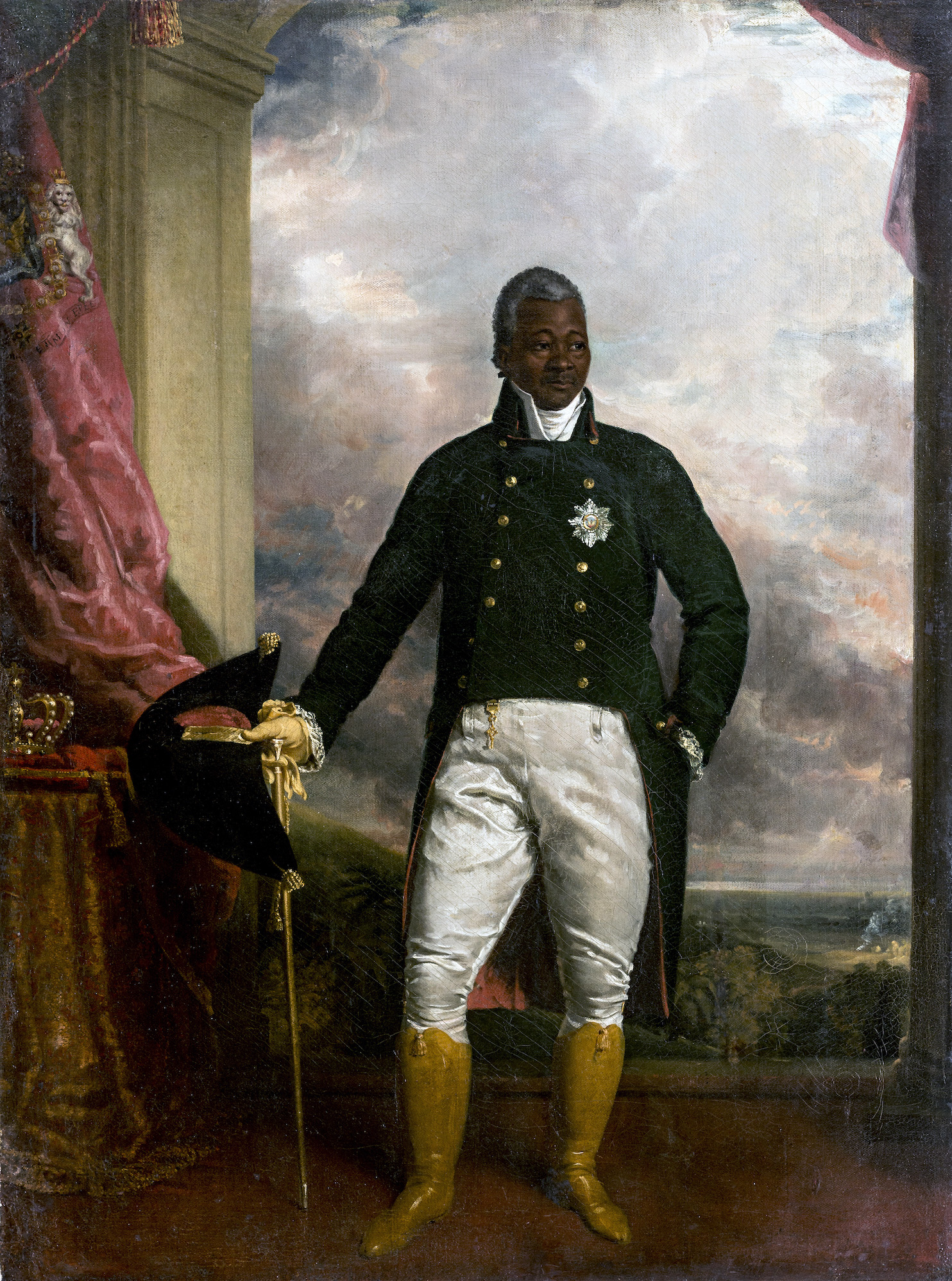
Haiti had gained independence from France in 1804, but it would take the U.S. more than half a century to recognize it as a sovereign nation. Slocum’s all-too-rare acknowledgement of a historical fact shared by Haiti and the U.S. – that they were the first two peoples in the Americas to successfully rise up against their colonial overlords and establish independent republics – might have helped sway a skeptical politician. Or the president might have been moved by Slocum’s pledge that cannons he contributed “will forever bear the name of Your Excellency and that of the Haitian People,” and that such a donation – preferably of 50-75 cannons – would constitute “a lasting monument to the renown of Haiti and to all that Haiti represents of the sacred in the great cause of Independence.”
Throughout his time in Haiti, to public officials and to the media, Slocum would keep repeating this promise that the presence of Haitian cannons in Ticonderoga would honor and teach the world about Haiti’s contemporary leaders and freedom fighter ancestors. (It’s a promise that clearly has not been kept across generations, as most of the tens of thousands of visitors to Fort Ticonderoga every year, as well as those who hear about the fort from afar, have no idea that it contains artillery from Haiti.)
Slocum’s power to persuade – or compel – can only be fully appreciated when one considers the context. As Bernard Weisberger wrote in a 1994 American Heritage article, the Marines responded to a 1918 anti-occupation rebellion by putting it down “at a cost of more than two thousand Haitian lives.” That was only three years into a nearly two-decade occupation, and it was not the only atrocity the Americans would commit in Haiti.
One can easily imagine that there would be some skepticism about members of this very Marine Corps now facilitating the removal of Haiti’s historic weapons – some of which had likely been used to win independence from France – to donate them to a museum of liberty in the U.S. Yet, Slocum and his Marine friends would be extraordinarily successful in their mission.
In early 1931, Slocum took a steamship from New York City to Port-au-Prince. Upon arriving, he immediately got in touch with Lt. Wirkus and “attached him to the expedition.” Slocum later said Wirkus contributed greatly to the success of the visit, and that the Marine commander of the Gendarmerie, Col. Richard P. Williams, offered him the full cooperation of all of the officers and men of the force.
President Vincent at first only agreed to let Slocum take a few small iron guns (no bronze), but, Slocum later wrote, “on my explaining how many thousands of visitors inspected the Fort each year and that the Republic would be given credit for the presentation he agreed that we could take some of the bronze guns.”
Together with Lt. Wirkus and some other Americans, Slocum traveled the South, partly on horseback, and then the North, where, Slocum later wrote, they faced “much opposition from the inhabitants as they could not understand why the guns were being moved.”
According to Slocum, he would convince skeptical leaders of the North just as he had convinced President Vincent. “I succeeded in impressing upon the officials that these guns would be on permanent exhibition at Fort Ticonderoga,” Slocum wrote, “and would be a lasting monument to the generosity of the Government and People of Haiti.”
Haiti’s representative in Washington was also among the skeptics, and he told a reporter that Americans had been stealing cannons from his country. Word got back to Slocum, who sent the diplomat an indignant letter, saying he must not have known that President Vincent had given permission, and that at Fort Ticonderoga, “a monument to the liberties of all people,” the Haitian cannons mounted on the ramparts would be known as “the Haitian battery,” and serve as “a perpetual monument to the President and the people of your country.”
In thank you letters Slocum wrote to Haitian magistrates who helped him acquire cannons, he called them patriots for allowing their country to be known abroad.
Media coverage in Haiti of the cannon expedition was not all favorable, but articles in the newspaper of record, Le Nouvelliste, used Slocum’s language in insisting on the benefits of donating the guns. One such piece went so far as to argue that contributing was made all the more important by the suffocating occupation of Haiti: “And these days above all, [having Haitian cannons at Ticonderoga] will have a very special value, in the Eyes of Civilized Peoples, who witness the strangling of our Country, which has fought so hard for the Cause of Liberty.”
In the end, between his two trips, Slocum was able to acquire what might have been as many as 60 weapons, many of them bronze.
After Haiti, Slocum continued on to the Dominican Republic. There, the U.S. occupation had come to an end more than six years prior, but a Marines-trained military government was in place, with a friend of the U.S., Rafael Trujillo, at the helm. The dictator put officers around the country at Slocum’s service, allowing him to acquire “a number of very handsome cannon,” Slocum later wrote.
There is no way to know if Slocum believed his own words when he described Fort Ticonderoga as one of “the sanctuaries dedicated to the cult of liberty” or promised that the cannons from Haiti at Ticonderoga would forever be identifiable as Haitian, eliciting admiration for its founding heroes. He clearly lied when he told President Vincent that all the other countries of Latin America had contributed to the museum. However, it is possible that he had a vision of acknowledgement that was once at least partially realized.
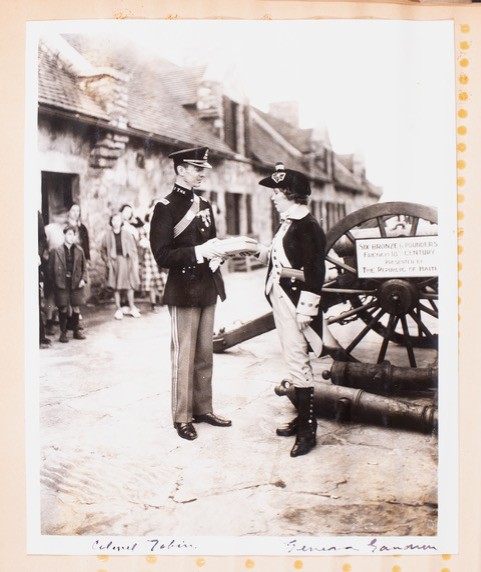
For a time, there were plaques beside at least some of the Haitian cannons, identifying them as such. A photo from 1937 shows a sign saying six French 18th-century bronze cannons had been “Presented by The Republic of Haiti.” But over the years, artillery at the fort was moved around, and the wooden plaques were lost or disintegrated.
In many cases, the disappearance of the plaques meant a loss of all identifying information about the cannons, since there was no systematic logging of them when it arrived at the fort, and the collection was not formally catalogued until 1999. As a result, especially for the many iron cannons, which usually have no identifying markings, it is exceedingly difficult to determine today the source of each gun at Fort Ticonderoga.
Slocum’s two Caribbean expeditions seem to have won the fort scores of cannons, but it’s impossible to know the number because some of the donated weapons might not have made the journey due to logistical hurdles, combined with the lack of logging. There is also a question of the reliability of Slocum’s accounts. Might he have inflated numbers to exaggerate his conquests to the media or others? Or might he have neglected to mention acquisitions that were not explicitly permitted?
The reason for the inconsistent documentation at the fort is that the role of the 156 cannons, mortars, and howitzers there was never to showcase the colonial history or independence battles of nations around the region; It was to stand in for the original guns that protected the fort in the 18th century. As Fort Ticonderoga curator Matthew Keagle has said, the cannons of the reconstructed fort “were thought of as set dressing.”
That goes not just for the acquisitions from Slocum’s 1930-31 expeditions, but also for the weapons acquired before and after. Some information is available because certain donations and purchases were logged, some described in the Bulletin of the Fort Ticonderoga Museum, and some briefly mentioned in newspaper articles. Beyond that, Keagle is able to connect some dots, however speculatively, through research at various museums and archives.
It is known that nine of the Haitian cannons, mortars, and howitzers at Fort Ticonderoga were purchased by Stephen Pell through a New York-based bank as early as 1915, around the start of the U.S. occupation. And the most recent Haitian cannon acquisition was a 1986 donation by Robert Pettigrew Sr. and his son, Robert Jr.
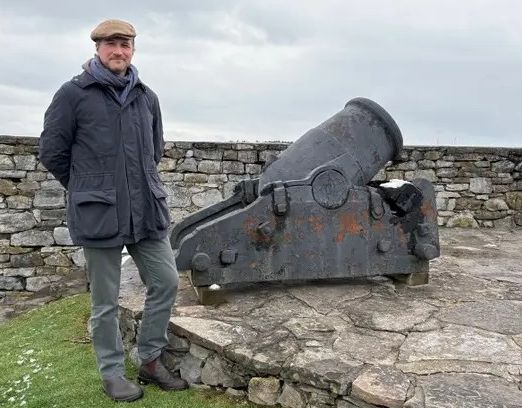
As a Marine stationed in Haiti during the U.S. occupation, Lt. Pettigrew took advantage of a change in the Haitian Constitution forced by the U.S. that would allow foreign land ownership. He founded Plantation Dauphin, a lucrative sisal operation, in Haiti’s Northeast, where an American land grab of thousands of acres caused mass displacement of smallholder farmers and their families.
The donated cannon was reportedly found in an overgrown area and mounted in front of the manager’s house on the plantation. Eventually both the cannon and Pettigrew relocated back to his hometown of Tappahannock, Virginia, where he died not long after making the donation to Fort Ticonderoga.
Cuba was among Slocum’s stops in his 1930 expedition where he did not succeed in acquiring artillery. However, the fort has at least one cannon that had been in Cuba, donated by Yale University, and likely others.
Keagle also raised the question of how to define the origin of a cannon, only in part because many have changed location multiple times, despite weighing tons. Looking at one bronze Spanish cannon, he pointed out engravings indicating that the raw material came from the West Indies, likely extracted by enslaved Africans, before the material was brought back across the ocean to a foundry in Seville, where the gun was cast, then shipped back to the Americas to protect Spanish colonies, and eventually up to Fort Ticonderoga. A single weapon, Keagle explained, can show the interconnectedness of multiple corners of three continents.
Other cannons at the fort tell more European stories of liberation, like the French cannon whose ornamental crown had been chiseled off at the fall of the monarchy, and another that was marked with the year IX, reflecting a calendar that started with the birth of the Republic.
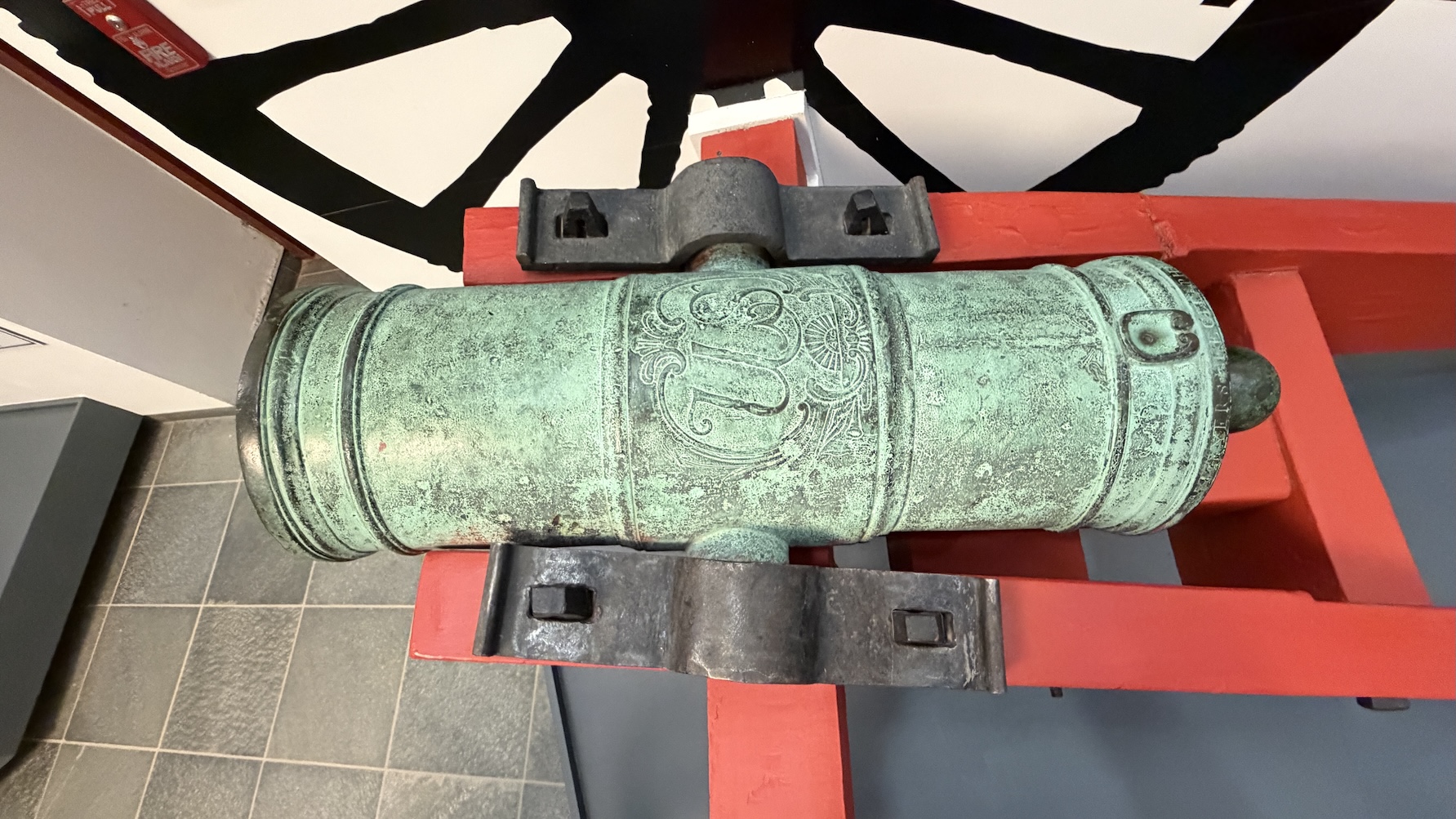
Some cannons come from as far away as Africa. A New York Daily Tribune article in 1912 reported that Stephen Pell traveled to Egypt, where he acquired cannons, including a French gun that had been captured in Omdurman, Sudan.
Perhaps most telling about the roles of the cannons at Fort Ticonderoga and how they would be presented over the years is a very short 1909 article in the Ticonderoga Sentinel titled, “Cannon of No Great Interest.” The piece reported that three cannons had arrived at the fort from New York City, arousing much speculation among the local population, but in response to a letter, “Mr. Pell says that the cannons are of no particular historical interest. They are simply six pounders of the Revolutionary period.”
For 10 years, Keagle has been working to identify the origins and history of as much of the artillery at the fort as possible. He is also trying to find a way to share that information. As new discoveries are made about an object, they are uploaded to the online database, accessible to all. Still, he wants to find ways to “shorten the runway” to this information for the visitor, while avoiding distracting from the power of the bristling fort itself. In other words, he wants to make good on Slocum’s promises without putting “a big sign” next to every cannon.
So far this has involved incorporating more information on Europe and the Caribbean into the fort’s 250th anniversary anthology exhibit series. It’s part of what Keagle described as a general shift among historians from a bicentennial sharply focused on the “American” experience to a semi-quincentennial in which academics are taking a more global view. He said this after attending a conference in Hong Kong on “1776 from a global perspective,” which featured speakers and topics from around the world.
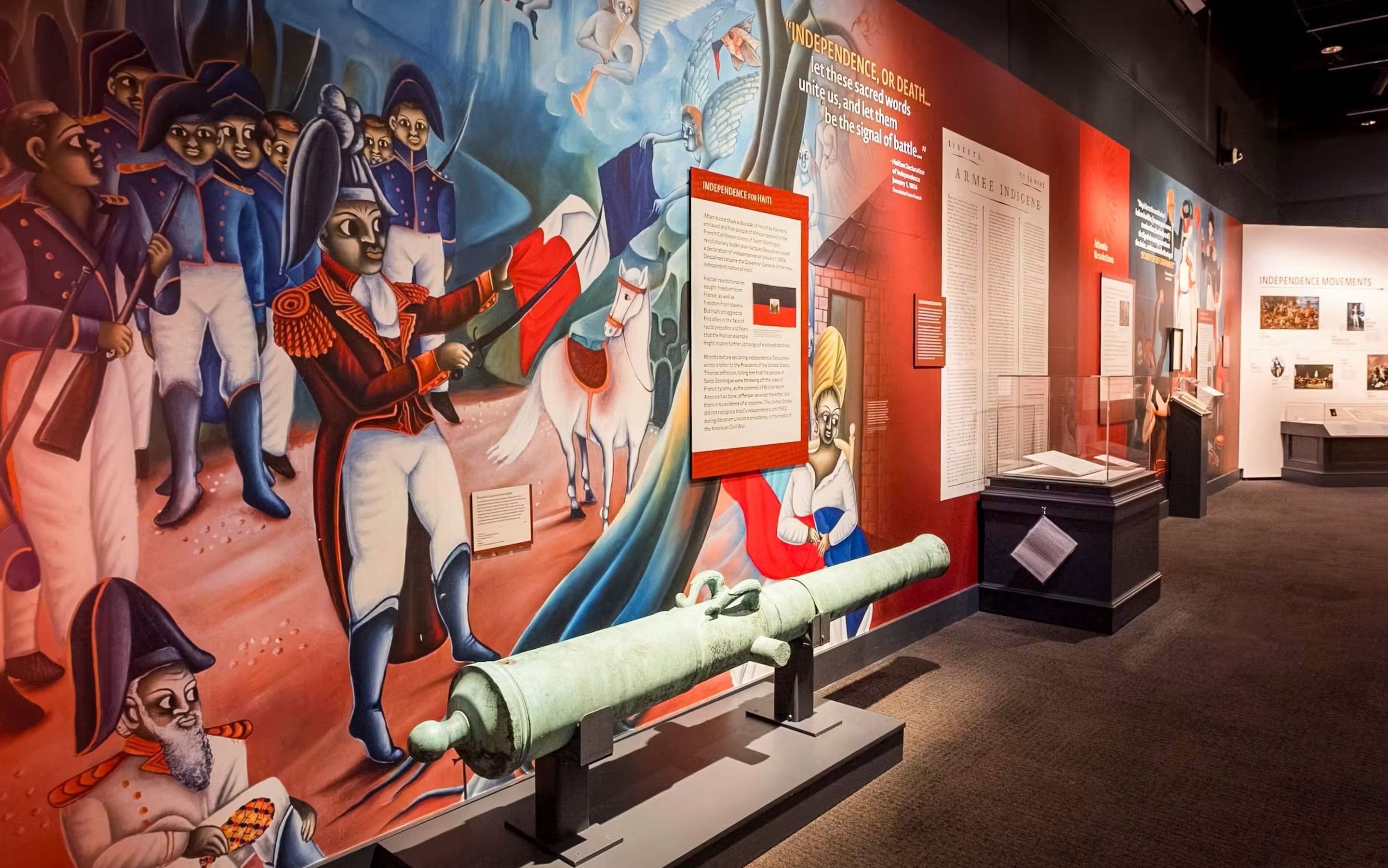
Within the U.S., when it comes to commemorating a shared revolutionary history with Haiti, there are some interesting examples. One of Fort Ticonderoga’s Haitian cannons is now on loan to Philadelphia’s Museum of the American Revolution. It’s included in a special exhibit on the American Declaration of Independence and its global influence. The bronze gun, which was likely used in the Haitian Revolution, is displayed alongside the Haitian Declaration of Independence. Also featured are Mexican, Irish Republic, Indian and Texan declarations of independence.
In Savannah, Georgia, a Revolutionary War monument depicts members of the Haitian regiment of more than 500 free men of color who fought on the side of the Americans in the 1779 Siege of Savannah. One of the monument’s statues represents a young drummer named Henry Christophe. After serving in Georgia, Christophe would return to Haiti and help lead his country to freedom, before becoming one of the nation’s first heads of state. “ So, there is a way to incorporate the role of Haiti and Haitians into this larger history that does it justice,” said Marlene Daut, a Yale professor and Christophe biographer.
Keagle hopes that Fort Ticonderoga will be able to harness the energy of the 250th to build a new facility that can provide context, “not just to Ticonderoga’s history, but the broader military history of the Atlantic world that Ticonderoga is a part of.”
Maybe in the future, Fort Ticonderoga will evolve into something that’s not just “America’s Fort” but “Americas’ Fort,” celebrating our neighbors’ struggles to win their freedom from European powers, and possibly even from the U.S. itself.