
At the nation’s pivotal moment — the Civil War — two seventeenth-century vessels kept sailing through the American mind: the Mayflower and the slaver White Lion. Their wakes still cut our waters.
-
Summer 2026
8 months ago By Edwin S. Grosvenor Volume71Issue3
Editor's Note: David S. Reynolds is one of our leading cultural historians and a Distinguished Professor at the CUNY Graduate Center. He is the author of numerous books including Abe: Abraham Lincoln in His Times and the recently published Two Ships: Jamestown 1619, Plymouth 1620, which explores the fascinating historical ideas he introduces in this essay.
Today’s deep cultural polarization might seem like a recent development, inflamed by partisan news and social media. But as the nation confronted its most literal break during the Civil War, Americans looked back two centuries to understand their disagreements. They didn't see a map of 34 states; they saw the resonances of two seventeenth-century ships still plowing through our waters: the White Lion, an English privateer sailing under Dutch colors, which had brought twenty-odd enslaved Africans to Jamestown, Virginia, in 1619, and the Mayflower, which arrived at Plymouth, Massachusetts, in 1620.
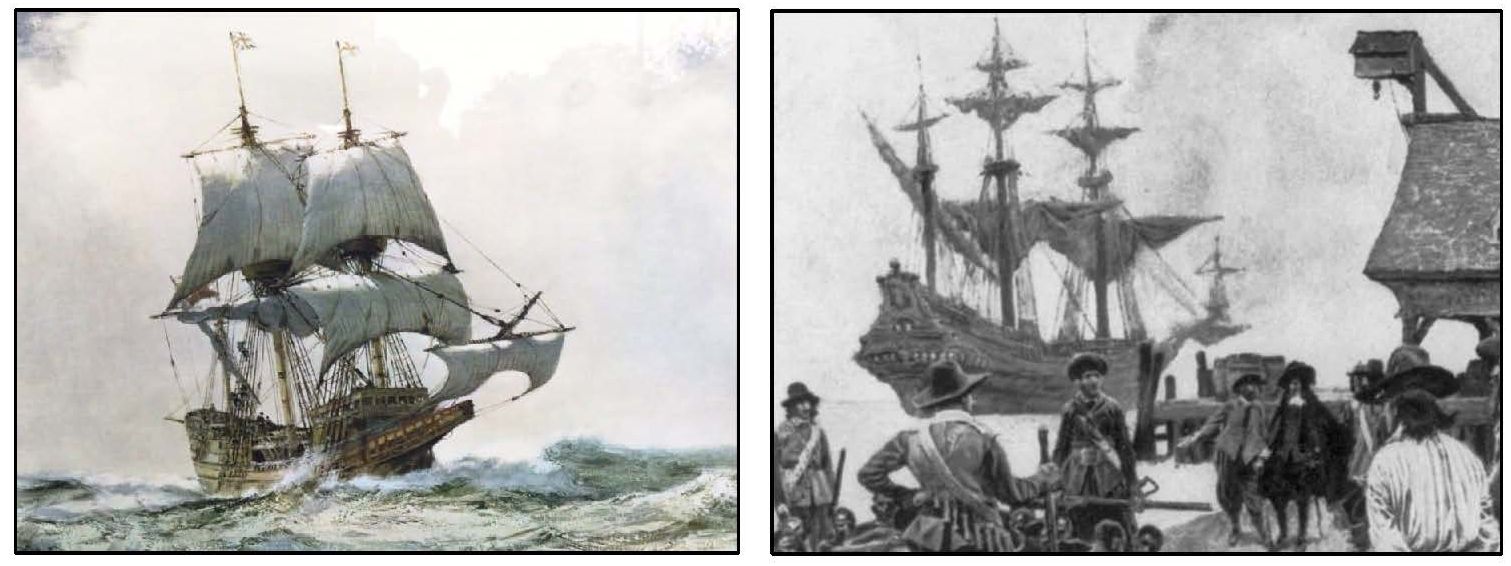
This view was no myth; it had historical substance. A cultural war had indeed been sparked at the nation’s origins. It intensified over time, raged fiercely during the Civil War, and has reappeared, albeit under different labels, in today’s ideological divide.
Winter, 1862
The first eight months of the Civil War had gone badly for the North. Early visions of a quick victory had been shattered by Union losses at Bull Run, Wilson’s Creek, Lexington, and Ball’s Bluff. The winter was frigid and snowy. General-in-Chief George McClellan was grounded with typhus. President Lincoln was restless about his armies’ inaction. Everything seemed stuck.
Frederick Douglass wanted to jolt the North out of its lethargy. In a resounding speech on January 16 in Philadelphia’s National Hall, he drove home the war’s purpose by discussing two ships:
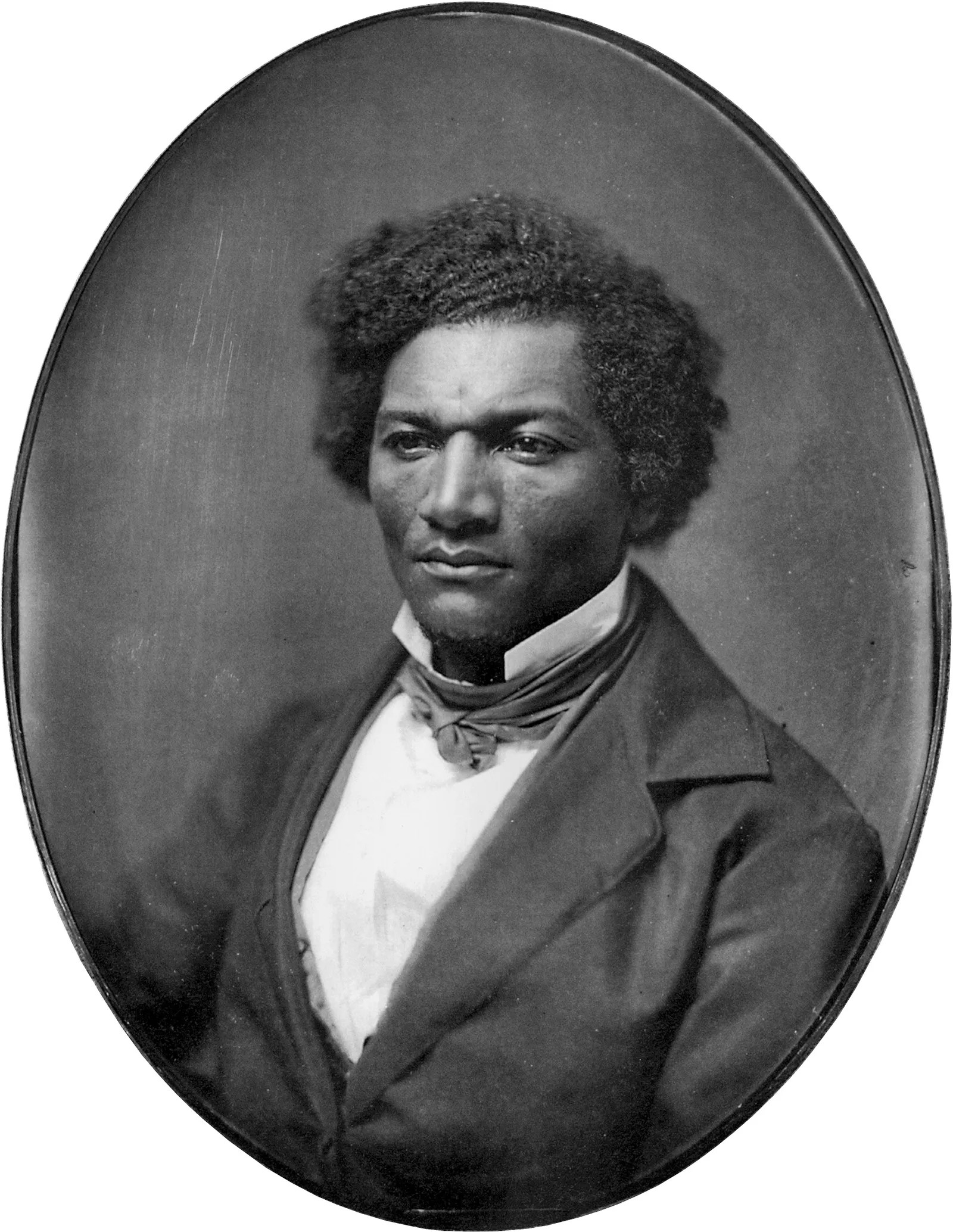
Douglass was using his favorite historical image to describe the nation’s dual origins. As he said in another speech, the Jamestown ship introduced “the whip and the chain,” whereas “the Mayflower came to establish the Bible, the Magna Carta, the right of habeas corpus, trial by jury, the marriage institution, equality in the eye of the law, deference for order, and all the institutions which tended to ennoble and dignify the human race.”
Douglass was tapping into one of the most popular tropes of his time. The image had became well-known in the 1820s, when the Hartford poet Lydia Huntley Sigourney wrote two poignant poems — one about the painful journey of the Jamestown ship and the other about the freedom-seeking Mayflower — both widely reprinted in antislavery newspapers.
The first to combine the two ships into a single speech was Massachusetts politician Robert C. Winthrop, who in 1839 pictured the ships “striving against the billows of the same sea, like the principles of good and evil,” with one echoing “the sighs of wretchedness” and the other with “the glorious ‘anthem of the free.’”
A consensus arose that the two ships represented opposing civilizations in English-speaking America. The Black preacher Henry Highland Garnet praised “the moral sublimity of the spirit of the pilgrims,” who “laid the broad foundation of republican institutions,” while the Jamestown ship brought “wretched” kidnapped Africans. Another former slave, the novelist William Wells Brown, called the Mayflower “the good genius of America,” which carried “the embryo elements of all that is useful, great, and grand in Northern institutions,” in contrast to the “low, rakish” Jamestown ship, “freighted with the elements of unmixed evil.”
In 1860, on the verge of the Civil War, civil rights pioneer Senator Charles Sumner boiled the issue down to a simple choice: “The question is simply between the Mayflower and the Slave-Ship,—which of the two to choose?”
Clashing Inheritances
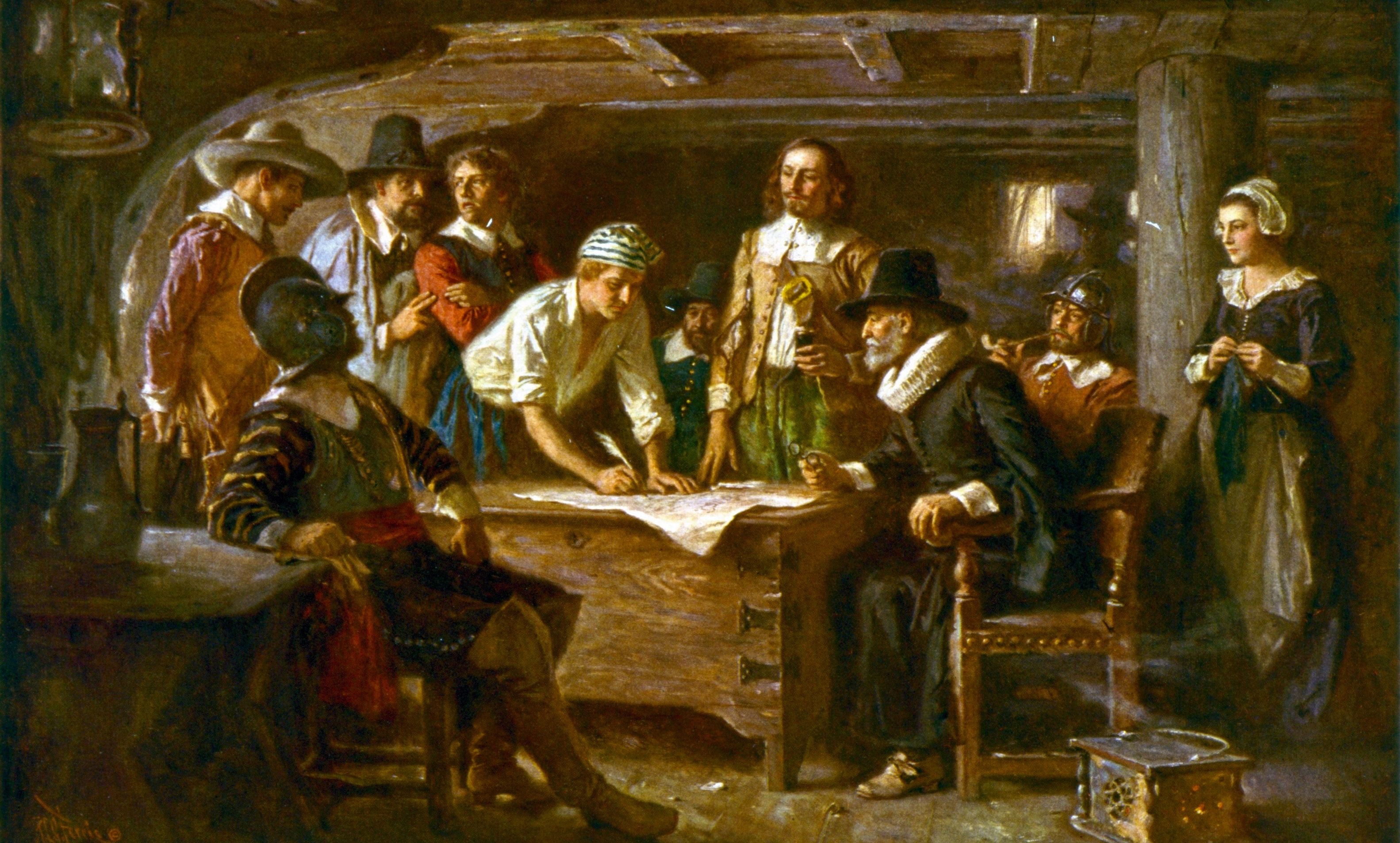
Northerners had good reasons to value the Pilgrims. Plymouth Colony introduced practices that later Americans would treat as foundational: government by consent in the Mayflower Compact, trial by jury, and a written legal code that hinted at a bill of rights. Religious life also broke precedent. For years the colony relied on lay preaching by the Mayflower passenger William Brewster rather than ordained clergy. Even landholding departed from older English customs, abandoning feudal-style quitrents. Crucially, Plymouth never legally recognized slavery.
There was also reason for Northern hostility toward the Jamestown ship, which introduced slavery into English-speaking America. Virginia’s General Assembly gradually hardened the institution into law: the 1662 statute declaring that a child inherited the status of an enslaved mother, later restrictions on manumission, and the sweeping slave codes of 1705 that treated enslaved people as property. By the mid-eighteenth century, enslaved Black people made up roughly forty percent of Virginia’s population.
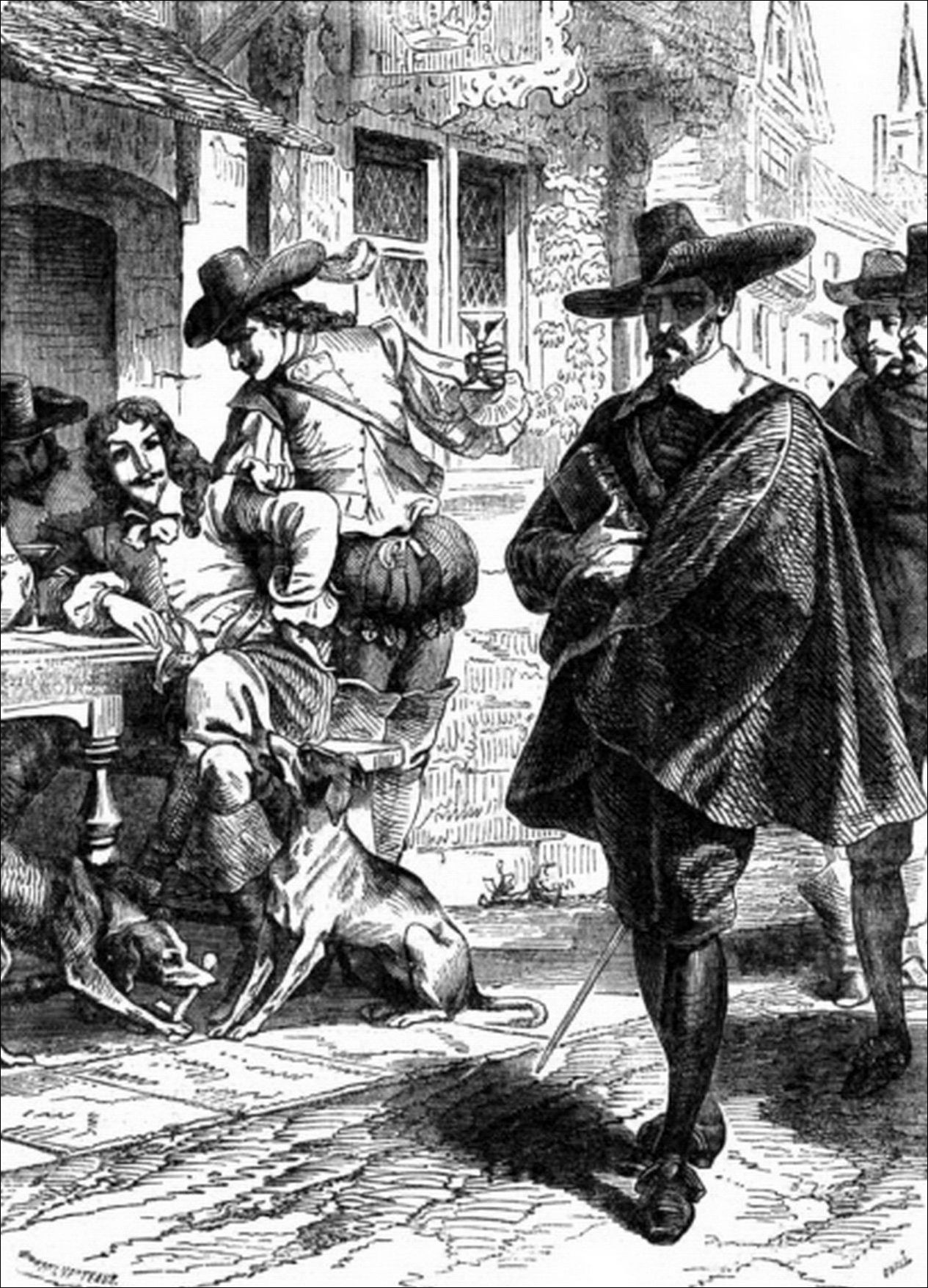
If the ships were symbols, their passengers became archetypes. Many nineteenth-century Northerners who looked back at history saw the Mayflower Pilgrims as trailblazing freedom seekers — and prophets of antislavery reform — because of their ties to the British Puritans’ overthrow of the oppressive Charles I under Oliver Cromwell, while the slave ship was associated with the royalist Cavaliers who settled in Virginia.
See also Mayflower's Place in History, by Nathaniel Philbrick
In contrast, Southerners viewed the Mayflower as planting a Northern culture of Puritanism that was fanatical and self-righteous, which eventually led to horrid “isms” like abolitionism, Mormonism, and spiritualism, while the Cavalier South was seen as genial, tolerant, and orderly, with established institutions like the Anglican Church. Virginia inherited a Cavalier mentality that valued social hierarchy, subordination, and racial differences, which buttressed slavery.
Although the North and the South teamed up during the American Revolution, slavery became a bitter wedge issue, and the longstanding split between the “Puritan” North and the “Cavalier” South became even wider. On the eve of secession, the New York Herald, describing Northerners and Southerners as “distinct and separate” peoples, announced, “The Puritan and the Cavalier will always fight when they meet. There is nothing in common between them but hate.”
Jefferson Davis, known as “the model Cavalier,” called Northerners “a traditionless and a homeless race; from the time of Cromwell to the present moment they have been disturbers of the peace of the world.”
The nation, in short, recognized that its differences were deeply rooted as it moved toward war.
War in Symbols
As the conflict erupted, the metaphor bridged the gap between policy and passion. While recruiting African American troops, Douglass again contrasted the Mayflower, “with her precious freight of honest, God-fearing and God-loving pilgrims,” and the Jamestown ship, with its “piratical scoundrels and their slaves.” Douglass used the Mayflower to push for Black freedom as a national policy.
Southern polemicists were quick to respond. One congressman suggested that history would have been cleaner if the Puritan ship had sunk. A New Orleans journalist called the Mayflower “the Pandora-box that showered woe upon our people.” A Richmond paper asked, “What similarity was there, or will there ever be, between Plymouth and Jamestown? What attraction could exist between Puritan and Cavalier?”
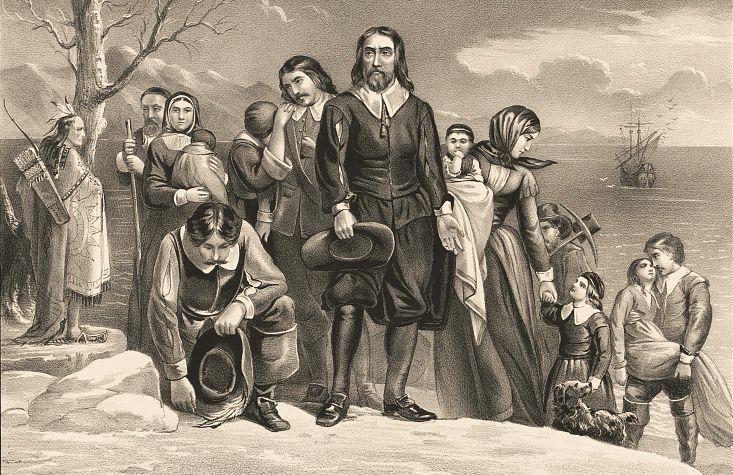
A South Carolina pamphleteer outshone them all, calling the Mayflower passengers a “viler, more pernicious, or contemptible rabble” than ever seen before. Mocking “Ape” Lincoln and claiming that “the superior race is never conquered by the inferior,” he confidently predicted a Southern victory.
He was, of course, wrong. After Appomattox, a Northern journalist proclaimed, “The Slave Ship yields to the May Flower. Plymouth conquers Jamestown.” A eulogist of Ulysses S. Grant commended him as a general who had “battled against the civilization of Jamestown and led triumphantly the armies of the civilization of Plymouth.” The sentences conveyed both a moral verdict and a military one.
But history rarely follows a straight line. The promise of Reconstruction — equal citizenship and political participation for formerly enslaved people — provoked a fierce backlash. Critics dismissed the movement for civil rights as “Puritan” meddling. They mocked what one newspaper called “the present Puritan Congress” and derided the language of equality as Northern fanaticism. One anti-Black suffrage publication even printed a bitter poem imagining how “happy would the world have been / Had whales but stove the Mayflower in.” The tactic was familiar: discredit reform by caricaturing its moral language.
By the early twentieth century a different consensus had taken hold. Jim Crow segregation and rising nativism drew North and South together in an uneasy alliance built less on reconciliation than on exclusion. Scientific racism circulated widely in popular culture, and the mythology of the Lost Cause softened memories of slavery and rebellion.
Yet resistance never disappeared. In 1909, reformers such as W.E.B. Du Bois and Mary Ovington helped found the NAACP, drawing inspiration from earlier traditions of moral reform associated with New England. Through litigation, protest, and political pressure, the organization pushed the nation toward decisions like Brown v. Board of Education and legislation such as the Civil Rights Act of 1964. The struggle for equality resumed its long, difficult course.
What the Ships Still Carry
The conflict between the two ships is not just a chapter of the past. The names of the factions have changed, but arguments over citizenship, voting rights, and the nation’s origins still return to the same unresolved question: how broadly the promises associated with American freedom should apply. If we let resentment and narrow views of “the people” guide us, we risk drifting — quietly but steadily — back toward the world the slave ship once carried. However, we still have the option to choose the more difficult path, the one the Mayflower embarked on with its focus on consent and legal equality.
During the Civil War, Charles Sumner warned that if the power of slavery — or its lingering legacy — were allowed to endure, “the Mayflower crossed its wintry sea in vain.” The remark captured the sense that the nation’s founding ideals were still unfinished work.
Abraham Lincoln understood that unfinished quality. During the war he proclaimed Thanksgiving a national holiday, transforming a regional New England observance into a shared American ritual in the hope that the country might someday speak with “one heart and one voice.” In his most haunted hours, he dreamed of a single vessel racing toward an uncertain shore — not two ships in conflict, but one people in motion. He understood that history is not a battleground to be won, but a duty to uphold. The “civilization of Plymouth” was a challenge to each generation to expand the circle of dignity. Lincoln’s dream was less a prophecy than a hope: that the nation might yet steer its divided inheritance toward a common destination.