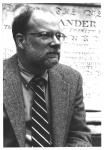
John Steele Gordon

John Steele Gordon has been a frequent contributor to American Heritage and the Wall Street Journal. He is the author most recently of An Empire of Wealth: The Epic History of American Economic Power (HarperCollins 2004). Gordon's writing concentrates on business and financial history, and his 1999 book, The Great Game: The Emergence of Wall Street as a World Power, 1653-2000, was adapted into a two-hour CNBC special. Gordon's writing has also been published in the Washington Post's Book World, Outlook, Forbes, and The New York Times.

Articles by this Author

A NEW BIOGRAPHY RESCUES A GREAT INNOVATOR FROM THE SHADOW OF CITIZEN KANE.
A couple of big mistakes in developing our own SST turned out to save us from commercial disaster.
It changed the course of capital punishment in America.
The game that has sold 200 million sets was born to teach its players about the evils of capitalism.
A 150-year-old invention keeps on remaking the world.
When politicians make business decisions on a heroic scale, heroically scaled calamities often result.
Novel, May/June 2000 | Vol. 51, No. 3
How a forgotten congressman’s crusade helped bring about the incredible growth of the internet and much else, besides
It took until late last year to undo the damage that Congress wreaked on the banking system in the 1930s.
How does one distill the millions of stories that are the history of Wall Street into a single book?
Like so much else, they’re a product of the Industrial Revolution.
She was the great financier’s librarian, and a good deal more.
Statistics help us comprehend the world sometimes.
The federal government handled it far better than it would later economic disasters.
His reputation obscures a complex man haunted by tragedy.
When Jerry Seinfeld pockets $250 million for the syndication rights to his show, he should thank the man who loved Lucy.
It was a bankrupt ruin by the 1660s, but the Saugus Ironworks foretold America’s industrial might.
The fate of the codfish suggests that collectivism on the ownership level is as destructive as anywhere else.
The lessons of their success
The son of an Italian immigrant built the largest privately-held bank in the world by helping other immigrants.
In a century of technological revolutions, this was perhaps the quietest.
In theory, it works fine. In practice, it has often made situations much worse.
Musical, May/June 1998 | Vol. 49, No. 3
The flagship Dewey took into Manila Bay still survives, but it needs help
When Irma Rombauer finally found a publisher for her famous cookbook, her troubles began in earnest.
The rush for treasure in the West is more than part of a picturesque past; it has profoundly shaped our present.
Will the current bull market die spectacularly, a la 1929, or—as in 1974—will it strangle in weird silence?
How a tireless impresario parlayed a cloud of smoke into several fortunes
The most glamorous business of the industrial era almost always lost money. But nobody paid a steeper price than Edward Knight Collins.

"WEB ONLY STORIES" BY THIS CONTRIBUTOR

Thirty years ago this week, rumors began circulating about the supposed extramarital affairs of Sen. Gary Hart, the leading candidate for the 1988 Democratic nomination for President. In response, Hart challenged the media. He told The New York Times in an interview published on May 3, 1987, that…
She was perhaps the most beautiful ocean liner ever built. Her three funnels (the aftmost a dummy) were raked and diminished in size from fore to aft. This gave her the sleek, powerful, forward-driving look that was the essence of the art deco style that so inspired her interior design. And in her…
It has all the hallmarks of an urban legend. A Midwestern state (which one varies with the telling) was so unsophisticated that its legislature once passed a law declaring the value of the mathematical constant pi to be 4 (or 3, or 3.2, or some other simple, exact number) instead of, as every…
Today is Alexander Hamilton’s 250th birthday. Unless, of course, it’s his 252nd. He claimed to have been born in 1757, but there is considerable nearly contemporary evidence that he was actually born in 1755. But there is no argument that he was not yet 50 when he died at the hands of Aaron Burr…
Gerald Ford was perhaps the most gifted natural athlete ever to occupy the White House. Captain of his high school football team and on the varsity of a major football power, the University of Michigan—where he was voted the most valuable player in 1934—he excelled as well in swimming, skiing,…
A new look at a man who “three Presidents served under.” Andrew Mellon (1855-1937) was the most historically significant secretary of the treasury since at least Salmon P. Chase during the Civil War and perhaps since Alexander Hamilton himself. Appointed by Warren Harding in 1921 he served until…
Pork is not a partisan issue and not a new one. The term “pork barrel” is over a century old in its political sense, an allusion to the regular handing out of joints of salted pork, stored in barrels, by plantation owners to slave families before the Civil War. Because it is believed with nearly…
I did not mean to imply that Alger Hiss passed atomic secrets to the Russians. I used the atomic secrets image only as an example of a serious disclosure of classified information, as opposed to the trivial “outing” of someone who has had a desk job at Langley for the last several years and is such…
The Nobel Prize for Literature has just been awarded to the British playwright and screenwriter Harold Pinter. The good news, I suppose, is that at least I knew who he was when I learned about his prize. That is a good deal more than can be said for Elfriede Jelinek, John Maxwell Coetzee, and Imre…
Ellen Feldman writes that post-election fatigue is an unlikely reason for President Bush’s recent troubles, given “the amount of time he spent vacationing at his ranch before Katrina.” I’ve taken a few cheap shots myself over the years, so I don’t much mind this rather gentle one, especially as I’m…