
New evidence finally settles the 150-year-old debate as to whether Alexander Graham Bell or Elisha Gray first invented the telephone.
-
Fall 2026
4 months ago By Edwin S. Grosvenor Volume71Issue4
Editor’s Note: Benjamin Brown is the former Chair of the Physics Department at Marquette University. He has spent years researching and writing about the invention of the telephone and is in the process of writing a book on the subject. This seminal essay provides important new evidence on the controversy.
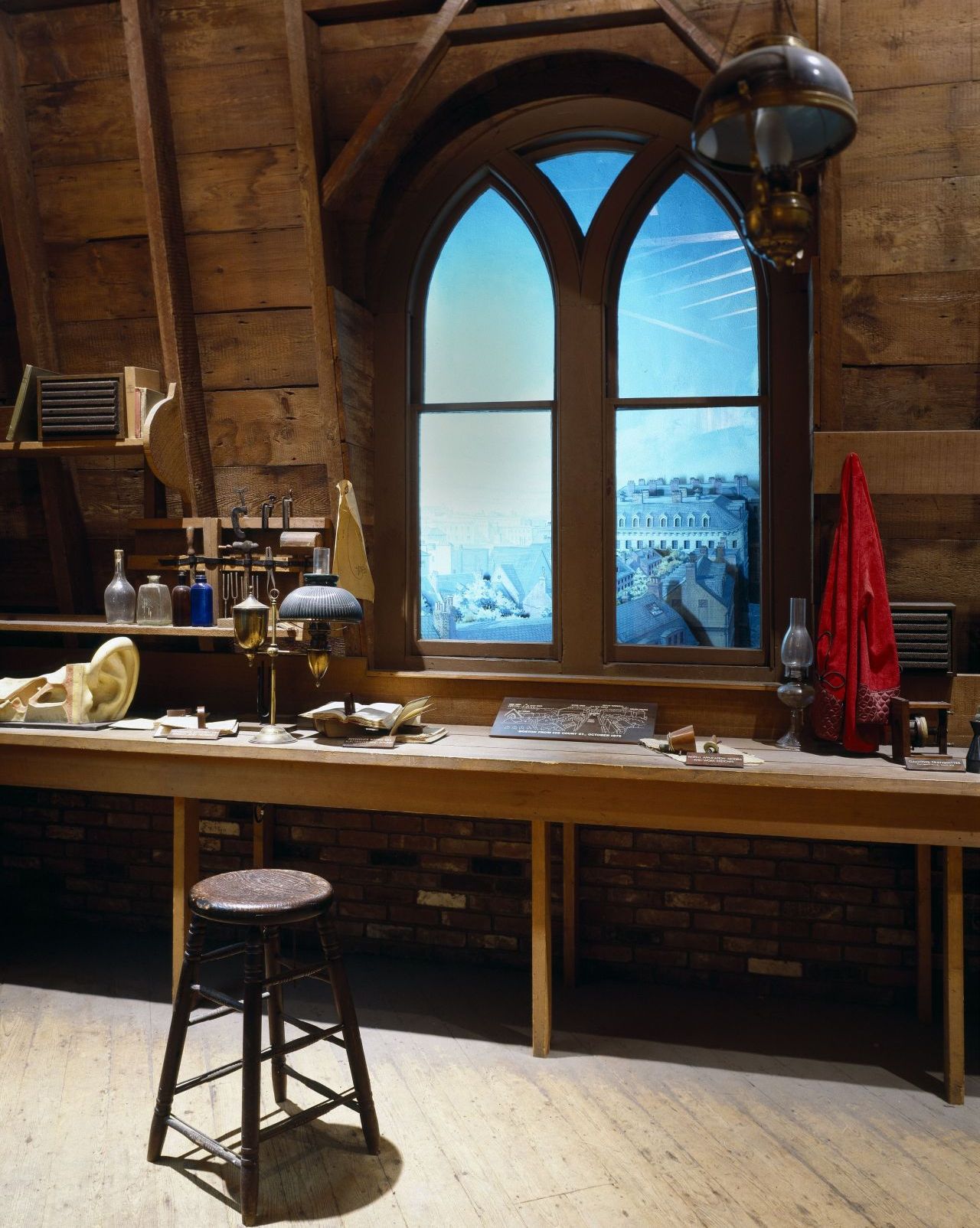
On March 10, 1876, in the attic room of a boarding house at 5 Exeter Place in Boston, Alexander Graham Bell was tinkering with a crude device in an attempt to transmit his voice over a wire to a distant room. It was a feat no one had ever successfully accomplished, although many had tried. Bell had been working on similar experiments for three years and had transmitted indistinct sounds the previous June, but up to that time, no one had ever transmitted intelligible speech by electrical wire.
On that day, Bell’s assistant waited at the far end of the wire with an equally crude electromagnetic receiving device. As Thomas Watson later wrote in his autobiography, “I was astonished to hear Bell’s voice coming from it distinctly saying, ‘Mr. Watson, come here, I want you!’”
Nearly a month before, on February 14, 1876, Bell’s attorneys had submitted his application for a patent that included the idea of a talking telegraph, or telephone. On March 7, 1876, the U.S. Patent Office granted Patent No. 174,465, titled “Improvements in Telegraphy,” to the 29-year-old inventor.
This would become the single most valuable patent in history. The theory underlying it, which no other inventor had understood, would revolutionize communication around the world and usher in the analog age with such inventions as the microphone, loudspeaker, sound recording, and early radio.
Although winning the patent was a triumph for Bell, suspicions immediately rose because on the very same day Bell had filed, February 14, a respected competitor, Elisha Gray, filed a similar telephone idea in a patent caveat — a placeholding document requiring a full application to be submitted within a year. Thus, the controversy was born, officially and unofficially, as to who originally conceived of the idea of the first working telephone.
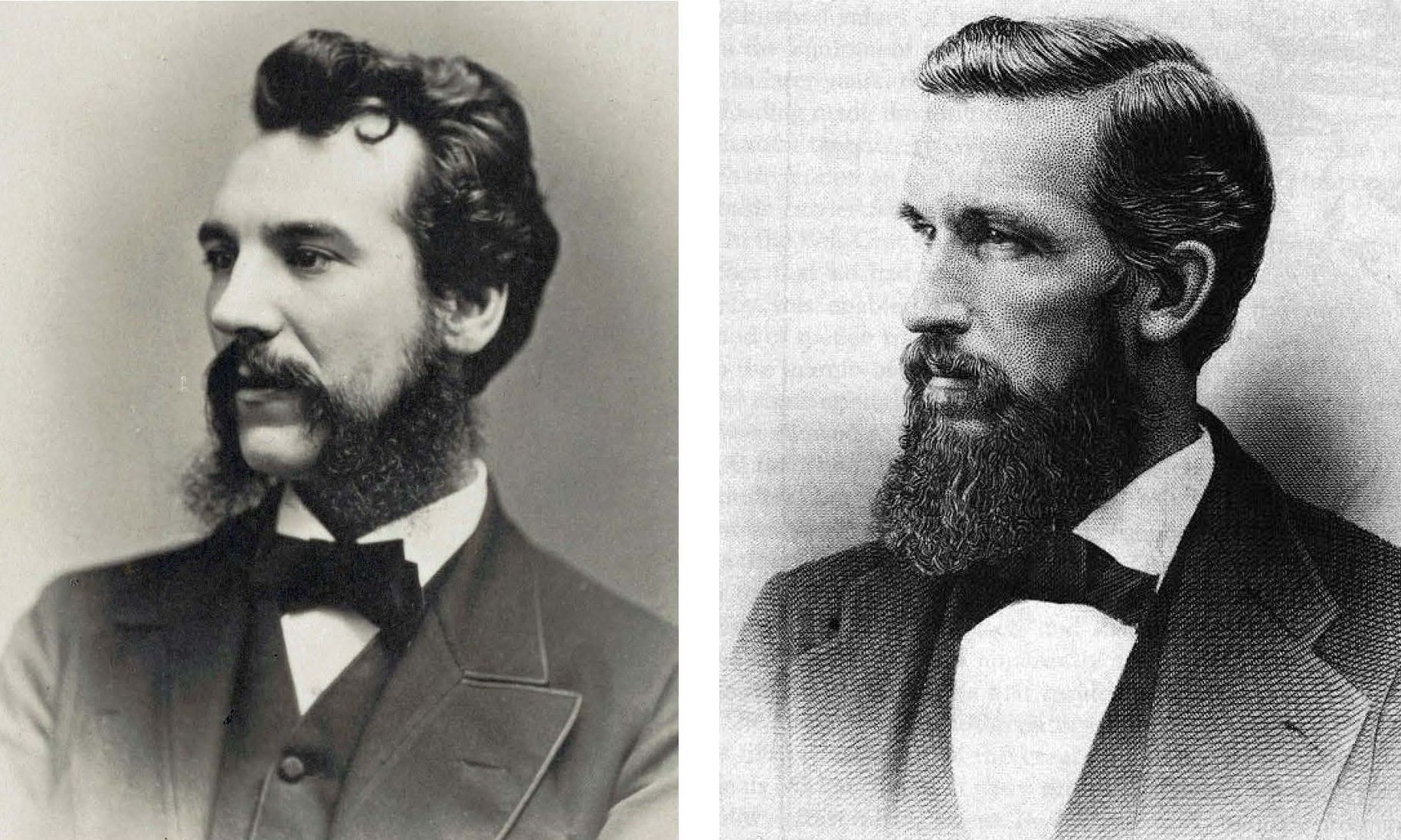
For many years some writers have claimed the idea for the telephone was stolen. Recent authors have kept the controversy alive, often portraying Elisha Gray as the underdog in the fight for inventive recognition and as a victim of those committing fraud. “Bell plagiarized the successful design for a telephone from his rival Elisha Gray,” claimed Seth Shulman in his 2008 book The Telephone Gambit. In another book due out next month, New York Times science writer James Gleick claims the apparatus that Bell and Watson used to make their famous call “was not theirs but rather Elisha Gray’s liquid transmitter, as described to Bell by a corrupt patent examiner.”
How is there still a question about the basic facts that after 150 years, and a mountain of evidence and testimony in hundreds of court cases ruled on by many different judges? Bell never lost a single one of the hundreds of legal cases. But writers with insufficient knowledge of the evidence and principles of physics involved in the telephone keep spinning the controversy.
For a review of recent books, see "The Truth about
the Telephone" by Edwin S. Grosvenor in this issue.
Happily, the digitization of many Bell family documents in the Library of Congress has provided easier access to primary sources. Evidence recently uncovered sheds important light on central facts in the history of telephony. Only now, after careful examination of long-overlooked letters and notes, can the question be decisively addressed.
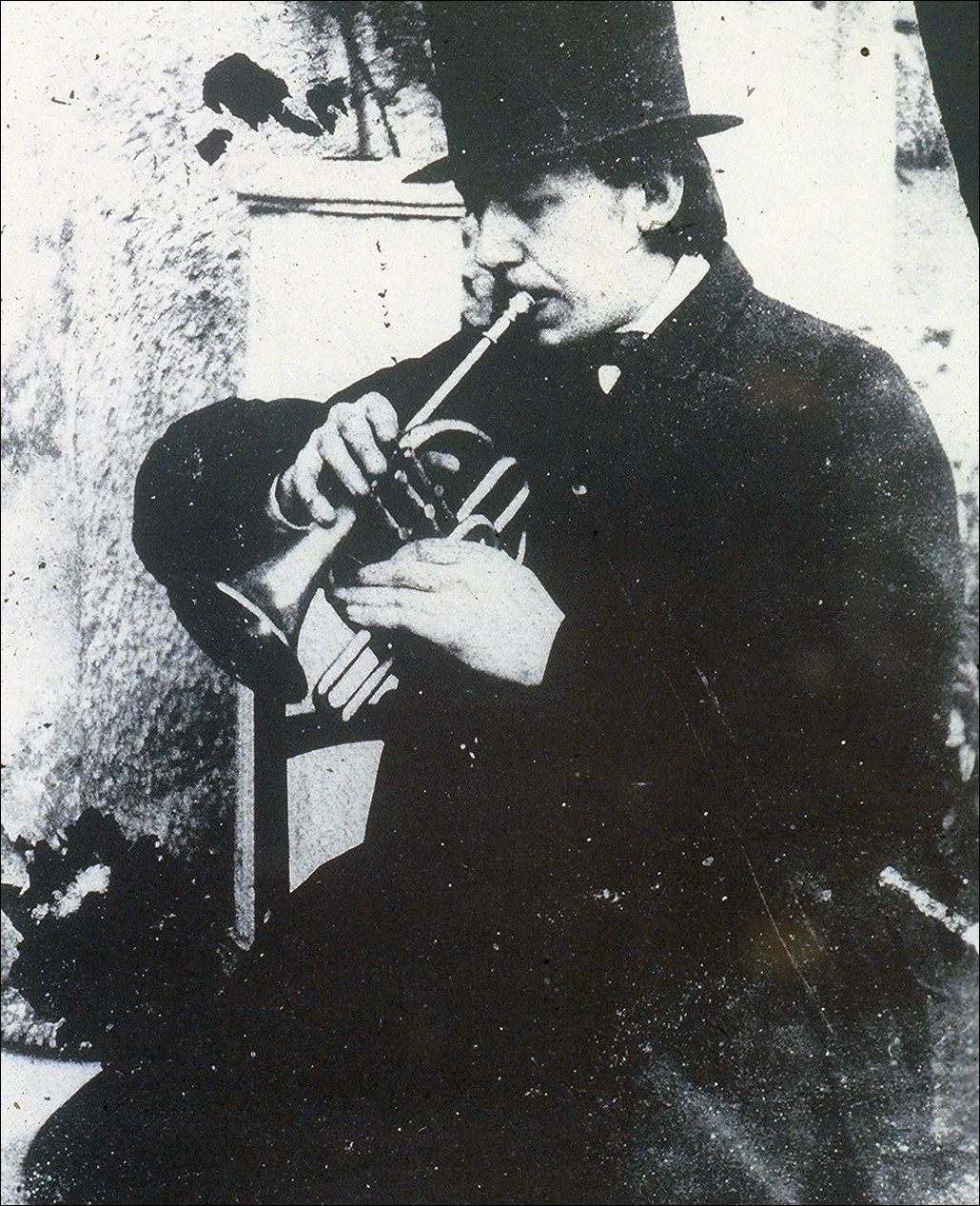
At the time of the invention of the telephone, Bell was a 28-year-old Scottish-born teacher of the deaf and a part-time Professor of Vocal Physiology at Boston University. His father and grandfather were both experts in elocution, and his father Melville Bell had devised an ingenious system called “Visible Speech,” which was capable of transcribing any sound the human mouth could make.
Bell’s formal training as a pianist gave him an ear for pitch and timbre that allowed him distinguish the faint, complex sounds coming from his experimental apparatus, sounds a less practiced listener would have dismissed as noise. He had developed a strong background in acoustics, hearing, and the mechanics of human speech that his electrician competitors lacked.
By 1874, both Bell and Gray were working on perfecting a multiple telegraph that could send eight or more telegraph signals over a single wire using different tone frequencies. Their telegraph work would lead both of them later to their telephone ideas. Bell and Gray both submitted similar patent applications for the multiple telegraph within two days of each other in February 1875 that ended up in interference proceedings with two other inventors. Such proceedings were designed to determine primarily who conceived of the idea first, not who was first to file an application. In addition, the patent office considered the inventor’s diligence and whether they were the first to reduce the invention to practice.
Beginning in October 1874, Bell received modest financial support for his experimental telegraph work from Gardiner Greene Hubbard and Boston businessman Thomas Sanders. Bell had been hired to tutor their totally deaf children, Mabel Hubbard and George Sanders, and he had shared with Hubbard his promising ideas for the harmonic telegraph that used vibrating reeds and magneto-electric devices.
Hubbard was particularly interested in this technology because he believed it could help challenge the Western Union Telegraph Company, then one of the largest and most powerful corporations in the world. From 1869 through 1876, Hubbard had repeatedly lobbied Congress for a “postal telegraph” system to compete with Western Union.
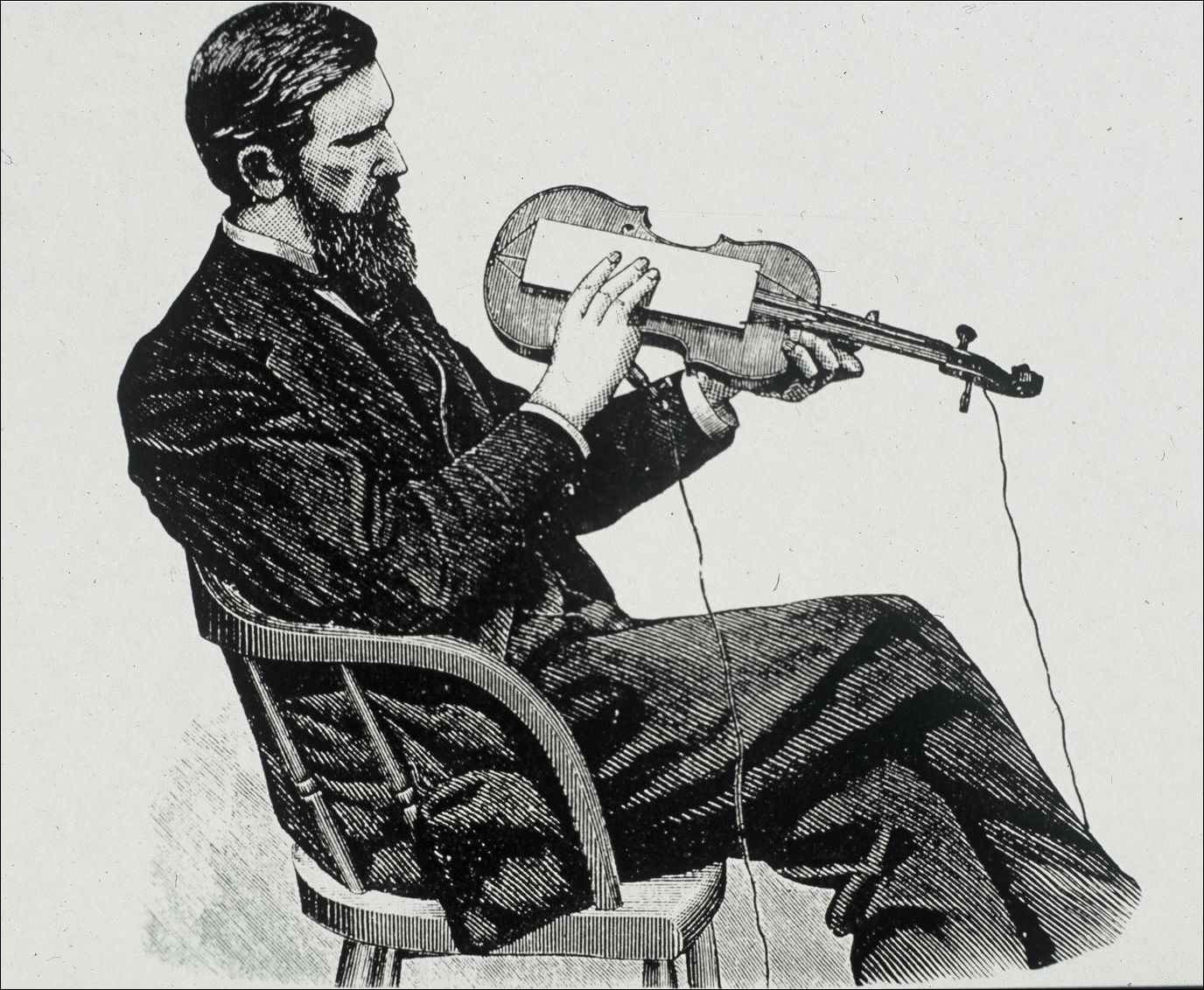
Elisha Gray's 1874 device was an early electronic musical instrument and tone transmitter that used tuned steel reeds and electromagnets to play and send melodies over standard telegraph wires. Gray was a 40-year-old professional inventor with many telegraph devices already to his credit. Motivated to create inventions that he felt could provide a strong monetary return, he was preoccupied with his harmonic telegraph in these years. Together with Enos Barton, he had founded Gray and Barton in 1869, which a few years later became Western Electric, the main supplier of equipment to Western Union. Gray sold his interest in 1875 to pursue independent invention, and he reportedly earned about five times more than Bell in his lifetime.
On February 11, 1876, Gray first documented his telephone in a sketch featuring a liquid transmitter — similar to Bell’s claimed idea that he had written 30 days before on January 12 — that could turn vibrations in air into a varying electric current capable of producing proportional vibrations at a distant electromagnetic receiver. It was a simple device, consisting of a wire attached at one end to an acoustic diaphragm. The other end of the wire was immersed in a conducting liquid, with an additional electrode placed in the liquid to complete the circuit.
On February 14, 1876, Bell filed his patent application for the telephone based on three years of work, while on the same day Gray filed his patent caveat, the description of a device he hoped to invent.
The majority of Bell’s patent application involved sending multiple telegraph signals over a single wire, but he also included a powerful fifth and final claim: “The method of, and apparatus for, transmitting vocal or other sounds telegraphically, as herein described, by causing electrical undulations, similar in form to the vibrations of the air accompanying the said vocal or other sounds, substantially as set forth.” This pioneering claim was never overturned in the U.S. courts.
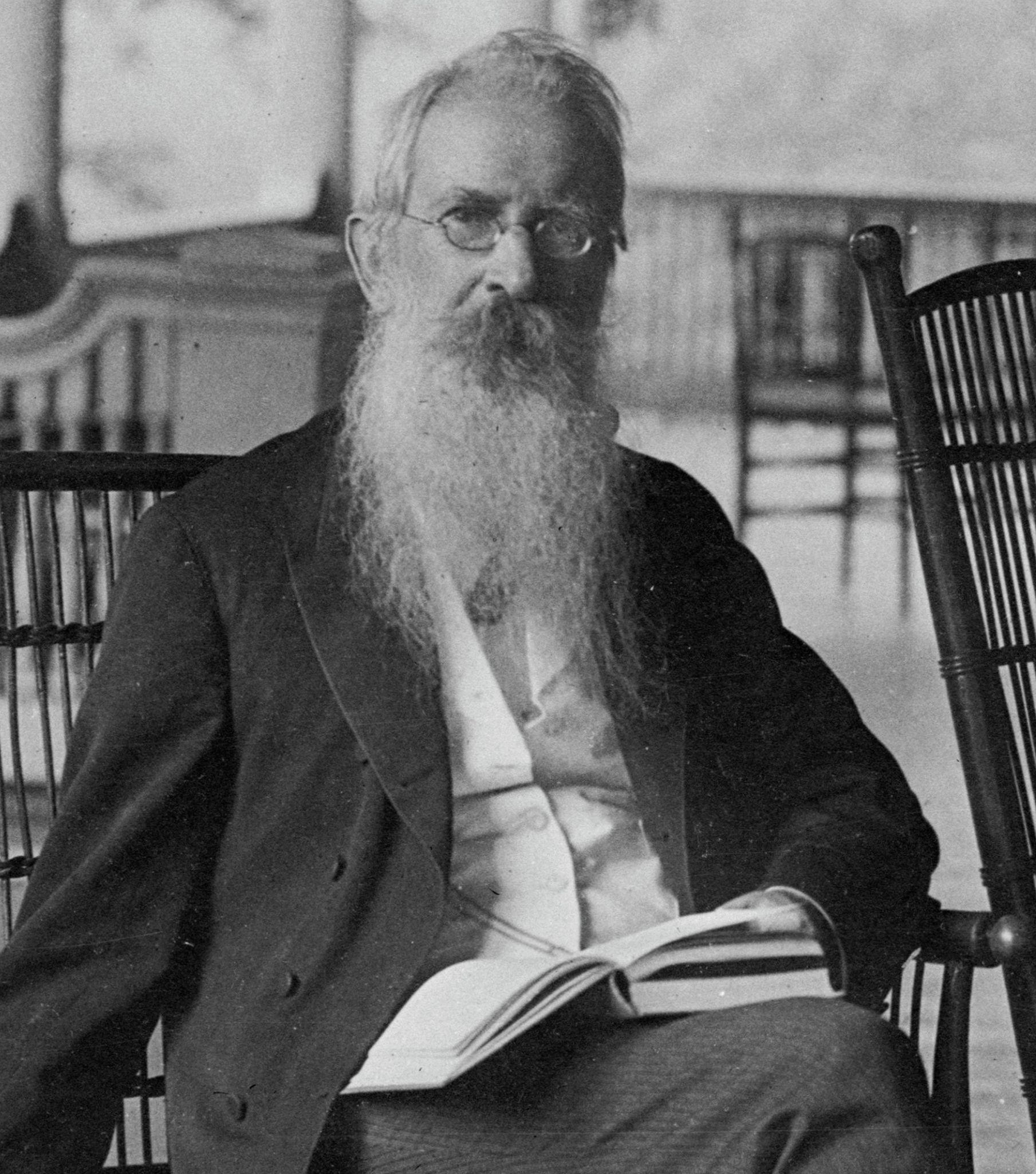
According to Watson’s recollections, Bell was highly motivated by his desire to marry Mabel Hubbard. Gardiner Hubbard was a successful Boston attorney and community leader. Although ten years her senior, Bell had fallen in love with Mabel while helping her to improve her speech. She was initially surprised to learn of Bell’s affection since she thought he was much older. Bell’s status as a poor Scottish immigrant had to be improved if he was to have a realistic chance to marry Mabel, and invention seemed to be his best avenue of success at the time. But was this motive so great that it compromised his integrity, as several authors have claimed?
Without doubt, he was also driven by his curiosity about the functioning of the ear and the voice, and by his professional desire to help the deaf communicate effectively.
In the summer of 1874, Bell first conceived the design of the telephone as a whole when he was at what he called his “dreaming place” overlooking the Grand River behind his parents' home in Brantford, Ontario. He pictured a harp with an iron reed above an electromagnet for every pitch of the voice, one harp at the transmitter and a matching harp at the receiver, the two connected by a pair of wires. The harp itself was unnecessarily complicated, but from that afternoon he treated the speaking telegraph as a problem he could solve. Bell eventually determined that one iron acoustic diaphragm near one electromagnet could do what the whole set of reeds was meant to do.
The idea of sending voice by wire became an obsession, and he worked tirelessly on the quest in parallel with his harmonic telegraph efforts for more than two years leading up to his famous patent. Hubbard initially opposed Bell’s telephone ideas, preferring him to concentrate only on the harmonic telegraph.
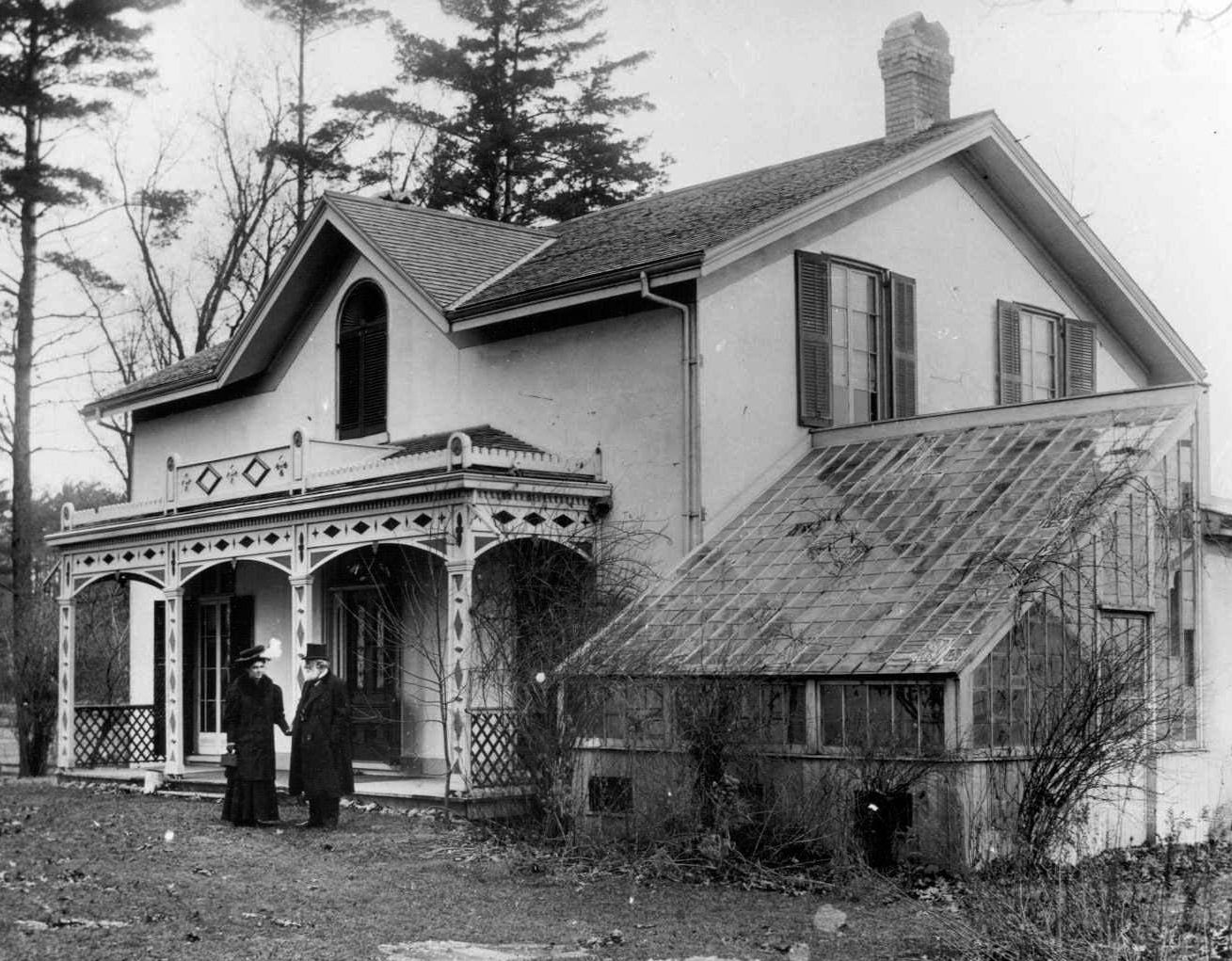
After his patent was issued, Bell returned to improving his original electromagnetic transmitter idea. It used a vibrating diaphragm attached to a magnet and coil to generate undulating electrical currents corresponding to sound waves, which were then converted back into sound by his similar receiver at the other end. He demonstrated this telephone in public lectures, and it became part of the first commercial telephone. It was superseded within a few years by the carbon microphone, invented independently by Thomas A. Edison, Émile Berliner, Francis Blake, and others, which used the variable resistance principle to create a much stronger signal.
Ironically, neither the liquid telephone transmitter nor the harmonic telegraph proved reliable due to inherent technical limitations.
Who Actually Had the Idea of the “Talking Telegraph” First?
Gray stated in legal proceedings that his path to his telephone idea began in early October 1875 in Milwaukee, when he saw boys playing with a simple string “tin-can” telephone. Yet merely thinking of a concept, even if complete, does not qualify as conception under patent law — the idea must be documented.
It was not until Friday, February 11, 1876 — just three days before his caveat was filed — that Gray made a sketch of his liquid-transmitter telephone. He had shown little interest in anything telephone-related or in liquid transmitters before this. By his own admission, the only time he spent on the talking telegraph until late in 1877 was from Friday, February 11, to Monday, February 14, and in a brief but unsuccessful attempt to make his device work in July 1877, after he had seen Bell’s telephone demonstration before the Philadelphia Centennial Exhibition judges.
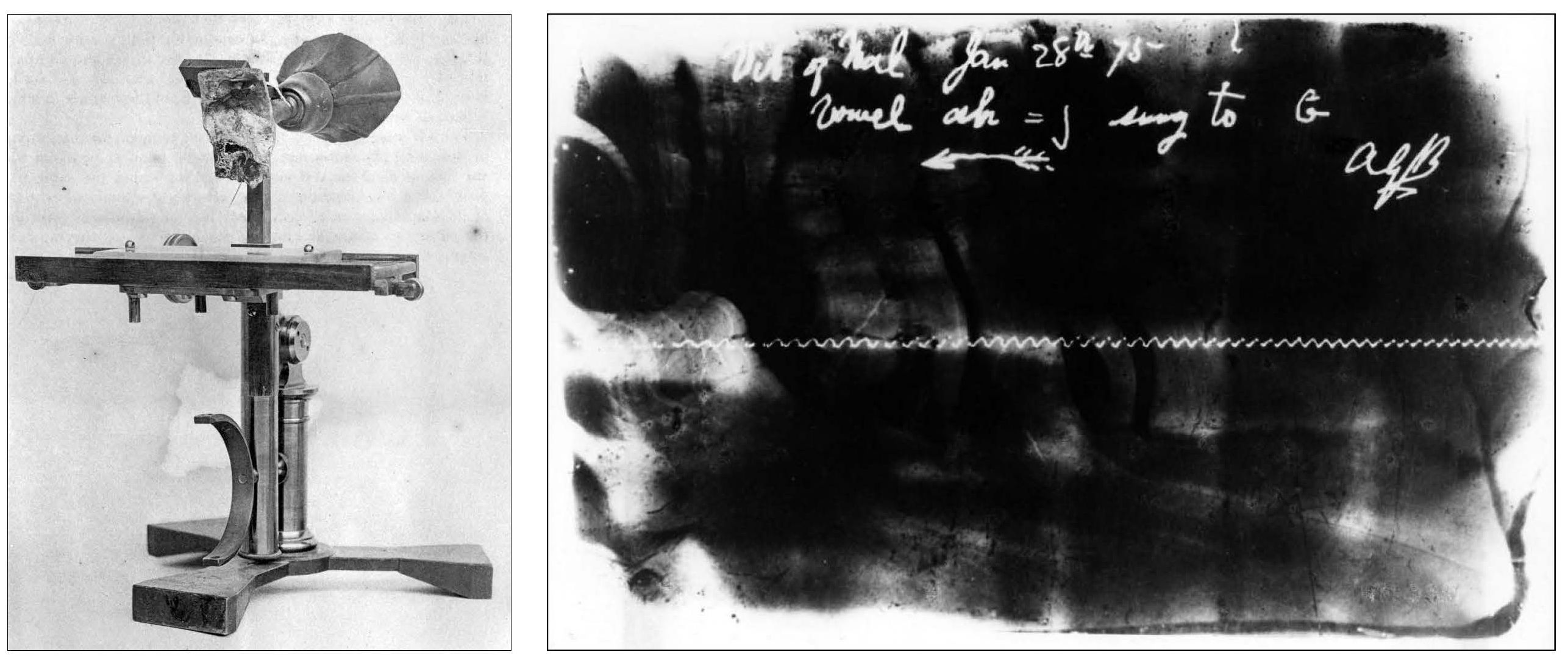
As a 19-year-old in Scotland, Bell had studied Helmholtz’s seminal work on acoustics, On the Sensations of Tone, and realized that vowel sounds were formed by multiple simultaneous frequencies.
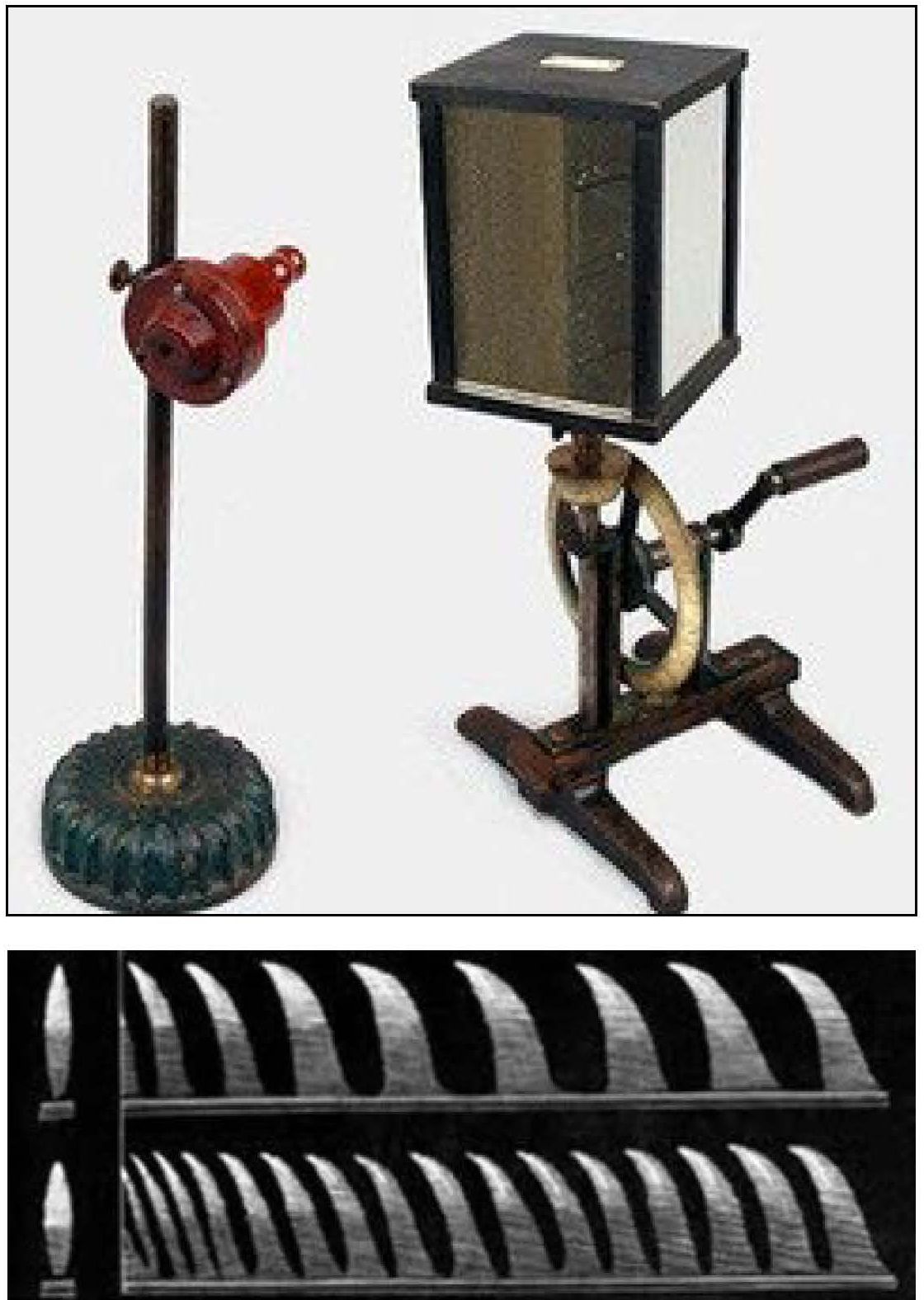
Subsequently, in Boston, Bell studied acoustics to help deaf individuals learn to speak. This work included experimenting with two devices that made sound vibrations visible: the phonautograph and Koenig’s manometric capsule. This study helped him to realize that complex waveforms were required to reproduce various sounds, including the human voice. He experimented with magnetic and liquid tone transmitters for two years before his famous patent was filed, even attempting voice transmission with the former as early as June 1875.
Bell traveled to Washington, D.C., from February 26 through March 5, 1876, to visit patent examiner Zenas Fisk Wilber in the Patent Office to deal with potential interference issues. Bell’s detractors have theorized that Wilber might have illicitly shown Gray’s caveat to Bell during this trip, or his attorneys might have seen Gray’s confidential caveat sometime around February 14, and subsequently added a liquid transmitter to Bell’s patent. Either action would have been a serious violation of a Patent Office statutory requirement of confidentiality for patent and caveat applications.
In his February 14 specification, Bell referred to his liquid transmitter work in his patent issued the year before. He wrote:
Bell wrote to his father on February 29 that Wilber stated in their meeting that he had missed this detail in Bell’s prior application, and that he allowed him to include the foregoing statement in his 1876 patent. This accurately describes a variable resistance liquid transmitter creating a binary, pulsatory current, a year before he succeeded with a continuously variable liquid transmitter. He had also written in a letter on May 4, 1875, that, in theory, the changing resistance in a circuit due to a sound wave impinging on a wire could be used to create an undulating current.
On June 2, 1875, Bell and Watson had also accidentally discovered that complex sounds could be transmitted by a continuously undulating current in a wire. Watson recalled in his autobiography Exploring Life: “One of the transmitter springs I was attending to stopped vibrating, and I plucked it to start it again. It didn’t start and I kept on plucking it, when suddenly I heard a shout from Bell in the next room, and then out he came with a rush, demanding, ‘What did you do then? Don’t change anything. Let me see!’”
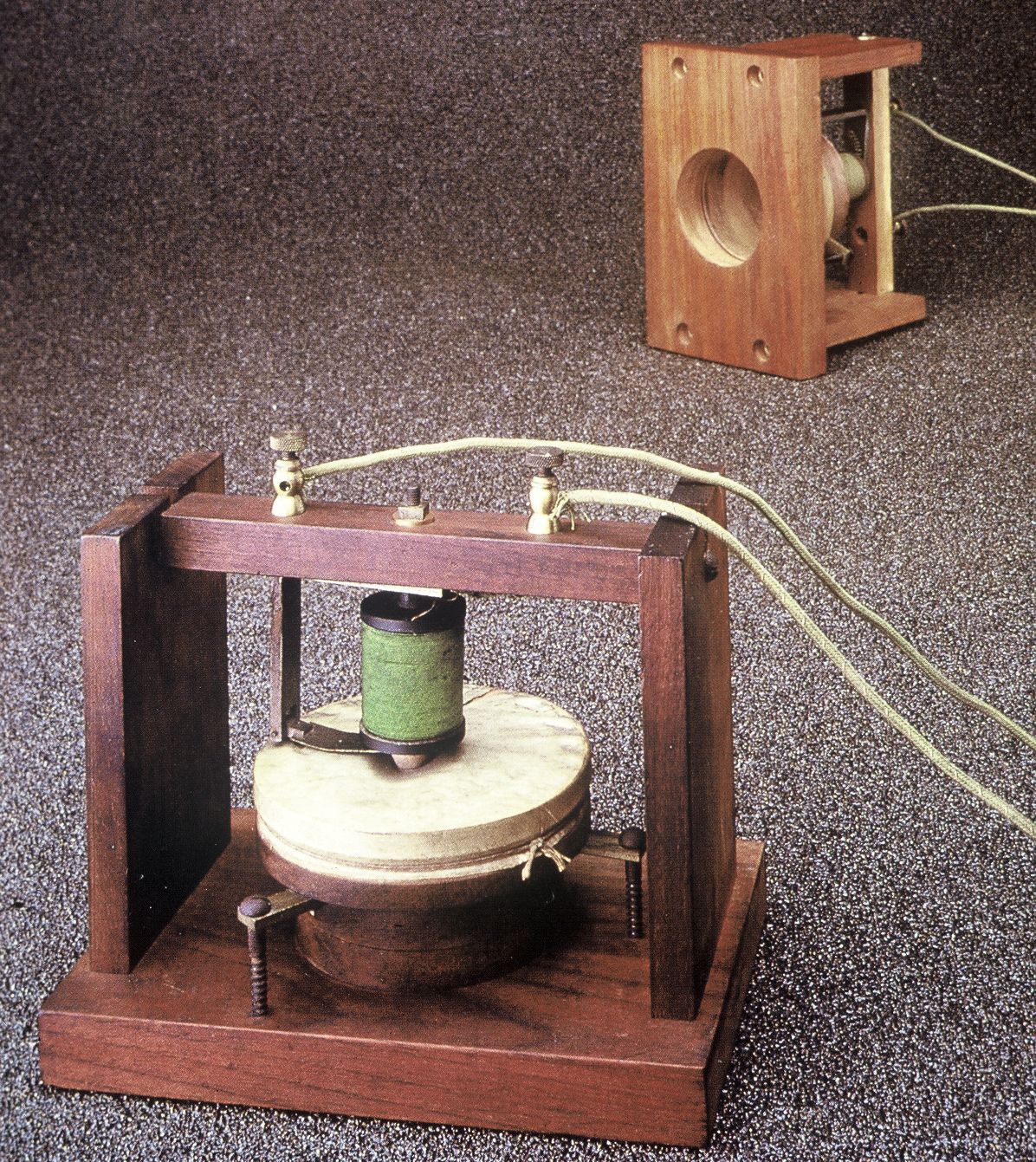
This immediately led Bell to conclude that it was possible for an undulating current to recreate all the various tones and colors of the human voice. That was the real breakthrough. By this time, the groundwork for Bell’s first successful telephone had been laid.
Gray also made impressive progress with his harmonic telegraph during this period, even creating what is considered the first musical tone synthesizer with a piano-like keyboard. But he seemed to almost avoid thinking about the telephone for the most part. He sought financial gain with his many inventions, but ironically, he did not think that the telephone would be profitable. In October 1875, Gray wrote his attorney that Bell’s work on “vocal telegraphy” was “of certain scientific interest but is of no commercial interest at the present time...” In November of the following year, eight months after Bell’s patent was issued, he wrote that the telephone “only creates interest in scientific circles, and, as a scientific toy… so its commercial value will be limited.” His initial lethargy on the development of the speaking telegraph was something that he bitterly regretted in his later years.
According to the circumstantial evidence, the two inventors could have been working independently on their inventions, or there could have been more nefarious actions. Nearly simultaneous inventions are not unusual. However, the possibility that Bell plagiarized Gray’s work gave competitors and Bell’s detractors a way to advance their agenda and capture the public’s attention. The allegations surrounding Bell’s character have persisted for the past one hundred and fifty years, first in courtrooms and newspapers, and more recently in books, TV presentations, and the internet. Time has seemed to increase the volume of the controversy rather than diminish it.
The central issue is well defined: Did Bell or his associates plagiarize Gray’s caveat? Exactly when was the critical gap in Bell’s patent — the “hole” — filled with the concept of the liquid transmitter? In early copies of his patent specification from October 1875, Bell made no mention of a liquid transmitter. He testified in legal proceedings that he added it to his specification at the last minute on January 12, 1876.
The critical date for Gray is February 11, 1876, when Gray documented his liquid transmitter telephone idea. If Bell had already conceived of the idea before that date, the long-standing shadow cast on his invention can finally be lifted.
Conclusive Evidence in a Love Letter and Contemporary Notes
There are two primary sources that have recently been uncovered that give independent and definitive answers on whether Bell plagiarized Gray. The first is a love letter from Bell’s fiancée, Mabel Hubbard, and the second is a record made by Bell’s associate, George Brown. These directly rebut the two fundamental arguments in favor of Gray.
In a last-minute argument before the U.S. Supreme Court in 1887, attorney Lysander Hill for the People’s Telephone Company claimed that Bell had obtained his patent by fraud. He asserted that Bell’s attorneys had filled the hole, or gap, in the patent specification with Gray’s liquid transmitter idea in the week of February 14–19. Bell was in Boston at this time.
On the night of January 12, Bell had agreed to stay at the Hubbard home in Cambridge to watch over the household and Mabel, who was mildly ill upstairs, while the family was out of town. He was under intense pressure from Hubbard to complete the specification and forward it immediately to him in Washington, D.C. The original document shows additions, including the liquid transmitter, scribbled in Bell’s handwriting vertically in the margin. Gray’s advocates feel that Bell added these details after the fact to cover up plagiarism by his attorneys. However, this document was never pointed to in legal proceedings, and it remained obscure until published by historian Bernard Finn in 1966. The marginal additions seem more consistent with a last-minute addendum, and page 9 of the 10-page document is in Mabel’s handwriting, confirming that she was involved in copying the specification.
In a letter from Mabel Hubbard, then Bell’s fiancée, to Bell dated five days later, on January 17, she mentions covering up the hole in the specification:
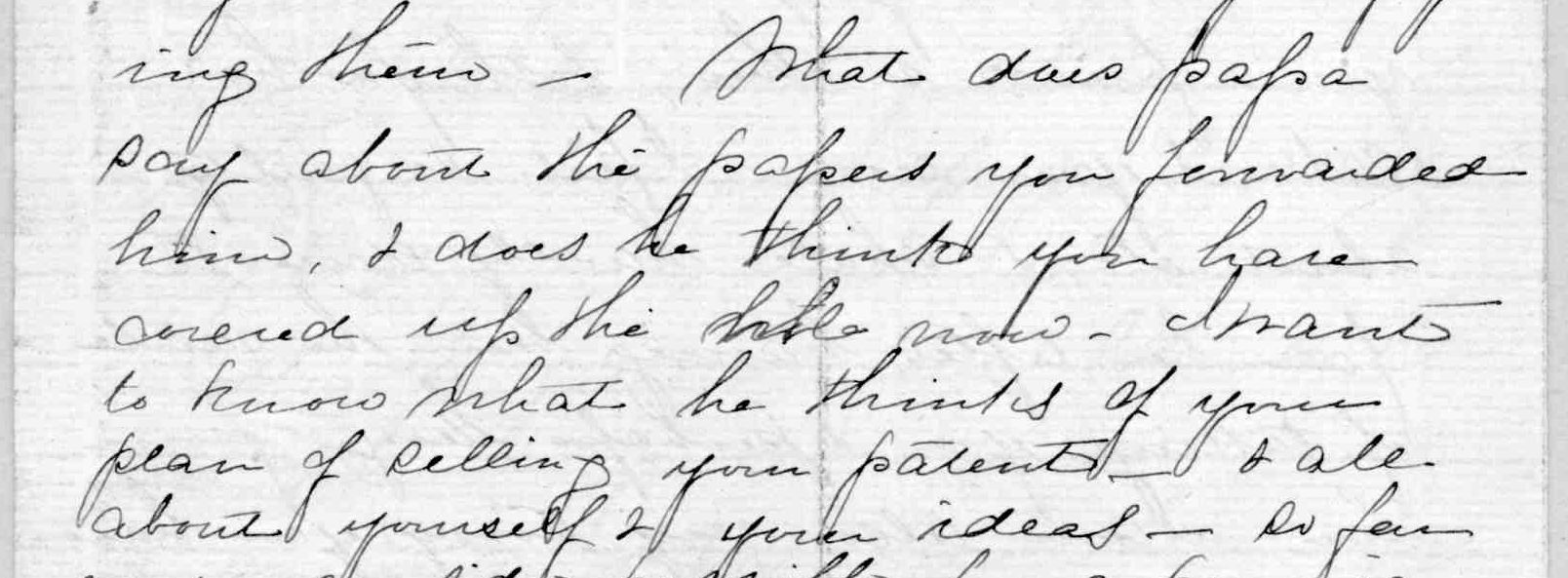
In the 1939 film The Story of Alexander Graham Bell (starring Don Ameche as Alexander Graham Bell and Loretta Young as Mabel), a dramatic scene takes place in which a fictitious love letter from Alexander Graham Bell to Mabel saves the day in court and proves that Bell’s patent idea had priority. Reality now strangely imitates fiction, but with a twist: a letter from Mabel to Bell finally provides resolution on the issue of when Bell filled the “hole” in his patent application, some 25 days before Gray’s first documented telephone idea.
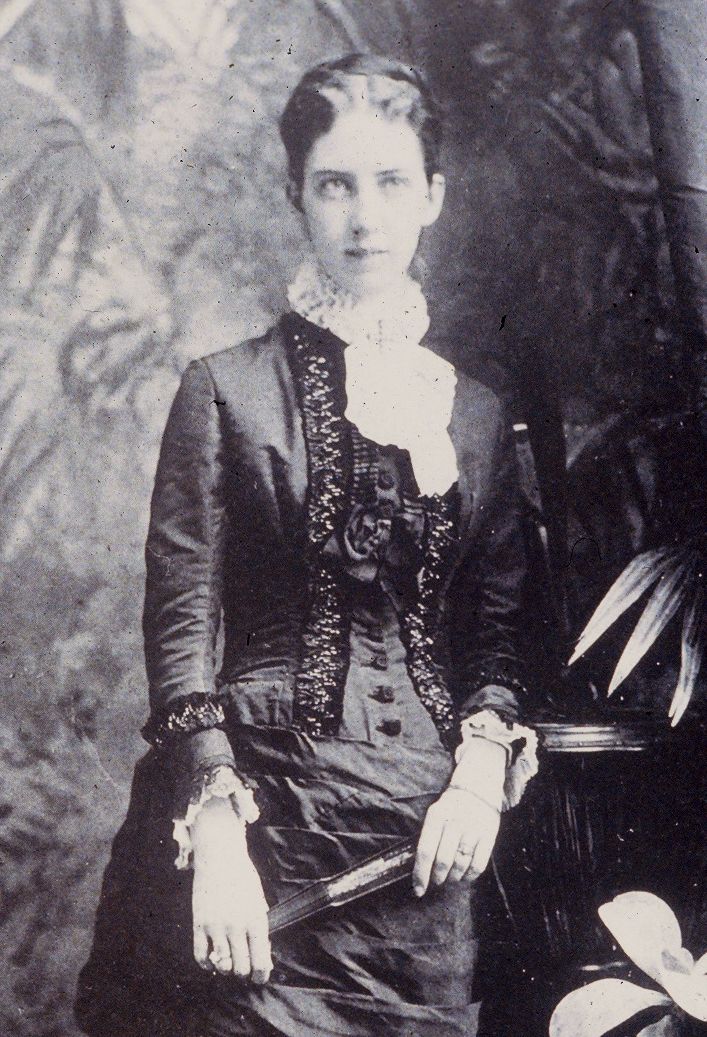
The exact context of Mabel's letter is provided by Bell in a private letter to Hubbard two years later, on March 14, 1878. Bell recalled the moment:
I said ‘I felt there was a hole in the specification’… the thought suddenly occurred to me that the undulating current would be produced by varying the resistance of the circuit and told Miss Hubbard, who was present, that I could now fill up the hole in the specification [emphasis added]. I at once embodied the idea… the external resistance would be varied by vibrating the conducting wire in a liquid included in the circuit.
Mabel mentioned the hole again in an October 31, 1922, letter to the new owners of the Hubbard family home in Cambridge, Massachusetts:
This was a strong memory for Mabel, and her recollection here matches her January 17 letter 46 years earlier. When she wrote this, Bell had passed away four months earlier, on August 2, 1922. Mabel would soon follow him about five months later, on January 3, 1923. Their marriage had lasted 45 years.
Supporting this evidence is another key document from the same period. On January 25, eight days after Mabel’s letter, Bell met in New York with Gardiner Hubbard, attorney Anthony Pollok, and the Hon. George Brown. Brown was a wealthy Canadian politician and founder of the Toronto Globe newspaper who was sailing for England the following day partly to pursue foreign patent opportunities for Bell in exchange for half ownership of all of Bell’s foreign patents. (It turned out that Brown, receiving mixed advice in England, did not follow through with any patent filings, which cost him and his brother a great fortune.)
Brown’s notes from the meeting briefly describe five patent specifications that he was carrying to England. He meticulously recorded receiving specifications 2 and 3 “herewith,” and three working models for specifications 1, 2, and 3 also conveyed “herewith.” But he does not mention receiving specification number 5 at the meeting, the telephone specification. Thus, he would have had to carry a previously prepared specification number 5 with him to England. Brown’s surviving copy lacked the liquid transmitter description.
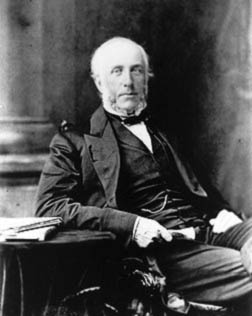
Hill had argued before the Supreme Court that Bell must have given Brown an up-to-date January 20 notarized telephone patent specification at their meeting on January 25. Hill concluded that Bell had not realized the liquid transmitter idea at this point in time, since the liquid transmitter was not in the Brown copy on record. He surmised that it was added (the hole was filled) by Bell’s attorneys after illicitly seeing Gray’s caveat submission of February 14. This rather convoluted argument required that Patent Office officials collude with Bell’s attorneys in allowing his specification to be altered after submission.
The problem with this argument now is that Brown’s notes tell a different story. The only opportunities to convey Brown’s copy to him were in person in Toronto on December 29, 1875, by mail in the first few days of January, or at the January 25 meeting, according to Bell’s testimony. Brown’s notes eliminate the latter possibility. In the first two cases, the version of the specification then would have naturally lacked the January 12 liquid transmitter description. Bell also testified that it must have been an oversight that Brown was not given an updated copy on January 25. Thus, nothing was amiss here. Brown’s notes eliminate Hill’s only tangible evidence of fraud on or around February 14.
The Supreme Court largely rejected Hill’s claim of fraud on a different but similar line of reasoning, noting that the copy Brown possessed appeared to be an early draft addressed directly to the U.S. Patent Office that differed from the final version in at least 30 different places. They unanimously agreed on this point, and that Bell, Bell’s attorneys, and Patent Office officials were unlikely to have engaged in the infamous activity suggested.
Independently, these primary documents fully support Bell’s testimony that he had entered the liquid transmitter concept into his specification on January 12. The thirty-day gap proves that Bell preceded Gray in his documented conception of the liquid transmitter telephone.
In addition, the telephone designs of Bell and Gray were notably different, indicating that neither copied technical details from the other. Bell’s first successful telephone had the electrodes widely separated with the wire attached to the acoustic diaphragm barely in contact with the liquid surface. Gray’s design specified electrodes immersed in the liquid as close together as possible without touching.
But what about the other claims that Bell and his associates committed fraud? First, it is necessary to gain context by discussing the intense reaction of those who wanted to nullify Bell’s patent for their own gain.
Who Was David, Who Was Goliath?
Gray’s proponents portrayed Bell as part of a powerful business organization that exerted its influence in the Patent Office and portrayed him and his attorneys as unethical. However, evidence shows the exact opposite is more accurate.
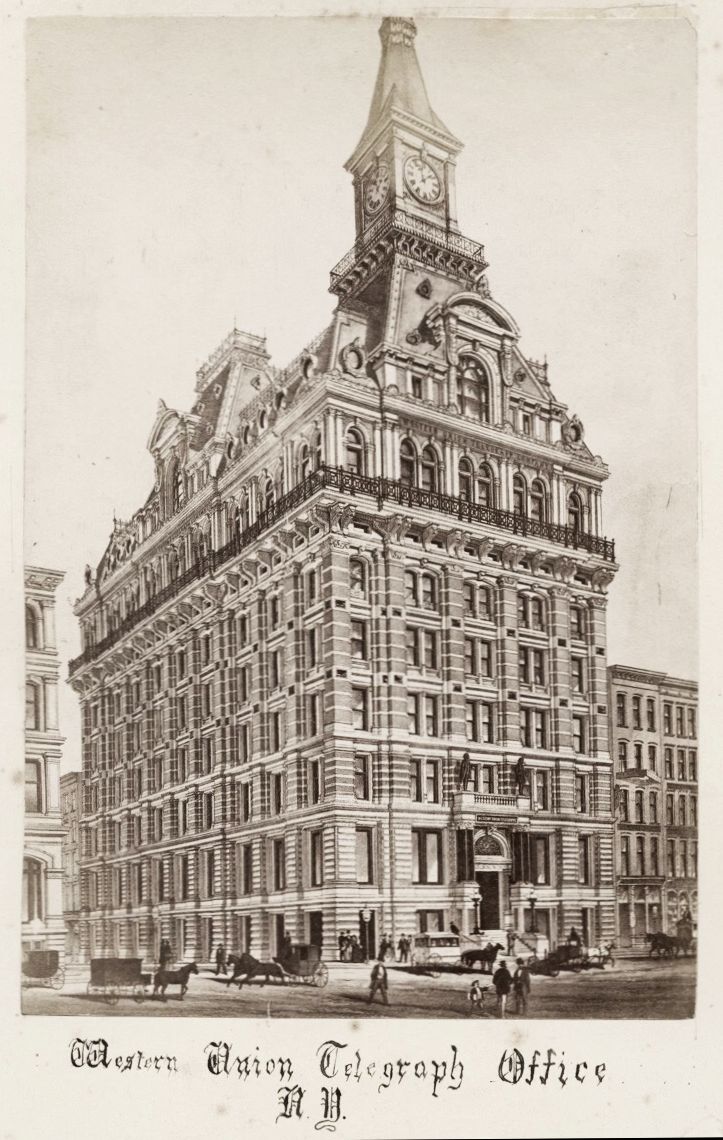
On July 9, 1877, Bell, Hubbard, and Sanders formed an unincorporated voluntary association. They assigned the telephone patents to Hubbard as trustee of the group, which leased instruments through local agents instead of selling them. By the end of July 1877, there were 778 telephones in service, but the company was tiny compared to Western Union — arguably the world’s wealthiest corporation with a near monopoly on communication.
Two days after the Bell association was formed, Mabel and Bell were married, and Bell gave all but a few shares of his 30 percent stock ownership to Mabel as a wedding gift. He had little interest in corporate affairs or governing boards. The Bell Telephone Company was formally incorporated a year later in July 1878. (The company took on several different names in the next decades as ownership expanded, but the term “Bell Company” will be most often used for these derivatives in what follows.)
The telephone first became popular with businesses and gradually it caught on with the general public. In a letter to his father written the day of his successful experiment, Bell predicted: “The day is coming when telegraph wires will be laid on to houses just like water or gas — and friends converse with each other without leaving home.” This vision separated Bell from the telegraph experts at the time, and it was an additional motivation for following through with his work.
By the end of 1877 there were 5,491 telephones in service. Western Union finally responded to the threat to its telegraph dominance by creating a subsidiary on November 17 called “The American Speaking Telephone Company.” They acquired the rights of Gray, Edison, and Amos Dolbear to devices related to the telephone, and Edison developed a carbon microphone transmitter that worked better than Bell’s.
What began as a contest between two inventors became a mammoth struggle when the tiny Bell Company sued Western Union for patent infringement in September 1878 in the case known as the “Dowd” suit, after telephone sales agent Peter Dowd. Western Union, which influenced the media with large advertising purchases, planting newspaper stories implying that Bell gained his ideas from Gray, that Bell was not skilled at inventing, and that the U.S. Patent Office was corrupt.
Western Union’s corporate disinformation campaign went on at various levels for some time. They also sponsored an authoritative-sounding book in 1878 by George Prescott that promoted Gray and Edison over Bell. Prescott revised his history in 1883, while still working for Western Union, in a subsequent book titled Bell’s Electric Speaking Telephone. Western Union used its influence over telegraph rates to shape press coverage and attack adversaries for nearly six decades, protected by political allies receiving favorable publicity. This era gradually ended when the Justice Department finally forced the issue beginning in about 1907, breaking Western Union’s exclusive grip on the press.
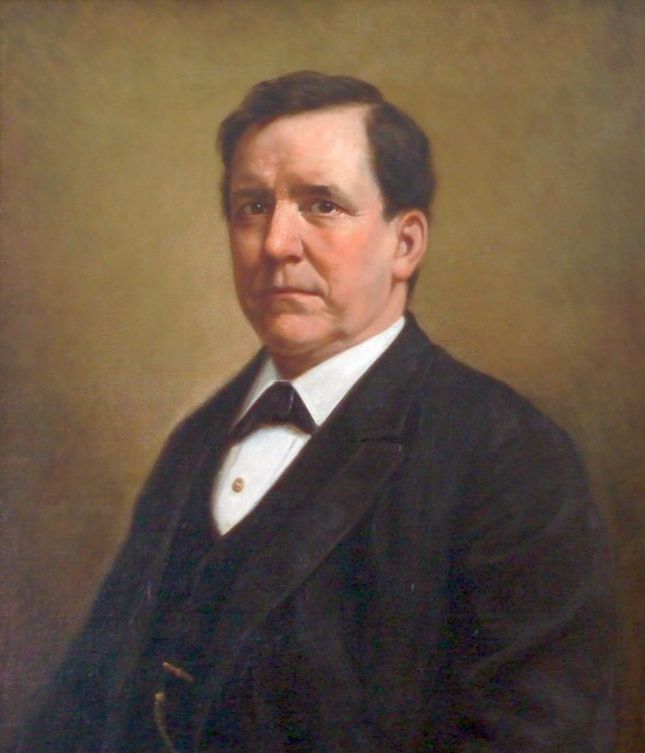
The Dowd case was settled by consent decree in 1879 when Western Union’s attorneys determined that the Bell patent would likely prevail. Both parties were eager to settle. Western Union transferred all patent rights to the telephone, including those of Gray and Edison, and they sold all telephone equipment to the Bell Company. In addition, they officially recognized Alexander Graham Bell as the inventor of the telephone. In return, they received 20 percent of the rental income from Bell telephones for the 17-year life of the patent. It was a major victory for the Bell Company.
The Dowd case was only the beginning. For nearly two decades the Bell Company defended its patents in nearly 600 infringement lawsuits; five reached the Supreme Court, where there were a record fifteen thousand pages in evidence. All were decided in Bell’s favor. As historian Daniel Boorstin wryly observed, “The importance of any new technique in transforming American life could be roughly measured by the quantity of lawyerly energies which it called forth.”
Eventually, the U.S. government joined the effort to annul the Bell patents. In 1885 the office of U.S. Attorney General Augustus Garland filed suit charging that the patents had been obtained by fraud, which was the only avenue left to strike down a patent that had been repeatedly upheld.
The action had a dramatic reversal after the New York World revealed that Garland himself had earlier received stock, at little to no cost, amounting to 10 percent ownership in the rival Pan-Electric Telephone Company. Ownership was similarly shared in the company with select Congressmen and Senators to create influence. If the suit in what was often call the “Government case” against Bell had succeeded in annulling the original telephone patent, Garland and his co-conspirators would have become wealthy.
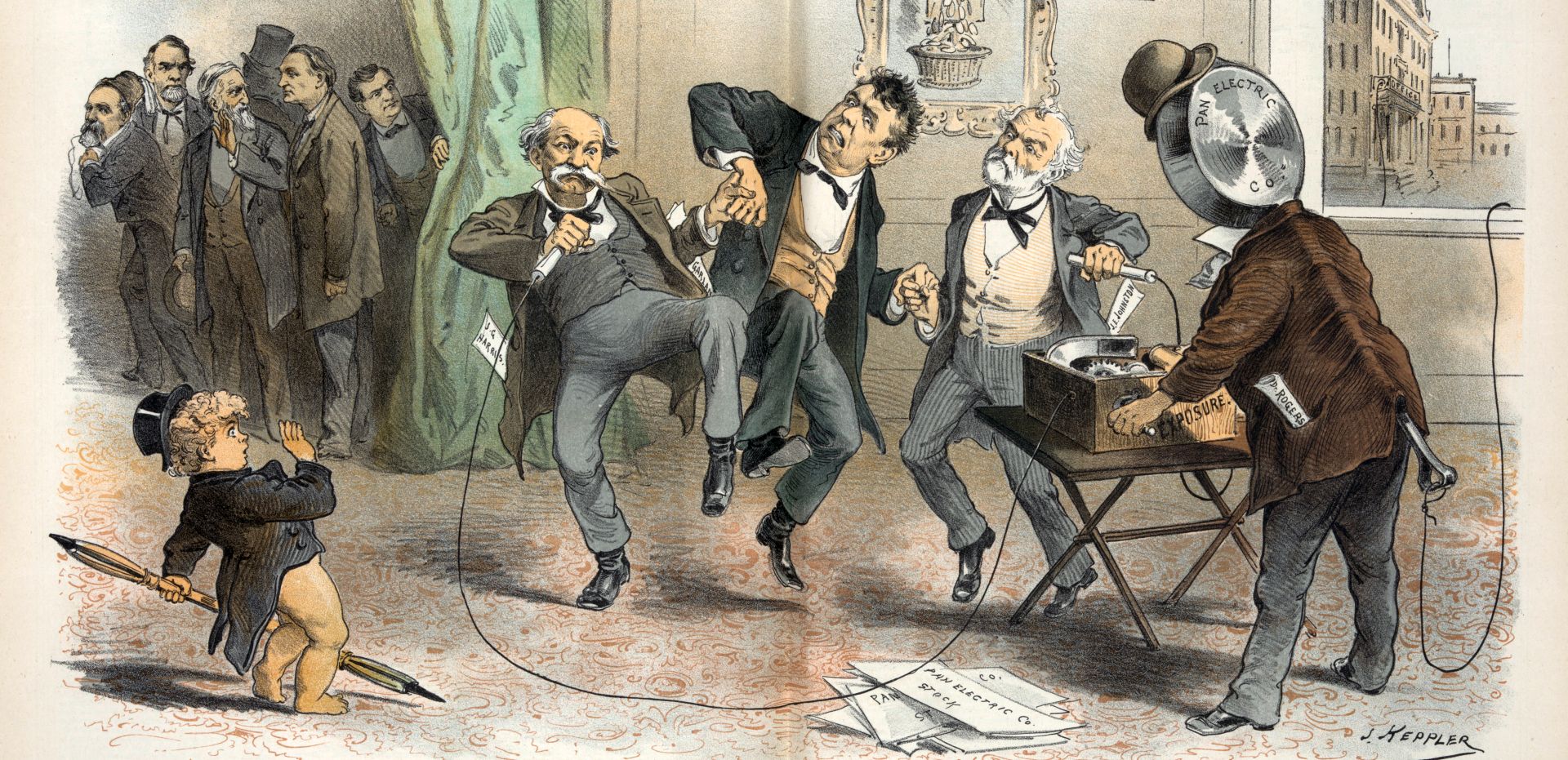
The government case and Pan-Electric matter became a major embarrassment for Grover Cleveland in his first presidential term. After the Supreme Court’s 1888 decisions in favor of Bell, the government suit gradually faded, and was eventually abandoned by late 1892.
Bell was required to give testimony for nine weeks in the government case in the spring and summer of 1892. His testimony was given during one of Boston’s most severe heat waves, and it alone fills 445 printed pages. Detractors combed through Bell’s three key testimonies — the Dowd case (1879), the People’s Telephone case (1883), and the government case — looking for inconsistencies. They found only one discrepancy of significance, which occurred in his 100-page Dowd case testimony.
Bell had written to Gray in March 1877 that all he knew about Gray’s device was that it “had something to do with the vibration of a wire in water…” He testified in the Dowd case that he did not remember how he knew that. Gray wrote much later, “[A wire] ‘Vibrating in water’ was the whole thing. How would he know that much?”
However, it was recently discovered that Gray’s own testimony in the Dowd case stated that he had explained his telephone design to Bell during their harmonious meeting at the Philadelphia Centennial Exhibition in June, some eight months before Bell’s letter to Gray. Bell had also frequently used water in his own liquid transmitters over the years, starting with his “tuning fork sounder” in 1872.
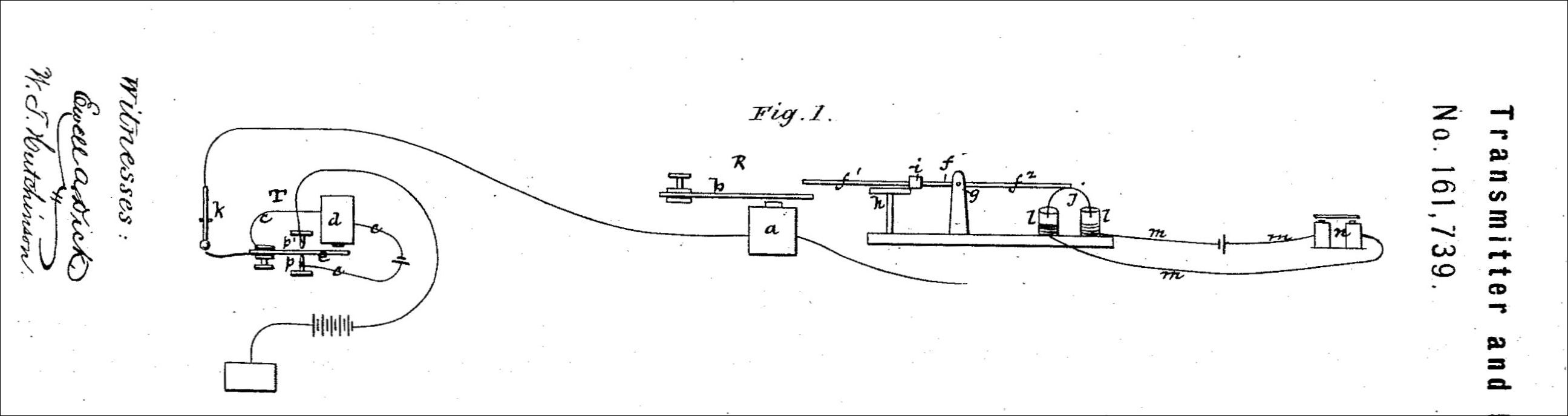
In his various testimonies, Bell proved a formidable witness with his excellent elocution and clear, consistent, and precise testimony. Nonetheless, the ordeal left him exhausted and, for a time, resentful of everything associated with the telephone. The cost to the Bell Company over the 17-year life of the original patent, and in related litigation, was enormous in legal expense and in damage to its reputation. The reputational damage has lingered to some degree to this day.
Was There Corruption in the Patent Office?
Primary documents show that Bell had conceived of his own variable-resistance liquid transmitter on January 12, 1876, nearly a month before Gray. Suspicions that he plagiarized Gray, bribed Patent Office officials, or saw Gray’s caveat are thus dispelled. Nonetheless, it is instructive to consider other related Patent Office events. Ironically, the additional evidence recently uncovered suggests impropriety on Gray’s part in creating his caveat and in what followed, rather than by Bell.
Science writer Seth Shulman in his 2008 book observed that a sketch in Bell’s laboratory notebook dated March 9, drawn shortly after Bell’s visit to Washington, D.C., was strikingly similar to the sketch in Gray’s February 14 caveat. Shulman examined the technical literature of the day and could find no similar drawings that both men might have emulated. He concluded that this was “smoking gun” evidence that Bell had seen Gray’s confidential caveat during his trip to Washington, D.C., and suggested that he had “committed a blatant, wholesale act of plagiarism.” This is the main theme of his book.
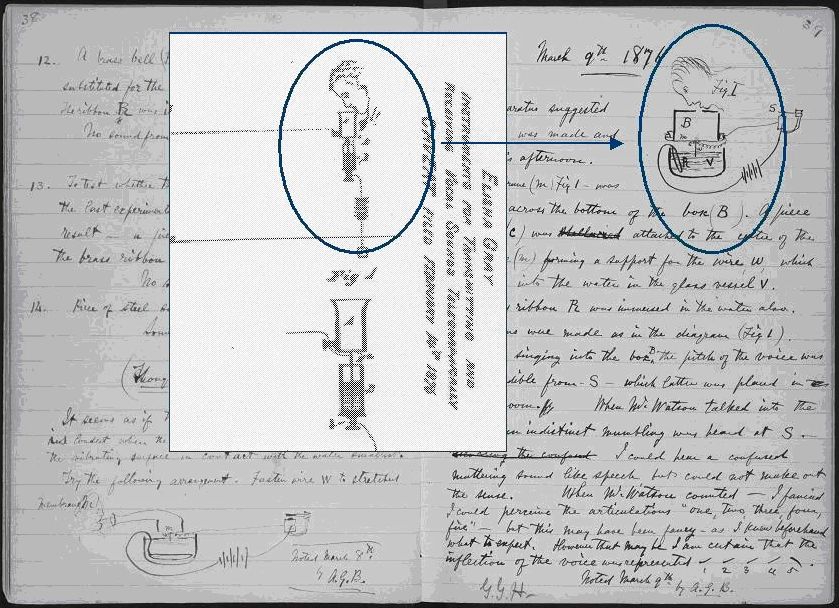
However, prior telephone sketches by Bell, including one drawn December 28, 1875, and even earlier examples, show a person in profile speaking into a telephone transmitter rendered in the same style, thus directly nullifying Shulman’s argument. Many earlier Bell sketches made for his speech analysis also show a similar talking head in profile.
When a caveat and a patent application claimed the same invention, an earlier-filed caveat would trigger a Patent Office interference proceeding to determine primarily who was the first to conceive of the invention. The caveator then had three months to file a complete patent application. An interference proceeding could be costly and time-consuming. However, the Patent Office time records confirm that Bell’s attorneys had officially entered Bell’s notarized specification in the morning, hours before Gray’s on February 14.
Only three weeks earlier, Patent Office records show a similar situation with a same-day application by J. Essex and a caveat that were put into potential interference. In the Essex case, after an inquiry, no filing times were found, whereas with Bell and Gray, after a similar inquiry, the filing times were found. It is possible that times were recorded more carefully after the Essex case only three weeks before. In any event, Gray’s attorneys, William D. Baldwin and his associate William J. Peyton, later testified that they began drafting the detailed caveat early in the day on Monday, February 14, and submitted it late in the day.
Gray’s patent attorney Baldwin revealed in a letter dated March 3 to Samuel S. White, Gray’s financial backer, that he had obtained “confidential” information that Bell’s patent would not be granted for a few days. Gray was visiting White in Philadelphia at the time. Baldwin offered to quickly complete an application for Gray that would interfere with Bell’s application, but Gray declined, partly because White had no interest in the telephone.
Baldwin also wrote, “…but my judgment is against it, as Gray made the invention, as I understand it, while here, after Bell’s application was sworn to.” In that, he was further sharing confidential information that he had somehow obtained.
The wording in Gray’s caveat was also troubling. Bell had used the phrase “…the transmission of vocal and other sounds” in his patent application, and Gray’s caveat title was “Transmitting Vocal Sounds Telegraphically.” The phrase “vocal sounds” is unusual, and it was not found in an extensive online search of the literature available to Bell and Gray at the time. Helmholtz’s well-known, comprehensive study on acoustics refers to “the voice” and “speech” more than a hundred times but never mentions “vocal sounds.” Bell had used this unusual phrase not only in his telephone specification, but also in draft specifications from October 1875, and in earlier correspondence. The first instance found for Gray is on February 14.
Given Baldwin’s admissions, and the use of the phrase “vocal sounds,” there is a distinct possibility that Gray was alerted to Bell’s application on or before February 11, giving impetus to his caveat, which was written quickly over a weekend. The opportunity was there, since Bell’s application had been in the Patent Office in the week prior to February 14, under the purview of admiring “people in the Patent Office,” awaiting word from Brown in England.
Bell wrote his parents on February 12 that “Mr. Hubbard is much pleased with it [the specification].” He continued that the people in the Patent Office had said ‘Mr. Bell knew more about electricity than all the other inventors put together’!… My specifications are now in the Patent Office but the Patents are not to be completed until we hear from George Brown that he has taken out foreign patents.”
In any case, the race appeared to be over once Gray chose not to complete a full application, since his caveat was only a statement of an intention to invent. A full patent application filed before Bell’s patent was issued, or within a reasonable time after, would have created an interference with that patent, but the outcome would have been the same. As Baldwin had noted in his letter, Bell had priority of conception.
Patent examiner Zenas Wilber initially described Bell’s application as largely routine in a series of four affidavits from July 30 through November 7, 1885. However, in a final affidavit signed by Wilber on April 8, 1886, it was asserted that Bell had bribed Wilber with a $100 bill and that he had shown Gray’s confidential caveat to Bell during his visit to Washington. As Pulitzer Prize-winning biographer Robert V. Bruce put it, Wilber was “probably liquored up or bribed, or both,” by agents of a competing telephone company.
Many writers have quoted Wilber's last affidavit without giving the context that it was drafted as part of the unscrupulous effort by the Pan-Electric Company to have the Department of Justice annul Bell’s patent so they would have the industry to themselves. It was soon revealed by the New York World that Pan-Electric had dispersed shares in the company to numerous senators and congressmen including ten percent to the U.S. Attorney General Augustus Garland. The scam became the biggest scandal of the Grover Cleveland Administration and was investigated by Congress at length.
Wilber was a Civil War veteran who admittedly struggled with alcoholism. The final damning affidavit was leaked to the press and published on the front page of the Washington Post on May 22, 1886. Bell’s response was likewise published three days later. He denied all charges, but the damage was done. Wilber’s affidavits were in obvious conflict with each other and thus were not allowed as evidence in court or in public congressional hearings, but the sensational last affidavit has provided fodder for adversarial articles, books, and TV shows, thus fueling long-lasting public suspicion. The claim of a bribe by Bell and allegation that he was shown Gray’s caveat is still referenced by writers without
Among the claims in Wilber’s last affidavit was the suggestion that Bell’s patent had been given special treatment because it was issued after an unusually short period of time, only 22 days. Yet Gray’s own patent number 165,728 was issued after 22 days in 1875, and his patent number 173,618 was issued after 19 days in 1876.
Similar claims that Bell was given favorable treatment by the Patent Office seem weak given Gray’s success, reputation, and connections to Western Union. This is in contrast to Bell’s relative inexperience, although Bell did have well-established legal representation. When considering accusations such as these, made long after the fact, it is important to realize that at the time, only Bell felt that the speaking telegraph had any value. It took time for Bell even to convince his financial backer Hubbard that the telephone idea had strong potential.
What Gray did not say in any of his affidavits is most telling. He never claimed that Bell’s specification was altered while it was in the possession of the Patent Office. This supposed alteration of Bell’s patent was the central argument made by Hill before the Supreme Court only a year after Wilber’s last affidavit. As principal examiner, Wilber would no doubt have known if any changes had been made after Bell’s application was present in the Patent Office in the week prior to February 14.
Should a Controversy Even Exist? Answers to Common Myths
Since the year 2000, five books have been written accusing Bell, his associates, and Patent Office staff of committing fraud, or, at a minimum, casting doubt on Patent Office procedures and the validity of Bell’s patent. These include Burton Baker, The Gray Matter, and A. Edward Evenson, The Telephone Patent Conspiracy of 1876 (both from 2000); Seth Shulman, The Telephone Gambit (2008); Christopher Beauchamp, Invented by Law (2015); and James Gleick, The Telephone (2026).
Burton and Evenson both recite and enhance the unsupported and unsuccessful arguments made on Gray’s behalf before the Supreme Court in 1887. Subsequent authors restate several of Baker’s and Evenson’s unsubstantiated assertions without further consideration. All rely on the spurious last affidavit of the unreliable patent examiner, Zenas Wilber, without detailing the scandalous context in which it was created.
Among the claims and biases interspersed in these books that are not supported by available sources are the following:
- Gray’s advocates often seem less focused on historical accuracy than on generating controversy and diminishing Bell’s reputation. Assertions are often based on suspicions and opinions rather than evidence.
- Bell is often portrayed as the person with more power and connections, and Gray as the underdog. The opposite was true.
- There is often subtle anti-AT&T bias and an accompanying populist, anti-monopoly sentiment. What the phone company became many years later has no bearing on the Bell-Gray controversy itself. The Bell Company consistently won its cases based on established legal standards of the time.
- The possibility that Gray filed first on February 14 is given significant weight. Contemporary documents do not support this. Even if the applications had been placed in interference, Bell’s patent would almost certainly have prevailed, as it did in all subsequent litigation. In addition to the all-important date of conception, the Patent Office also considered diligence and who was first to reduce the invention to practice. Bell was far ahead of Gray in these areas.
- Bell’s and Gray’s efforts on the telephone are depicted as somehow equal. Bell labored over telephone concepts and incremental improvements for more than two years before and two years after his patent was issued. Gray spent little more than a long weekend on the telephone during this period, drafting his caveat, and he had no working model until nearly two years after Bell’s patent was granted and Bell’s first telephone was famously demonstrated.
- Patent Examiner Zenas Wilber’s last affidavit, 1886, is treated as likely true, or at least as casting serious doubt on Bell. However, it directly conflicted with four earlier sworn affidavits that said that Bell’s patent application was handled in a routine manner, making it legally inadmissible.
- There is generally little mention of Western Union’s significant influence over the newspaper industry at the time. Telegraph rates were a powerful tool used to influence the press for nearly sixty years until about 1907.
Selected arguments by attorney Lysander Hill before the Supreme Court are quoted as if they were true, and the Court’s 4 to 3 decision in favor of Bell in 1888 is sometimes implied to have been a close call for Gray. It was not. Claims in favor of Gray were dismissed with unanimity by the Court. The dissenting opinion mentioned only the rustic inventor Daniel Drawbaugh and the People’s Telephone Company, effectively presenting a populist sentiment.
Finally Setting the Record Straight
The love letter from Mabel Hubbard dated January 17, George Brown’s contemporaneous notes of January 25, and the surrounding documentation provide independent evidence that Alexander Graham Bell conceived of his liquid transmitter design nearly a month before Gray.
Bell and his attorneys never plagiarized Gray, nor did they need to. They never engaged in the accused corrupt practices with Patent Office officials.
The technology of the mid-19th century was ripe for the invention of the telephone. Bell acknowledged this in his May paper presented to the prestigious American Academy of Arts and Sciences; he credited more than twenty predecessors, including the German schoolteacher Johann Reis and his partially successful telephone based on a make-or-break design. Bell stands apart in having pursued a practical vision of the telephone from the start, guided by his knowledge of vocal and auditory physiology, and by his theoretical understanding of sound. He followed through with his prediction, made three days after his patent was granted, that friends would someday “converse with each other without leaving home.”
Neither Gray nor Bell copied engineering designs from one another. After Gray’s death in 1901, Bell wrote, “I had a very high respect for Elisha Gray, and have always had the feeling that he and I would have become warm friends had it not been for the intermeddling of lawyers, and the exigencies of lawsuits.”
The famous telephone patent number 174,465 was legitimately awarded to Bell on March 7, 1876. The reputations of Bell, his attorneys, and the Patent Office officials can now be fully restored, thanks to the obscure primary sources that have finally laid the controversy to rest.