Danielle Allen's new biography of the Duke of Richmond is certainly exciting and provocative, yet its bold claims appear to rest on fragile foundations.
-
November/December 2026
3 months ago By Edwin S. Grosvenor Volume71Issue5
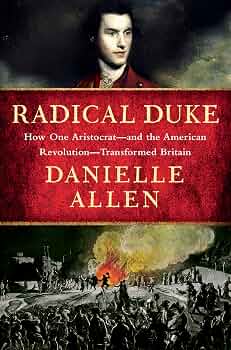
Eighteenth-century English dukes are unlikely subjects of provocative new biographies. We tend to picture them as crusty old farts relaxing in the libraries of their country estates, sipping port and nursing their gouty toes while the world around them goes up in flames. They might be keen observers of transformative events such as the American and French revolutions, but not active participants, and hardly deserving of our historical attention.
Danielle Allen begs to differ. Her ambitious book, Radical Duke: How One Aristocrat—and the American Revolution—Transformed Britain, tells the story of a remarkable outlier. Charles Lennox, the third Duke of Richmond, third Duke of Lennox, and Duke of Aubigny in the French nobility (1735–1806), emerges from her dramatic narrative as one of the most important and underappreciated persons in late 18th-century Britain. “Richmond was a defining figure of the revolutionary age,” Allen writes, as influential, in certain respects, as Thomas Paine, Edmund Burke, and King George III himself.
Among the startling claims that propel Radical Duke is that Richmond was the mastermind behind the Junius letters (1769-1772), a famous series of anonymous attacks on the British government, for which he recruited a dream team of gifted writers, including Paine, Burke, James Burgh, Philip Francis, and John Wilkes. Allen also maintains that Richmond collaborated with Paine and Benjamin Franklin on The Juryman’s Touchstone (1771), an obscure 95-page pamphlet that blasted Lord Mansfield for his handling of the seditious libel trial of Henry Woodfall, the publisher of the Junius letters.
If these claims are true, they place Richmond at the center of a group of radical thinkers and writers who shaped revolutions on both sides of the Atlantic. They also compel us to revise our understanding of Paine, who until now has been assumed to have met Franklin in London only shortly before his departure for America in September 1774, and to have published little of note before the appearance of Common Sense in January 1776. Allen seeks to upend these long-standing assumptions, along with the received wisdom that Richmond was a relatively minor and inconsequential historical figure. Against the grain, she contends that Paine, Franklin, Burke, and the rest were all part of “Richmond’s regiment,” a secretive cabal devoted to defending British liberties and advancing the Duke’s radical reforms, even if doing so brought his majesty’s government to its knees.
The main outlines of Richmond’s life are well-known to specialists in British political history. Born February 22, 1735 in London, he was the oldest surviving son of Charles Lennox, the second Duke of Richmond, and his wife, Sarah, the daughter of William Cadogan, the first Earl Cadogan. His lineage was exceptional because, like his father and grandfather, he descended directly from King Charles II (1630-1680) and his French mistress, Louise de Kéroualle—and therefore also from King Charles I (1600-1649) and King James I (1566-1625). During the French Revolution, Richmond acquired a copy of a large portrait of Charles I and Queen Henrietta Maria with their two oldest children, the future Charles II and the infant Princess Mary, painted by the renowned Flemish artist, Anthony Van Dyck. The duke hung this grand reminder of his royal ancestry in the ballroom at Goodwood House, the seat of his country estate in West Sussex, where it still can be viewed today.
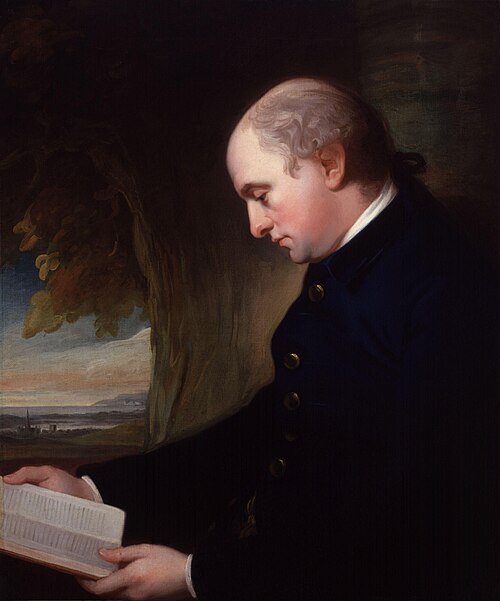
After his father’s death in 1750, the 15-year-old Richmond inherited Goodwood and the family titles. He was educated at Westminster School and Leiden University, where he received a degree in 1753. Under the tutelage of the biologist Abraham Trembley, he traveled extensively across the continent, meeting Montesquieu and Frederick the Great. Although he initially pursued a military career and saw combat during the Seven Years War, he gravitated toward politics, entering the House of Lords in 1756. With a huge annual income derived from a tax on all Newcastle coal, a grant given to his grandfather by Charles II, Richmond’s prospects seemed immense. His path to power, however, was soon derailed. In 1761, a budding courtship between his sister, Sarah Lennox, and George III ended when the King hastily married Princess Charlotte of Mecklenburg. This humiliating turn of events came on the heels of another break with the Crown, in which Richmond offended George III by resigning his post as a Lord of the Bedchamber after the duke’s younger brother was passed over as a royal aide-de-camp. Both episodes created tensions with the new king that blunted Richmond’s political career.
Richmond’s half-century in the House of Lords was erratic and mostly unsuccessful. The last academic study of him, The Radical Duke by Alison Olson (1961), begins by asking, “Why did Richmond’s career prove so disappointing?” and it is easy to grasp this framing. Unlike many of his peers—the Marquess of Rockingham, the Earl of Chatham, the Duke of Grafton, and others—Richmond never served as Prime Minister, and his brief stint as a lower-ranking minister in the first Rockingham administration (1765-1766) lasted a mere seven weeks. He never held a steady leadership position in Parliament either, taking a back seat to more active Whigs like Rockingham and Burke. During the fateful administration of Lord North (1770-1782), Richmond did emerge as a leading voice for American independence, a role foreshadowed by his outspoken support of the repeal of the Stamp Act in March 1766. Like virtually all of his peers, however, he voted in favor of the Declaratory Act, which notoriously affirmed parliamentary authority over the colonies “in all cases whatsoever.” No British statute was more offensive to the American colonists, yet like most Rockingham Whigs, Richmond was resistant to repudiating it, even after he reluctantly decided, in the face of mounting losses and the alarming French-American alliance, that Britain should abandon the war and let the Americans go their own way.
In addition to promoting conciliation with the colonists, Richmond is perhaps best known as an advocate for electoral reform. Two famous events illustrate these twin commitments, along with his reputation as someone whose career was beset by bad luck and unfortunate timing. On April 7, 1778, his motion in the House of Lords to withdraw British troops from North America drew a passionate rebuke from Lord Chatham—William Pitt the Elder—who had helped guide Britain through the Seven Years War before serving as Prime Minister from 1766 to 1768. After strenuously rejecting any surrender of sovereignty over America, the elderly Chatham collapsed from a stroke, then died five weeks later. The ensuing sympathy for his imperialist vision overwhelmed Richmond’s peace initiatives, and the British war effort persisted for several more years. Likewise, on June 3, 1780, Richmond introduced an unprecedented bill calling for annual parliaments, equal electoral districts, and universal manhood suffrage. These ideas were not original with him and drew heavily from prominent British radicals, such as Burgh, John Cartwright, Richard Price, and Glanville Sharp. Still, Richmond deserves credit for becoming the first person to move such a progressive bill in the House of Lords. His timing, however, was again inopportune. The anti-Catholic Gordon Riots erupted just then, leading to violence, looting, and mayhem throughout London. In this fraught climate, Richmond’s reform bill was coolly received and rejected without an official vote.
The last half of Richmond’s career was marked by a move away from the radical tendencies of his youth, along with failures of his own making. In 1784, after nearly two decades as a core member of the Whig opposition, he threw in his lot with George III and what became the “new Toryism” of William Pitt the Younger, joining Pitt’s ministry as Master-General of the Ordnance. Richmond held this position until 1795, when he was removed from the post in disgrace in the aftermath of a bungled military expedition to Dunkirk. In 1786, his bill to fortify the nation’s defenses suffered a humiliating defeat that historians have attributed to his unpopularity. His 1783 Letter to Colonel Sharman had endorsed “restoring the right of voting universally to every man” along with “annual elections.” But by 1792 he backed away from these reforms, suggesting it was “not the proper time” to pursue them. Paine singled out Richmond for harsh criticism in The Rights of Man, caustically referring to “the tax upon coals, so iniquitously and wantonly supplied to support the Duke of Richmond” that “takes away as much for himself as would maintain two thousand poor and aged persons.” In 1806, when Parliament finally passed a landmark bill to abolish the foreign slave trade, Richmond voted by proxy against the measure.
Why did Allen spend almost a decade working on a new biography of Richmond? The answer starts with the so-called Sussex Declaration, the only known large-scale parchment copy of the Declaration of Independence other than the signed original on display at The National Archives. After Allen and her colleague, Emily Sneff, located this manuscript in a West Sussex record office in 2016, they began puzzling over its provenance. In a pair of scholarly articles, they dated the Sussex Declaration to the 1780s and argued that it was commissioned by Pennsylvania’s James Wilson for his own use at the 1787 constitutional convention. The question then became how this manuscript ended up in Sussex.
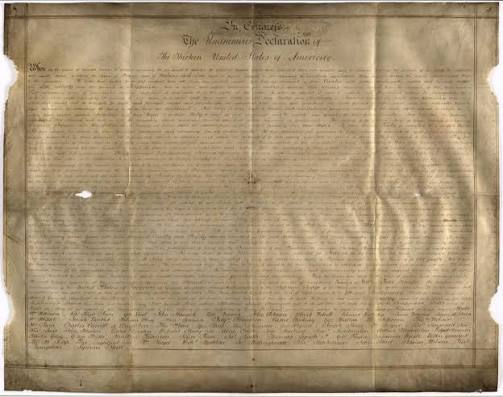
Allen’s solution to this mystery, presented in both Radical Duke and a 2025 article in The Atlantic, holds that Paine carried the Sussex Declaration with him when he sailed for Europe in 1787, intending to give it as a token of gratitude to Richmond, his first patron and champion of American independence. “Paine was a courier of revolutionary talismans,” she explains, likening the Sussex Declaration to the Bastille Key that Lafayette gifted to George Washington and that Paine had a hand in transmitting to Washington, with help from John Rutledge, Jr. This apparent link between Paine and Richmond led Allen to dig into the details of the Duke’s life and career. To her surprise, she found him to be “a kindred spirit,” “whose commitment to the political empowerment of ordinary people was unmatched by any other member of the aristocracy.” Eventually, she also found evidence of a relationship between Paine and Richmond. As the first scholar with access to the Duke’s library, Allen discovered a handwritten dedication from “the Author” on Richmond’s copy of The Juryman’s Touchstone. After several years, she decided that the handwriting belonged to Paine, a judgment embraced by the editors of a new collection of Paine’s writings after she brought the pamphlet to their attention. This discovery led her to speculate about Richmond’s role in the Junius letters, many of which the Paine editors were in the process of attributing to Paine. On this basis, Allen began gathering clues for a revisionist narrative about Richmond quite unlike the traditional versions given by Olson and by Max Reese in his own biography of the duke, Goodwood’s Oak (1987).
The story Allen tells in Radical Duke is captivating, but upon close examination it appears to rest on a number of questionable assumptions. The first involves the Sussex Declaration. In a 2025 article, the Declaration scholar John Bidwell makes a persuasive case that this manuscript was not, in fact, commissioned by Wilson or transported across the ocean by Paine. Instead, it was likely copied, directly or indirectly, from a cheap facsimile produced in Boston by a man named Lewis H. Bridgham in 1836. Bidwell’s argument turns on the fact that the most distinctive feature of the Sussex Declaration, the seemingly random order in which the 56 signatures of the men who signed the Declaration of Independence appear in this manuscript, is virtually identical with the order of signatures found in the Bridgham facsimile. (Bridgham’s handiwork was later used as a frontispiece to Robert T. Conrad’s 1846 edition of Sanderson’s Biography of the Signers to the Declaration of Independence, indicating an even wider circulation of it than Bidwell assumed in his article.)
If Bidwell is correct, then Allen’s diligent search for a link between Paine and Richmond was premised on a fundamental mistake. That would not necessarily undercut Allen’s surprising findings about Paine’s collaboration with Franklin and Richmond on The Juryman’s Touchstone, or her even more sensational contentions about Richmond’s role in orchestrating the Junius letters, both of which could still be true. But it does make one wonder if these and other bold assertions at the heart of Radical Duke are well-grounded.
In this context, it is disconcerting to realize that on at least seven occasions, the only direct support Allen provides for her novel claims about these collaborations are personal emails she received from Gary Berton, one of the editors of the new edition of Paine’s collected writings. For example, to support her claim that Franklin co-authored The Juryman’s Touchstone with Paine and Richmond, Allen refers to an email Berton sent her on March 17, 2025. No other details about this alleged link between Paine and Franklin are provided. Likewise, to support her claim that Burgh was “Richmond’s earliest and longest-serving pamphleteer,” whom Richmond recruited to write an anonymous defense of him in a September 1766 issue of the London Public Advertiser, Allen refers only to an email Berton sent her on March 15, 2025. Finally, to support her claims about the all-star lineup of Junius authors, according to which, of sixty-two letters, “Paine had a hand in thirty-four, Burgh seventeen, Burke fifteen, Francis eleven, and Wilkes ten,” Allen refers to an email from Berton on December 24, 2024. Again, no further pertinent details about this division of labor—such as which of these letters were authored or co-authored by each of these individuals, and how their collaborations actually unfolded—can be found in Radical Duke.
Mr. Berton is not a professional historian, but the former president of the Thomas Paine Historical Association, an organization devoted to correcting what it believes to be the unfair and inaccurate treatment Paine has received as a result of “the negative propaganda and slander perpetrated against him” by many historians. The crux of his research relies upon novel computer-based programs to identify Paine and other writers as the authors of anonymous eighteenth-century pamphlets and newspaper essays. None of his findings on which Allen relies has been published in peer-reviewed journals, however, and his computer methods are not sufficiently described in other venues to enable other researchers to reproduce them. When I asked him to explain the details of those methods to me, he did not adequately fill this gap, but directed me instead to a series of instructional videos on the website of the Institute for Thomas Paine Studies (ITPS) at Iona University.
These videos do not inspire confidence. In two of them, Berton seeks to demonstrate the efficacy of his methods by applying them to The Federalist Papers. Astonishingly, the first video purports to show that James Madison, Gouverneur Morris, and James Monroe were Alexander Hamilton’s co-authors in Federalist #1. The second video purports to show that Hamilton was Madison’s co-author in Federalist #10. In fact, Berton goes further than this by identifying specific passages written by Hamilton, Madison, Morris, and Monroe in Federalist #1 and by Hamilton and Madison in Federalist #10. (In another recorded lecture, Berton alleges that there are “about ten [or] twelve authors” of the Federalist Papers, not just the three men—Hamilton, Madison, and John Jay—long credited with writing those famous essays.) For over two centuries no serious commentator has attributed Federalist #1 to anyone but Hamilton or Federalist #10 to anyone but Madison for a simple reason: both men agreed with these assignments and left clear and convincing evidence for them. To be sure, some historians have discussed the close thematic relationship between Federalist #9 and #10 and speculated about Hamilton’s influence on the latter, but none has defended anything like the passage-by-passage co-authorship found in these videos. Moreover, no serious commentator has attributed Federalist #1 to Monroe because he was an Antifederalist who opposed the Constitution in the Virginia ratifying convention. Furthermore, Monroe was in Virginia, not New York, in the fall of 1787, and there is no known documentary evidence suggesting he wrote any of the Federalist essays. Berton does not address any of these objections in his videos, relying solely on his algorithms to justify these breathtaking claims. The fact that Allen leans so heavily on his unpublished findings is therefore cause for concern. (For similar doubts about this aspect of Radical Duke that I discovered after this commentary was written, see this review by Joseph Hone.)
Allen points to another source in Radical Duke to explain her heavy reliance on Berton’s work, a 2016 book chapter Berton co-authored with three computer scientists. Yet this reference only compounds the sense of something gone awry. Once one sifts through the jargon, the “automated computer authorship attribution methodology” summarized in the chapter raises obvious red flags. The basic method described in the chapter is to compile a list of 25 candidate authors and 189 texts known to be written by those authors, then to assess which of them is the most likely author of a text of unknown authorship. The analysis draws upon complex algorithms constructed out of seventeen lexical features and four machine learning techniques. The method is therefore comparative and turns on which authors and texts are used to build the “training corpus” on which the algorithms depend.
In this chapter, Berton and his colleagues illustrate their methods by applying them to two anonymous American texts: “Thoughts on Defensive War” (a short essay published in the Pennsylvania Magazine in July 1775) and “Four Letters on Interesting Subjects” (a 24-page pamphlet published in Philadelphia in July 1776). They also identify all 25 authors and roughly two-thirds of the texts used in their computer analysis. And here is where the problems begin. Fifteen of the authors used in their study were not residents of Philadelphia in 1775-76, or even Americans for that matter, but famous British or French authors, such as Burke, Catharine Macauley, James Mackintosh, Richard Price, Joseph Priestly, John Wesley, Mary Wollstonecraft, and the Marquis de Lafayette. At least two of the authors—Burgh and John Woolman—were dead by 1776, while at least three others—Lafayette, Wollstonecraft, and Mackintosh—were children or teenagers at the time. Meanwhile, six of the ten Americans on the list (John Adams, Franklin, Francis Hopkinson, Thomas Jefferson, Benjamin Rush, and John Witherspoon) were delegates to the Second Continental Congress. Why they but not any other delegates were chosen is not explained.
The texts used by Berton and his colleagues in their study are also notably heterogeneous. They include dense works of political theory (for example, Burgh’s Political Disquisitions, Burke’s Reflections on the Revolution in France, and Wollstonecraft’s Vindication of the Rights of Woman), along with 27 short pieces by Franklin, several unnamed sermons by Wesley, and unspecified correspondence by Jefferson and Lafayette. It seems difficult to avoid the conclusion that Berton and his colleagues selected these particular authors and texts on the basis of familiarity and expedience—figures with whom they were acquainted and accessible texts they could plug into their software—rather than a deep understanding of Philadelphia’s radical political thought and print culture in 1775-76. Entirely missing from their analysis, for example, are well-known Philadelphia radicals like Owen Biddle, George Bryan, Christopher Marshall, Timothy Matlack, Charles Wilson Peale, David Rittenhouse, and Thomas Young. Any of these individuals would seem more likely to have composed these anonymous texts than most of the authors used in this study.
What about the new edition of Paine’s writings, on which Allen also relies in Radical Duke? Unfortunately, it does not appear to help matters. In the first place, to explain why their volumes attribute hundreds of new anonymous pieces to Paine, the editors point the reader to the same ITPS videos and 2016 book chapter by Berton and his colleagues. They do not, however, address any of the foregoing problems. More generally, the gold standard of any experimental investigation is to describe one’s procedures and findings in sufficient detail to give other investigators the opportunity to replicate them. The editors of the new Paine volumes do not come close to doing this. In fact, they do not describe their computational experiments in any significant detail at all. Instead, they make what amount to hundreds of unsupported assertions about the authorship of the new anonymous entries in their collection, telling their readers, in effect, only that the computer said so.
Remarkably, these conjectures include the claim that, in addition to publishing dozens of anonymous pieces in English newspapers from 1758 to 1774 on his own, Paine co-authored twenty-one numbered Junius letters, seventeen “Junius Americanus” articles, thirty-two “miscellaneous” Junius letters, and over fifty additional anonymous pieces during the same time period. Moreover, his supposed collaborators on these projects included Burgh, Burke, Cartwright, Francis, Franklin, Macaulay, Price, Priestly, and Wilkes, along with Hugh Boyd, Thomas Hollis, John Horne, Arthur Lee, William Moore, and the Earl of Shelburne. In each case, the editors highlight the specific passages written by Paine, leaving those written by his co-authors unmarked. In some cases, moreover, Paine’s alleged contributions consist of only a single paragraph or—even less plausibly—a mere part of a paragraph. These are mind-boggling claims, raising all kinds of intricate historical puzzles, including why so many prominent British authors and politicians would co-author with a then-unknown Paine in such a cumbersome fashion and how collaborations this extensive could have gone undetected until now. But are they any more compelling than the claim that Monroe co-authored Federalist #1 with Hamilton, Madison, and Morris? Without more explanation and a complete description of the studies that produced these findings, a healthy dose of skepticism would seem to be warranted.
In sum, there seems to be a major computer-said-so problem at the heart of Radical Duke. The book is certainly exciting, thought-provoking, and skillfully crafted in many respects. Yet its bold claims about Richmond and his secret collaborations are unconvincing because they appear to rest on fragile foundations. Allen may turn out to be correct about her daring new theories in Radical Duke, just as the editors of the new collection of Paine’s writings may turn out to be correct about theirs. In both cases, however, significantly more evidence and explanation are needed to turn their speculations into persuasive historical arguments.