
The author of “Rip Van Winkle” and “Sleepy Hollow” had a long and productive career, but nothing he wrote after them reached the heights of those classics.
-
November/December 2026
3 months ago By Edwin S. Grosvenor Volume71Issue5
Editor’s Note: A long-time book reviewer and columnist for the Washington Post, Jonathan Yardley won the Pulitzer Prize for Criticism in 1981. His numerous books include a biography of writer Ring Lardner and Second Reading, an anthology of essays in which Yardley looked at works by both well-known and underappreciated authors, where an earlier version of this essay appeared.
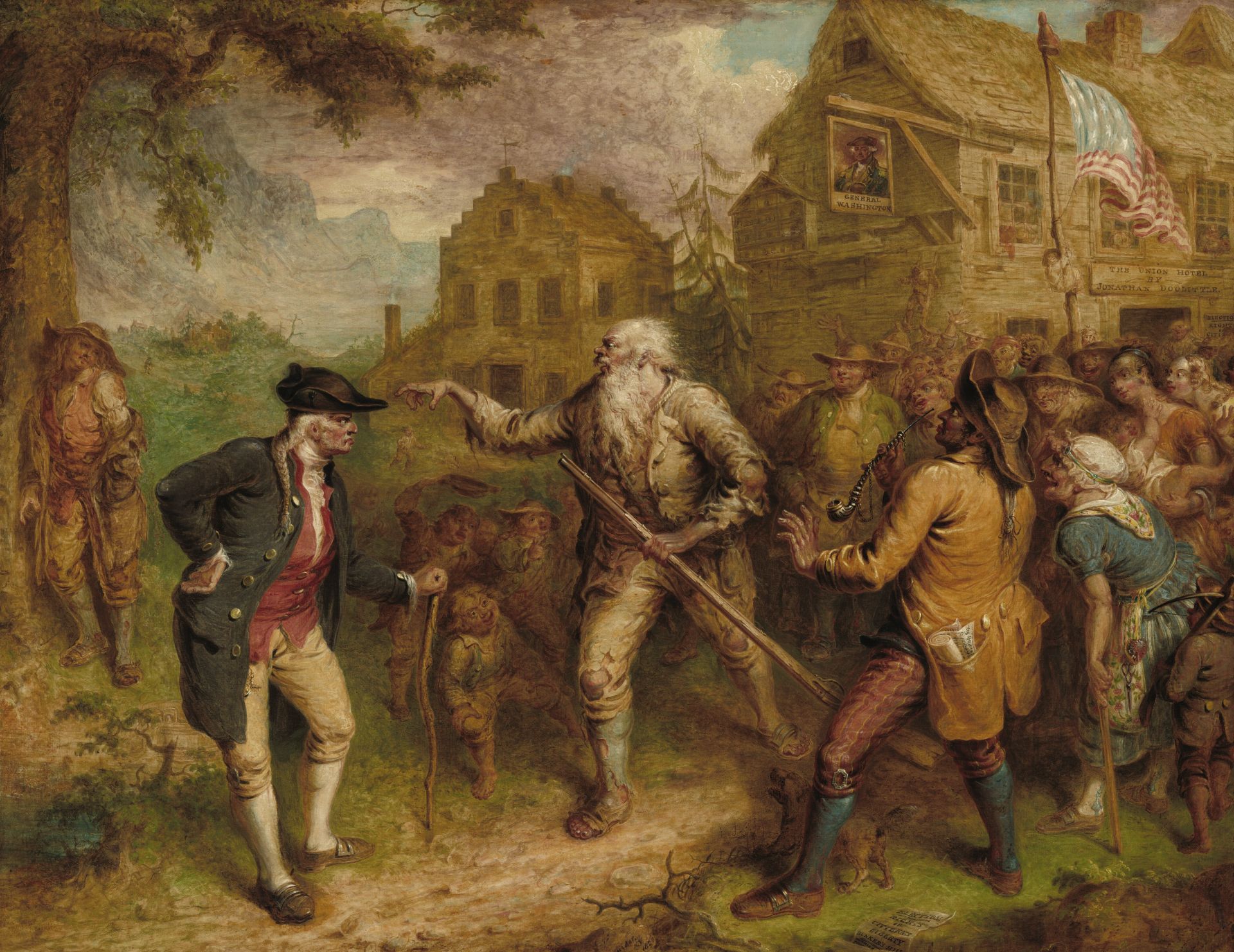
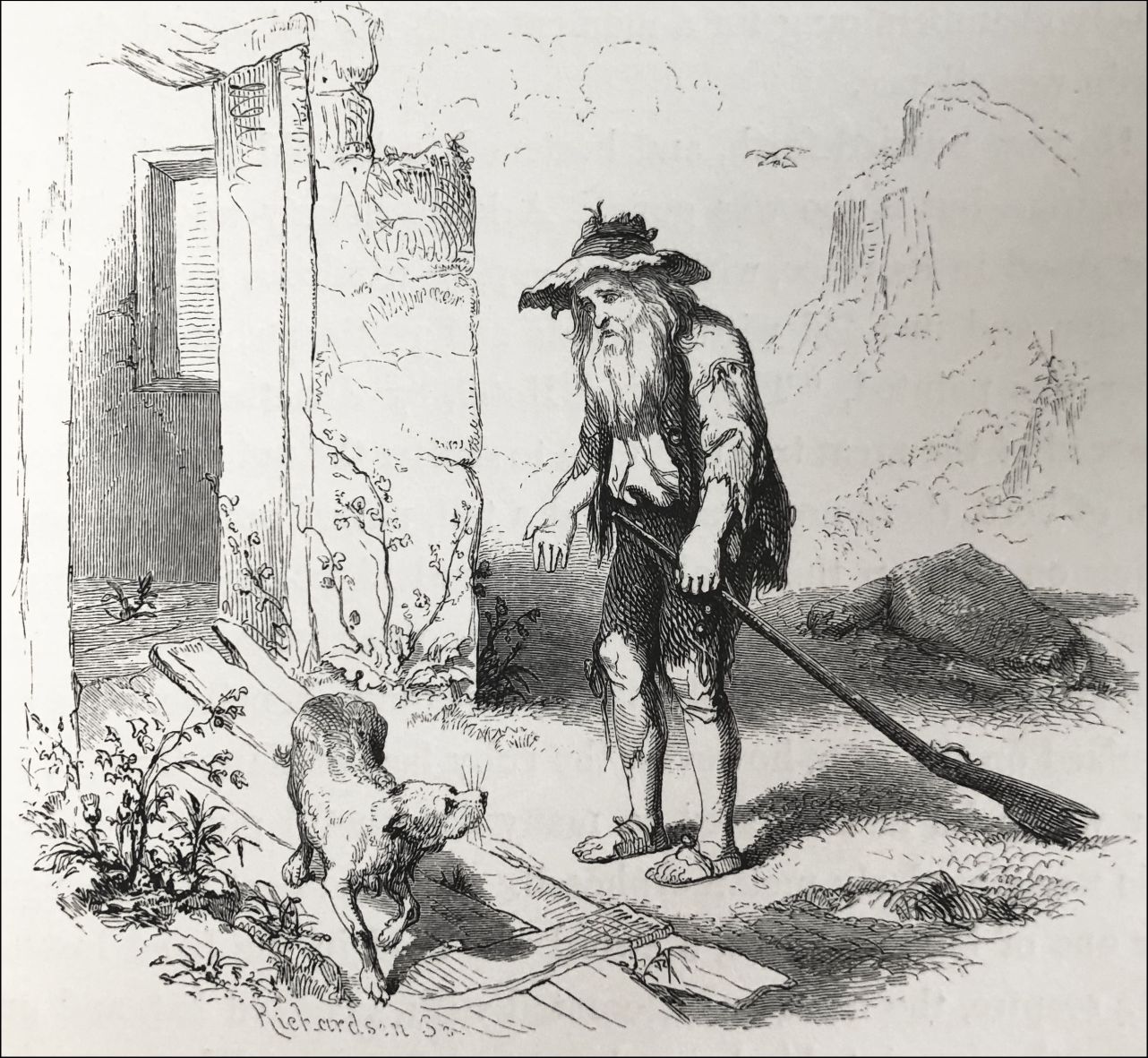
No book reaches more deeply back into my own past than Washington Irving’s The Legend of Sleepy Hollow, originally published in 1819 as The Sketch Book of Geoffrey Crayon, Gent. When I was a very small boy, my parents read to me about Rip Van Winkle and Ichabod Crane over and over again, and as a somewhat larger boy I read about them myself, over and over again. Their stories – Rip’s twenty year snooze, Ichabod’s encounter with the Headless Horseman – might as well have been bred in my bones, I know (and love) them so.
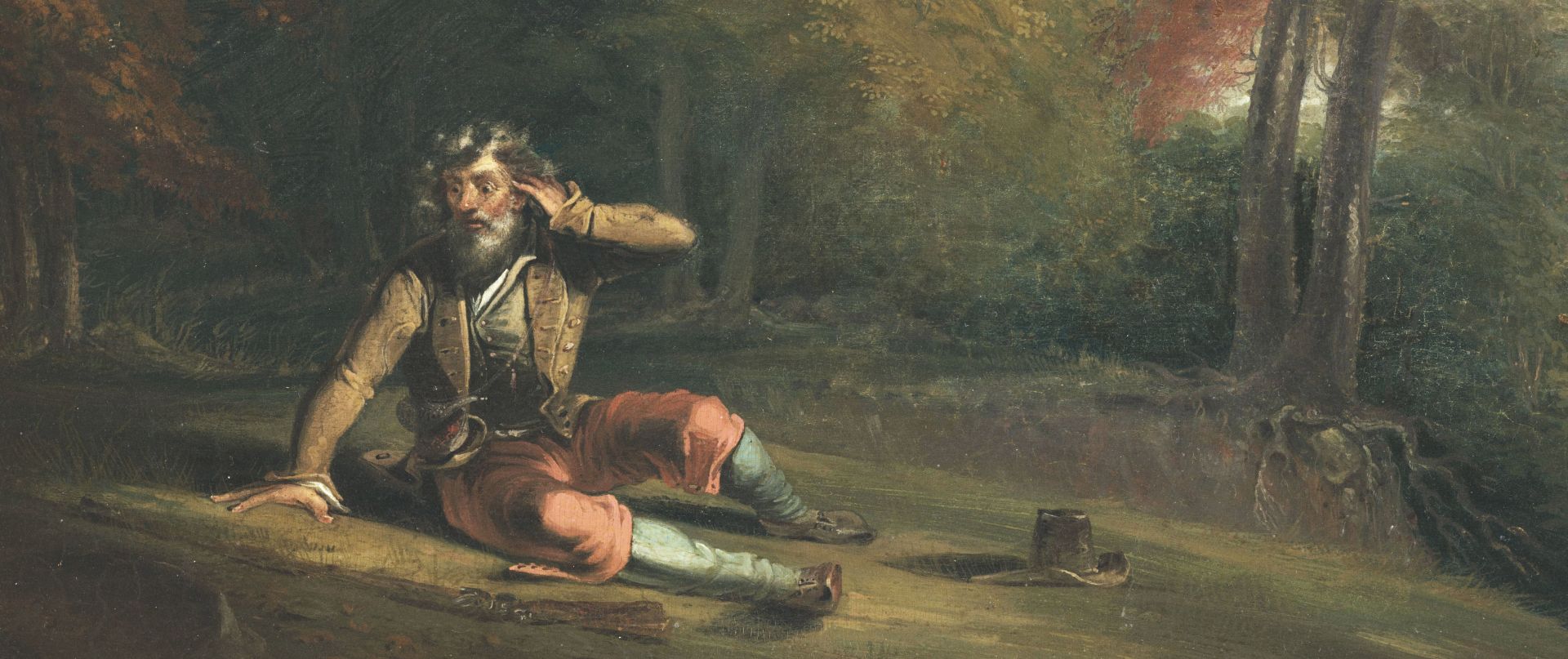
Re-reading The Sketch Book (as I’ll refer to it henceforth) after all that time has been an eye-opener, and then some. I realize now that, for all my powerful sense of intimacy with the book, I’d probably read only about a half-dozen of its nearly three dozen sketches, and probably read those – “Rip Van Winkle” and “Sleepy Hollow” – in versions that had been rewritten and edited for children. I realize as well that I’d had only a glimmering of what a splendid (if limited) writer Irving was, in particular what an ebullient humorist he was, so this was a discovery as well as a rediscovery.
When I was not quite three years old, in the late summer of 1942, my father took a headmaster’s job at a town in the Ramapo Mountains of southeastern New York. He had a passionate love of American history and on weekends (gas rationing permitting) enjoyed taking his family to places along and near the Hudson River: the Catskills, West Point, Tarrytown, Bear Mountain.
Of all my childhood memories, these are among the happiest, and they are inextricably connected to Irving’s two great short stories, which are set in and about those places. Fiction and fact? I could barely distinguish them. The places where my family drove in our little Ford were Washington Irving’s places, as to me they always will be.
Irving was born in New York City in 1783 into a prosperous mercantile family and named in honor of the famed general of the recently ended Revolutionary War. It was assumed that he would follow his father and brothers into business, but he studied law instead. His real love was writing, and by the time he was in his early twenties he had begun to publish newspaper pieces.
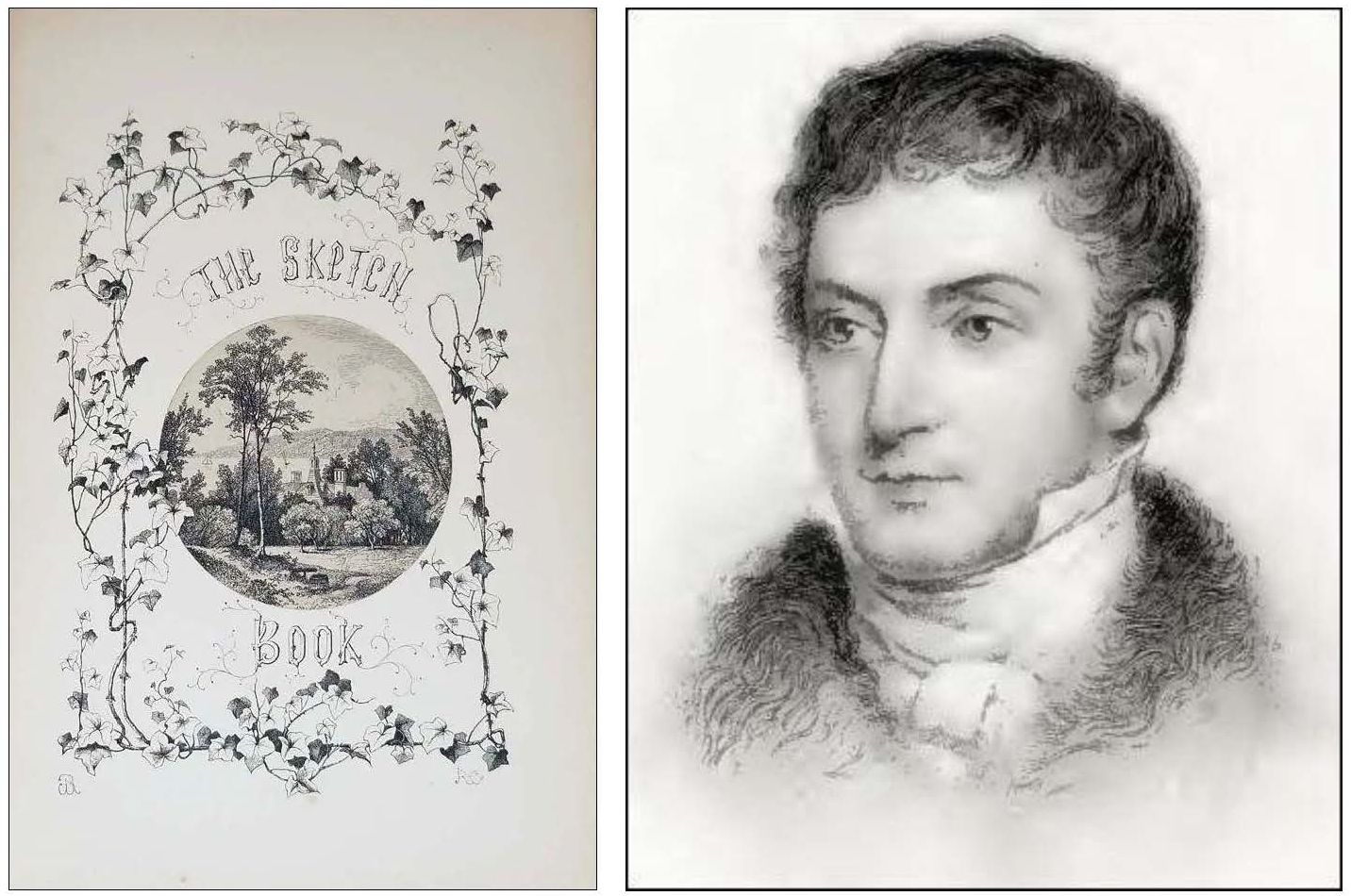
Irving’s heart was broken in 1809 by the death of his young fiancée, but later that year publication of his satirical A History of New York, under the pseudonym Diedrich Knickerbocker, was a great success and established him as a professional writer, though for some time he continued to struggle to support himself by his pen.
Irving wrote the three dozen pieces in The Sketch Book while he was on an extended stay in England, motivated in part by family business and in part by his inveterate urge for travel: “I was always fond of visiting new scenes, and observing strange characters and manners.” Like many educated Americans of his time, he had strongly ambivalent feelings toward England, admiring its accomplishments and traditions but resenting its snobbery and condescension.
Strong strains of both are evident in The Sketch Book, sections of which appeared serially in England and America in 1819 and 1820. On the one hand there are lavish paeans to numerous aspects of British life, from the countryside and its churches to Westminster Abbey and its Poets’ Corner, but on the other there are sharp gibes at British pretentiousness and superciliousness, particularly at British travelers in the United States, who “underrate a society, where there are no artificial distinctions, and where, by any chance, such individuals as themselves can rise to consequence.”
Irving’s sketches of England led him to various tart and/or perceptive comments. What he wrote almost two centuries ago about hack writing is fully applicable today: “I have often wondered at the extreme fecundity of the press, and how it comes to pass that so many heads, on which nature seemed to have inflicted the curse of barrenness, should teem with voluminous productions.” What he has to say about great writers and their readers, inspired by visiting the monuments to the great at Poets’ Corner, is similarly timeless:
The point is proved by The Sketch Book itself, which has survived the years with remarkable resilience and undiminished pertinence, notwithstanding Irving’s sentimental streak. But it is for the two great short stories that we are still most likely to read it, and in which we are still most likely to detect “the diligent dispensation of pleasure.”
Both are believed to be based on German folk tales, relocated by Irving to the Hudson Valley he loved and knew so well. The stories of Rip Van Winkle and Ichabod Crane are as deeply ingrained in American mythology as those of George Washington and the cherry tree, Ben Franklin and his kite, Abraham Lincoln reading by firelight.
When I heard the stories as a boy of four or five, when I read them as a boy of seven or eight, I was most enthralled by their mystery and suspense: How did Rip manage to sleep through two whole decades? Was that really the Headless Horseman who chased Ichabod right out of Sleepy Hollow, or was it Brom Bones in disguise?
Reading the stories now, I am most struck by their characters and their humor. Rip is “a simple, good-natured man ... a kind neighbor, and an obedient henpecked husband” who has “an insuperable aversion to all kinds of profitable labor,” “one of those happy mortals of foolish, well-oiled dispositions, who take the world easy, eat white bread or brown, whichever can be got with least thought or trouble, and would rather starve on a penny than work for a pound.” His wife is a “termagant” and keeps him in a “species of despotism” called “petticoat government.”
Small wonder that Rip escapes to the mountains, where he discovers “a company of odd-looking personages playing at ninepins” and hears “the noise of the balls, which, whenever they were rolled, echoed along the mountains like rumbling peals of thunder.”
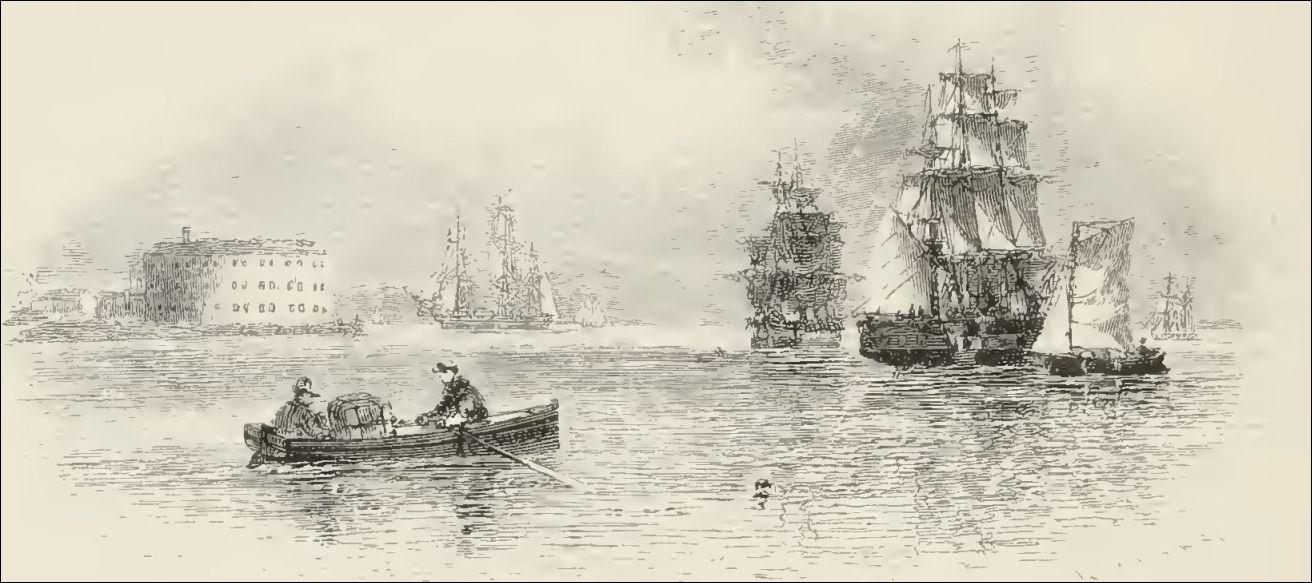
As a small boy, lying abed in the Ramapos, I was both thrilled and terrified whenever a thunderstorm swept through, convinced as I was that this was “Hendrick Hudson, the first discoverer of the river and country,” and his men “in their old Dutch dresses playing at nine pins in a hollow of the mountain” and that I was hearing “the sound of their balls, like distant peals of thunder.” I loved that image then, and find that over six decades it has lost none of its power to move and amuse me.
Wonderful as Rip’s story is, it almost pales beside Ichabod’s. In his excellent introduction to the Penguin Classics edition, William L. Hedges argues that Irving in The Sketch Book had “given form to both the literary sketch and what was eventually to be called the short story,” opening the way for Poe and Melville and innumerable others to follow. “The Legend of Sleepy Hollow” is, beyond dispute, a great American short story. It is set two miles from Tarrytown, in “a little valley, or rather lap of land among high hills, which is one of the quietest places in the whole world.” A “drowsy, dreamy influence seems to hang over the land, and to pervade the very atmosphere,” and strange spirits inhabit the place.
Certain it is, the place still continues under the sway of some witching power that holds a spell over the minds of the good people, causing them to walk in a continual reverie. They are given to all kinds of marvelous beliefs, are subject to trances and visions, and frequently see strange sights, and hear music and voices in the air. The whole neighborhood abounds with local tales, haunted spots, and twilight superstitions; stars shoot and meteors glare oftener across the valley than in any other part of the country, and the nightmare, with her whole ninefold, seems to make it the favorite scene of her gambols.
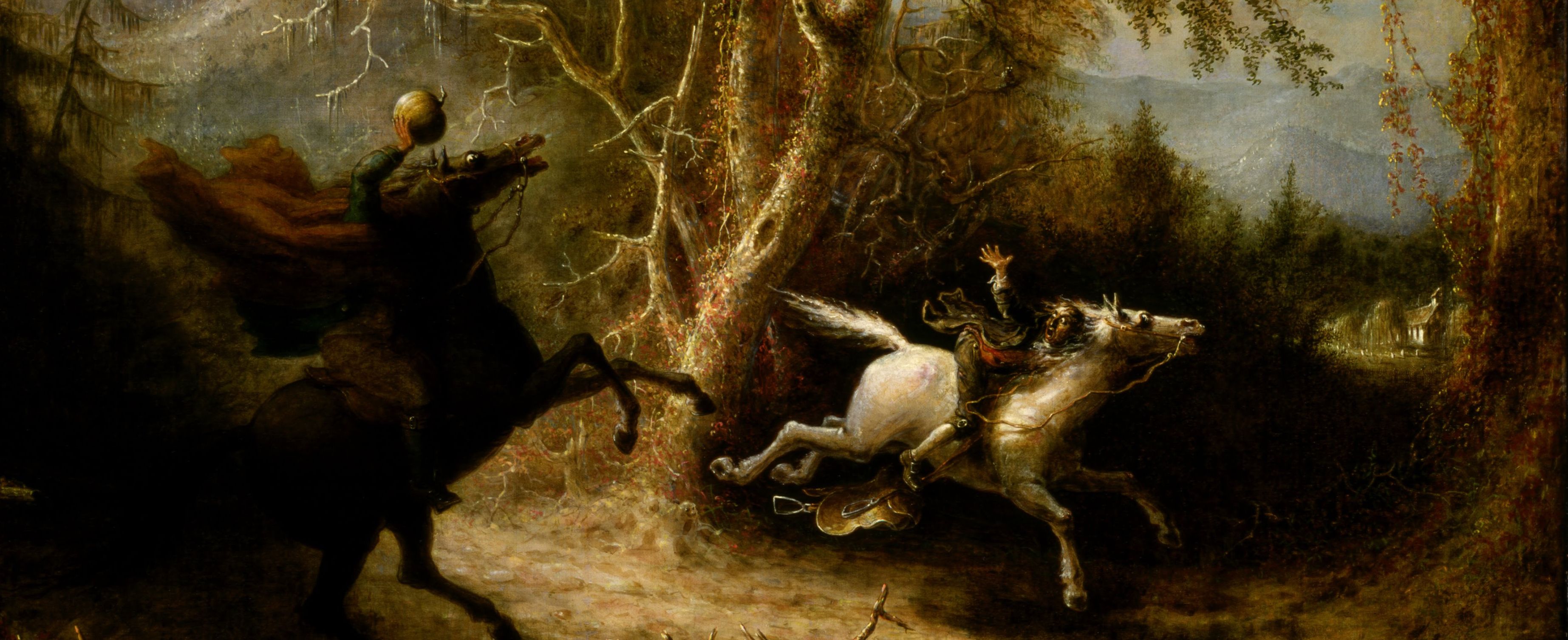
No sight is stranger to the imaginations of the locals than “the apparition of a figure on horseback without a head,” perhaps “the ghost of a Hessian trooper,” who “rides forth to the scene of battle in nightly quest of his head,” and no one is more firmly in the grip of that apparition than the schoolmaster, Ichabod Crane, who is “esteemed by the women as a man of great erudition, for he had read several books quite through, and was a perfect master of Cotton Mather’s History of New England Witchcraft, in which, by the way, he most firmly and potently believed.”
Among the women of the village, one is of special interest to Ichabod: Katrina Van Tassel, “the daughter and only child of a substantial Dutch farmer,” a “blooming lass of fresh eighteen; plump as a partridge; ripe and melting and rosy cheeked as one of her father’s peaches; and universally famed, not merely for her beauty, but her vast expectations.” She wears “a provokingly short petticoat, to display the prettiest foot and ankle in the country round,” and “from the moment Ichabod laid his eyes upon these regions of delight, the peace of his mind was at an end, and his only study was how to gain the affections of the peerless daughter of Van Tassel.”
Alas for Ichabod, in his way stands Brom Van Brunt, known as Brom Bones “from his Herculean frame and great powers of limb.” He too eyes this “country coquette” and the Van Tassel fortune: “This rantipole hero had for some time singled out the blooming Katrina for the object of his uncouth gallantries, and though his amorous toyings were something like the gentle caresses and endearments of a bear, yet it was whispered that she did not altogether discourage his hopes.” As to the upshot of all this, you know, of course, what happens, as Irving brings his classic tale to its deliciously funny and absolutely perfect conclusion.
Irving was in his late thirties when “The Legend of Sleepy Hollow” was published. Ahead of him lay a long and astonishingly productive career that lasted almost to the moment of his death in 1859, but nothing he wrote thereafter reached the heights of this classic, essential, exquisitely American tale.