
After six years in the U.S. Senate, Blanche Bruce served in senior positions in the U.S. government, appointed by three Republican Presidents.
-
November/December 2026
3 months ago By Edwin S. Grosvenor Volume71Issue5
Editor's Note: Eugene L. Meyer was a reporter and editor at The Washington Post for more than three decades, and has been widely published in regional and national magazines. He posts on SubStack and blogs at www.eugenelmeyer.com.
The recent victory of Scott Colom to be the first elected Black U.S. Senator from Mississippi is a remarkable milestone in the struggle for democracy in the Deep South. It comes 62 years after the “Mississippi Summer” of 1964, when more than 700 young civil rights activists — Black and white — converged on the state to help register Black voters. Three young men seeking to register them, one Black, two white — James Chaney, Andrew Goodman, and Michael Schwerner — paid with their lives. It was one crime among numerous others that would go unpunished for decades.
In 1964, only 5.3 percent of eligible Black voters were registered. That summer, despite registration efforts, only 1,200 Black voters were successful, out of 17,000 who applied. Fast forward to today. Mississippi’s population is 39.96 African American and 56.30 percent white. Yet, the state often described as the nation’s “most polarized” managed to overcome its presumed bias to elect Colom.
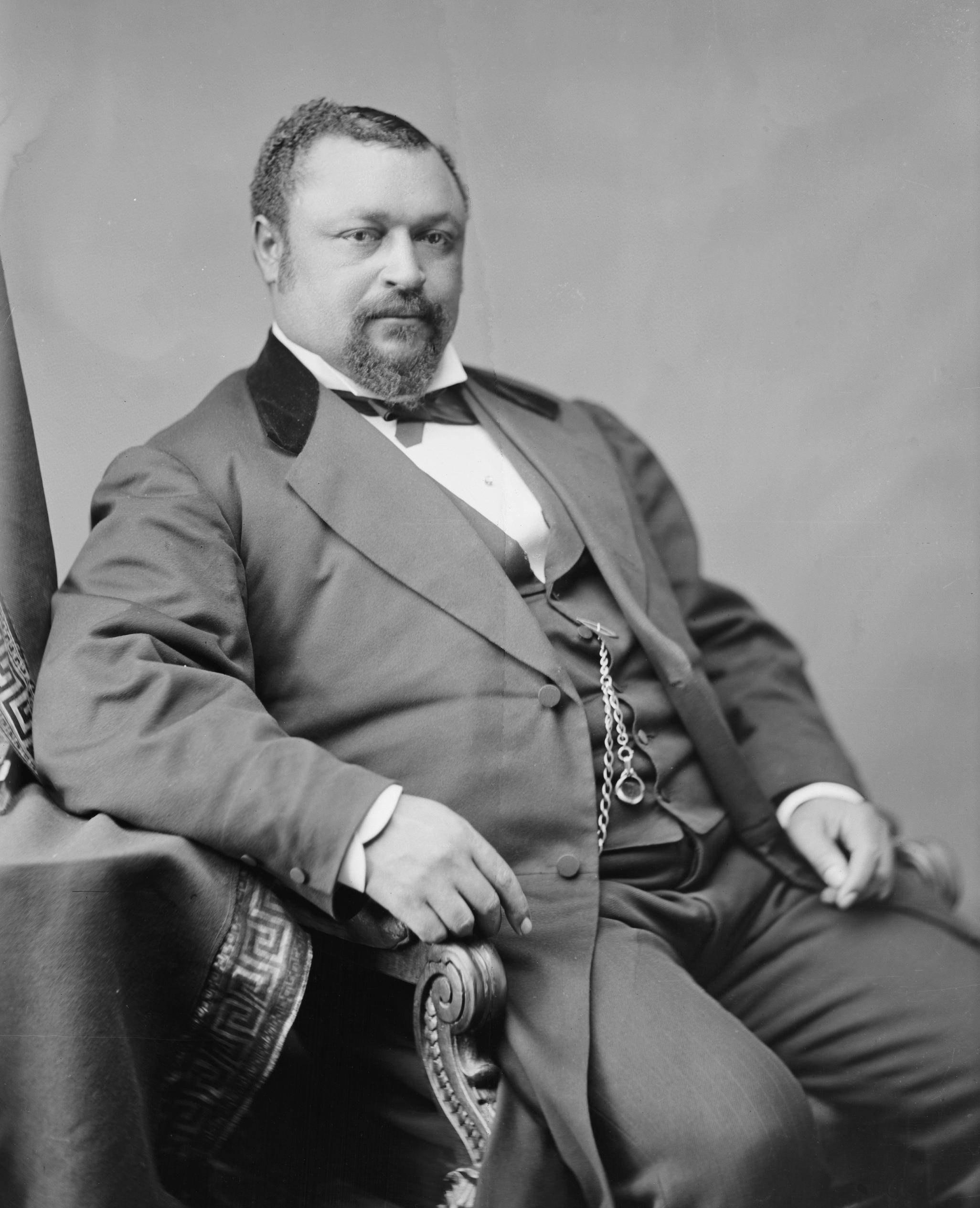
With Scott Colom’s victory, it seems timely to remember that the last Black senator from Mississippi, Blanche Bruce, had a remarkable career. He was the first African American to serve a full six-year term in the U.S. Senate, from 1875 to 1881, and also the first to preside over the Senate when in February 1879 he served as a temporary presiding officer.
Born into slavery in 1841, in Farmville, Virginia, Bruce was of mixed race, the son of an enslaved domestic servant named Polly Bruce and his white master, planter Pettis Perkinson. It has been reported that Perkinson educated and allegedly freed him, though Bruce in an 1886 interview said he gained his freedom by moving to Kansas during the Civil War.
Bruce is said to have attended Oberlin College for two years, then was a steamboat porter on the Mississippi River, moving in 1864 to Hannibal, Missouri, where he established a school for black children.
In 1868, Bruce moved to northwestern Mississippi, where he owned a plantation spanning several thousand acres. There followed a string of appointed and elected positions. He also edited a local newspaper, and became sergeant-at-arms for the Mississippi State Senate in 1870.
In February 1874, Bruce was elected to the U.S. Senate by the Mississippi legislature, the second African American to serve in the upper house of Congress. He was not Mississippi’s first Black senator. Hiram Revels held the position in 1871-1872, but Bruce was the first to serve a complete six-year term.
As a Senator, Bruce advocated strongly for civil rights protections for African Americans and spoke out against white violence and voter suppression during Reconstruction. He defended the rights of Native Americans (protesting the mistreatment and displacement of tribes like the Ponca) and opposed anti-Chinese immigrant legislation. He also pushed for federal improvements to the Mississippi River, advocated for fair federal patronage and black representation in government service, and championed backpay for veterans.
When the Freedmen's Savings and Trust Company failed in 1874, Bruce chaired the Senate committee that looked into the collapse. Abraham Lincoln had signed the bill to create the Freedman's bank in order to help emancipated slaves borrow and save money. Its failure, which cost thousands of poor former slaves the money they had struggled to save, was due to poor investments by its all-white directors.
For more information, see “The Freedman’s Bank” by John Steele Gordon in the December 1993 issue of American Heritage.
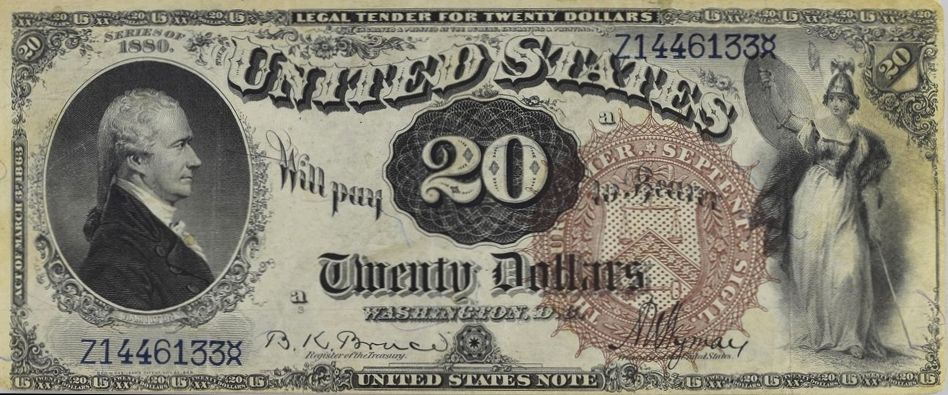
After Bruce completed his term as U.S. senator, three successive Republican presidents appointed him to senior positions in the Federal government. President James A. Garfield named him Register of the Treasury, a position he held from 1881 to 1885. Then he was Recorder of Deeds for the District of Columbia, appointed by President Benjamin Harrison, from 1891 to 1894. And President William McKinley reappointed Bruce as Register of the Treasury in 1897 and he served in that position until his death at age 57 in 1898.
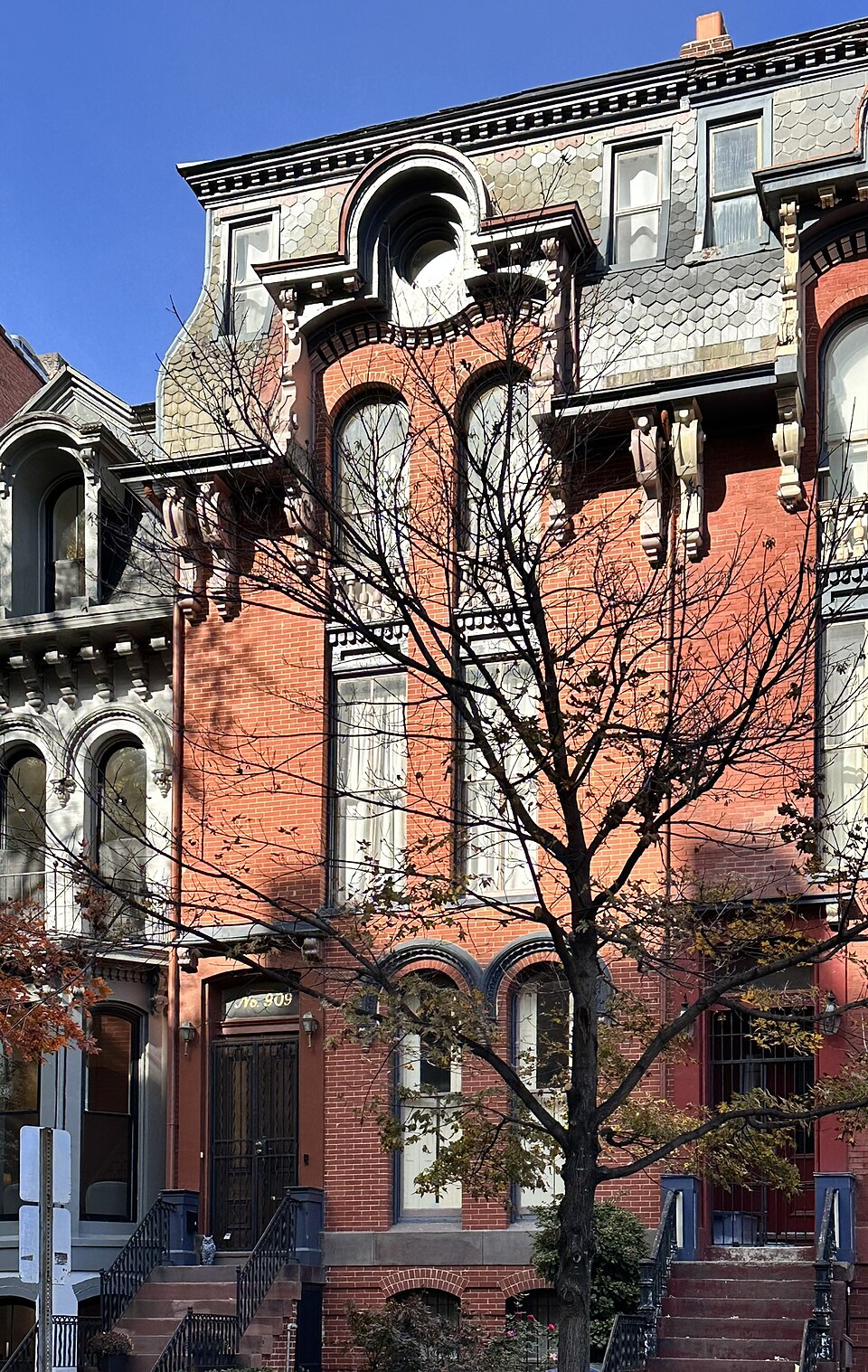
Bruce was a trustee of Howard University, and argued for integration of the U.S. Army. The three-story home he owned in the Shaw neighborhood of Washington was declared a National Historic Landmark in 1975.
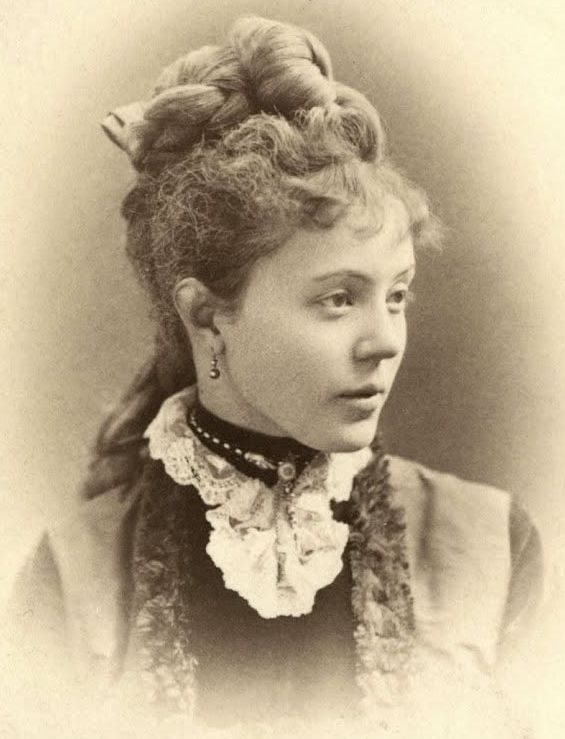
After the 1898 death of her husband, Josephine Beall Willson Bruce became dean of women at the Tuskegee Institute and managed her family’s cotton plantations in the South. A few years before, she was successful in her fight for the passage of a resolution to establish an annual Negro History Celebration Observation, which inspired Carter G. Woodson to create Black History Month.
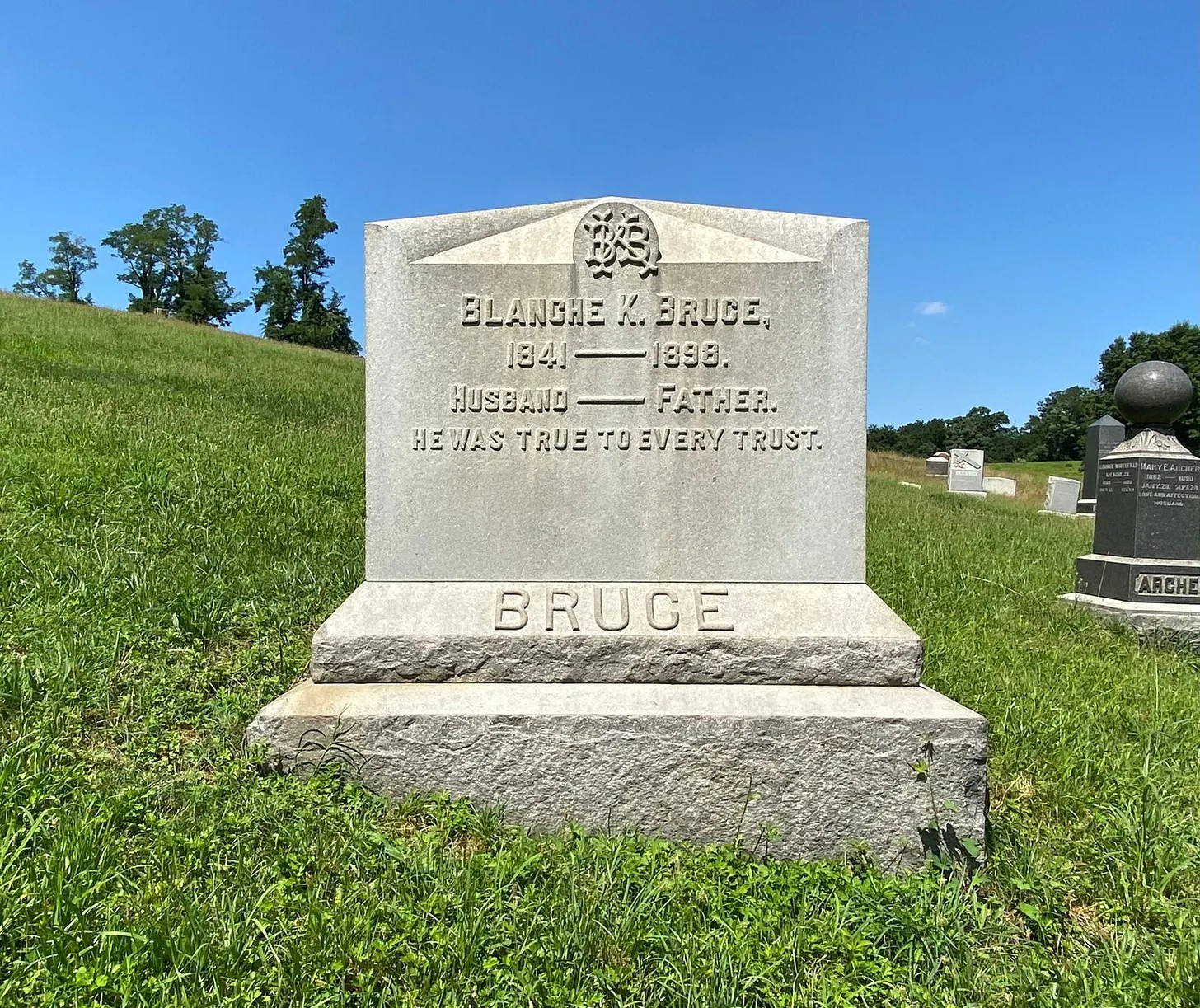
The historic Woodlawn Cemetery, located in Washington, D.C. east of the Anacostia River, is the final resting place of many of Washington’s 19th century Black elite.
While many of the graves are in disrepair, Blanche’s isn’t. It sits majestically on the hillside with an inscription identifying him as “Husband” and “Father” and “true to every trust.”