
While Robert Morris is remembered as the "financier of the Revolution," his partner and former boss, Thomas Willing, has been lost to history despite his own contributions to early American business and finance.
-
Spring 2026
9 months ago By Edwin S. Grosvenor Volume71Issue2
Editor’s Note: Richard Wade Vague is an American businessperson and author who previously served as the Secretary of Banking and Securities for the Commonwealth of Pennsylvania. His latest book is THE BANKER WHO MADE AMERICA: Thomas Willing and the Rise of the American Financial Aristocracy, an illuminating and original study of the life of one of early America’s dominant financiers. We often remember Robert Morris as a leading funder of the Revolution, but as Vague makes clear, Willing deserves as much attention, if not more, for his role in financing the cause. The following has been excerpted from that book.
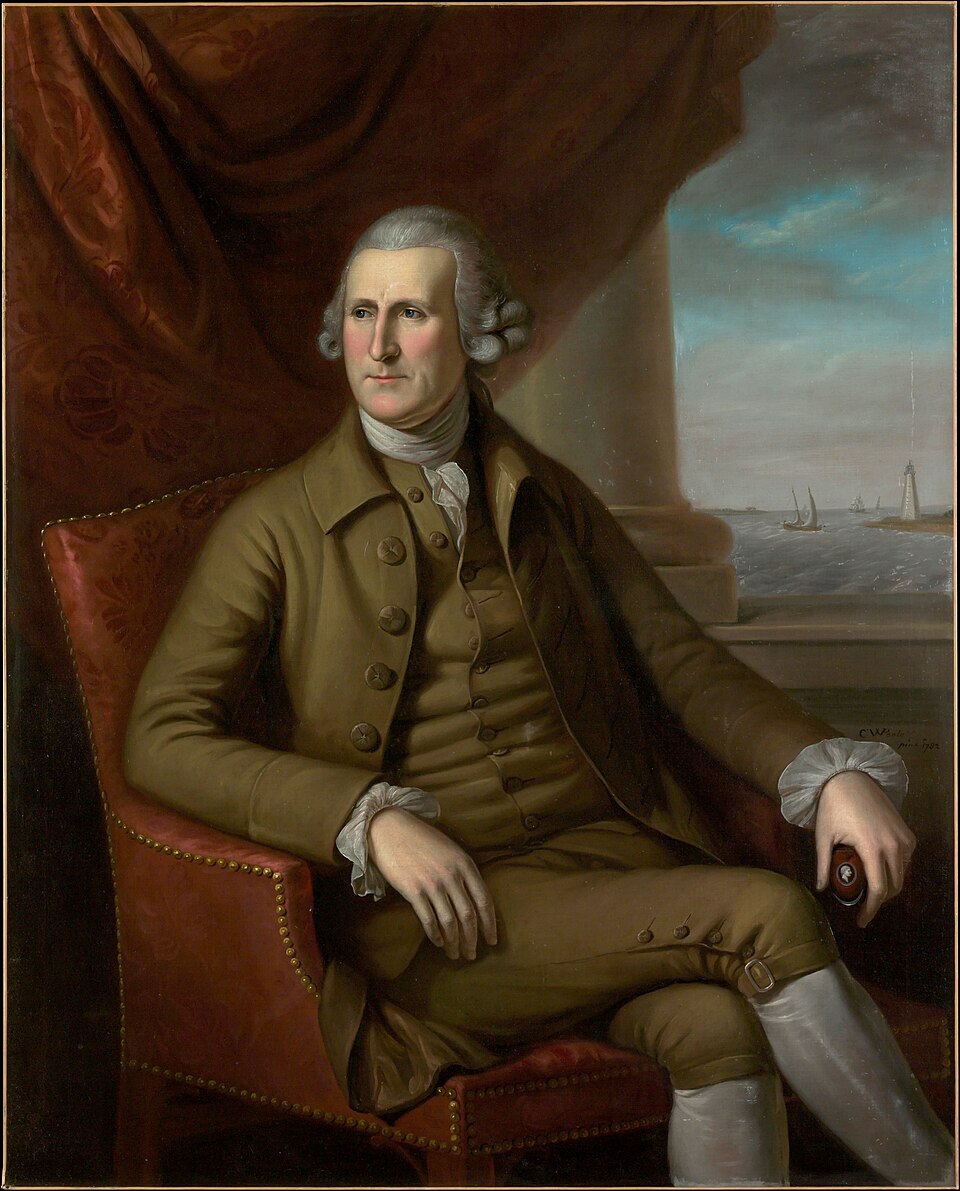
On July 1, 1776, at the Continental Congress being held in the stately building we now call Independence Hall, Pennsylvania delegate Thomas Willing cast a vote against independence.
It was a stifling and humid day, and the delegates had sequestered themselves in the elegant Assembly room with the windows shut so that no one could overhear their deliberations. The Congress was meeting as a “committee of the whole” to take a preliminary vote on the question of independence in advance of the official consideration. The matter was far from resolved. Opinions ranged from a passionate endorsement from figures such as John Adams and Thomas Jefferson to ambivalence and even to adamant resistance.
Willing, one of seven Pennsylvania delegates in attendance, was the very wealthy head of the state’s largest merchant trading firm and a towering presence – in Congress, in Pennsylvania, and in colonial life. Given his stature among Pennsylvania’s delegates, Willing’s influence helped sway their collective vote against independence, four to three. South Carolina joined Pennsylvania in voting no, Delaware’s delegation was locked in a tie, and New York abstained.
Although the measure had passed and the question of independence would now advance to the full Congress, delegates who supported the measure realized uneasily that only nine states had voted yes – and given Pennsylvania’s large size and its location as the geographic linchpin of the states, it was inconceivable to declare independence without it. The tension was magnified by the alarming news that a large British fleet had just arrived at New York, where General Washington’s army was camped.
The prospect of a stalemate loomed. As the delegates grappled with the outcome of the vote and scheduled the formal vote for the next day, the heat that had burdened them was pierced by a thunderstorm, portending an anxious evening of persuasion and debate.
Most likely, Benjamin Franklin did much of the persuading deep into that night, and specifically with Pennsylvania delegates John Dickinson, an unwavering Quaker who categorically opposed war, and Robert Morris, who was Willing’s business partner and a fellow member of the very small and tight-knit community of Philadelphia’s merchant elite, all of whom had deep commercial ties to Britain. Whatever Franklin’s arguments might have been, both Dickinson and Morris chose to absent themselves from the next day’s vote.
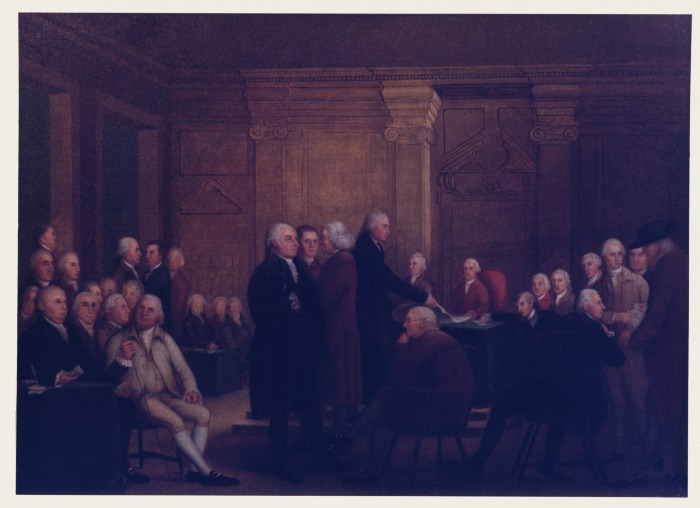
But Thomas Willing did not absent himself. On July 2 he was present and cast another “no” vote, though it was not enough to change the outcome.
With the two abstentions, Pennsylvania’s vote turned in favor of independence by three to two, and with the two smaller states now also both a yes, the momentous declaration of independence passed with twelve votes for, none against, and New York again abstaining (but then adding its assent soon after). But with his fateful vote, Willing had consigned himself to an undeserved obscurity in early American history.
Willing is a paradoxical figure, and we cannot truly understand this moment or its implications for American history without understanding this paradox, because even as Willing cast his votes, he and his business partner Morris were supporting the Revolution in a more tangible and imperative way: they were financing it. And often on nothing more than their personal wealth, credit, and reputations. They were taking the lead and the risk in supplying much-needed arms, gunpowder, and funds to the Revolution, likely saving it in its earliest and most perilous months.
Stated simply, Willing was the most powerful figure in early American history that you’ve likely never heard of. He was America’s dominant merchant and banker through the Revolution and the earliest days of the Republic and stood at the very heart of America’s founding financial elite. This elite’s political and economic conflicts with an emerging class of the so-called “middling and lower sorts,” and its creation of a new financial system for the young nation, profoundly shaped American history.
Pugnacious President John Adams would complain that “[George] Washington and [Alexander] Hamilton, with all their Understrappers, Tools, Satilites and Puffers, were in the Way: all governed by Willings and Chews and Bingham and Yard” – an extended and powerful group that Thomas Willing dominated. Adams had often protested that Washington was unduly swayed by Hamilton, but here he made a more startling claim: that for all their influence and power, both men were under the sway of – nay, governed by – Thomas Willing and his associates. Adams viewed their wealth and influence – embodied in the two banks Willing helped create – as the epitome of a threat to democracy, fretting that Willing and his son-in-law William Bingham would “get possession of all Pennsylvania” through their extraordinary riches. This, after the country had just won its freedom from the king. “A banking Aristocracy,” Adams lamented, “is not better than any other Aristocracy.”
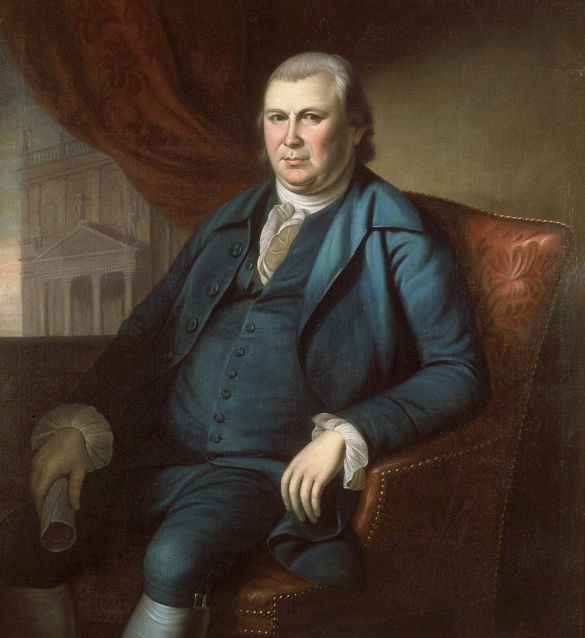
As America’s dominant financier, Willing wielded enormous power. He was the man at the pinnacle of the burgeoning American banking industry, president of the nation’s first bank and then its first central bank, the Bank of the United States. As such, he directly oversaw over a third of all the bank loans made in the country during his almost thirty- year career – and whether perceived or real, political and legislative votes were influenced by the “dread of being refused [loans] at the Bank.”
In the Revolution, prevailing against Britain came down to whether America could obtain sufficient supplies and funding, and Willing was central to both. Robert Morris, deemed “the financier of the Revolution,” was Willing’s employee whom he later elevated to partner. Treasury Secretary Alexander Hamilton was his client. William Bingham, Willing’s wealthy son-in-law, was selected as a young man by Congress as its agent to raise funds for the Revolution through trading and feats of privateering in the West Indies, where he oversaw the capture of more than 200 British merchant ships. After the war, Willing’s London banking relatives, the father and son Francis and Alexander Baring – leaders of a firm so formidable that it would later be called the world’s “sixth great power” – would help finance America’s banks and government, including the massive 1803 Louisiana Purchase. Part of that financing would be a loan from Willing’s bank.
Though he initially opposed independence, he and his partner Robert Morris played a crucial role in supplying and funding the Revolutionary War. Once the colonies committed to that path, Willing extended his personal credit and his firm’s overseas connections to quickly secure financing, gunpowder, and other vital war needs. He later became president of America’s first bank, an institution chartered to provide desperately needed funds for the war at a point when continental currency had turned virtually worthless. This was a “war of finance,” as Morris himself later noted – a financial war of attrition that would cost (distant) Britain far more than the colonies. This broad collaboration between radical political impulses for independence and the support of the conservative merchant elite was the only feasible path to victory. During the war, Willing was seemingly everywhere, serving on countless war committees while his ships served as navy vessels, his warehouses as a munitions depot, and his wharves as a gathering point for navy seamen.
See also: "Robert Morris and the 'Art Magick'" by John Dos Passos in the October 1956 issue
Willing’s vote against independence was the embodiment of the preference of Philadelphia’s elite merchant class. In fact, in 1775, the wealthy Quakers and Anglicans who dominated Pennsylvania’s government had expressly prohibited its delegates from voting for independence. Though Willing had been Pennsylvania’s leader in protesting the Stamp and Townshend Acts, he, along with many of his associates, were deeply entangled with British wealth and did not see the need for revolution. At the same time, they found themselves in the crucible of an internal political war in Pennsylvania that pitted the conservative elite merchant traders in the colony’s port city against the middling and lower sorts – the largely rural Scots-Irish Presbyterian farmers and artisans who had been flooding into that colony, who coveted independence, and who were becoming a radical force for political change. The fate of the country hung in the balance as these factions fought a virulent class war within America that has raged episodically and in different guises ever since.
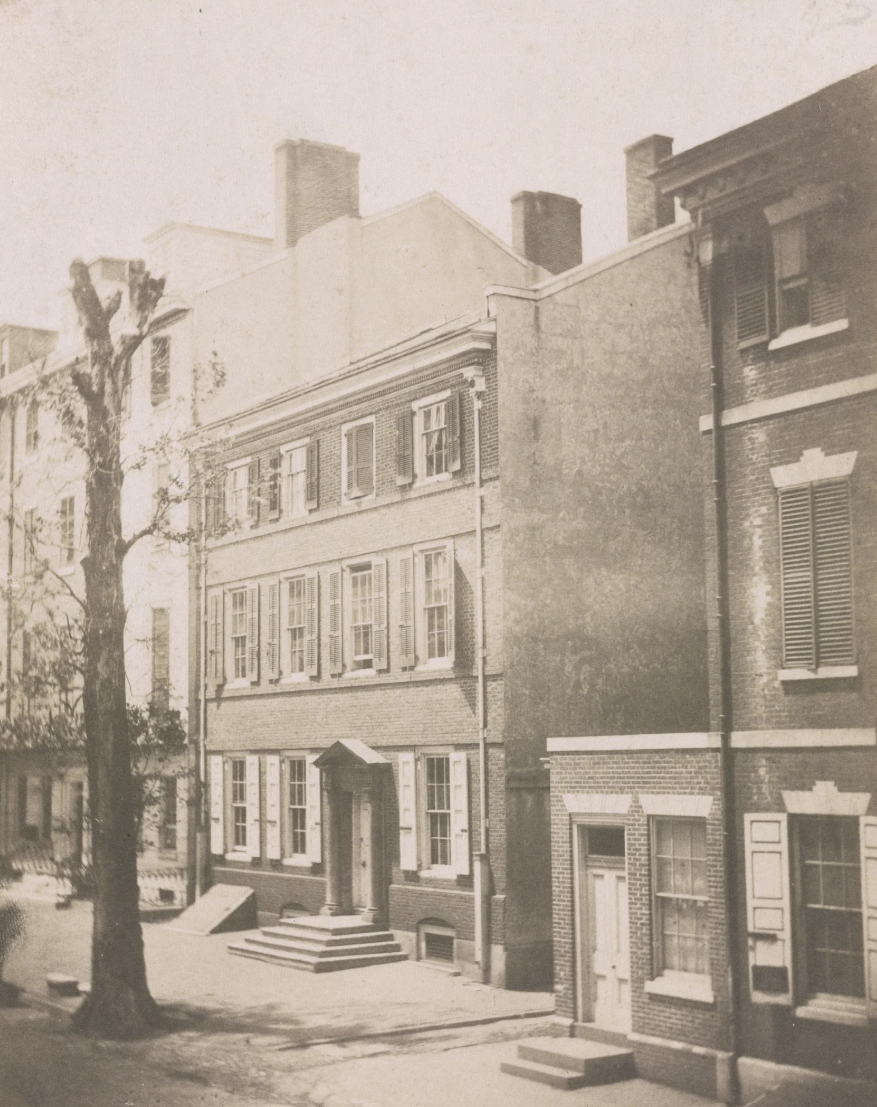
Over the decades, Willing grew the modest trading business he inherited from his father into the dominant merchant firm in Philadelphia and likely all of North America. During the 1740s, his father’s firm had conducted trading voyages averaging 15 tons (a rough measure of a ship’s capacity) per year. Under Willing’s leadership, along with that of his partner Morris, this increased to about 86 tons per year during the 1750s, then to over 260 tons annually just before the Revolutionary War, and then to a remarkable 1,043 annually by the end of the 1780s. This was a time when merchant trading was the preeminent business of the elite, and the firm’s ships carried wheat and timber to the West Indies and Europe and brought wine, sugar, cloth, and other manufactured goods back to Philadelphia. Over the course of his career, Willing would parlay a $26,000 inheritance from his father into a fortune estimated at roughly $1 million.
In the crucial period leading to Yorktown – a point by which the continental currency had turned worthless – Willing, Bingham, Morris, and others pooled their own personal resources to help supply the army. This led to the creation of America’s first bank for the express purpose of funding the war. As its president, Willing would lend money to the fragile US government. Hamilton rejoiced: he had carefully analyzed the financial capacity of both Britain and America for continued fighting, then calculated the added funding that loans from a new bank could bring. “Without being an enthusiast,” he concluded, “I will venture to assert, that with such a resource as is here proposed (the bank), the loss of our Independence is impossible.”
Willing and Morris launched that bank in a country that had no banks or banking system – a venture he described as a “pathless wilderness.” Indeed, the colonies had been prohibited from establishing such banks. He then played a vital part in shaping the young nation’s new world of banking as a generous resource to advise other new banks in other cities.
His banks financed the robust growth of the new nation’s private sector. As president of the Bank of the United States, he was the dominant economic force in the country, extending “public and private credit,” as Hamilton would put it, to the US government, the merchant elite, and the broader business community. In any economy, growth is dependent on loans, and he was responsible for making the largest portion of the loans made in the country for more than a quarter of a century. Hamilton, in his less than seven years as Treasurer, primarily financed the government (in part with Willing’s help). Willing, in his twenty-six years as a bank president, financed both the government and the emerging business class, so much so that the country’s economy more than tripled in size during his banking tenure.
From his seat of power and with his fundamentally conservative temperament, he would, through time, implement curbs and guardrails against the banking industry’s tendency toward boom and bust. This included establishing internal guidelines, governed by a balance of risk and caution, that his bank branches should not make loans of more than five times the “specie capital apportioned to them.” He skillfully navigated his own business and banks through one of the most turbulent eras in economic history – a sixty-year span that saw almost continual wars and near wars; the postwar depressions of the 1760s, 1780s, and the latter half of the 1810s; the financial crises of 1772, 1791–2, 1797, and 1819; the economic boycotts and embargoes of 1765, 1767, 1773, and 1807–9; and one of the most far-reaching political revolutions in history.
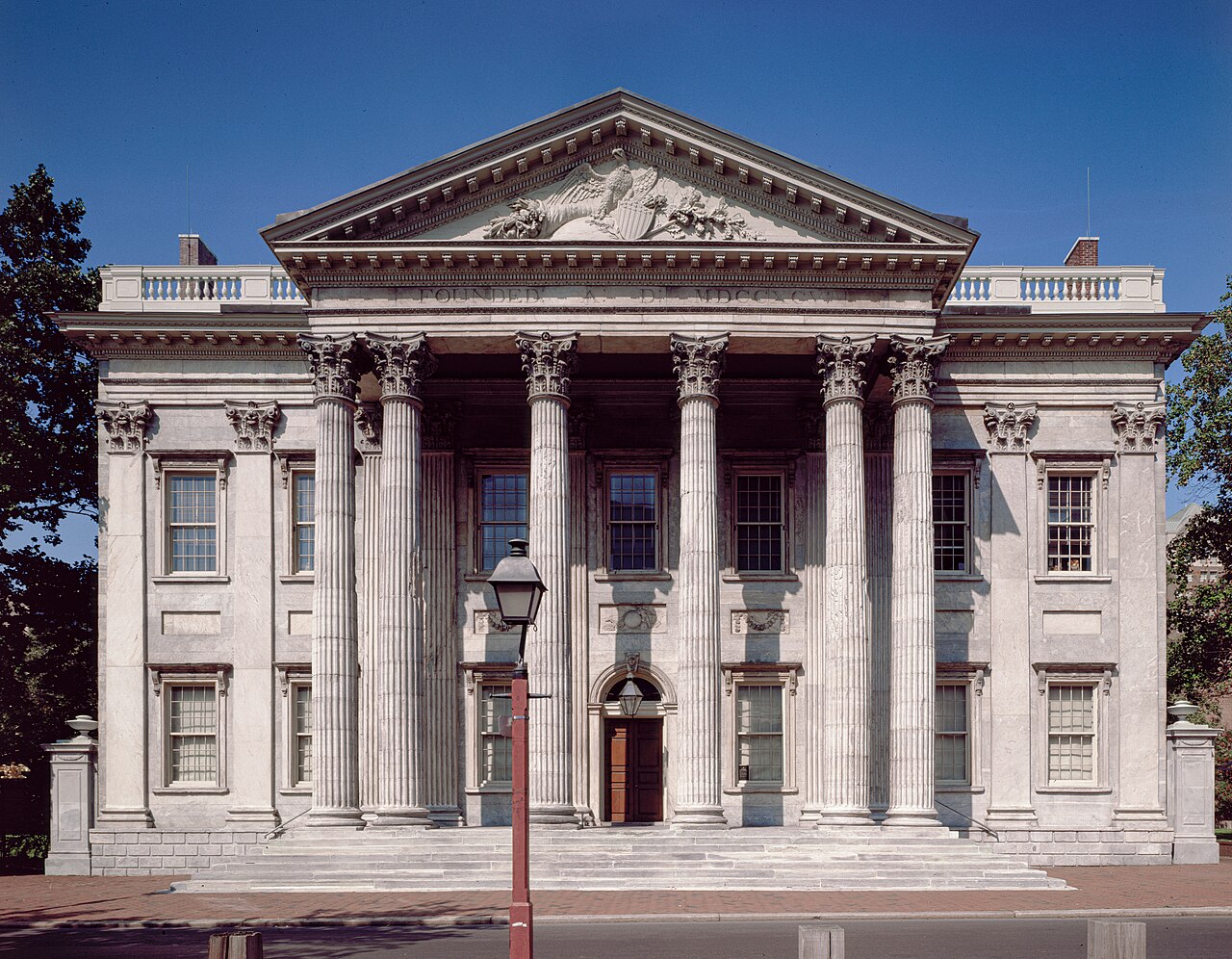
Willing kept his perspective and his fortune – and kept his banks in strong condition – when many others did not. It is arguable that a different Bank president with a different temperament could not have provided the steady helmsmanship that allowed this experiment to succeed so mightily. In stark contrast, when William Jones – a former Secretary of the Navy with no banking experience – took the helm of the newly chartered Second Bank of the United States in 1816, his catastrophic mismanagement led not only to his own dismissal but to one of the worst financial crises in US history.
Remarkably, Willing’s combination of power and conservatism was such that he was the only lender to ever call the US government’s loans. For all his commitment to advancement, he had the indispensable ability to say no; to resist the siren song of million-acre land speculations when his peers succumbed; to turn down friends, family, and even the government for loans he deemed ill-advised, and to circumscribe the activities of his life when those were overextended.
Willing has been overshadowed by Hamilton in most historical scholarship and writing, but at the helm of the Bank of the United States, he helped Hamilton shape the national financial and economic system. He crafted policies that governed the interactions between the Treasury and the Bank of the United States (the same kind of policies that govern the relationship between the Treasury and Federal Reserve today), coordinated with Hamilton and his successors to stabilize and sometimes save troubled banks, and even showed Hamilton how to create secret, anti-counterfeiting marks on bank notes. Willing helped to unify, streamline, and rationalize the government’s finances in its first decades as his bank and branch network served as a principal depository for federal monies and tax payments; a transfer mechanism from city to city; a clearing agent for payments on the national debt; and a facilitator for the payment of government salaries.
Because of their banking power, Willing and his peers had a profound political influence, and the specter of Willing’s approval or disapproval hung over most major legislative actions of that period, including the fierce legislative battle for ratification of the Constitution, the protracted battle to get the new government to honor its war debt, and the political battles regarding the Jay Treaty and the Quasi-War. Willing’s power in these moments came in part from his financial control: Whether real or perceived, many were loath to vote against Willing’s wishes for “dread of being refused [loans] at the Bank.” This was the very power that John Adams decried when he wrote that Washington, Hamilton, and their staffs were all “governed by [the] Willings.” Significantly, the new monetary system launched by the 1787 Constitution was the very one that Willing, Morris, and Bingham had so coveted. It precluded states from ever again issuing currency and left banks as the all-but-exclusive creators of money in the new country.
In short, Willing was a colossus presiding over the financial landscape of the new republic. Meanwhile, over his own lifetime, he built a substantial fortune, and for a time was likely the wealthiest man in America.
In Thomas Willing, we find a conjunction of obscurity and power – the contradiction of a titan who’s been forgotten by history. True, as he strolled with stately calm down the streets of Philadelphia, he was sometimes mistaken for George Washington, but Willing made no boasts to that kind of stature. He had a long-standing reputation for modesty, steadfastness, and honesty in his conduct, and “a civil and respectful deportment to all my fellow citizens.” Even Adams, upon first meeting him in 1774, had deemed Willing “the most agreeable man.”
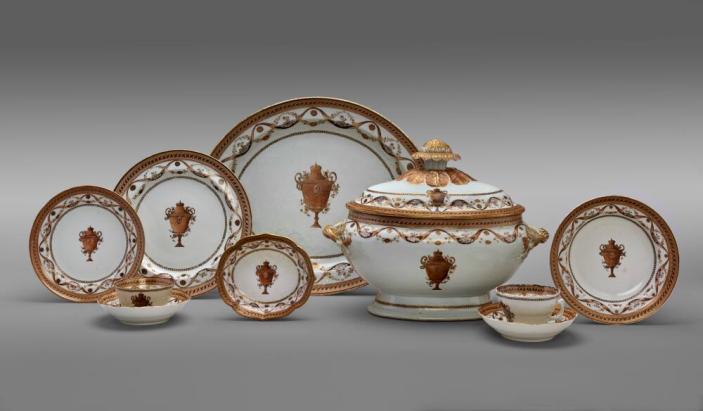
Willing was devoted to family, paying great attention throughout his life to his many siblings and children. He was similarly committed to the firm passed on to him from his father. He was Mayor, Assemblyman, Pennsylvania Supreme Court Justice, and a creature of habit who claimed as his own talents nothing more grandiose than persistence and hard work. He was so predictable and punctilious, the banker’s temperament, that he was nicknamed “the old regulator.”
Perhaps the most telling character in Willing’s story was America itself: bursting, explosive, unbounded – from the outset a stage for turmoil, conflict, and relentless advancement. It was a country one astonished immigrant decried as “a Hercules in the cradle.” Far from a small and wanting country resisting the depredations of an impregnable Britain, Willing’s America was in the midst of the greatest economic expansion in world history.
The Willings had not come to America because of religious persecution, but to build more wealth. The country, and in particular fertile Pennsylvania, was the Silicon Valley of its day – a beacon for ambitious British entrepreneurs. This was a century in which the colonies’ population would skyrocket from 200,000 to 5 million while their collective economies grew from nothing to one-third the size of mighty Britain’s, making it inevitable that America would not long subordinate itself to its mother country. In that span, against that backdrop, Willing and his associates would become America’s first financial elite.
Willing would succeed far more than almost any other in his era largely because he was the embodiment of what became cherished American values: dependability coupled with innovation; steadfastness with graciousness; boldness with prudence; and conviction with compromise. As Willing himself would reflect: “My success in life has not been derived from superior abilities, or extensive knowledge, a very small and scanty share of either having fallen to my lot; therefore, it can only be ascribed to a steady application to whatever I have undertaken, a civil and respectful deportment to all my fellow citizens, and to an honest and upright conduct in every transaction of life.”