
While we “know” more and more about the American past, too many of our citizens are ignorant of who we are and where we came from.
-
Winter 2026
9 months ago By Richard Bell Volume71Issue1
Editor’s Note: Wilfred McClay is a professor of history at Hillsdale College and author of Land of Hope: An Invitation to the Great American Story, a widely used textbook and narrative history of the United States.
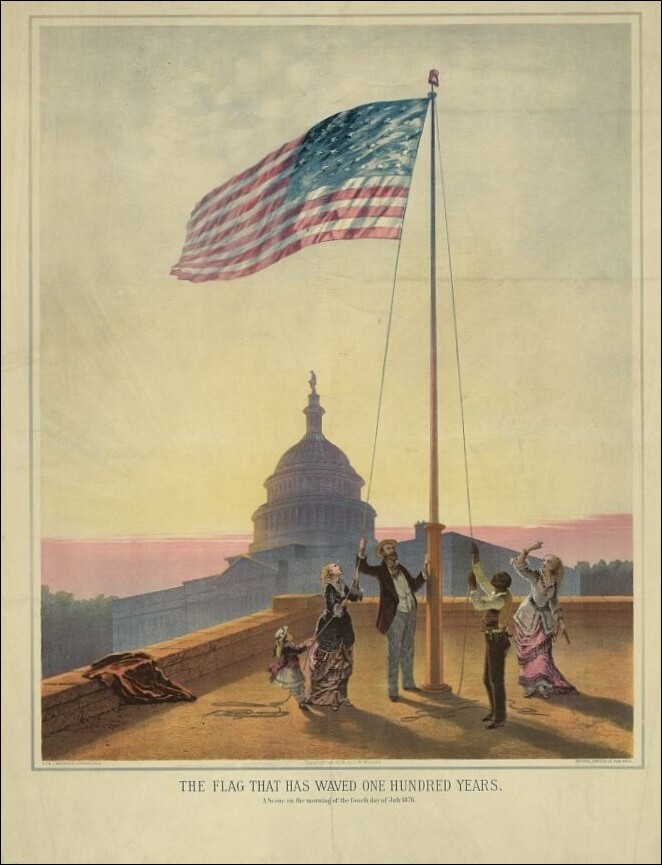
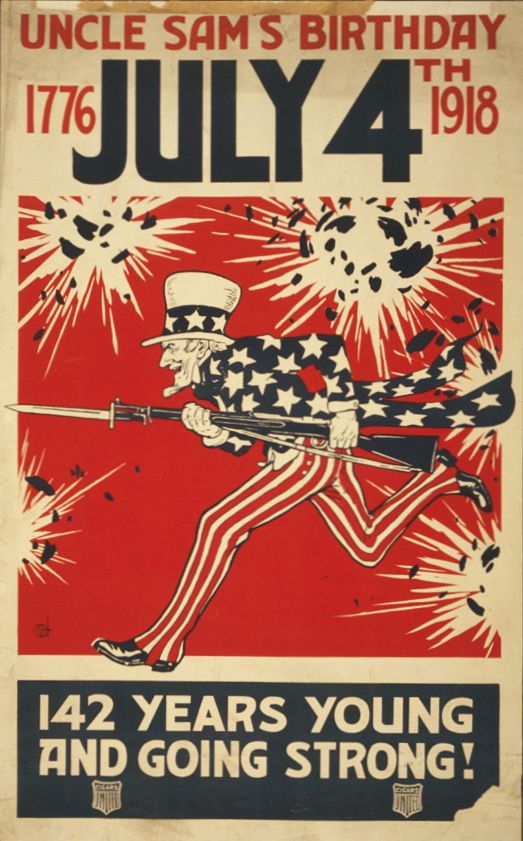
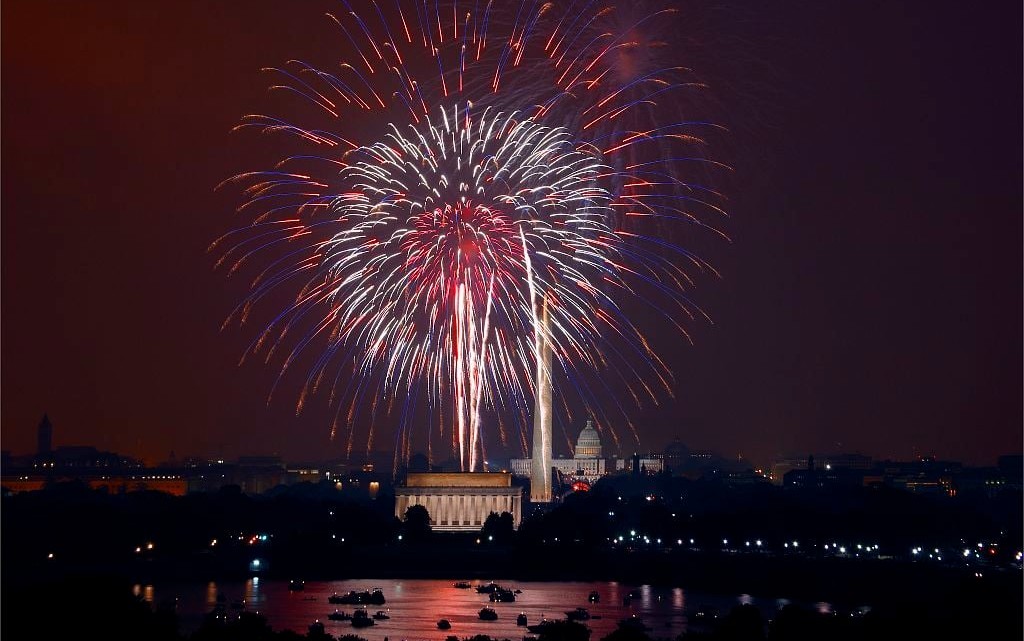
This year we celebrate the 250th anniversary of our nation’s birth, the date on which our free and independent nation was proclaimed to the world by the signing of the Declaration of Independence.
We celebrate the enduring flame of the American Revolution, that fired the imaginations of the brave men and women who fought to make this country possible, against tremendous odds, and who saw to it that it would become a beacon to the world.
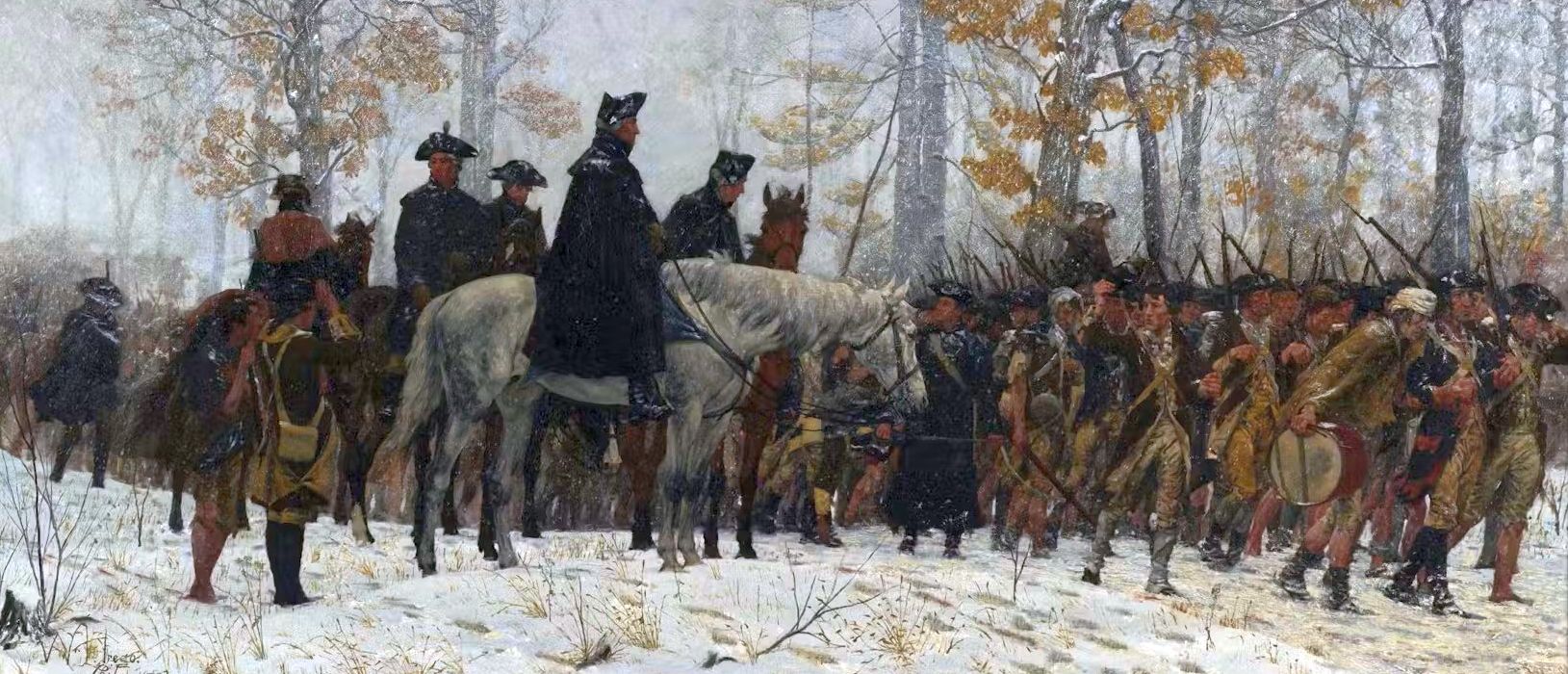
That war was already well underway by July of 1776, and had been for more than a year. The American landscape was ringed with campfires and sounds of battle, with the ultimate outcome far from certain. When the Declaration’s signatories pledged their lives, fortunes, and sacred honor to the Patriot cause, they were not speaking rhetorically. The humiliations of failure – and worse – were a real possibility.
The study of history has many uses, but primary among them is the work of memory. No great or enduring human enterprise can be sustained without it. No matter how determined and focused we are, we’re sure to lose our way unless we regularly look back, and reorient ourselves, remembering where and how we began, and why, remembering our deep connection to what came before us, and particularly with those who came before us.
Without those points of reference, we not only forget the succession of historical events, the names and places and stories that form the warp and woof of our common life. In the process, we eventually forget who we are.
A perfect example of what I mean by that rather extraordinary statement – drawn not from American history but from the ancient Near East – continues to this day. It is the Passover Seder, a ritual meal at the heart of Judaism. It involves a retelling, every year, of the story of the miraculous liberation of the Israelites from slavery in ancient Egypt, taken from the Book of Exodus in the Bible. The Seder itself is based on the Biblical verse commanding Jews to retell the story of their Exodus from Egypt: "You shall tell your child on that day, saying, 'It is because of what the LORD did for me when I came out of Egypt.'" (Exodus 13:8)
It is a story of grateful liberation, a story to be told again and again and again, a story that defines a people, a story that has helped them remember who they are, year in and year out, through centuries of displacement and tribulation. It is a story that defines a particular disposition toward the miracle of life itself.
The story of the Exodus has been a formative part of our Western civilization, taking many shapes along the way. The New England Puritans saw their perilous trek across the ocean in search of religious liberty as a repetition of the Israelites flight to freedom, bringing them into Zion. Enslaved Africans south of the Ohio River too looked to the Exodus story as an anticipatory symbol of their own eventual freedom, as they sang “Go down, Moses…. Tell old Pharaoh/ Let my people go….”
And when it came time for the new United States of America to design its Great Seal, both Benjamin Franklin and Thomas Jefferson — not among the most religious men, in any conventional sense of the term — urged that the Seal should depict the miracle of Exodus, with Moses extending his hand over the Red Sea waters as they swamped Pharaoh’s pursuing army, and that the Seal should bear the following motto: “Rebellion to Tyrants is Obedience to God.”
To use such a design for the national seal used to guarantee the authenticity of the most important and solemn records and documents: that would have been quite a marvelous thing. In the end, though, they didn’t get that design adopted. But their design showed an understanding of what Americans most needed to remember about themselves, about who they are. They were to be a free people, under God.
Remembering who we are is not something that comes automatically. And what happens when we no longer are able to remember these things?
Let me provide another illustration, albeit a painful one to contemplate. Alzheimer’s Disease is perhaps the most dreaded affliction of our time. It is dreaded because, by robbing its victims of their memories, it also robs them of their fundamental identity, their very sense of who or what they are. Too many of us today have had the unsettling experience of looking into the eyes of a loved one afflicted with this awful disease, and being unsure whether the person we once knew so well is still there behind the eyes, whether he is even capable of remembering who he is, or recognizing who we are, and the lifelong relationship that has subsisted between us.
Without the capacity for memory, such a loved one soon slips away from himself, from us, and from our shared world, and finally vanishes into a fog of unknowing.
What is true for individuals is also true for nations and peoples. What memory is for individuals, history is for civilizations; and without the reference points provided by historical memory, we soon forget who we are, and we perish.
Yet there is a crucial difference to be pointed out here. No one can be blamed for having contracted Alzheimer’s Disease, an organic condition whose causes we still do not yet understand. It is not a choice. But we the American people can be blamed if we fail to know our own past, and fail to pass that knowledge on to the rising generations.
We will be the ones responsible for our own decline. And our society has come dangerously close to that very state, having lost a general grasp on the larger trajectory of our own history. It is small wonder that so many young Americans now come into adulthood without a sense of their membership in a society whose story is one of the greatest enterprises in human history. That this should be so is a tragedy. And it is also a crime.
The fear that we Americans might lose our national soul by forgetting who we are and where we came from is not something new. Abraham Lincoln had the same fears, as an unusually prescient young man. He made that anxiety vividly clear in his 1838 Lyceum Speech, “On the Perpetuation of Our Political Institutes.” But the possibility of such a self-inflicted loss is in fact a perennial problem, arising anew in each new generation of our republic.
In our own time, the problem takes the form of a strange paradox: while we “know” more and more about the American past, due to the labors of many battalions of specialized professional historians, we actually know less, because we lack a grasp of the overarching meaning of our history, the kind of meaning that helps shape the way we live together. We lack an adequate perspective on our history, a perspective that allows us to see the great achievements of American history in their proper light, properly weighed against the admitted failings and shortcomings of that history. We lack a shared sense of how exceptional our pioneering experiment in self-rule has been. A sense of how full of darkness and despair and want and inequity most of human history has been by comparison. A sense of what a brilliant light came into the world with the events of the year 1776.
So where to begin repairing the damage done by the neglect of our history, and to begin counteracting the misdeeds of commission and omission that are depriving us of our own legacy? The anniversary that is fast approaching will be a marvelous place to start.