
The American patriots came up with a bold plan to force the British out of Boston 250 years ago this month.
-
Winter 2026
9 months ago By Richard Bell Volume71Issue1
Editor’s Note: Edward J. Larson is a professor at Pepperdine University and previously taught at the University of Georgia, Yale, and Stanford, among other universities. His many books include Summer for the Gods, winner of the 1998 Pulitzer Prize in History, and most recently Declaring Independence: Why 1776 Matters, in which portions of this essay appeared.
In their relatively comfortable winter quarters in Boston, the British were largely ignorant of George Washington’s audacious plan to force them out of Boston. On the other hand, patriot leaders alerted by informants always seemed to know precisely what the British would do before they did it, such as the prior April when the British marched on Concord to try to capture the patriot armory, or two months later when the British took the highlands around Bunker Hill.
At those critical junctures, by acting first, the patriots turned both efforts by the British into pyrrhic victories at best. “Another such would have ruined us,” one British general at the scene commented on his army’s “dear bought victory” at Bunker Hill. But confident in their might and dismissive of their foe, British leaders never seemed to attend in advance to patriot operations even when they should have foreseen them.
Changing military strategy and war aims also played roles in the unfolding drama. The British had first dispatched troops to Boston in 1768 to enforce the Townshend tariffs and added more troops in 1774 under the command of Thomas Gage to administer the Coercive Acts.
At the time, both sides saw the conflict as a dispute over colonial rights rather than a war for American independence. As the center of colonial resistance, Boston was the logical place to post British troops.
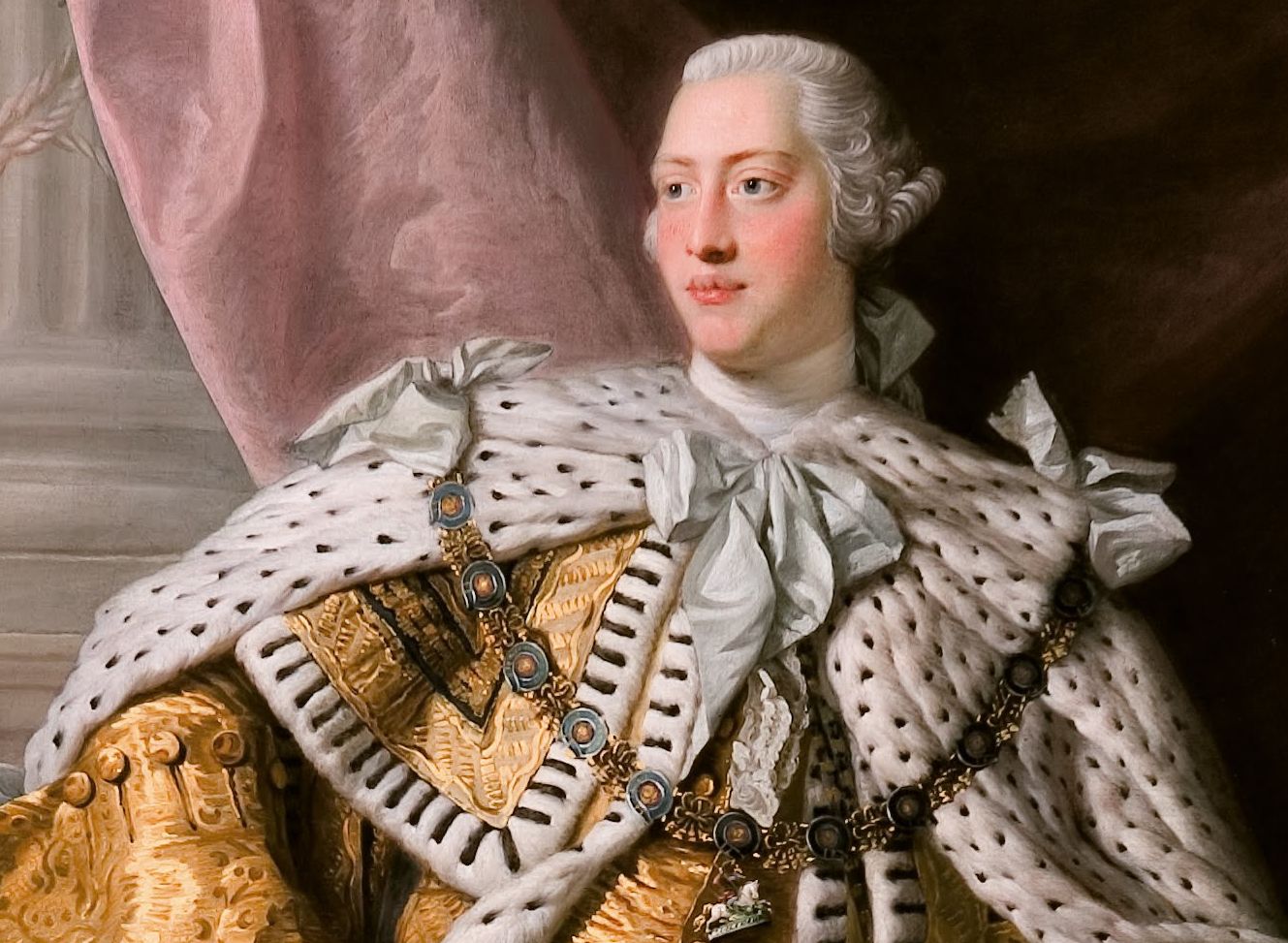
After the Battle of Bunker Hill in June 1775, however, the British began seeing the conflict differently. Even as patriot leaders in Congress and the colonies professed their loyalty to the Crown, King George in August proclaimed New England in “open and avowed rebellion,” and in a speech from the throne two months later he declared, “The rebellious war now levied is become more general and is manifestly carried on for the purpose of establishing an independent empire.”
For more, see Edward Larson's essay on "The Meaning of 1776"
how strategy for both sides changed that year
With these official pronouncements, Britain declared the conflict to be a war of independence nearly a year before the Americans did so. At this point, the ministry in London approved a request by their commander-in-chief Thomas Gage to transfer the center of British military operations from Boston to New York. Hemmed in by a large patriot force, the army served scant purpose in Boston once suppression replaced reconciliation as Britain’s war aim. With a larger harbor, more strategic location, and a less hostile population than Boston, New York offered an optimal base for severing New England from the other colonies and defeating the patriots in a war for independence.
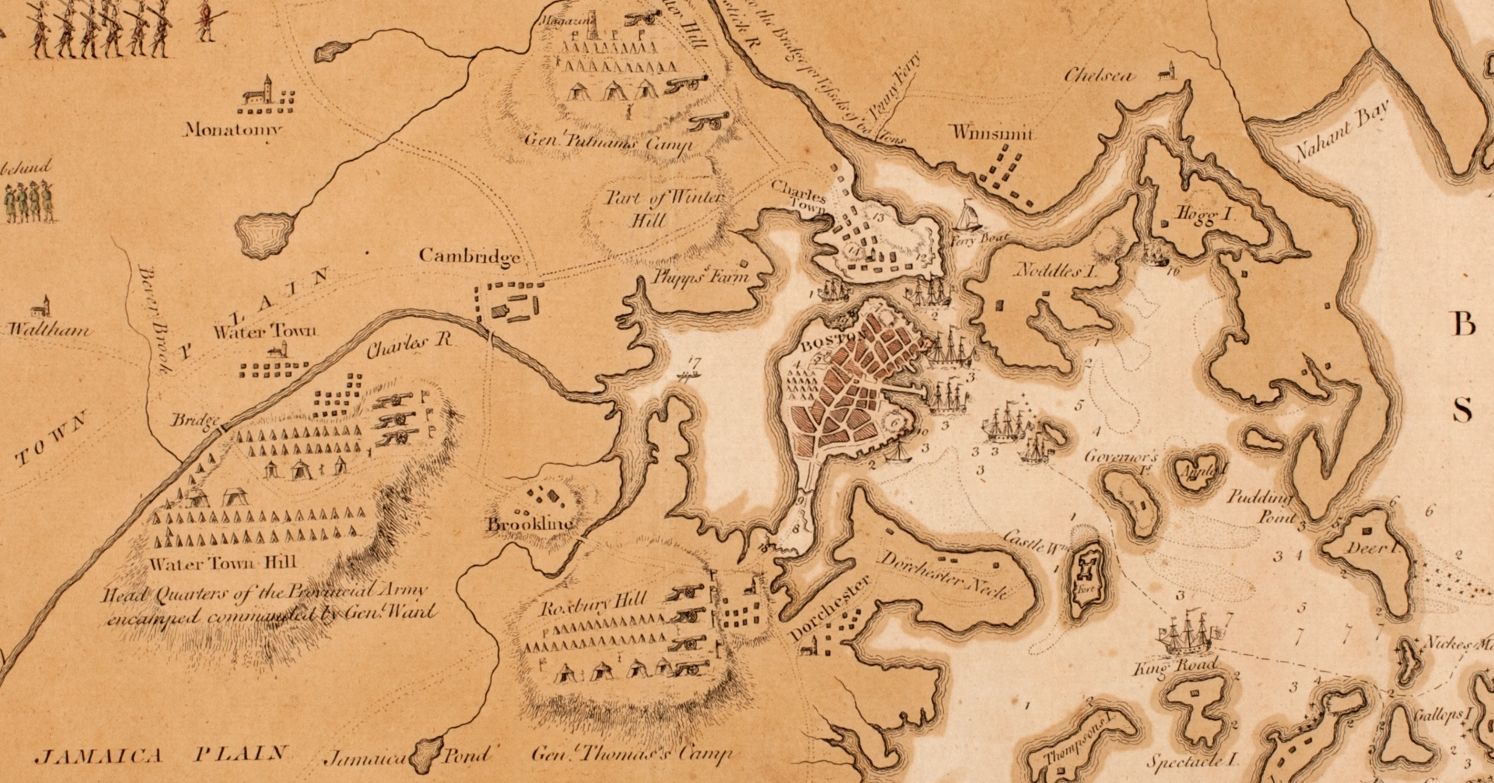
General William Howe, replacing Gage who had been recalled after Bunker Hill, supported Gage’s request, but, after taking command, and due to the long delays in trans-Atlantic communications, he did not receive London’s approval for the move until October, by which time he felt compelled to put it off until spring. He did not yet have enough ships in place to transport his army, and winter storms could complicate the operation. Howe felt secure in his position and saw no need to expand it. He sat tight.
As he confided even before Henry Knox returned from Ticonderoga with his valuable cannon, Washington had “great reason to believe” that the British would leave Boston for New York. He did not want to let them go in an orderly fashion to a superior location for prosecuting the war, especially if they could punish Bostonians on their way out by burning the city. With a two-to-one advantage in troops, Washington wanted a victory – or at least the appearance of one – to show for once that an American army could beat a British one. Whether fighting for rights and reconciliation or (as he by then hoped) independence, a victory would strengthen the American hand.
See also Knox Brings Cannon and Victory to General Washington, by Edwin Grosvenor
Accordingly, Washington rushed to emplace Knox’s artillery on Dorchester Heights before the British either learned of the threat and countered it or left Boston on their own terms. He hoped that, if surprised by the sudden appearance of a battery on the previously barren and windswept heights, Howe would respond with a massive, Bunker Hill-style assault that could destroy the British Army. Patriot troops could then sweep into Boston by land and water to liberate it. Springing that trap could secure American independence. Impulsive by nature, Washington willingly took such chances.
Blind to the looming threat from Dorchester Heights, Howe and his army made the most of another enforced winter in Boston even as the slow-moving war ministry in London dispatched more ships for an orderly transfer of troops to New York and evacuation of loyalists to Nova Scotia in the spring. Cut off from the mainland by patriot forces, occupying British troops and local loyalists relied on goods brought in by sea, which drove up prices and limited supplies.
Still, housed in the better homes abandoned by the patriots who had fled Boston after the Battles of Lexington and Concord, British officers lived well enough, with General Henry Clinton taking over John Hancock’s Beacon Hill mansion and a regimental surgeon residing in John and Abigail Adams’s townhouse. As Boston lacked a theater because of its Puritan roots, the British turned Faneuil Hall into one, with some officers writing plays and soldiers performing in them.
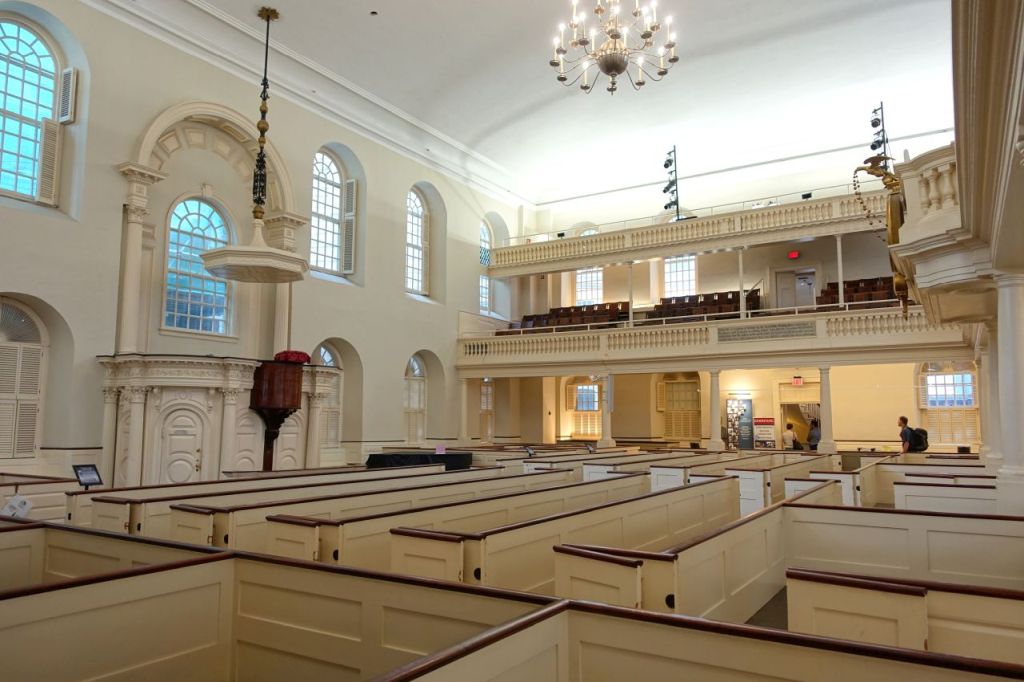
Stripped of its pews, the Old South Church became a horse-riding rink for officers. Balls and parties were commonplace, punctuated by an occasional exchange of largely ineffective cannon fire between the opposing sides, with the British typically firing twice as many shots as the patriots. Born into the aristocracy and a member of Parliament from a rotten borough controlled by his family, Howe was cautious by nature and tried to make life comfortable for his officers.
Everything changed on Saturday, March 2. “The House this instant shakes with the roar of Cannon,” Abigail Adams wrote to her husband John that evening from their country home some ten miles south of Boston. “I have been to the door and find tis a cannonade from our Army, orders I find are come for all the remaining Militia to repair to the Lines a monday night by twelve o clock. No Sleep for me to Night.”
Nor for the British. As he explained in a report to Congress, Washington meant the bombardment from existing positions as a distraction “to harass the Enemy and divert their attention from” Dorchester Heights, which he planned to occupy two nights later. The British responded in kind, with both sides repeating the cannonade over the next two nights and Howe never seeing it as part of a larger operation by the patriots.
Neither side inflicted much harm on the other with the intensified bombardment, but, as Washington reported to Congress, informers told him that it caused “much distress and confusion” among the British, who had not suspected that the patriots had the added mortars supplied by Knox.
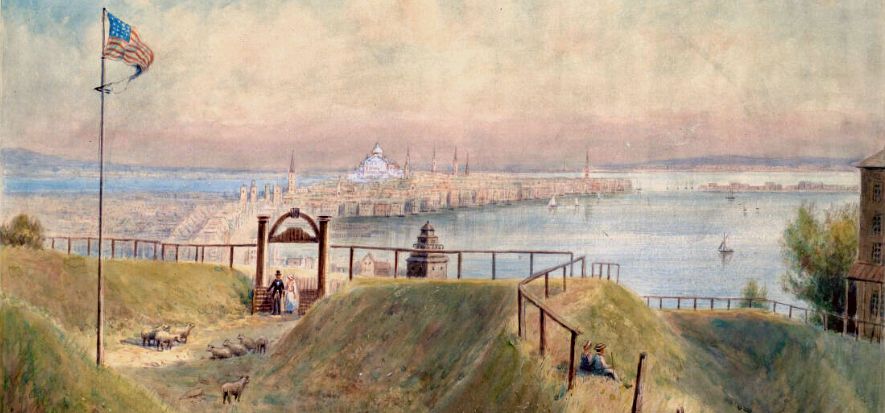
Timed to mark the sixth anniversary of the Boston Massacre on March 5, Washington dispatched his troops after nightfall on March 4. A marine layer obstructed the view of Dorchester Heights from Boston, but a full moon gave ample light for work at the summit, which stood 112 feet above sea level. Knowing that his soldiers could not rapidly dig trenches in frozen ground, Washington prepared movable breastworks composed of twisted hay and bundled sticks (or fascines) on wooden frames. Overnight, the troops moved these prefabricated breastworks along with the cannons and mortars from Ticonderoga into place at two key positions on the heights.
First, the operation required hundreds of local laborers guarded by 750 soldiers posted on the hills to erect a screen of hay bales and tree branches to block the view from Boston of movement on the causeway to Dorchester. Then work parties made up of some 1,200 soldiers and hired teamsters with 360 ox teams hauled the breastworks and artillery to the heights, where some 3,000 troops emplaced them by dawn. Four thousand more troops stood ready to invade Boston should the British Army storm the heights. Once emplaced, the battery stood too high for the British artillery to target it with their cannon even as the battery could rain down fire on Boston. The ongoing cannonade masked the sounds of hauling and construction.
“When the Enemy first discovered our Works in the morning, they seemed to be in great confusion,” Washington wrote in a letter to Congress.
“The rebels have done more in one night, than my whole army could have done in months,” Howe purportedly said at the time. He wrote, “They could not have employed less than 12 or 14,000 Men that Night.” Howe’s first impulse was to attack.
“A considerable number of their Troops embarked on board of their Transports” in preparation for crossing the harbor to assail Dorchester Heights, Washington reported on the British response. “If such was their design, a violent Storm that night and which lasted till Eight OClock the next day, rendered the execution of It impracticable.’’
“It is much to be wished, that it had been made,” Washington added. “The event I think must have been fortunate, and nothing less than success and victory on our side.’’ Instead, when Howe decided not to resume the operation after the storm subsided, Washington had to settle for a hasty departure from the city by the British and about a thousand of their most ardent loyalist followers. They could no longer remain safely in Boston, and Washington allowed them to depart peacefully so long as they left the city intact.
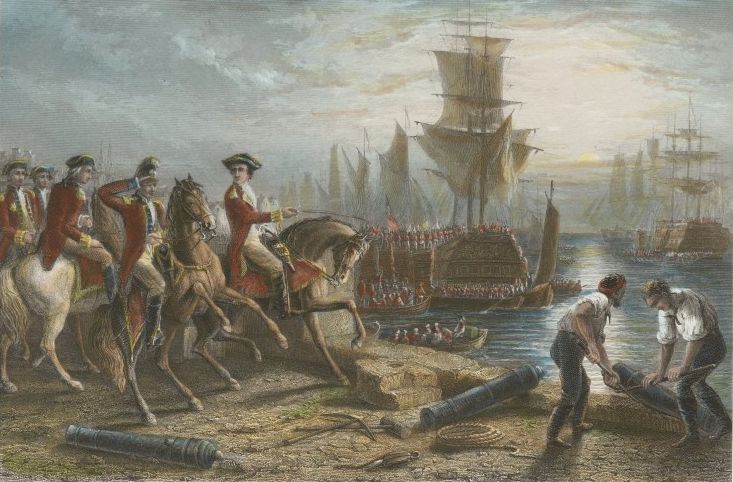
After two weeks packing what they could carry, they embarked on March 17. Without having yet assembled sufficient force to invade New York, Howe directed his fleet of some 125 vessels to sail for Nova Scotia. It carried 9,000 British officers and soldiers with their dependents, plus more than 1,000 departing loyalists and as much equipment and baggage as could fit aboard the ships.
“The Town in General is left in a better state than we expected,” Abigail Adams wrote to her husband at Congress. Their townhouse was “very dirty” and without furniture but undamaged, she reported. “I look upon it a new acquisition of property, a property which one month ago I did not value at a single Shilling, and could with pleasure have seen it in flames.’’
Knox’s bookstore suffered worse, with the windows broken and merchandise stolen or spoiled. Hancock’s mansion fared better. “I have a particular pleasure in being able to inform you Sir, that your house has receiv’ d no damage,” the commander in chief wrote to the president of Congress. “Your furniture is in tolerable Order and the family pictures are all left entire and untouch’d.’”
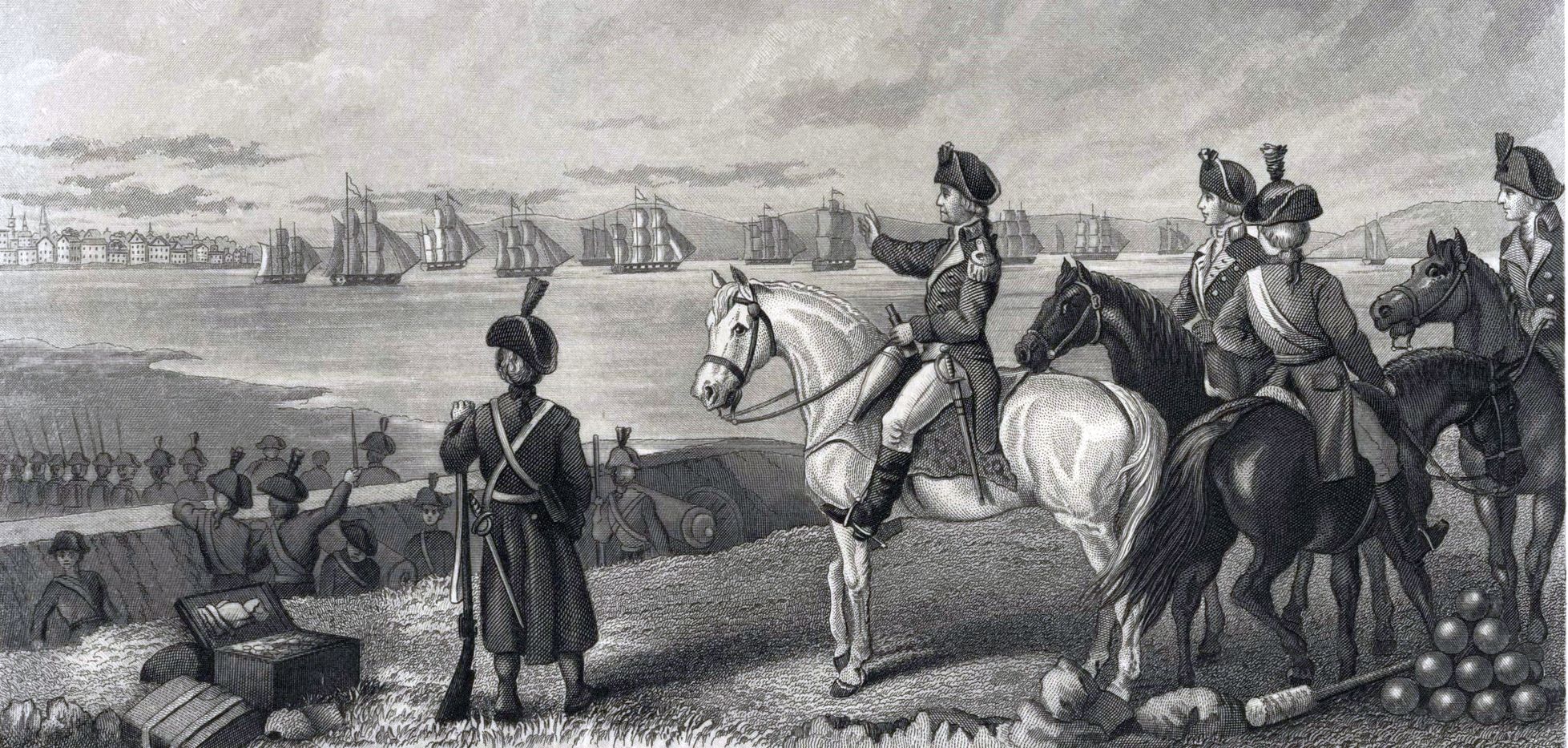
The British had spiked some of the artillery pieces that they could not carry, but Washington assured Hancock, “I have employ’ d proper Persons to drill the Cannons & doubt not shall save the most of them.”
In their firsthand accounts of the evacuation, both George Washington and Abigail Adams attributed the overall lack of damage in Boston to the “precipitate flight” of the British brought on by placement of Knox’s artillery on the heights by the patriots. Although not the crushing defeat of the British Army that Washington wanted and the patriots needed, the liberation of Boston still represented a patriot triumph in the only major military engagement between British and patriot forces during the six months between the burning of Norfolk on January I and the British invasion of New York that began on July 2.
While Washington tempered his claims of victory by warning that the British Army would soon come back, most likely to New York, for the time being at least the colonies were free from British control and occupation.
Excerpted from Declaring Independence: Why 1776 Matters. Copyright (c) 2026 by Edward J. Larson. Used with permission of the publisher, W. W. Norton & Company, Inc. All rights reserved.