
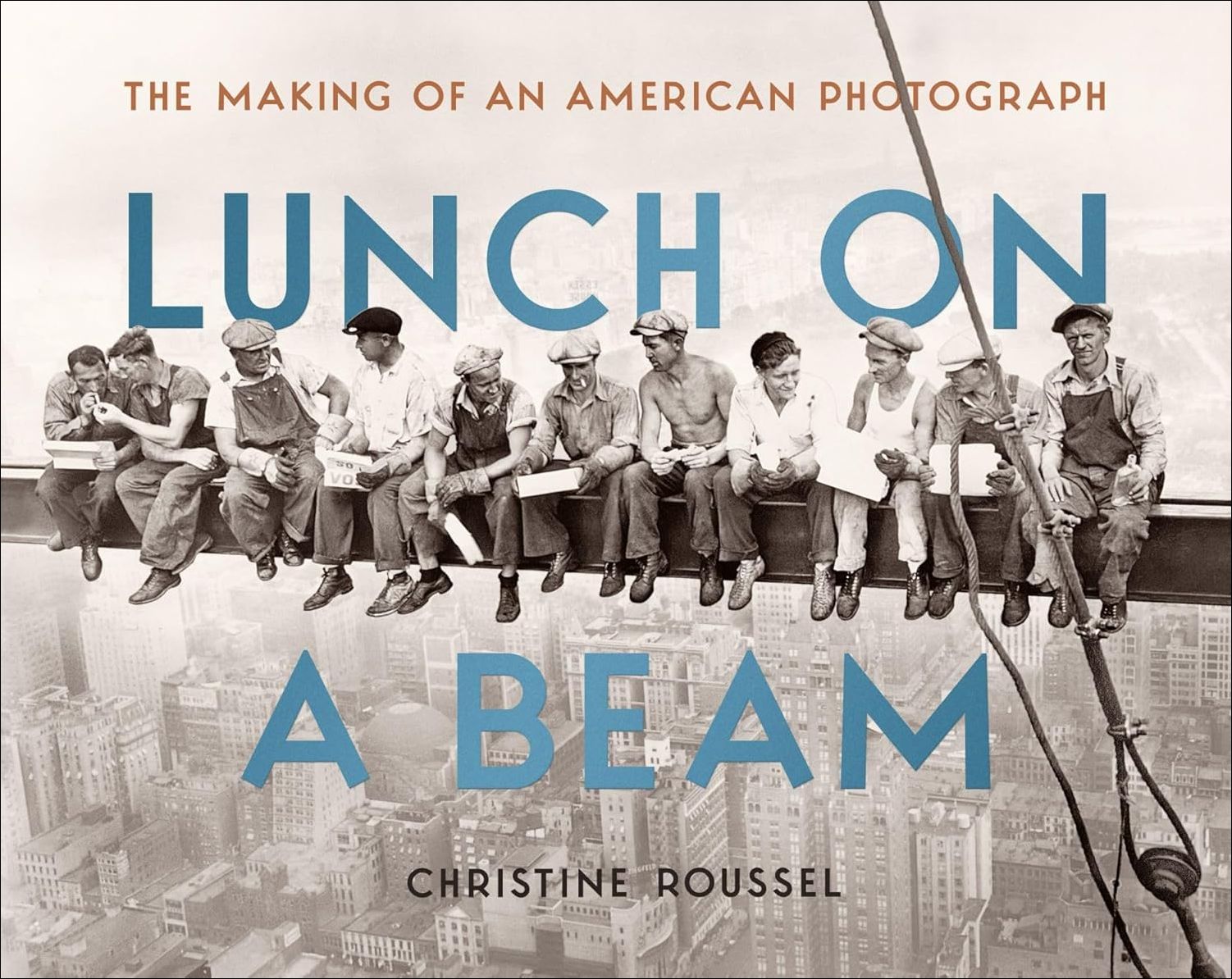
The photograph of iron-workers having lunch in the air high above Manhattan is one of America's most iconic images.
-
Spring 2026
9 months ago By Edwin S. Grosvenor Volume71Issue2
It’s hard to think of a structure in New York City that is more integrated in the life of the metropolis than Rockefeller Center. There are other instantly recognizable skyscrapers – the Empire State Building, the Chrysler Building – but they lack the sprawling and varied spaces provided by what was once seen as Nelson Rockefeller Jr.’s folly. There is nothing to compare with Radio City Music Hall at the various World Trade Centers, which are devoted to office space. And then there is Citicorp (now Citigroup) Center, which is perhaps best-known for having been at risk of falling over.
Rockefeller Center, by contrast, has the grand Radio City Music Hall, an ice-skating rink, broadcast studios, a perihelial (if now private) nightclub space, the Rainbow Room, and yet more broadcast studios. There are rooftop gardens, author Christine Roussel writes in Lunch on a Beam: The Making of an American Photograph (Brandeis University Press, 222pages), “originally built as an exercise and rest area for Radio City Music Hall’s dancers.” That’s right, dancers. Rockefeller Center has its very own troupe of high-stepping chorus girls, the Rockettes. There are no Chryslerettes, as far as I know.
Conceived of in the go-go heydays of the 1920s, before the market crash and ensuing Depression, Rockefeller Center looked like an extravagant, bum investment. It cost too much; the chorus voice of architectural criticism combined efforts to blow raspberries. Newspapers denounced the plans as “ugly.” Lewis Mumford sneered that “every touch of ornament” in the pile of stone wasn’t just bad, but “bad with an almost juvenile badness.” He pronounced it the stuff of “Cloudcuckooland”
But Rockefeller and his army of publicists didn’t give up. The picture of ironworkers having lunch in the ether was just one day’s effort at keeping Rockefeller Center in the news.
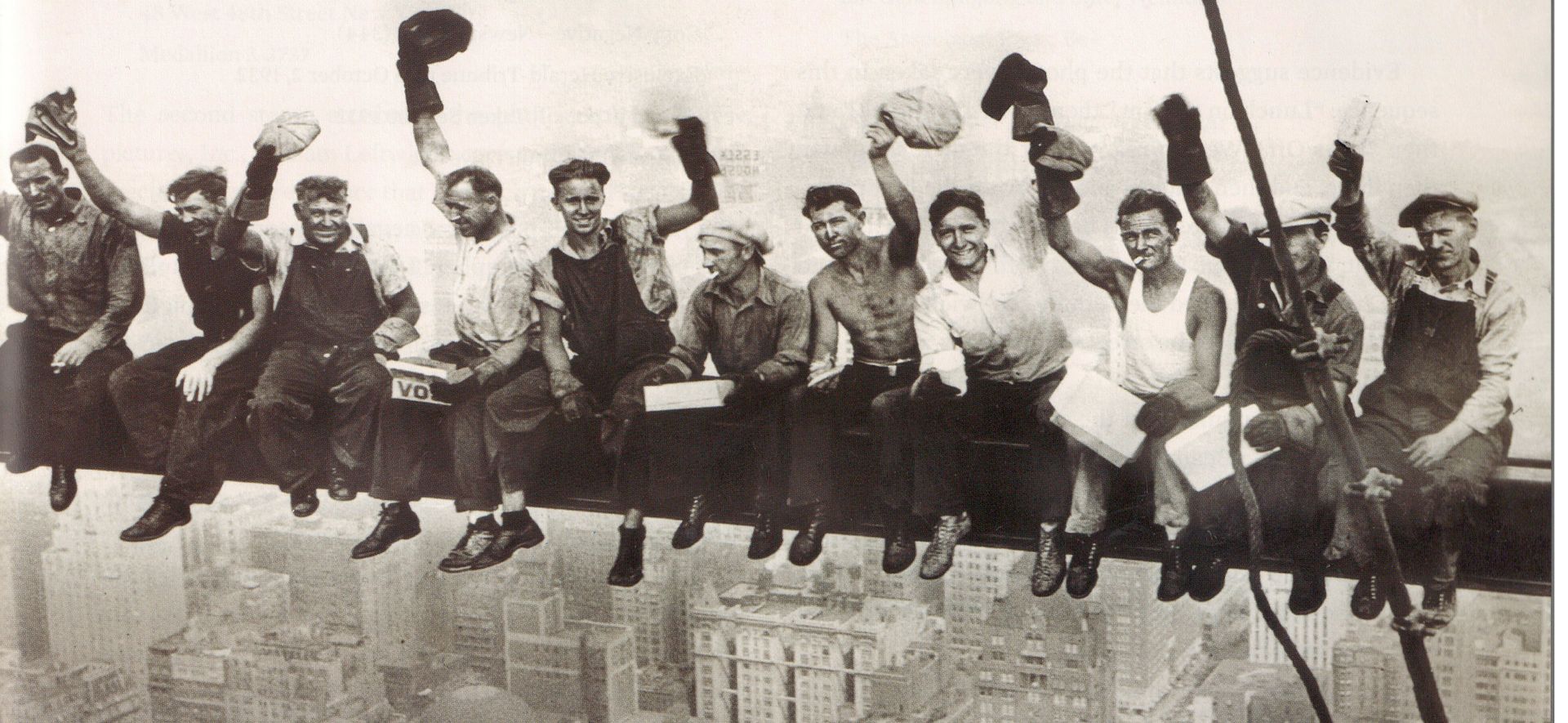
There is some confusion as to what to call the photo. “Lunch on a Beam” is the phrase used by Roussel to title her book. Rockefeller Center promotes it as “Lunch Atop a Skyscraper.” A newspaper caption back in the day read “Builders of the City Enjoy Luncheon.” Elsewhere the picture is titled “Lunch atop a Skyscraper (New York Construction Workers Lunching on a Crossbeam).”
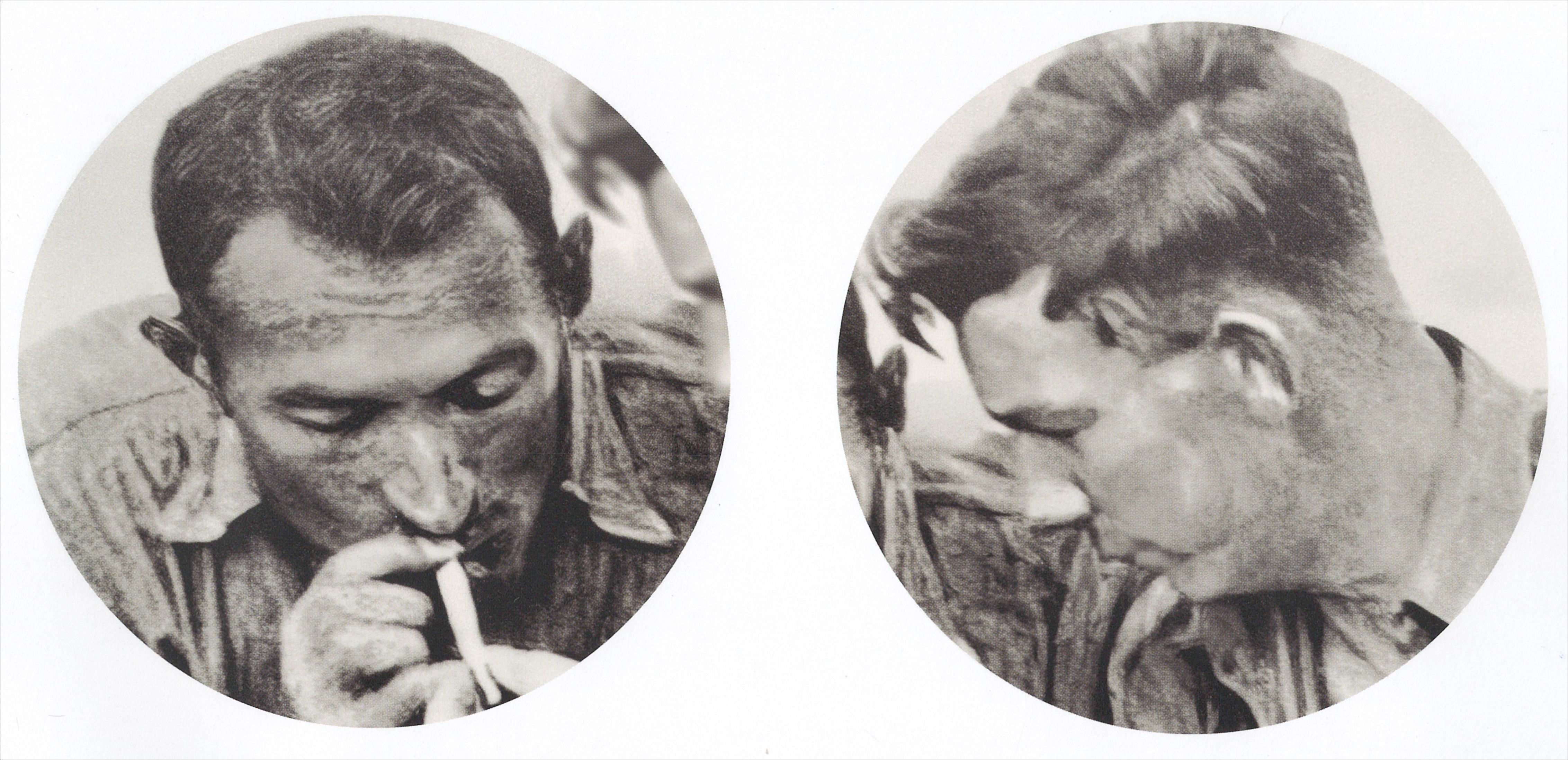
Roussel, who is the archivist of Rockefeller Center, spends some time trying to track down the names, identities, and life stories of the eleven men on the beam. But fortunately she finds herself stymied in the effort. Just as V-J Day’s “Kissing Sailor” is better known as an anonymous everyman, the workers who lunched on the beam are better remembered not as individuals who had done something extraordinary but as representatives of all the courageous workers who braved dangerous construction to defy the Depression and rebuild the nation.
For Roussel, Rockefeller Center is a “triumph of art and commerce.” It is a symbol she declares, “A symbol of progress, determination, hope in the face of despair, and American greatness.”
In 1937, Ira Gershwin penned the lyrics for the Fred Astaire and Ginger Rogers musical film Shall We Dance. Among its brilliant songs – “They Can’t Take That Away from Me,” “Slap that Bass” “(I’ve Got) Beginners Luck” and “Let’s Call the Whole Thing Off” is a tune – “They All Laughed” – that captured the changing fortunes of Rockfeller, Junior’s gamble, “They all laughed at Rockefeller Center,” Rogers sang, “Now they’re fighting to get in.”
For those who want to see themselves lunching with the fearless ironworkers, there’s always the magic of AI. So, Rockefeller Center has rigged up a faux beam atop the building’s “Top of the Rock” observation deck. One sits on the beam; it rises 12 feet and rotates 180 degrees, perfect for posing to recreate “the legendary 1932 photo.” Not recommended for acrophobics.
One thing you can say: Rockefeller Center hasn’t lost its knack for publicity.