What do we do if history is published that is easily proved false?
-
November/December 2026
3 months ago By Edwin S. Grosvenor Volume71Issue5
Editor's Note: Edwin S. Grosvenor is Editor-in-Chief of American Heritage and author of Alexander Graham Bell: The Life and Times of the Inventor of the Telephone and numerous articles about Bell. He is a Bell descendant.
Historians often quibble over interpretations of what happened in the past. That's one thing that enlivens our profession.
But facts matter. “Although historians disagree with each other about many things... all historians believe in honoring the integrity of the historical record,” notes the American Historical Association in their Standards of Professional Conduct.
So what should we do when a writer flagrantly mischaracterizes the historical record and refuses to retract his errors?
Last week, the venerable New York publishing house Farrar, Straus, Giroux published a book that was so riddled with errors throughout its first 170 pages that it should be classified as fiction. Its author, James Gleick, repeatedly claimed that Alexander Graham Bell stole the telephone from rival Elisha Gray, bribed the Patent Office staff, and didn't know what he was doing or why he was doing it.
“‘Mr. Watson, come here, I want you’ is a spurious milestone in the annals of invention,” writes Gleick. “Whatever Watson heard Bell say, the apparatus they used that day was not theirs but rather Elisha Gray’s liquid transmitter, as described to Bell by a corrupt patent examiner.”
Everything in that statement is wrong. Bell had drawn and constructed numerous liquid transmitters in the previous years. Several are even available in Wikipedia. Two such transmitters were drawn and described in a patent that was granted to Bell by the US Patent Office the previous year. (See U.S. Patent No. 161,739 - Improvement in Transmitters and Receivers for Electric Telegraphs.)
“Primary source evidence shows that Bell wrote his patent application for the telephone thirty days before Elisha Gray starting writing his patent caveat,” notes Benjamin Brown, a former professor of physics and author of definitive essays about the telephone invention in American Heritage and the peer-reviewed Proceedings of the IEEE.
"It's irrefutable that Bell did not steal the telephone from Gray," continues Brown. "And he had no reason to bribe the patent examiner or copy Gray's caveat since he already had the idea."
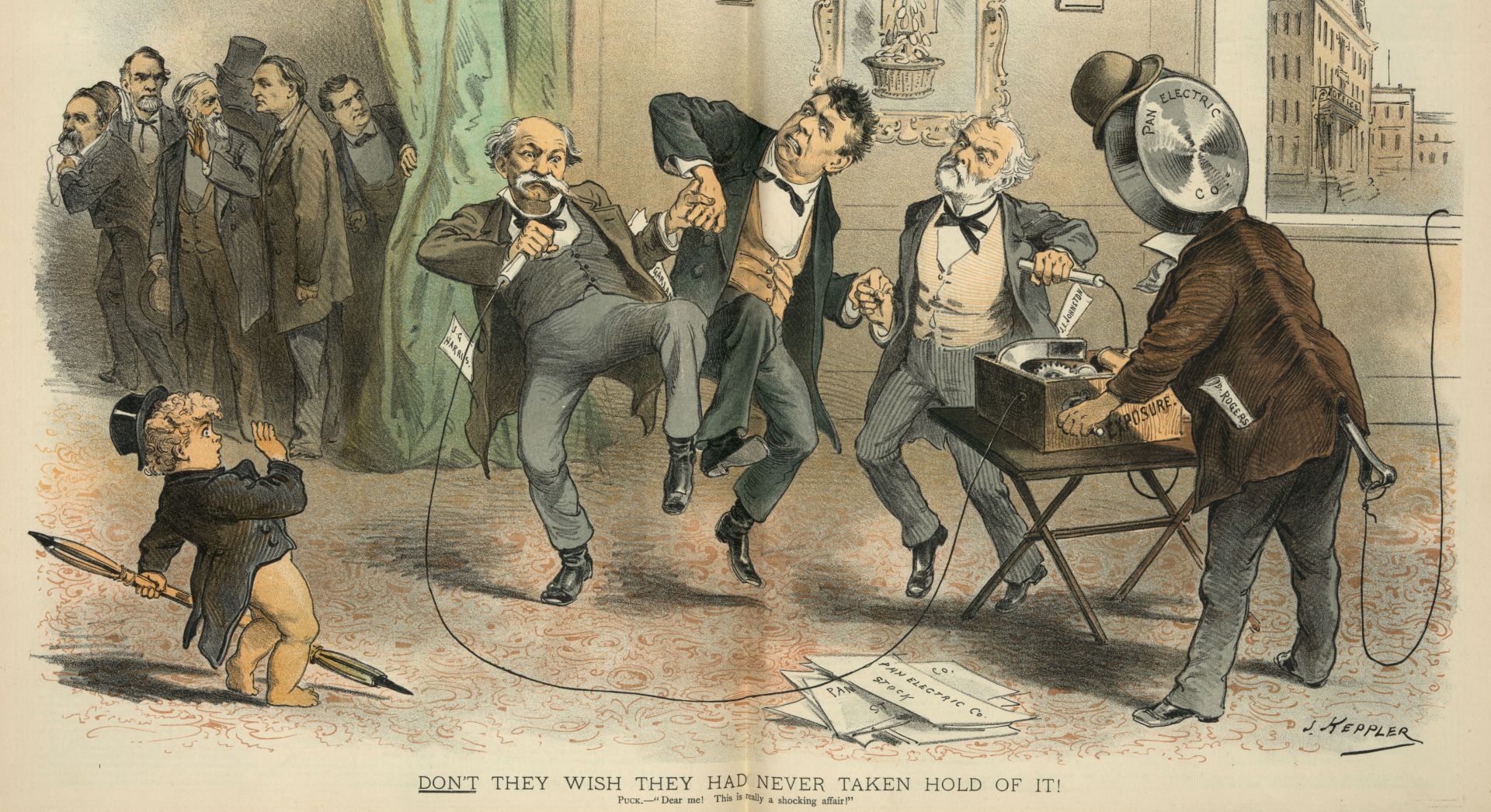
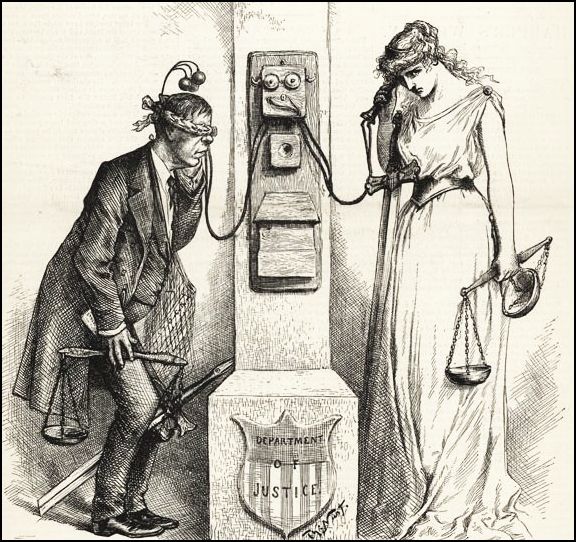
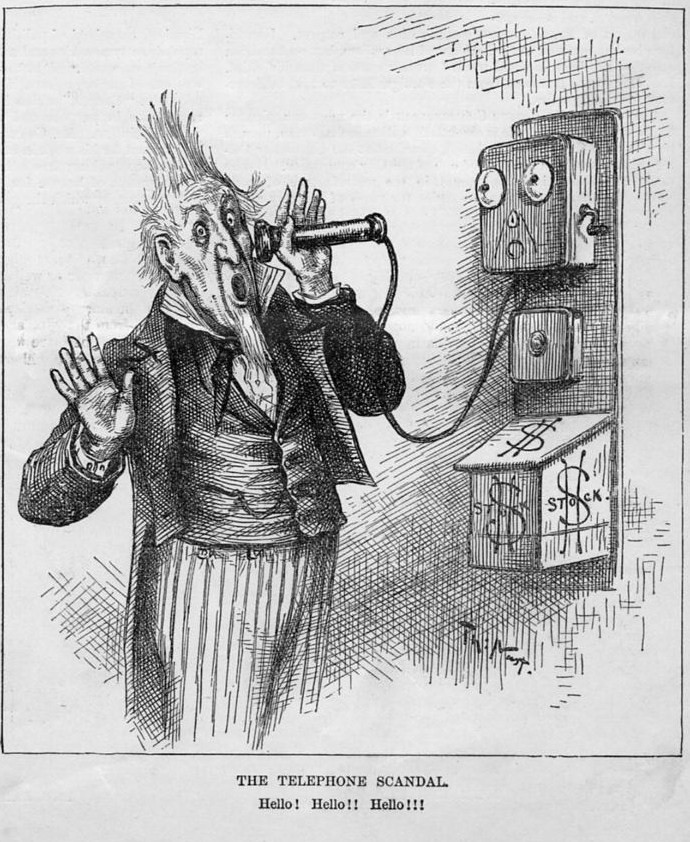
Gleick's book convicts Bell of theft and bribery using evidence that was rejected by Congress and found to be invalid by the Supreme Court. He fails to notice that the charges against Bell came from rival telephone companies some ten years after Bell’s patent was issued, in a last ditch effort to invalidate Bell’s patent for their own gain.
Descendants of Bell were indignant when the book appeared. Lawyers for the Alexander and Mabel Bell Legacy Foundation sent a letter to the publisher with a memo of seven pages detailing errors, and demanding Farrar, Straus, Giroux acknowledge the inaccuracies and publish corrections and an apology.
In reply, the foundation received a smug legalistic letter stating that "FSG is the proud publisher of The Telephone...Mr. Gleick has reviewed the letter and its enclosures, and he has found nothing in them that warrants altering his book."
That response was not surprising. Smugness is "the less attractive byproduct of Farrar Straus & Giroux's distinction as a publishing house,” observed NPR critic Maureen Corrigan in a recent story about the publisher.
How can we compel writers to "honor the integrity of the historical record"? In its Professional Standards, the AHA points out that mischaracterizing evidence undermines not just the historical arguments of the writer, but all subsequent scholarship that relies on the writer’s work.
How many future writers will be misled because Gleick assumed that Bell cheated -- and tried to find evidence to support his theory, no matter how flimsy -- rather than seeking the truth from the record?
There are literally thousands of pages of testimony and evidence that prove Bell was the first to describe the telephone and the theory behind it, and successfully reduce it to practice. That's the reason Bell never lost any of the 600 or so lawsuits over the telephone patent.
That mountain of evidence "blows Gleick's arguments out of the water," sums up Prof. Brown.