Trusted Writing on History, Travel, and American Culture Since 1949
SEARCH 75 YEARS OF ESSAYS!
Featured Essays
Some writers ignore a mountain of evidence that is contrary to their theories about the telephone's development.
Our Founders profoundly transformed the way people participate in government.
Congress forbade living persons from appearing on paper currency in 1866, after an unpopular Treasury Department official put himself on the five-cent note.
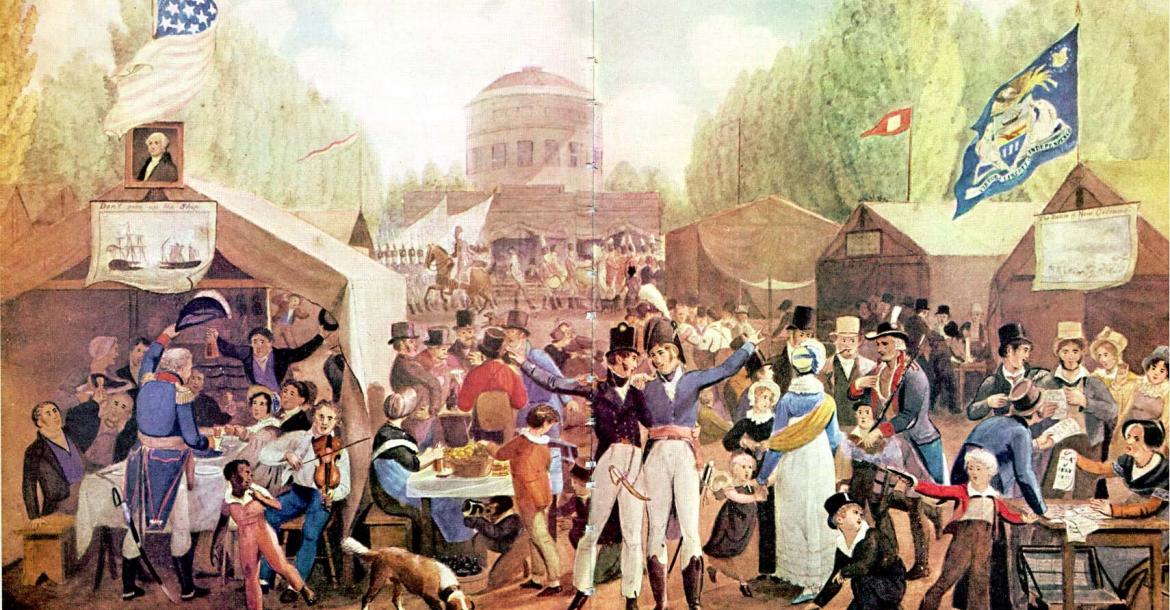
The extravaganza celebrating the nation’s first century was the greatest cultural event of America’s Gilded Age.
America 250!
Rethinking the Boston Massacre | Special Issue - George Washington Prize 2018, Vol 63, No 2
By Eric HinderakerIt is one of the most notorious incidents in American history, and also one of the least understood.

Why Is the American Revolution So Important? | Spring 2024, Vol 69, No 2
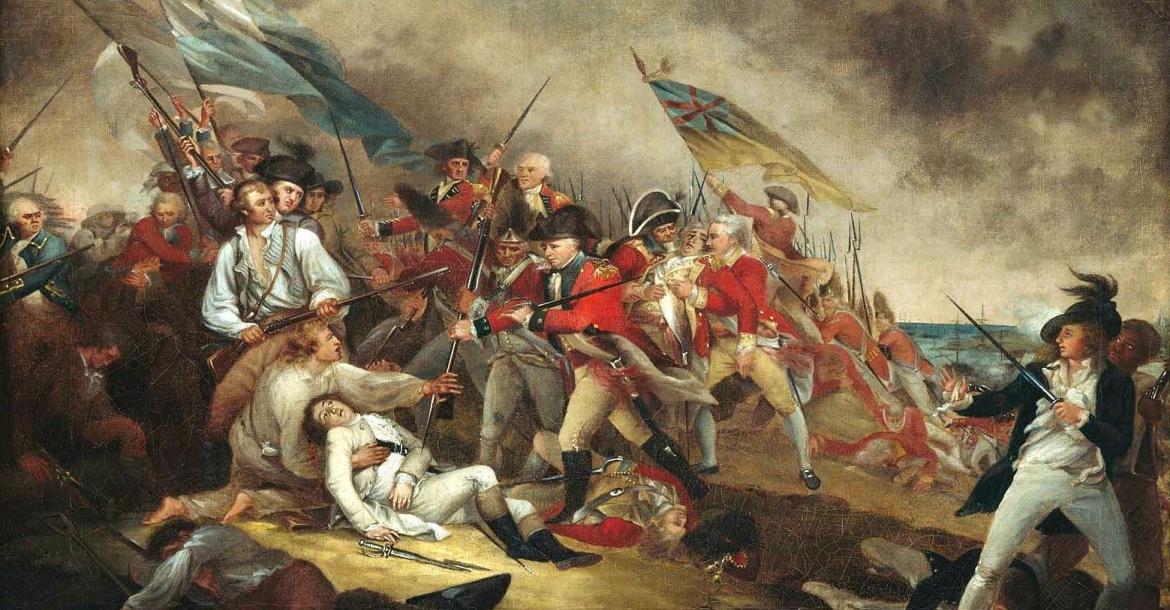
By Jack D. WarrenOur nation is free because, 250 years ago, brave men and women fought a war to establish the independence of the United States and created a system of government to protect the freedom of its citizens.
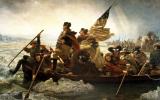
Glover and the “Indispensables” Save Washington’s Army | Spring 2024, Vol 69, No 2
By Patrick K. O'DonnellJohn Glover and the men of Marblehead saved the Continental Army several times, and then helped it cross the Delaware to victory at Trenton and Princeton.
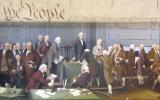
“Shall We Have a King?” | Fall 2025, Vol 70, No 4
By William E. LeuchtenburgSome delegates at the Constitutional Convention wanted a strong executive, while others feared the American president might become a king.
American Rebels at Sea | Summer 2022, Vol 67, No 3
By Eric Jay DolinAn estimated 1500 privateering ships played a crucial role in winning the American Revolution, but their contributions are often forgotten.

Classic Essays from the Archives
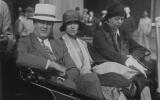
FDR and His Women | March 2003, Summer 2025, Vol 70, No 3
By Ellen FeldmanA novelist who has just spent several years studying Eleanor Roosevelt, Lucy Rutherfurd, and Missy LeHand tells a moving story of love: public and private, given and withheld.
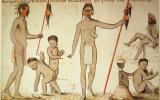
Who Invented Scalping? | April 1977, Vol 28, No 3
By James AxtellIn recent years many voices—both Native-American and white—have questioned whether Indians did in fact invent scalping. What is the evidence?
Lincoln and Presidential Character | October 2020, Vol 65, No 6
By David S. ReynoldsAbraham Lincoln learned much of what made him a great president — honesty, sincerity, toughness, and humility — from his early reading and from studying the lives of Washington and Franklin.

SUPPORT AMERICAN HERITAGE BY BUYING A NEW EBOOK!