
A Constitutional crisis erupted when President Lincoln authorized the Army to arrest suspicious persons without due process after Maryland rebels tried to cut off Washington.
-
Spring 2026
9 months ago By Edwin S. Grosvenor Volume71Issue2
Editor’s Note: Joseph Connor is a Contributing Editor for American Heritage, member of the Supreme Court bar, and former prosecutor at the Morris County (NJ) Prosecutor's Office. He handled many habeas corpus cases and came to realize how important a safeguard is that check against arbitrary detention. Mr. Connor earned a B.A. in History at Fairleigh Dickinson and a J.D. at Rutgers Law School.
In April 1861, Abraham Lincoln faced the most severe crisis an American president had ever confronted. Seven southern states had seceded from the Union and formed the Confederate States, and on April 12 they bombarded Fort Sumter, South Carolina. Three days later, Lincoln called for 75,000 volunteers to suppress the rebellion. The Union needed to rush troops to Washington, D.C., to defend the capital. Once Virginia left the Union on April 17, 1861, only the Potomac River stood between the seat of Federal government and rebel territory.
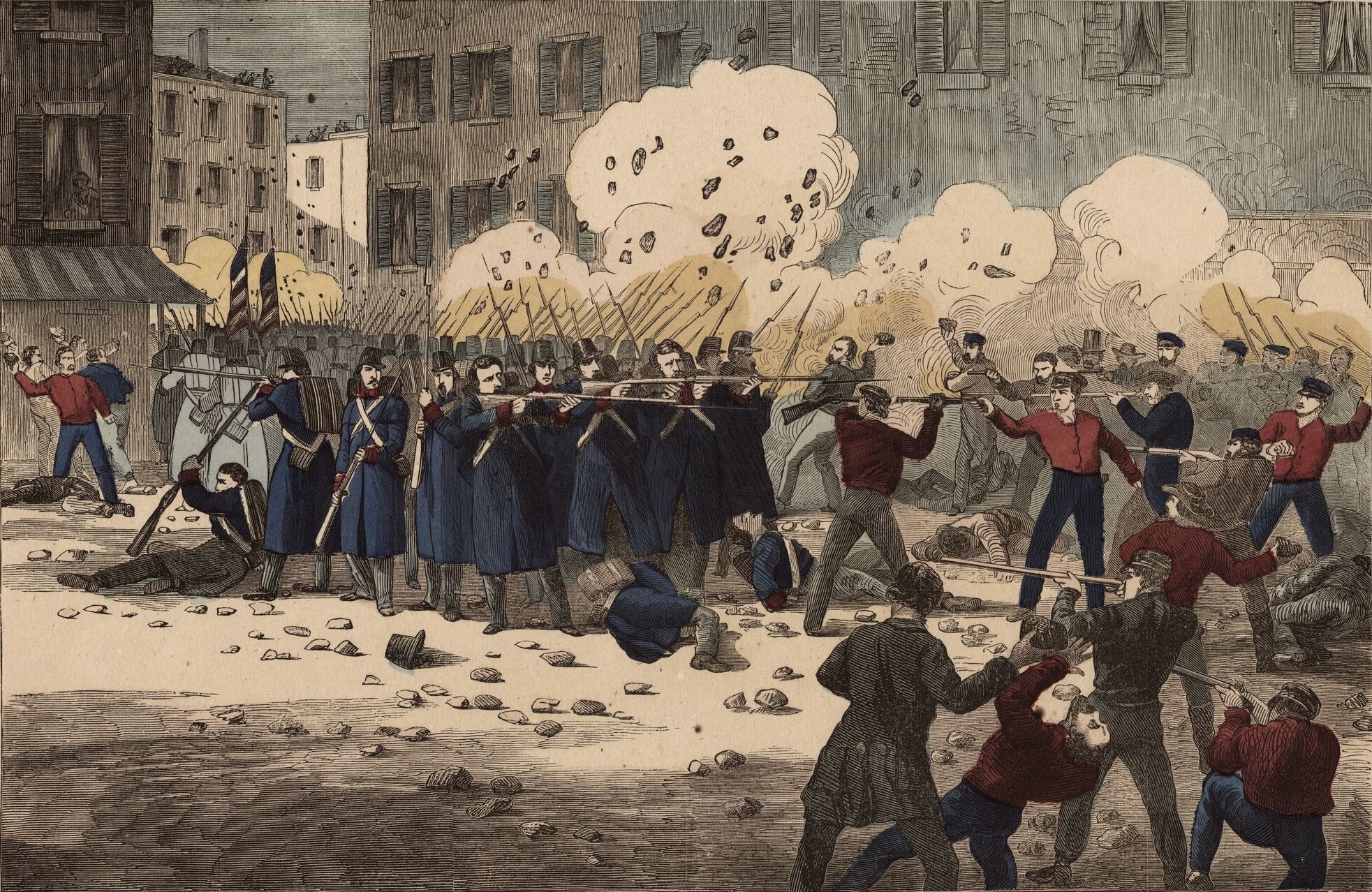
The most direct route to Washington was by rail through Baltimore, but Maryland was a slave state and hotbed of secessionist sentiment. When the Sixth Massachusetts Regiment passed through the city on April 19, 1861, an angry mob attacked, escalating from “yells, oaths, taunts” to “clubs, paving-stones, and other missiles” and then to gunfire, according to a chaplain who witnessed it.
By the end of the day, 16 soldiers and civilians lay dead. That night, as many as 500 insurgents, including members of the Maryland militia, burned several railroad bridges that Union troops needed to reach Washington. Saboteurs allegedly had the blessing of Maryland Governor Thomas H. Hicks and Baltimore Mayor George W. Brown.
Lincoln responded forcefully. With Congress out of session, he had to act alone and on April 27 issued an executive order empowering the commander of the U.S. Army, Winfield Scott, to suspend the writ of habeas corpus when necessary to keep open the rail lines to Washington. This meant that Union soldiers could arrest suspected insurgents without legal process or just cause and imprison them indefinitely. If the suspension of habeas was valid, the courts would be powerless to intervene. It was the first time in the nation’s history that the federal government had suspended the writ and the only time, to date, a president has tried to do so without prior congressional authorization.
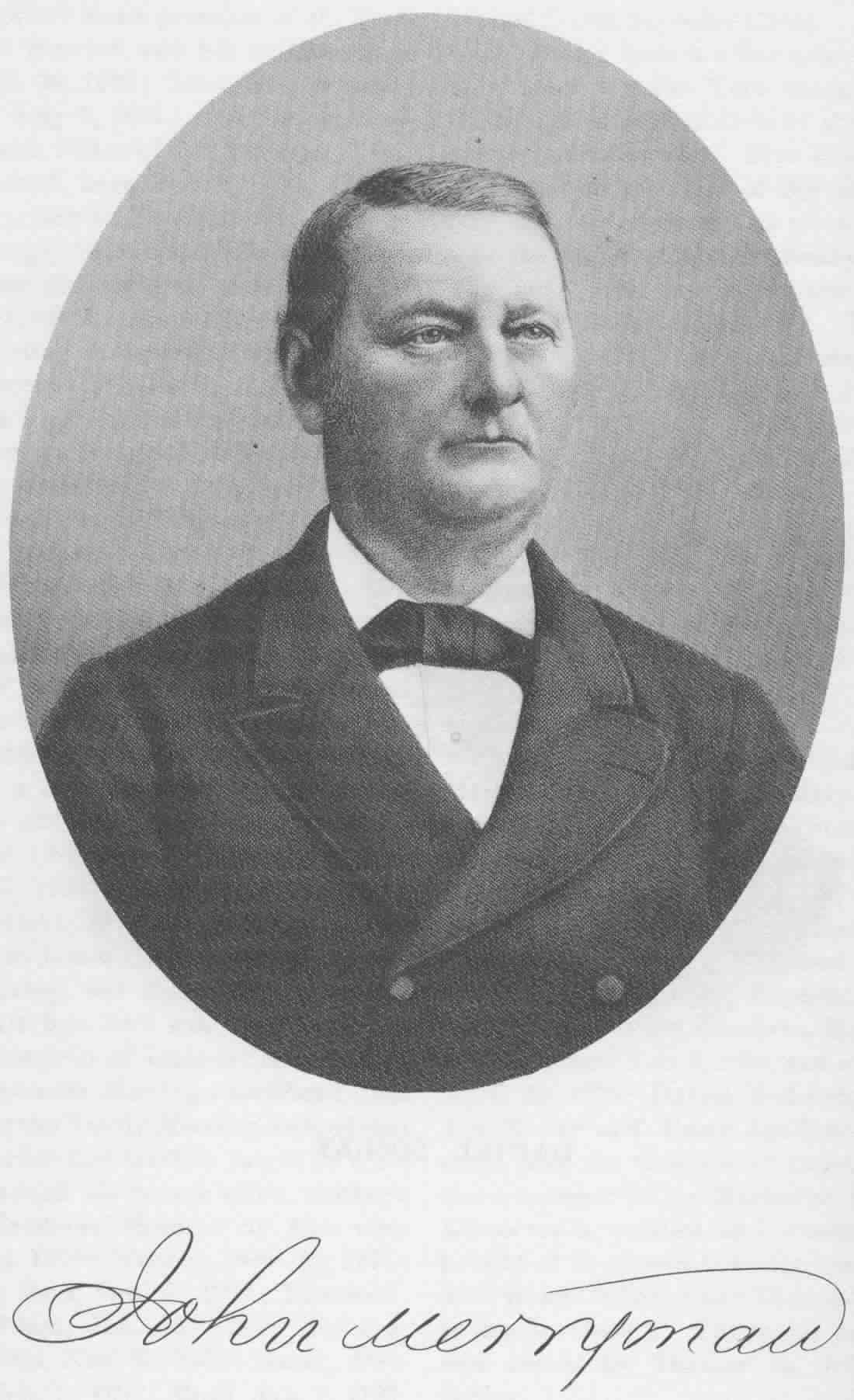
One of the first men arrested was 36-year-old John Merryman, a wealthy farmer and a member of a militia unit called the Baltimore County Horse Guard. Imprisoned in Baltimore’s Fort McHenry, Merryman quickly contested his arrest in Maryland Circuit Court. His challenge presented a vexing question: could the president suspend the writ or was that a power entrusted solely to Congress? The ensuing legal battle pitted the chief executive against Chief Justice Roger Taney, a slaveholder from Maryland. It probed the limits of just how far a president could go to put civil liberties on hold during a crisis, a fight that may soon repeat itself as President Donald J. Trump reportedly considers a nationwide suspension of habeas corpus in immigration cases.
Habeas corpus (literally, “you have the body” in Latin) is a hallmark of American jurisprudence. It empowers the courts to order the release of any person whom the government has improperly detained. The Founding Fathers viewed freedom from unlawful confinement as essential to liberty and saw habeas corpus as a bulwark against despotism. “(A)rbitrary imprisonments,” Alexander Hamilton noted in the Federalist No. 84, “have been, in all ages, the favorite and most formidable instruments of tyranny.”
At the Constitutional Convention, including habeas corpus was a given. The only question was whether the government should ever be able to suspend the writ. John Rutledge of South Carolina thought habeas corpus should be inviolable, but others, like Charles Pinckney, also from South Carolina, believed the government might need leeway to act in grave emergencies. Gouverneur Morris of Pennsylvania suggested allowing suspension, but only in cases of rebellion or invasion.
Morris’ idea became Art. I, sec. 9 of the Constitution. This suspension clause provides that “(t)he Privilege of the Writ of Habeas Corpus shall not be suspended, unless when in Cases of Rebellion or Invasion the public Safety may require it.” This language states when the writ can be suspended but not which branch of government can suspend it.
The suspension clause worried some in the Founding generation. Weighing in from his ambassador’s post in Paris, Thomas Jefferson thought it unnecessary. Anyone involved in an insurrection, he noted, “may be charged instantly with a well defined crime.” Luther Martin, a convention delegate from Maryland, went further, asserting that in the wrong hands, suspension could itself become a “dangerous engine of oppression.” He foresaw an unscrupulous future government declaring opposition to its policies to be a rebellion justifying suspension.
After the attack on Fort Sumter, the rebellion that the Union faced was all too real, as was the insurrection in Maryland. Lincoln felt immediate action was needed. He could not wait for congressional authorization, he believed, because Congress was out of session until July and the rebellion would make it difficult for it to convene sooner. On April 27, 1861, he issued his executive order empowering General Winfield Scott to suspend the writ in Maryland, but he urged the army to tread lightly, telling it to forego arrests “unless the necessity for these arbitrary arrests is manifest, and urgent.”
On May 21, 1861, Company D of the 1st Pennsylvania Regiment was ordered to arrest Maryland militia members “spreading secession sentiments and using their influence in favor of the Southern Confederacy.” The main fear was militia weapons. “By all means get the arms,” the order stated, and told the men to act “coolly and deliberately but determinedly.”
How Merryman came to the army’s attention is unclear, but at 2 a.m. on May, 25, 1861, Company D, led by Adjutant James Miltimore and Lieutenant William H. Abel, raided Merryman’s 560-acre farm near Cockeysville, Maryland. They found no weapons but arrested Merryman because he was a militia member and had “uttered and advanced secession doctrines.” He was confined at Fort McHenry.
The next day, a Sunday, Merryman’s attorneys filed an emergency petition for habeas corpus with Supreme Court Chief Justice Roger B. Taney at his home in Washington, challenging both the writ’s suspension and Merryman’s arrest. Taney would sit as a trial judge because in those days, Supreme Court justices also rode the circuit and acted as lower-court judges. The 84-year-old chief justice, who had held office since 1836, was already loathed in the North for his opinion in the Dred Scott case barring African-Americans from citizenship. Taney immediately ordered Major General George Cadwalader, commander of Fort McHenry, to appear in court in Baltimore the next day, to bring Merryman with him and to justify Merryman’s arrest.
An attorney in civilian life, Cadwalader knew militia membership and pro-South views were a flimsy basis for arrest, so he asked his superiors for direction. They ordered him to hold Merryman at Fort McHenry indefinitely, until “the present unhappy difficulties are at an end.”
The Merryman case became a sensation in Baltimore. The next morning, May 27, 1861, the courtroom was “thronged by members of the bar and other citizens,” the Baltimore Sun reported, noting that the importance of the case “naturally excites a corresponding interest in this community and elsewhere.”
When Taney took the bench at 11 a.m., Cadwalader and Merryman were nowhere to be seen. Instead, Cadwalader’s aide, Colonel R.M. Lee, appeared in the general’s place and relayed Cadwalader’s request that Taney postpone the hearing while the general awaited instructions from Lincoln. Taney asked bluntly if Cadwalader was defying his order, but the colonel evaded the question, causing “great indignation” in the audience. Not getting a straight answer, Taney cited Cadwalader for contempt. He ordered U.S. Marshal Washington Bonifant to arrest the general and to bring him to court at noon the following day.
When Bonifant tried to arrest Cadwalader at Fort McHenry, armed soldiers blocked him from entering the fort. The threat of force was palpable. What caught a reporter’s eye was a soldier’s bayonet, “a sharp-pointed and very ugly looking piece of steel (that) had been suddenly brought in close proximity to (Bonifant’s) head.” The marshal left with the unserved arrest warrant still in hand.
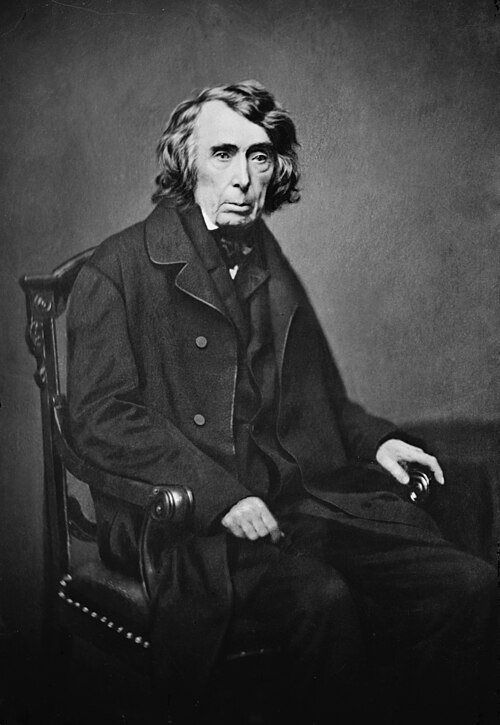
On May 28, 1861, tension and anticipation filled the air. When Taney left for court that morning, he told his son-in-law he expected the army to arrest him by the end of the day. Long before noon, “the doors of the United States Circuit Court were besieged by a very large throng of citizens eager to witness the proceedings in a case destined to much historic importance,” a Washington newspaper reported. The crowd parted when the elderly Taney walked into the courthouse, steadying himself on the arm of his grandson.
Taney took the bench at noon, and a marshal reported that the army had prevented Cadwalader’s arrest. “(A) buzz of anxious expectation followed,” an observer noted. Taney then delivered his ruling, finding that Lincoln lacked the power to suspend the writ and, therefore, declaring Merryman’s arrest illegal.
Taney’s reasoning was simple. The suspension clause appears in Article I of the Constitution, which delineates the powers of Congress, but not in Article II, which lists the president’s powers. This shows, he held, that the Framers intended to give Congress alone the power to suspend the writ.
While Taney found Merryman’s incarceration to be unlawful, he stopped short of ordering his release. The army’s defiance made further enforcement action futile. “I have exercised all the power which the constitution and laws confer upon me,” Taney said, “but that power has been resisted by a force too strong for me to overcome.” Nevertheless, he beseeched the president “to perform his Constitutional duty…a proper recognition of the Constitution and laws.”
Taney’s rebuke of Lincoln thrilled those in attendance. Baltimore Mayor Brown approached the bench and thanked Taney. “Mr. Brown, I am an old man, a very old man,” Taney replied, “but perhaps I was preserved for this occasion.” The courtroom gallery also approved, hailing the chief justice with “heartfelt exclamations of approbation,” such as “Thank God for such a man.”
In the North, the reaction was decidedly different. The New York Tribune called Merryman “a traitor of the deepest dye” and chastised Taney for siding with him. The New York Times attacked him for throwing “the weight of the judiciary against the United States and in favor of the rebels.”
Because Taney sat on the Merryman case as a trial judge, he did not speak for the entire Supreme Court. The high court never got to rule because the Lincoln administration did not appeal Taney’s decision. Perhaps Lincoln feared the Supreme Court would agree with Taney, or maybe without a direct order to release Merryman, there was really nothing to appeal.
The Union was not done with Merryman, but for him, what at first appeared to be a drastic change for the worse became a blessing.
Merryman had helped burn the railroad bridges in April, but the army did not know it at first. Its list of suspected saboteurs did not include him. By July 1861, however, federal prosecutors had built a case. On July 10, 1861, a grand jury in Maryland indicted Merryman for treason, alleging he had waged war against the United States by “maliciously and traitorously” burning six bridges of the Northern Central Railway line near Baltimore to hinder the passage of Union troops.
This was serious business because treason was punishable by death, but it also took Merryman out of military control and put him in the hands of the judiciary. The army brought him to court in Baltimore, and a judge set bail at $40,000. With the help of friends, Merryman posted this sum and was freed on July 13, 1861. As he left the courtroom, “a large number of friends crowded around him to welcome him to their midst.” If the army had known earlier of Merryman’s complicity, it might have avoided the habeas issue entirely by treating him as an enemy combatant and holding him as a prisoner of war.
No one was in a hurry to try Merryman’s indictment. Perhaps the Union wanted to avoid making him a martyr, and the courts kept postponing the matter. Merryman remained free, and the indictment languished until it was dismissed after the war.
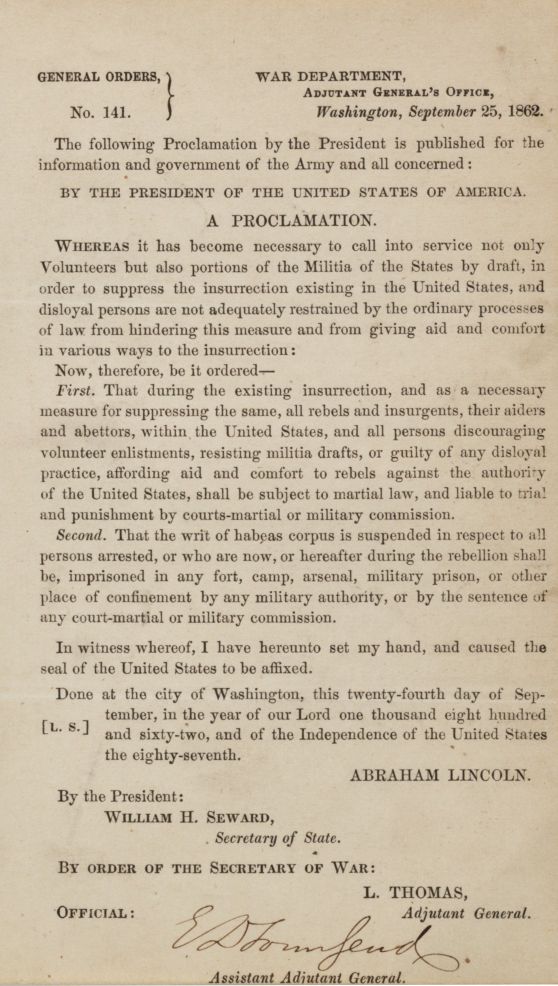
On July 4, 1861, Congress’ first day back in session, Lincoln sent a message to both houses defending his suspension of the writ. He expressed doubt that the Framers had intended the commander-in-chief to be powerless in a crisis simply because Congress was not in session. Even if he had violated the suspension clause, he insisted it was a step necessary to save the Union. “Are all the laws but one to go unexecuted, and the Government itself go to pieces lest that one be violated?” he asked.
The next day, Attorney General Edward Bates issued a formal opinion backing Lincoln. A month later, on August 6, 1861, Congress retroactively blessed all of Lincoln’s wartime actions, including the suspension, endorsing them “with the same effect as if they had been issued and done under the previous express authority and direction of the Congress of the United States.”
The most dramatic arrests were yet to come. The Maryland Legislature was scheduled to meet on September 17, 1861 in Frederick, Maryland, reportedly to consider secession. The state’s departure from the Union would be a devastating blow, one from which the Union might not recover. It would leave Washington encircled by hostile forces and cut off from the North. It would undermine Union morale and might prod foreign powers, like Great Britain, to recognize the Confederate government.
Maryland’s secession seemed likely. Of 22 state senators, for example, only eight were considered “loyal and reliable” and sure bets to vote against it. Rumors spread that a Confederate force was poised to enter the state as an “army of liberation” once it seceded. The federal government vowed to do whatever was needed to keep Maryland in the fold.
On September 11, 1861, Secretary of War Simon Cameron ordered Major General Nathaniel Banks, who commanded Union troops in the state, to prevent the Maryland Legislature from voting. “Exercise your own judgment as to the time and manner,” Cameron directed, “but do the work effectively.” By the end of the month, Banks’ troops had arrested more than three dozen pro-South members of the Maryland Senate and House of Delegates, as well as influential Confederate sympathizers. Among those arrested was Frank Key Howard, a Baltimore newspaper editor and grandson of Francis Scott Key, author of “The Star-Spangled Banner.” Howard later wrote bitterly of his incarceration in a book entitled Fourteen Months in American Bastiles. Fort McHenry became so crowded with secessionist prisoners that one Union wag dubbed it “the hospital for sick patriotism.” Maryland remained in the Union.
On March 3, 1863, Congress gave Lincoln the discretion to suspend habeas corpus for the duration of the war, but he used this power sparingly. In September 1863, he suspended the writ for spies, prisoners of war, deserters, and draft resisters, and in July 1864, he suspended it in Kentucky, where insurgents were battling the civil government.
Habeas corpus also became an issue in the Confederacy, whose constitution contained a suspension clause identical to its federal counterpart. The Confederate Congress twice passed bills authorizing President Jefferson Davis to suspend the writ. In a jab at Lincoln’s unilateral suspension, the rebel Congress pointedly noted that the power to suspend habeas corpus “is vested solely in the Congress, which is the exclusive judge of the necessity of such suspension.”
After his release, Merryman sat out the war, but his arrest still grated on him. In early 1863, he sued General Cadwalader, seeking $50,000 in damages for false imprisonment, but his lawsuit went nowhere. The Northern Central Railway Co. also held a grudge, suing Merryman for $200,000 for the damage to its bridges. Merryman remained forever grateful to Taney for his support, so much so that in 1864, he named his son Roger B. Taney Merryman.
Since the end of the Civil War, the government has suspended habeas corpus only three times, all with explicit congressional authorization. In 1871, President Ulysses S. Grant did so in nine South Carolina counties where the Ku Klux Klan was trampling on civil rights. In 1905, Luke E. Wright, governor general of the Philippines, suspended the writ in two rebellious provinces, and in 1941, Joseph Poindexter, territorial governor of Hawaii, did so in Hawaii after the Pearl Harbor attack. During World War II, the writ remained alive on the mainland even when the government confined thousands of Japanese-Americans in internment camps. In fact, a habeas petition was the vehicle used by 22-year-old Mitsuye Endo to mount the successful legal challenge that ended the wartime relocation program in 1944.
In the war against terrorism, the nation came close to a suspension under a different name in 2006. Congress did not suspend the writ. Instead, it stripped the federal courts of jurisdiction to hear habeas petitions filed by suspected terrorists held at the Guantanamo Bay detention camp. The government insisted habeas protection did not extend to Guantanamo because it is part of Cuba, not the United States. In a 5-4 decision, the Supreme Court rejected this argument, noting that the United States exercised complete control over the detention camp, and it found this legislation to be an impermissible end-run around the suspension clause.
Another suspension, the first explicit one since 1941, may be in the offing. In May 2025, presidential adviser Stephen Miller revealed the Trump administration is considering suspending the writ in immigration cases. To try to fit the issue within the suspension clause, Miller called the influx of undocumented migrants an “invasion,” a characterization the president has also used.
That same month, Kristi Noem, then secretary of Homeland Security, told a Senate committee she believes the president has the power to suspend the writ without congressional authorization. If the president were to do so, the nation would face the same explosive issue that Chief Justice Taney confronted in 1861: the breadth of a president’s power to dispense with the most basic of liberties, the right to be free from arbitrary and unlawful imprisonment.