
Maggie Walker, the first Black woman to open a bank, helped thousands of individuals who could not borrow from traditional lenders.
-
Fall 2026
4 months ago By Edwin S. Grosvenor Volume71Issue4
Editor’s Note: Norah O’Donnell is a 60 Minutes correspondent, CBS Mornings co-host, and Healthful host. She recently authored a collection of stories about American women from 1776 to the present who changed the course of history, We the Women: The Hidden Heroes Who Shaped America, in which a version of this essay appeared. Kate Andersen Brower is an American journalist and author who has written four books about the White House, two of which have been New York Times bestsellers.
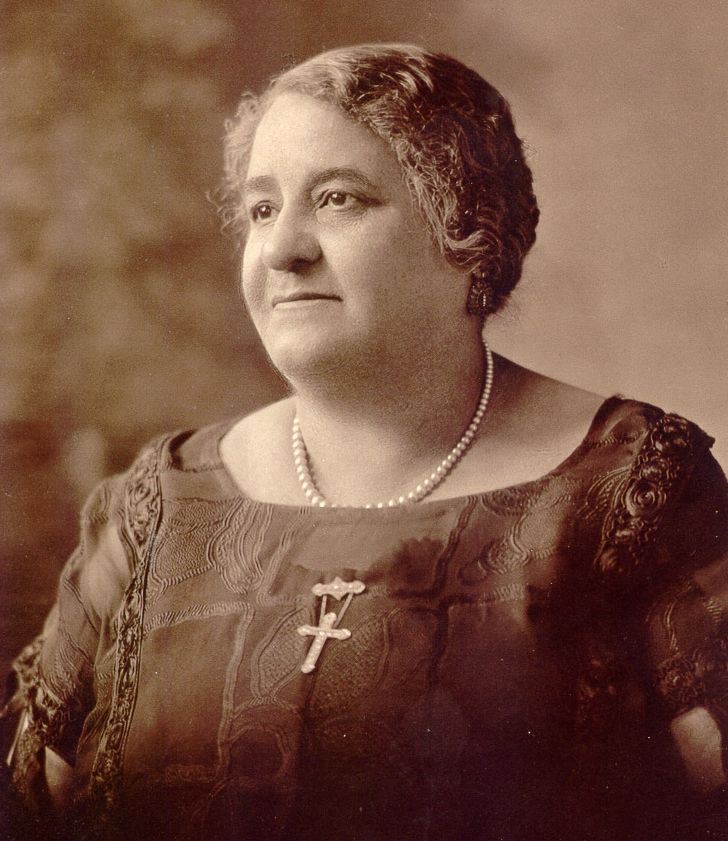
On November 2, 1903, in the heart of the former capital of the Confederacy, a Black woman did the unthinkable: She opened a bank – and not just any bank but one that sparked a movement of Black economic empowerment.
Nearly three hundred people gathered for the occasion, waiting patiently to open accounts in the St. Luke Penny Savings Bank. The atmosphere was electric – music, speeches, and a steady stream of community members, from those with just thirty-one cents to others with over $100. By the end of the day, the bank had collected $8,000 in deposits.
It was a crowning achievement for Maggie Lena Walker, whose vision would cement her legacy as the first Black woman to charter and successfully run a bank in the United States. Maggie was born in Richmond, Virginia, on July 15, 1864 – the daughter of Elizabeth “Lizzie” Draper, a formerly enslaved woman, and Eccles Cuthbert, a white Irish journalist. They never married. She was raised by her mother and stepfather, a butler named William Mitchell, who was robbed and killed when Maggie was just eight years old. She began working as a laundress at a young age to help support the family.
“My childhood became a struggle for something to eat, something to wear and a place to sleep,” Maggie wrote in her diary. “I worked all day and way into the night. Work or starve, that was my mandate.”
Even so, she excelled in school and graduated from Richmond Colored Normal School in 1883. She became a teacher and soon after married Armstead Walker, a successful brick mason. They lived in Jackson Ward, a growing center of Black life in post-Civil War Richmond.
To fully grasp the significance of Maggie’s achievement, we have to envision the South after the Civil War. White leaders erected monuments to Confederate generals and enforced Jim Crow and other means of discrimination against the Black community-which was almost 40 per-cent of Richmond’s population. White-owned banks largely refused to provide financing and fair banking services to Black families. Many banks either did not accept deposits from Black customers or outright denied them loans, often citing racial stereotypes that Black borrowers would not pay them back. Even when Black customers were served, they were frequently charged higher interest rates or were paid less interest on their deposits.
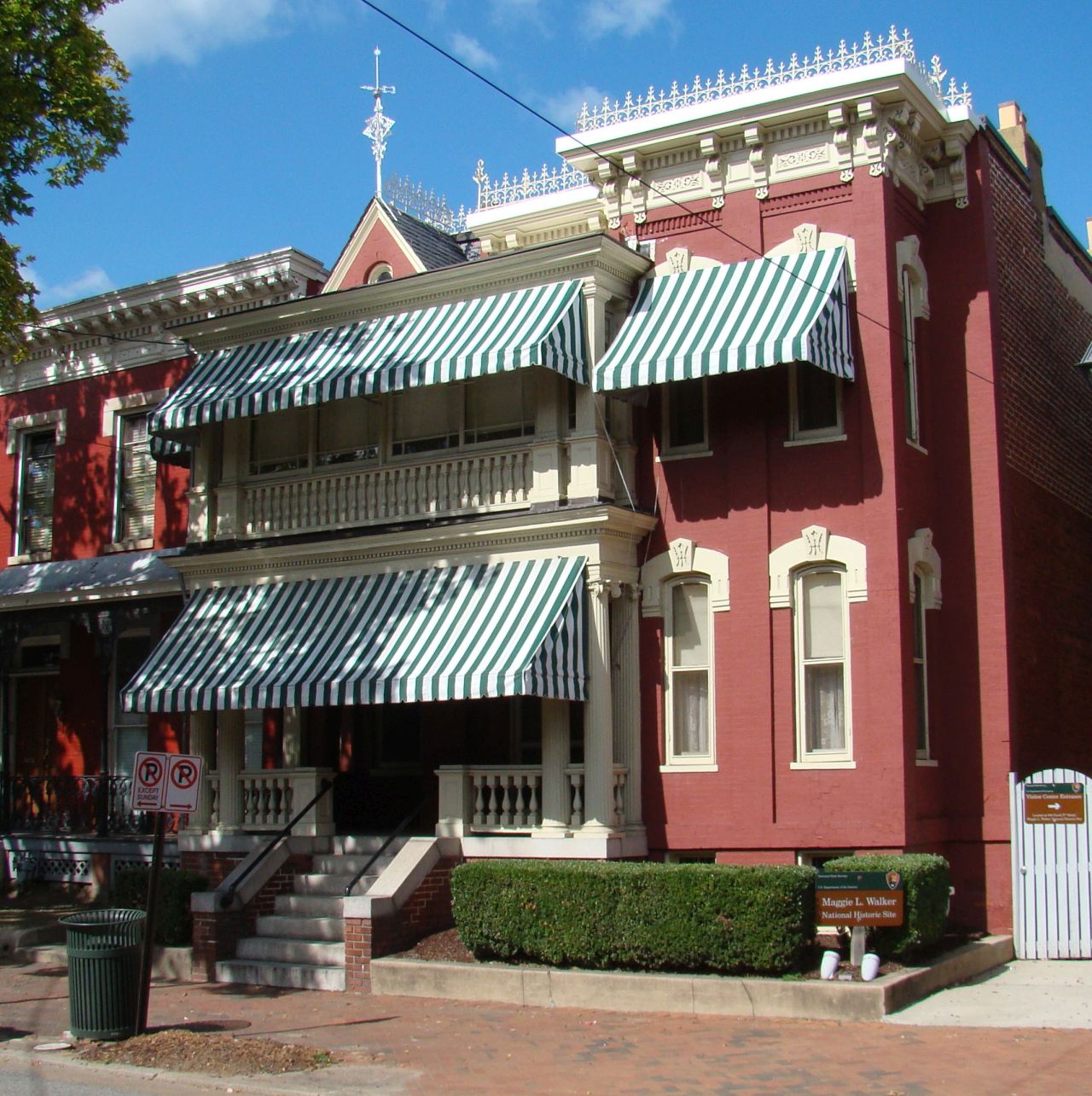
In 1902, Virginia revised its state constitution to disenfranchise most of the Black voters through poll taxes and literacy tests, effectively legalizing segregation, oppression, and second-class citizenship.
This hostile climate inspired Maggie to speak out forcefully against Jim Crow – and to act decisively to create institutions that empowered Black communities from within. Everything Maggie built in her life was about creating opportunities: the bank, a department store, a newspaper, and a scholarship fund to send young people to college.
At age fourteen, she joined the Independent Order of St. Luke, a mutual aid society, where she rose through the ranks and ultimately became its Right Worthy Grand Secretary. She would transform the organization from a struggling fraternal society into a thriving financial and civic institution for Black Americans. Black fraternal orders like the Independent Order of St. Luke were important job creators for the Black community. Because of segregation, Black Americans were forced to rely on one another. They founded banks, retail stores, insurance companies, and other Black-owned and operated businesses. They built a community and they created leadership training programs for their members.
Maggie helped the Order open the St. Luke Penny Savings Bank and she was its first president. This was more than a bank; it was a movement whose mission was to uplift the Black community through economic empowerment and self-reliance. In speeches, Walker explained her vision: “Let us put our money together; let us use our money; let us put our money out at usury among ourselves, and reap the benefit ourselves.”
Maggie encouraged savings among people with modest means-literally starting with pennies. She even gave children penny banks to encourage saving-once they had a hundred pennies, they could open their own accounts. “Let us have a bank that will take nickels and turn them into dollars,” she said famously.
She believed that Black communities could thrive by circulating their dollars within their own institutions. That’s why the bank’s slogan was “Bring it all back home.” Moreover, she ensured that much of the bank staff were Black women-and they were paid for every new member they recruited, giving them both economic power and agency.
Maggie Lena Walker set high standards. She was a demanding and disciplined leader. One former secretary recalled, “You had better be at your desk at ten minutes to nine.” She ran a tight ship, expecting accuracy and accountability. In one instance, when an audit came up one nickel short, Maggie instructed two employees to stay late-and they didn’t leave until they found the missing coin at midnight. She also enforced a formal dress code: White blouses and long dark skirts were required. Yet despite her strictness, Maggie was known for caring deeply about her employees’ well-being, encouraging them to save five percent of their wages.
Under her leadership, St. Luke Penny Savings Bank flourished. From 1904 to 1910, deposits grew from $21,362 to $85,183. The bank financed hundreds of Black-owned homes and helped Black entrepreneurs start businesses. This wasn’t inherited wealth or influence-Maggie was a self-made woman, and her clients were like-wise creating wealth on their own initiative. She was likely the first woman in U.S. history to serve as a bank president without family ties to the institution.
She didn’t stop there. Maggie also founded the St. Luke Herald, a weekly paper that published the organization’s goals and took a strong stand against Jim Crow and injustice.
“What we need,” she explained when starting the paper, “is an organ, a newspaper to herald and proclaim the work of the Order. No business, no enterprise, which has to deal with the public, can be pushed successfully without a newspaper.”
She also opened the St. Luke Emporium, a department store with Black mannequins and Black saleswomen-a bold and radical act in the early 1900s, when most Black women worked as housekeepers or in factories. She helped transform the idea of what was possible for Black women.
In civic life, Maggie served as vice president of the National Association for the Advancement of Colored People and founded Richmond’s Council of Colored Women. In 1923, she joined the national board of directors of the NAACP. This belief in equality extended into her personal philosophy as well; she told the young women she mentored that marriage should be an equal partnership.
Despite personal hardship – including the tragic accidental death of her husband and later her own declining health – she never stopped working. After a fall in 1908 and worsening diabetes, she eventually used a wheelchair. She installed an elevator in her home and bought a car that could accommodate her wheelchair. Still, she traveled the country to expand St. Luke’s membership and share ·her message of economic self-determination.
By the early 1920s, the Independent Order of St. Luke had grown to over one hundred thousand members and had become one of the most financially powerful Black institutions in America. Even after the Great Depression, the bank she founded would remain open. It eventually merged with three other Black-owned banks to form the Consolidated Bank and Trust Company, where she served as board chair until her death.
Her efforts at the time were widely recognized. In 1925, Virginia Union University awarded her an honorary degree. In 1934, the City of Richmond named October “Maggie Walker Month.” First Lady Eleanor Roosevelt even wrote to her: “I cannot imagine anything more satisfying than a life of the kind of accomplishment that you have had. I congratulate you.”
Maggie’s faith, community, and early exposure to activism through her church shaped her lifelong mission to uplift others. She entertained great thinkers like WE.B. Du Bois, Langston Hughes, and Booker T. Washington in her home-but she always stayed focused on helping the people of Richmond, especially Black women, rise.
In 1931, she wrote: “I have indeed been happy in all these years of service; nothing encountered has lastingly impressed me as a hardship, weighed against the achievements of our splendid organization. My heart has sung out, ‘Inspiration,’ when physical strength has all but failed, but with eyes ever set to the golden horizon and the wonderful ‘rainbow of promise’ always just ahead, I’ve kept happy and traveled through the years to the music of the St. Luke drum tap.”
After she passed away on December 15, 1934, thousands gathered to mourn her – despite cold weather. Schools closed early. Flags flew at half-mast. The mayor attended. People lined the streets in the rain. It’s incredible to comprehend all that she achieved. Maggie Lena Walker – born into poverty, shaped by struggle – proved to the world the importance of Black economic power. And she left behind institutions that would continue to uplift and empower generations to come. St. Luke Penny Savings Bank would become the oldest continuously operated Black-owned bank in the country by the twenty-first century.
From WE THE WOMEN: The Hidden Heroes Who Shaped America, by Norah O’Donnell and Kate Andersen Brower, published by Ballantine Books, an imprint of Random House and a division of Penguin Random House LLC. All rights reserved. No part of this excerpt may be reproduced or reprinted without permission in writing from the publisher.