
Angry words between Reagan and Gorbachev led to a dramatic turn in the Cold War forty years ago this month.
-
November/December 2026
3 months ago By Edwin S. Grosvenor Volume71Issue5
Editor’s Note: Ken Adelman served as the Director of the U.S. Arms Control and Disarmament Agency and attended the talks in Reykjavik as a key member of President Reagan’s small delegation. He is the author of The Brink of War: Inside the Reagan-Gorbachev Weekend that Changed the World.
By 1986, the Soviet Union and U.S. had a total of some 65,000 nuclear warheads. The arsenals included an extraordinary range of weapons from strategic arms such as intercontinental and submarine-launched ballistic missiles to artillery shells, atomic landmines and other tactical weapons.
Despite President Ronald Reagan and Soviet leader Mikhail Gorbachev having met (each, for the first time) one year before – in Geneva, November 1985 – superpower tensions were still sky high in the Fall of 1986. The Cold War then was as chilly as Reykjavik was the eventful weekend of October 11–12, 1986.
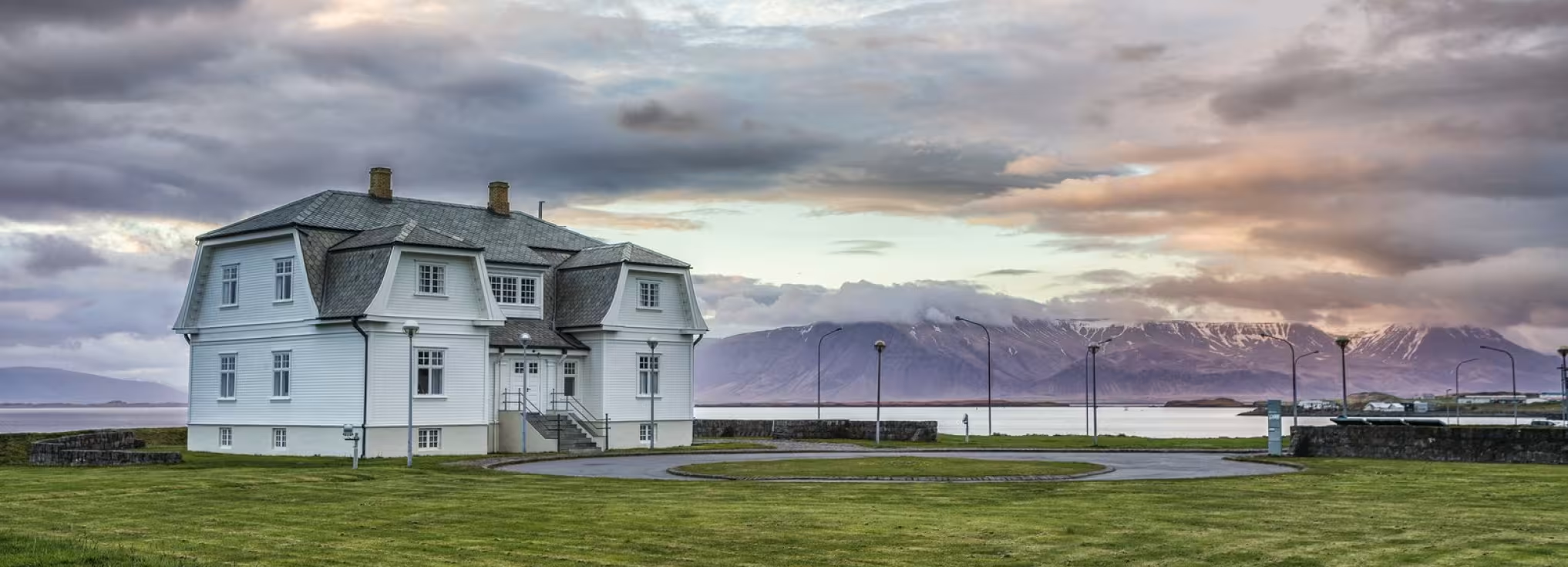
The threat that one side might launch a nuclear weapon, either deliberately or by accident, and thereby trigger a war of global annihilation, loomed large when Reagan and Gorbachev journeyed from afar to a desolate, windswept island near the Arctic Circle to meet, in that small home, with rain often lashing against its windowpanes. The President had already stated his mantra, repeated many times during the weekend, that a nuclear war could never be won and must never be fought.
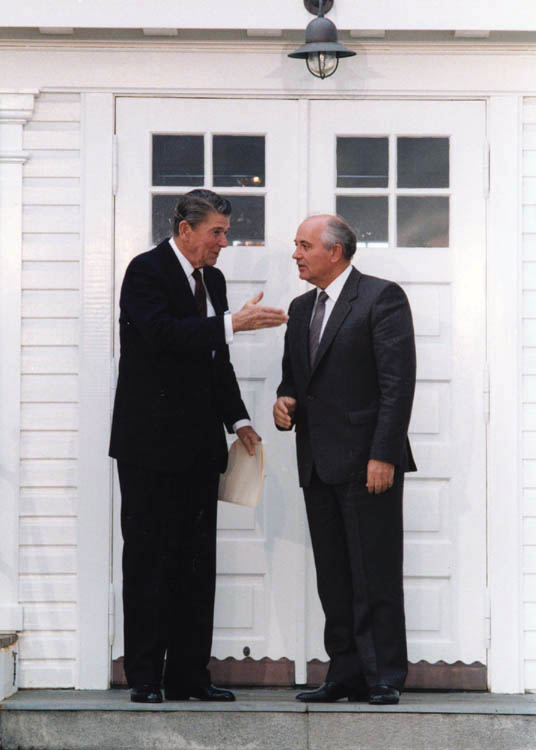
As aides to President Reagan, we expected the weekend to be a low-key, uneventful session to prepare for a “real summit” in Washington, DC the following year. What happened instead was an emotional roller coaster, full of twists and turns, highs and lows, with the future of nuclear weapons on the table and in the balance. NPR commentator Rod MacLeish deemed it among “the most amazing events in diplomatic history” while veteran Washington Post correspondent Don Oberdorfer called it “one of the most controversial — and bizarre — negotiations by powerful heads of state in modern times.”
To Gorbachev, it was filled with “wearying and grueling arguments” while Reagan said he left the island as Gorbachev was trying “to act jovial, but I acted mad and it showed.”
Unlike other summits — which are mostly scripted set pieces — the action at Reykjavik happened fast and off script. The meeting, which began as a surprise, then delivered surprise after surprise. We didn’t know what to expect next or how it all would end — not just over that weekend but over the months and years to come.
On center stage in Reykjavik were the two over-sized personalities, Ronald Reagan and Mikhail Gorbachev. Both loom large in history. For ten plus hours they sat face-to-face — devoid of the customary staff advice, “talking points,” or guiding memos. There they acted more like themselves than at any time in office. And there (despite a few notable lapses), each was the best version of himself.
Summaries of their private discussions — one scribed by an American, one by a Russian — enable us to put an ear up to the door of their conference room and peep through its keyhole to learn their core beliefs, detect their unadorned heartfelt thoughts, and feel their powerful personalities in a way that is rare, in history.
The Reykjavik Summit changed each man, as well as their mutual relationship, thus changing superpower relations. It ended up changing the world. A day after returning home, Gorbachev broadcast nationwide that post-Reykjavik “no one can continue to act as he acted before.” Neither man nor country did.
The Höfði House was a second, but inspired, choice for the meeting. Such unique buildings can sometimes emit a spirit and establish an ambience that molds events within. The striking all-white structure, situated between the roiling ocean and monotonous lavascape, proved a creepy yet hospitable site for the world’s most powerful men to face off and discuss, implore, and wrangle over the big issues of their, and our, era.
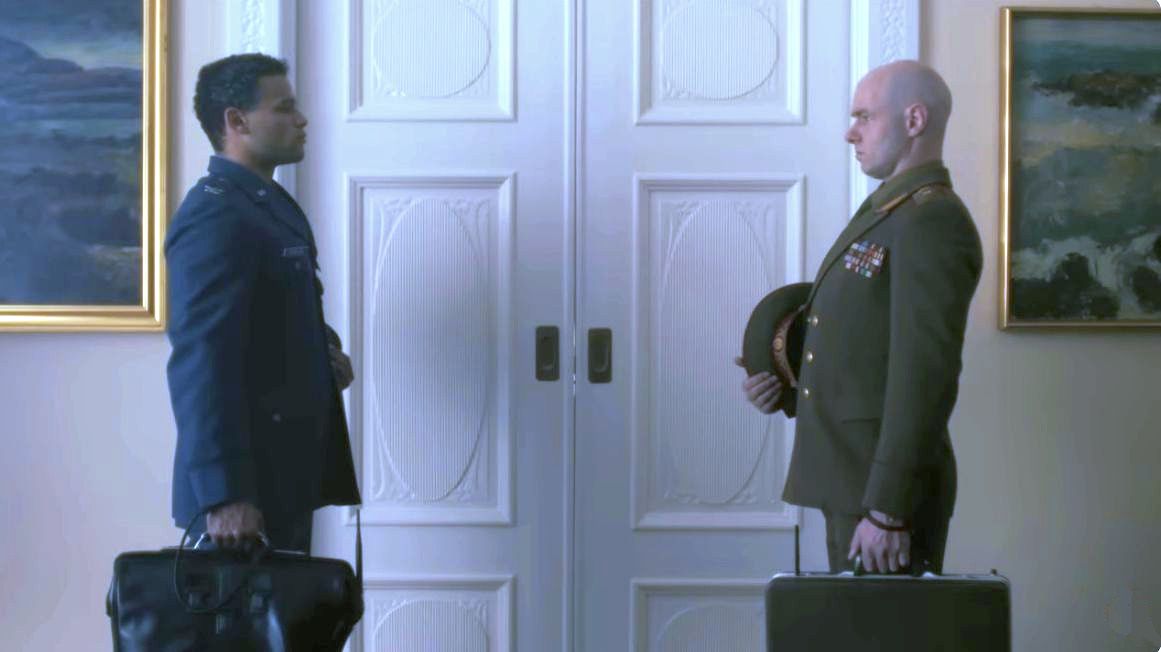
Besides the outward beauty there was a frightful indoor site – two military officers, shoulders back, each carrying a briefcase, standing erect just outside the small conference, only a few feet from one another, for hours on end – never (from what I could see) acknowledging or even seeing the other. Inside those two briefcases, called “the football” by Americans, were the codes to initiate a nuclear attack on the other country. Total drama in total immobility. I stood and stared at the site for minutes at a time, several times, over the weekend. Indeed, it was my most durable memory of that weekend.
Alongside these two main characters were supporting cast members. Most constructive, yet tragic, was the Soviet chief of staff, the legendary five-star Marshal of the Soviet Union, Sergei Akhromeyev. After operating from the shadows over many decades, he surprisingly emerged at Reykjavik for a few shining hours to alter history. He never imagined that forces growing out of the summit would ignite the implosion of his beloved nation, ruin his beloved reputation, and end the noble life he led.
Accompanying the Marshal were a galaxy of Soviets. While President Reagan proclaimed that this would be a business meeting, without large staffs – luckily for me, I was one of the few chosen to go – Soviet leader Gorbachev shared no such opinion. Hence there were some 300 Soviet officials there – diplomats, intelligence operators, KGB officers, so-called diplomats. His main advisors, besides Marshal Akhromeyev, included Foreign Minister Eduard Shevardnadze. He proved most beneficial after the weekend, when helping to craft a sweeping arms control agreement which eliminated an entire class of nuclear weapons.
His counterpart, also in the small conference room, was Secretary of State George Shultz, who likewise proved essential in turning Reagan and Gorbachev’s desire for deep nuclear cuts into a concrete treaty. As director of the Arms Control & Disarmament Agency, I was responsible for helping arms negotiators on thorny issues – in essence, making arms control happen. At Reykjavik, I made some suggestions to the President during breaks but was by no means front and center. Indeed, only Ronald Reagan stood in the spotlight that weekend on the American side, and only Mikhail Gorbachev on their side.
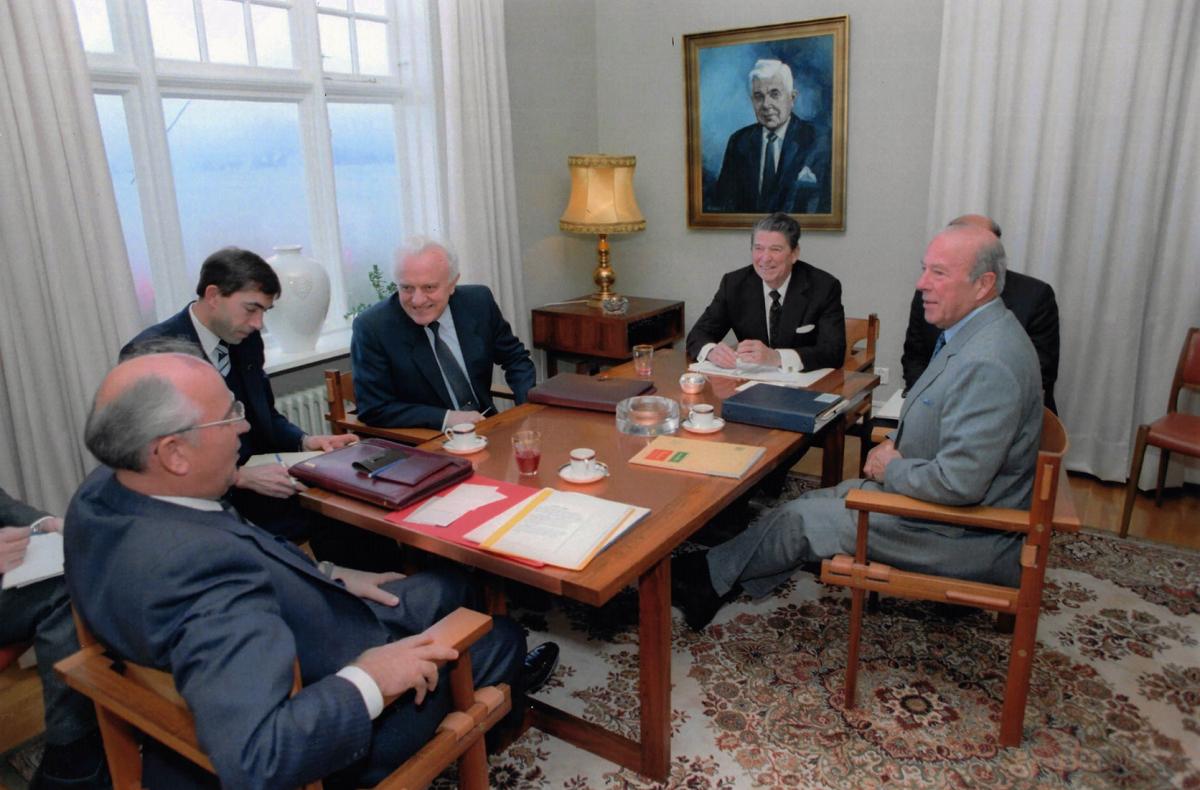
The two spoke for ten-and-a-half hours, virtually without notes or so-called talking points. At one point, on that Sunday October 12, 1986, they went so far as to propose the total elimination of nuclear weapons on both sides. When more practical, they agreed to deep cuts in the nuclear arsenals of both sides. And thus, incredibly, almost unbelievably, it began to happen. Today, both the U.S. and Russia have only 20 percent of the total nuclear weapons they had at that time.
As if its twisting plot, oversized characters, and unique setting weren’t enough, the Reykjavik Summit left a rocky legacy in its wake. Initially, it was proclaimed an abject failure, as the two leaders stormed off in a huff — issuing no joint statement, proposing no toasts, and having no notion they would ever meet again.
The summit stumbled over SDI, the Strategic Defense Initiative, unkindly dubbed “Star Wars” by critics. Reagan considered researching, developing and then deploying such defensive systems as SDI absolutely critical, while Gorbachev considered SDI absolutely threatening. Since 1986, with the advent of Iron Dome in Israel, Patriot missiles in the U.S. arsenal, and an array of defensive systems by Russia, Ukraine and Taiwan, we can now appreciate how prescient Reagan was at Reykjavik.
But at the time, the session was harshly condemned. No less a foreign policy authority than ex-President Richard Nixon said right afterwards: “No summit since Yalta has threatened Western interests so much as the two days at Reykjavik.” British Prime Minister Margaret Thatcher, Reagan’s closest ally and friend, considered the discussion there “tantamount to surrender.”
This bleak view brightened the next year, in 1987, when the Reykjavik Summit was heralded for leading to a breakthrough arms accord, signed with fanfare by Reagan and Gorbachev in the White House. In the years since, despite the fall of the Berlin Wall, demise of communism in Eastern Europe, collapse of the Soviet Union, end of the Cold War, and a deep division of Europe between NATO democracies and dictatorial Russia, the Reykjavik Summit had been largely ignored. Specialists have debated the summit’s significance at four conferences held on its anniversaries, but their deliberations had remained just that — among specialists at academic conferences.
Until recently. With the declassification of more top-secret documents and the passage of time, appreciation of the Reykjavik Summit has been on the rise. Now, with the release of the popular film “The Brink of War,” the meeting is finally getting its due.
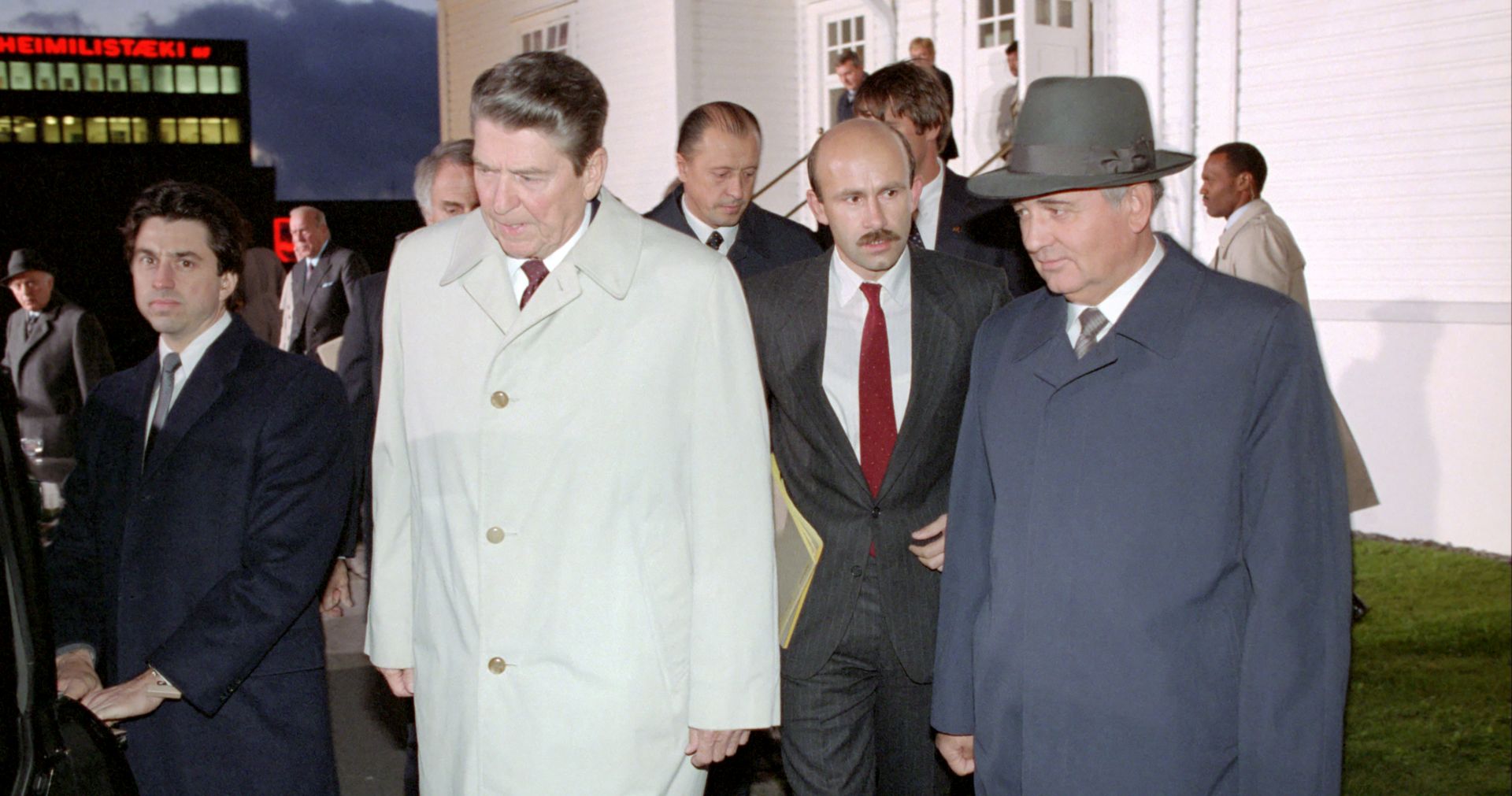
The Reykjavik Summit made a deep impression on its participants, especially on me. The emotional ups and downs, the demands on our circadian rhythms — with me getting ten or eleven hours of unrestful slumber in total over three nights — and the staggering stakes of the issues on the table, all this made it the most spectacular weekend of my life. One I often recall, and more often relive.
History has likewise judged it as critical a turning point, something Mikhail Gorbachev wisely surmised twenty years ago. In 2006, George Shultz described his conversation with Mikhail Gorbachev, then twenty years after the summit itself.
He didn’t hesitate a second. ‘Reykjavik,’ he said.
And I said, ‘Why?’
‘Because,’ Gorbachev said, ‘for the first time the two leaders talked directly over an extended period in a real conversation about key issues.’
More particularly, the Reykjavik summit resulted in three momentous changes – as stated, the deep reductions in the nuclear arsenals of both superpowers; intense focus on the criticality of defensive weapons; and subsequent reforms in the Soviet system, which brought about the country’s demise.
As Ronald Reagan was fond of saying about many of his accomplishments: “Not bad. Not bad at all.”