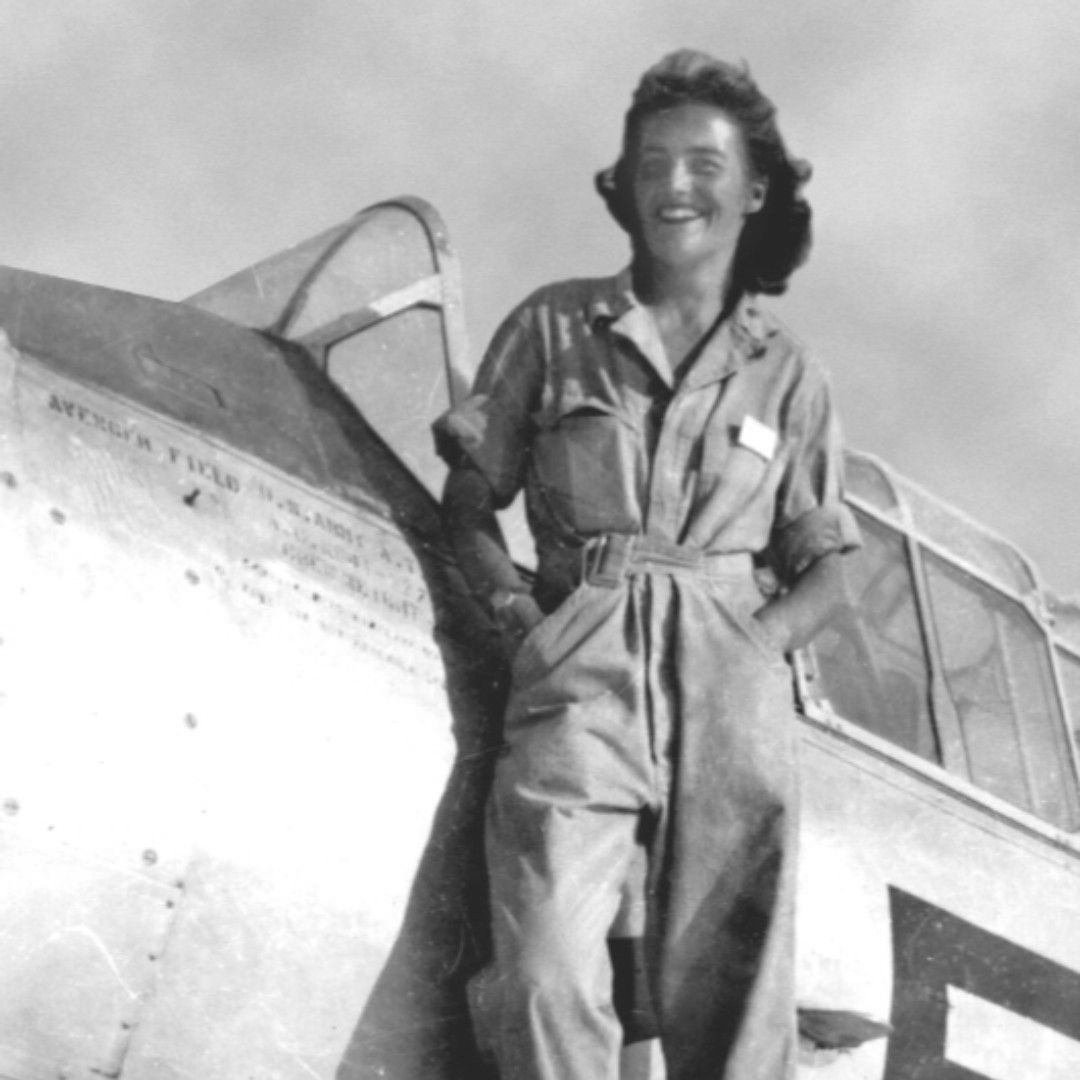
An estimated 350,000 women filled critical military roles during World War II, from the Women's Auxiliary Corps to the Women's Air Force Service Pilots.
-
Winter 2026
9 months ago By Richard Bell Volume71Issue1
Editor’s Note: Lena Andrews is an Associate Research Professor at the University of Maryland School of Public Policy and previously was a military analyst at the Central Intelligence Agency. Recently, she has published a fascinating book, Valiant Women: The Extraordinary American Servicewomen Who Helped Win World War II, on the important work of women during the war. Portions of this essay were adapted from that book.
“Women,” wrote Eleanor Roosevelt that year, “are a weapon waiting to be used.”
Ann Baumgartner, having achieved her dream of becoming a pilot, agreed. From the moment in 1941 when she stepped into a plane on a small airfield twenty-five miles outside Newark, New Jersey, she knew in her bones that flying would allow her to make a difference in the war. “I was eager to be off to try to do my part in the war,” she remembered.
Although there was little public discussion of women joining the armed services when Baumgartner started flying, she reasoned that she should be prepared for the eventuality. Her first step was to get a pilot’s license. This was no small feat. A license required two hundred hours of flying time, which was difficult to come by under normal circumstances and near impossible in 1941 with so many men being trained for the Air Force at civilian airfields. But Baumgartner would not be dissuaded from her calling. “This is what I was made for,” she thought to herself. Imagining the adventures she might one day have, she recalled, “I could not sit still. I circled round and round the room, imagining dangerous wartime rescues.”
While the idea of women pilots remained at the extreme end of the American imagination, by the time the United States entered World War II, the notion of women serving in uniform was hardly unprecedented. Thousands of women had served in the military, primarily as nurses, since at least the American Revolution, and, by the end of World War I, the Army was actively considering a proposal to formally integrate women in a wider range of positions.
The notion even garnered the support of World War I general John J. Pershing — notorious for his strict discipline, demanding standards, and ability to inspire fear and loyalty in equal measure — who himself had requested a detachment of women to join his command as translators and telephone operators. The Navy had been equally supportive of women in uniform during World War I, authorizing a small corps of several thousand “Yeomanettes” to provide clerical assistance at naval bases across the country.
See also: “Hello Girls” about Gen. Pershing
recruiting women phone operators in WWII
Since the military had come so close to fully integrating women into its ranks during World War I, several proposals for women’s service in future conflicts were considered during the interwar period. The Army, in particular, devoted much study to the idea. The detailed and comprehensive reports they produced proved to be instantly controversial. As one of the primary authors pointed out, “Nothing but fruitless conflict had resulted from previous arguments between extreme feminists on the one side and male diehards on the other, all disagreeing endlessly over minor details.”
Though War Department studies of the subject would prove prophetic on several issues related to women’s service in the military, the noise coming from both ends of the spectrum drowned out most of their insights. Consequently, the studies faced the same fate as most other well-considered government reports on contentious issues: they were filed in a drawer and forgotten for over a decade. Peacetime consideration of a women’s program was suspended in 1931 since, as one memo put it, “no one seems willing to do anything about it.”
Nevertheless, much had changed in the decade since the reports were unceremoniously tossed in a file cabinet. In previous wars, finding men to staff the support elements of the military without undermining the equally important tasks of manning the front lines and the production facilities at home was not an insurmountable problem. But as the scale of World War II’s demands became apparent, military planners realized it was going to necessitate particularly large numbers of production, combat, and support personnel, and especially the latter. This left them wrestling with the nagging question of where to find all these people.
It did not take long for senior commanders to realize that the same women who were beginning to man the conveyor belts and riveting guns of American manufacturing plants could also be used in the military, filling the desks left behind by the men now needed for combat tasks. “There are a great many jobs connected with the Army’s war program which women can handle better than men,” wrote Army Chief of Staff George Marshall in 1941. He concluded, “The demands on manpower would be so great that a large number of women should be incorporated in the Army’s effort.”
At the same time, a growing number of American women were showing interest in signing up. When the War Department offered no officially sanctioned way to contribute, many women took matters into their own hands. The Chicago Women’s Defense League started enrolling and classifying women ready to volunteer in the event of a war, and the Los Angeles Women’s Ambulance and Defense Corps created a military training program and pleaded for official Army recognition. “Women must play their part in building of a greater US national defense,” remarked Marie Reed, organizer of the California group.
Even movie stars got involved with the ad hoc effort. According to the Lancaster New Era, Hollywood starlet Ida Lupino had signed up for an ambulance unit: “Knitting would drive her crazy,” they reported, “but two nights a week she attends a first aid class for the women’s ambulance defense corps.”
See also: “Flights of the Wasps” by Victoria Pope
in the Spring 2009 issue of American Heritage
Facing this surge of interest, General Marshall had little choice but to embrace the enthusiasm and find a way to channel it for the Army’s benefit. By March 1941, he had conceded it was time for the War Department to “provide some outlet for the patriotic desires of our women.”
Marshall’s support, however, was just the first of many hurdles legislation authorizing a women’s program needed to clear. Convincing Congress, the rest of the military, and the American public to allow women into the Army proved more challenging. For starters, both sides of the social milieu largely opposed the idea. On one side, vocal pacifists and isolationists, with many women among them, had become a powerful brake on efforts to maintain a standing military and equally opposed any suggestion that women be included in whatever Army remained.
On the other side, traditionalists and conservatives loudly proclaimed the view that a woman belonged in the home. Many congressmen on the powerful Senate and House Armed Services Committees fell into that camp and were nearly apoplectic about the prospect of women serving in the Army. “Take the women into the armed service,” one congressman protested, and “who then will do the cooking, the washing, the mending, the humble homey tasks to which every woman has devoted herself? Think of the humiliation! What has become of the manhood of America?”
But the program’s long odds did not deter the staunchest defenders of women’s military service and, in this respect, no one surpassed congresswoman Edith Nourse Rogers. A Republican from Massachusetts, Rogers had won her late husband’s former seat with a seventy-two percent majority in 1925. She had a biting sense of humor and was well liked by her colleagues and constituents. “I hope,” she noted early in her tenure, “that everyone will forget that I am a woman as soon as possible.”
By the spring of 1941, Rogers felt she had waited long enough for the Army to act on the question of women joining their ranks. After resolving that it was time for her to introduce her draft legislation, she picked up the phone to warn Marshall it was coming. Marshall, realizing that Rogers had decided to introduce the legislation with or without the Army’s approval, rushed to develop a counteroffer. He asked for a week to consider Rogers’s proposal — then extended his review to a month — and promised that the Army was studying the best way forward on the issue. Soon after, he presented Rogers with an initial plan for the incorporation of women: a civilian auxiliary corps that would be affiliated with, administered by, and under the authority of the Army — but technically not a part of it.
As expected, congressional approval was a formidable obstacle. The legislation sat, virtually untouched, for the better part of 1941 and 1942, languishing in bureaucratic no-man’s-land. In the end, it took the personal intervention of both Marshall and Secretary of War Henry Stimson to get the bill over the finish line.
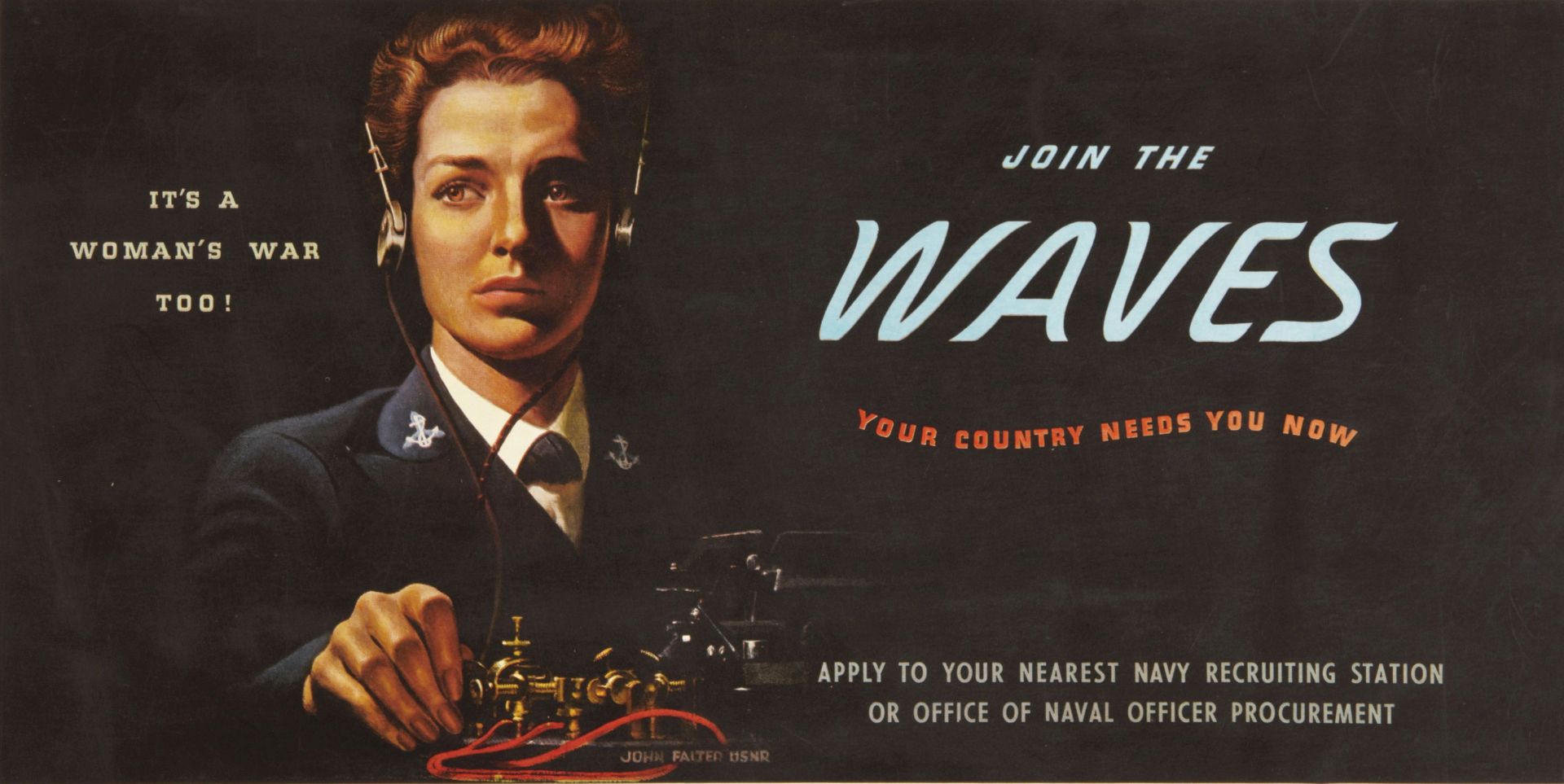
On May 15, 1942, over a year after Rogers had first introduced the legislation for a women’s program, President Roosevelt authorized women “for noncombatant service with the Army of the United States for the purpose of making available to the national defense when needed the knowledge, skill, and special training of the women of this Nation.” The new organization would be called the Women’s Army Auxiliary Corps, the WAAC for short.
The following day, at a ceremony announcing the program, the War Department leadership hinted at what was in store for American women. “For the first time in the history of our nation, women may volunteer for direct service to a national war effort with the army of the United States... . Some of these jobs will be dramatic; many will be monotonous. All will be important.”
Almost immediately, this prediction proved true. Although ultimately the U.S. achieved victory with men in combat on the front lines, it also won with women in uniform serving in unprecedentedly diverse roles. Not only did women work behind thousands of desks doing clerical and administrative tasks, but they also served, often for the first time, in an extraordinarily diverse set of military occupations. They served as pilots, aircraft trainers, photo interpreters, gunnery instructors, radiomen, metal-smiths, machinist’s mates, chemists, codebreakers, classification experts, lab technicians, translators, parachute riggers, ordnance experts, weather observers, control tower operators, mechanics, truck drivers, radarmen, quartermasters, pigeon trainers, and much more.
More than three hundred and fifty thousand American women served in uniform during World War II. They served in every service, in every combat theater, and in nearly two-thirds of the available military occupations at the time. Abroad, these women were sometimes mere miles away from the front lines, and they were directly involved in some of the most important moments of the war, caring for the wounded on the beaches of North Africa, following the front after the D-Day landings, and crash-landing in the Pacific. Many were injured or died for their country, and many received the nation’s highest honors.
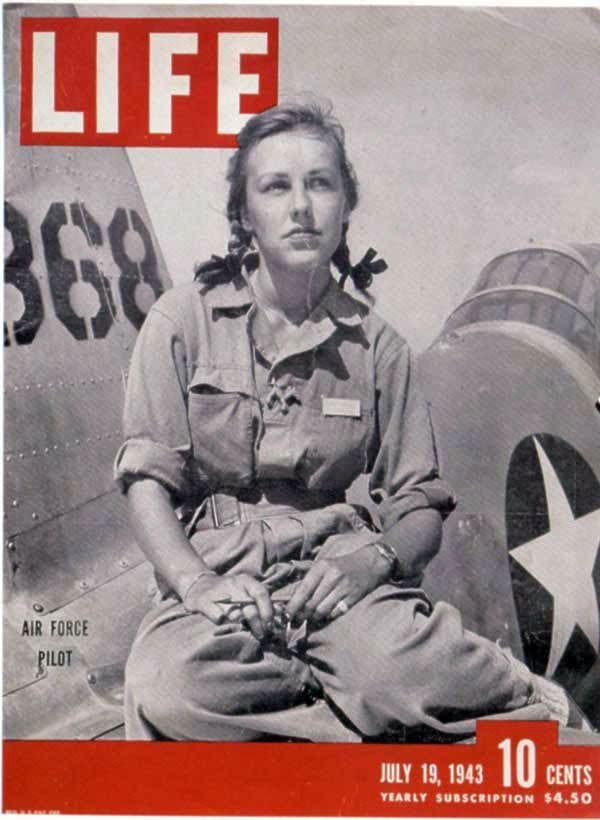
Although the Women’s Army Corps was the first and largest of the women’s programs, the other services quickly followed suit and, by 1943, women in uniform occupied every corner of the military establishment. That included in the US Army Air Force, where women aviators were recruited to join the Women’s Airforce Service Pilots, known by the clever acronym WASP, which was borne out of the combination of two earlier groups, the Women's Flying Training Detachment (WFTD) and the Women's Auxiliary Ferrying Squadron (WAFS).
The WASPs were, to the woman, excellent fliers. Even those who signed on during the later part of the war, subject to less stringent entry requirements than those who joined in the early classes, still proved to be skillful pilots. Their safety and crash records were as good as, and often better than, those of male pilots in comparable roles: about nine percent of the overall WASP force died in fatal accidents, whereas the Army Air Forces fatality rates in similar assignments were closer to eleven percent during the same period.
See also: “Flights of the Wasps” by Victoria Pope
in the Spring 2009 issue of American Heritage
These rates were especially impressive given that they did not reflect two risks unique to the women fliers. First, the WASPs faced issues of safety in the maintenance of their training and ferrying planes. While it is difficult to find direct evidence of explicit negligence, many women pilots often worried that the women’s aircraft did not receive the same careful attention as their male counterparts’. They suspected that some Army Air Forces maintainers, reluctantly pulled from their jobs supporting male pilots or reassigned because they could be easily spared, were not of the highest caliber. If the widespread rumors were true, then the WASPs were flying planes with sketchier safety records than their male counterparts.
Second, Army Air Forces instructors and commanders who did appreciate the WASPs for their skill and professionalism had a habit of using them to make a point. Recognizing that no man wanted to be upstaged in the air, and certainly not by a woman, many Army Air Forces officers assigned the women to untested and dangerous planes to prod male pilots unwilling to fly them. It proved to be a highly effective strategy, but it often placed WASPs in dangerous situations, as in the case of the B-26 Marauder.
Known as the “widow maker” among Army Air Forces pilots, the B-26 was a difficult plane to fly, and especially to land. The flight manual instructed pilots to descend the aircraft at extremely fast airspeeds, with little margin for error. If landed too slowly, the plane would stall and crash before it made the runway. Many pilots, distrusting the instructions and overconfident in their skills, followed their instincts and slowed the plane too much and too far from the airfield, crashing and killing most of the crew.
To solve the problem, crews needed to be retrained to ensure the pilots would follow the instructions rather than their instincts. But getting them to do so was difficult, since the plane had developed a dangerous reputation. Army Air Force leadership had to find a solution. The planes were expensive, solid pieces of equipment, and, when flown correctly, they proved to be one of the safest bombers in the United States air fleet. They just needed to find pilots willing to fly them.
The instructors at the Army Air Forces Training Command, being pilots themselves, knew how to get men back into the B-26 cockpit. They understood that many young male fliers were motivated to perform, chiefly, by pride, and the instructors devised a solution to the B-26 issue with this in mind. On a warm fall day in Alabama, Air Force instructors assembled men training at the airfield to “watch a spectacular air show by two B-26 pilots.”
When the performance concluded, four WASPs emerged from the planes. Not to be outdone by these willing, capable women safely at the helm of the B-26s, the men soon returned to the cockpit. Delighted at the success of their airshow, the instructors repeated the performance several times over in a range of aircraft deemed too risky to fly by the male aviators. The strategy worked near flawlessly.
As a result, by the end of the war, over one hundred WASPs had qualified on the B-26s, without a single crash. The women attributed their success not to skill or daring but to something much more powerful: they followed the instructions.
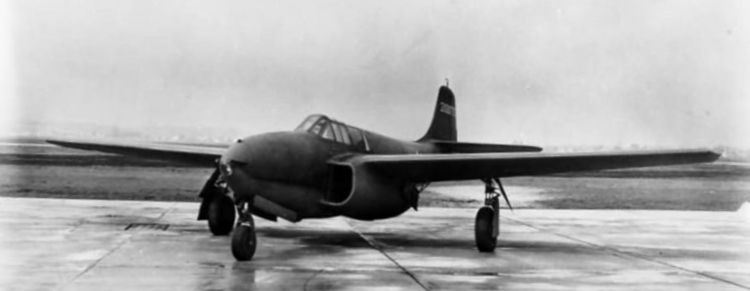
Like so many other women of the WASP, Ann Baumgartner proved to be a superior flier. Having received her pilot’s license in the early days of the war, Baumgartner was among the first women to apply to the WFTD and later the WASP. She went through training camp and, after she spent several months towing artillery targets for male recruits in North Carolina, the Army Air Forces had transferred Baumgartner to its elite testing and training hub in the Midwest. In 1944 at Wright Field in Ohio, Baumgartner became the first-ever American woman to fly a jet plane when she tested the Bell YP-59A, the first jet-powered aircraft in the United States arsenal.
While her test of a jet plane was, by far, one of Baumgartner’s most memorable flights, it was only one in a long line of important firsts for women pilots — and for the world. Take, for instance, Baumgartner’s check out of another plane: the B-29 Superfortress. Unlike many of her previous flights, in which Baumgartner was one of many pilots to test out the specifications and handling of new aircraft, her flight of the B-29 had a very specific operational purpose. At the time, Baumgartner was given only the barest of details. The Army Air Forces wanted to know, she was told, whether the plane could handle a nine-ton bomb load, packaged into an area of about ten feet by two feet for long-duration flights.
Despite the secrecy around the mission, Baumgartner’s test flight of the B-29 was uneventful. In their tests of the plane, Baumgartner and her crew encountered few problems carrying dummy pay-load, aside from the occasional overheated engine. If anything, she found the whole ordeal a bit boring. But, as always, Baumgartner reveled in the flying, in watching “the light over the land turn pink and then fade into darkness.”
Months later, on August 6, 1945, the gravity of the mission came into full view, when another pilot, Lieutenant Colonel Paul Tibbets, sat in the cockpit of a silver B-29, transporting payload with nearly identical dimensions to the one that Baumgartner tested months earlier. Tibbets had worked over the preceding weeks with Baumgartner and the other test pilots at Wright Field to manage some of the quirks of the plane, and made a few modifications to address its hot engine. Given the nature of his upcoming mission, Tibbets needed to feel completely confident the plane would perform to the necessary specifications, and the team at Wright Field ensured he had the information he required.
The morning of his mission, however, Tibbets made one last small change to the bomber: he had the plane’s name — shared by his mother, Enola Gay — painted below the cockpit window. Then Tibbets took off from a runway on the small island of Tinian and flew the B-29 over the Japanese port city of Hiroshima, where he dropped his payload, “Little Boy,” the first atomic bomb used in human history. Three days later, another B-29 dropped the "Fat Man" atomic bomb on Nagasaki. Six days after that, the Japanese surrendered.
Like most Americans, Baumgartner was probably at home when she heard the news of the atomic bomb being dropped. The WASP had been deactivated, she was no longer flying Army Air Force planes, and her life had transformed considerably since leaving Wright Field. She was now married and focused on building a home. But when she heard about the Allies’ final victory in the Pacific, Baumgartner would have known, more than most, exactly what it took to get there.
Over the next several months, the remaining women of the WAC, WAVES, SPARS, and MCWR were released from duty. With their discharge papers in hand, they arrived at processing centers around the country, and were unceremoniously returned to the lives they had left behind. Some women were thrilled to be going home, others had mixed emotions, and still others never looked back.
Waiting in line for the official discharge papers, many of the women were given an informational pamphlet that provided instructions for their formal separation from the military. Inside the front cover was a short commendation: “A job accomplished, a victory won.”
In June 1948, the Women’s Armed Services Integration Act was signed into law by President Harry Truman. The act formally authorized women to serve in both the regular and reserve armed forces of the United States during peacetime. It was an extraordinary turning point for the women in the military, recognizing women as equal contributors to national defense, and it rested on the shoulders of the women, like Baumgartner and so many more, who served in World War II.