
The Apollo 8 mission was the first to leave earth orbit and head to the Moon. It's a miracle they made it back, given how primitive the technology was.
-
Winter 2026
9 months ago By Richard Bell Volume71Issue1
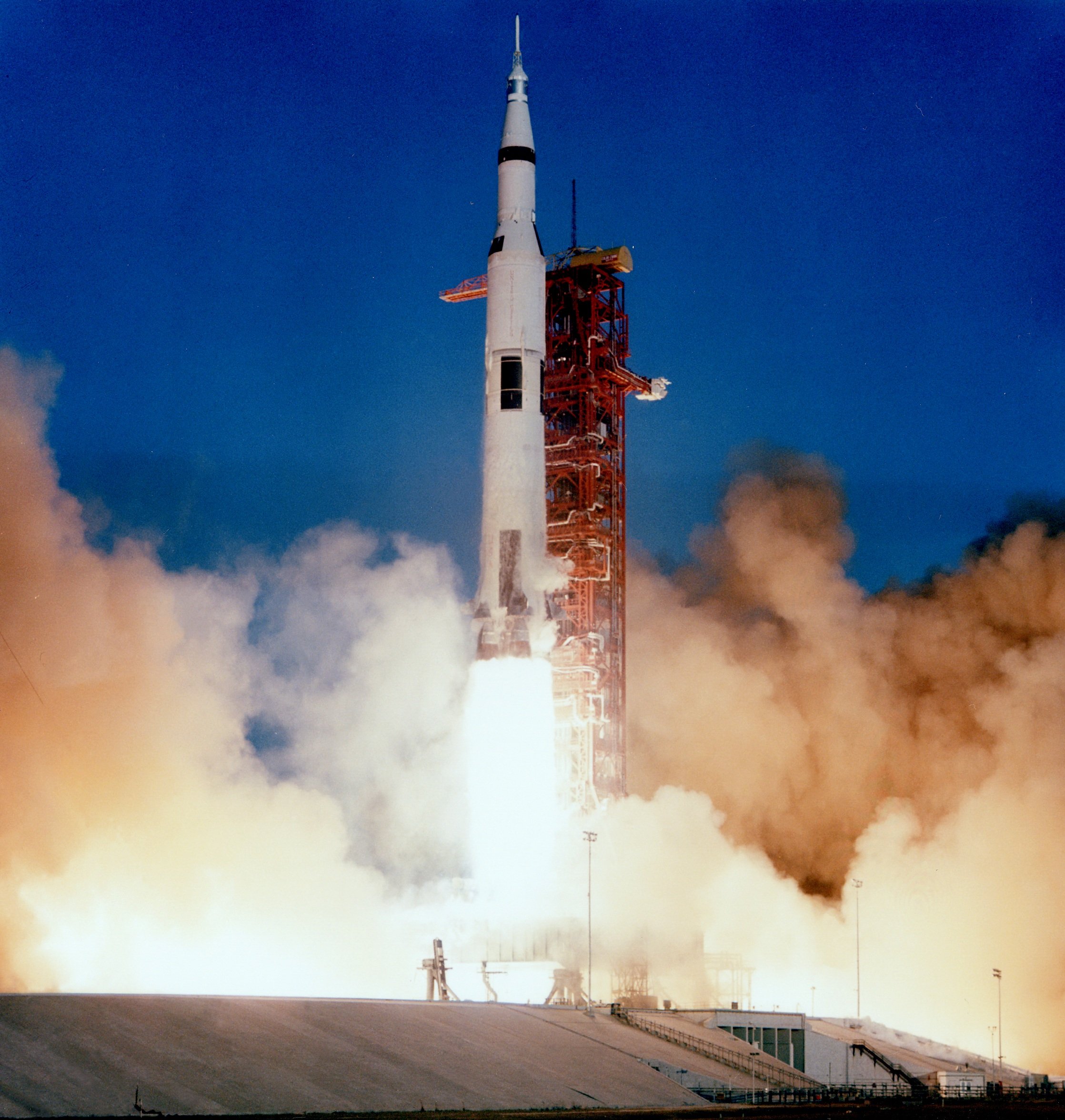
Editor's Note: Edwin Grosvenor is Editor-in-Chief of American Heritage. He covered the launch of Apollo 8 for National Geographic as a freelance photographer early in his career.
As Artemis II lifted off on April 1 from the launch pad at Kennedy Space Center, I recalled watching Apollo 8 blast off nearly 58 ago before from almost the same spot. Both Artemis II and Apollo 8 were on a similar mission: leave the bounds of earth and travel a quarter million miles to the Moon, circle it, and return.
I will never forget the feeling of being hit by the shock wave of the Saturn V rocket engine blast, even though it was more than 3 miles away. The blinding light of ignition was followed 15 seconds later by a deep rumble that you could feel in your feet and chest.
On December 21, 1968, I was the fourth photographer on a four-man team, an eager teenager given a camera with a lens almost four feet long and told (perhaps with a bit of skepticism) to do the best I could.
Luckily, I was able to capture a photograph of Apollo 8 as it headed down range across the Atlantic, taken at such a high attitude that the first stage of the Saturn V rocket had separated and left behind a cloud of smoke as the second stage rose toward space.
A few months later, I happened to visit the magazine offices after National Geographic started to print the nine million copies they needed, and was delighted to see my photo used as a full-page illustration. But there was a problem: they were printing the photograph upside down. The designers had assumed the rocket should be going up, not realizing that with the camera angle from the launch site the second stage appears to be descending as it headed down range toward Africa.
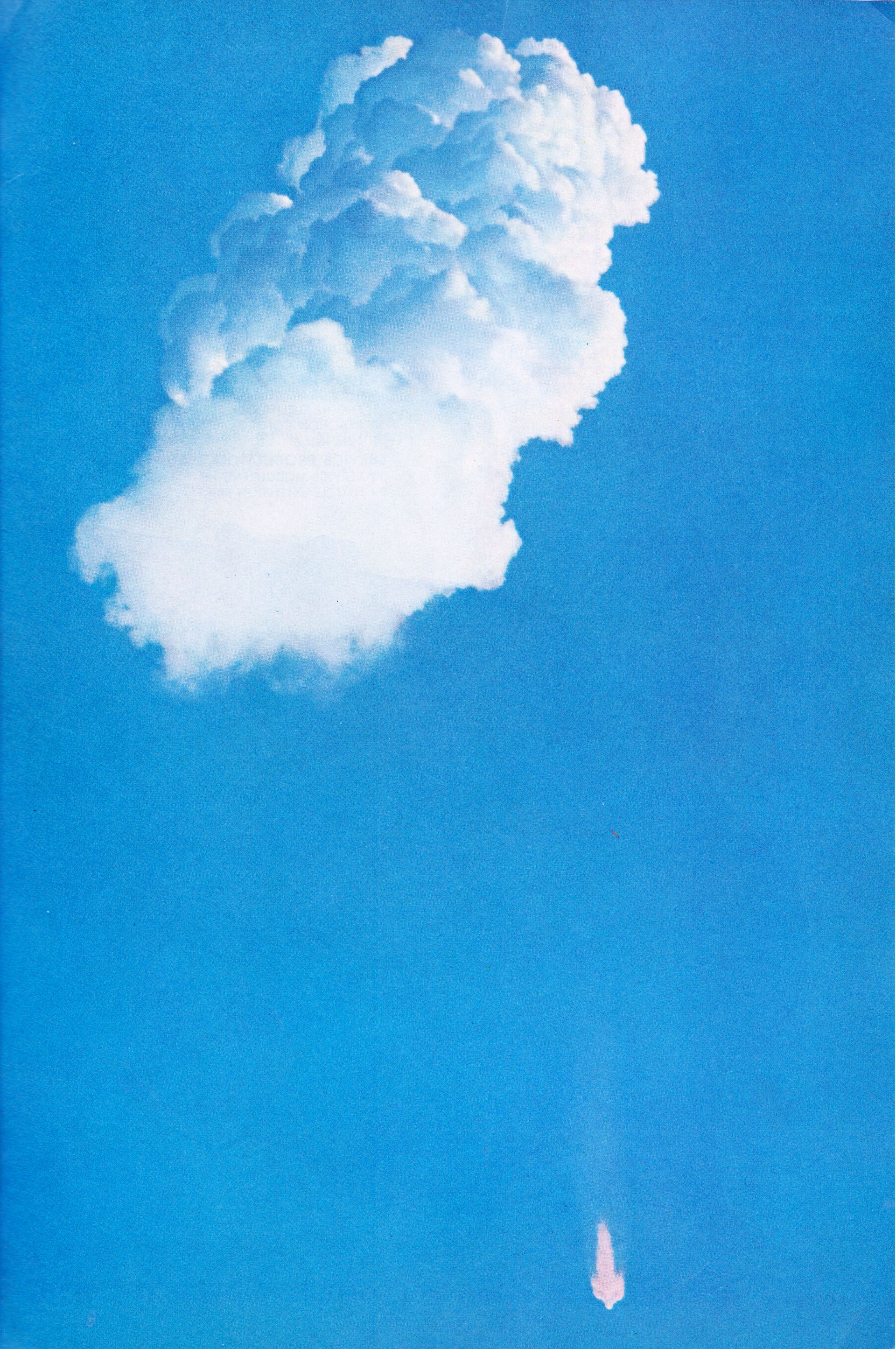
Geographic had to stop the presses and reprint those early issues with the photograph right side up.
It is hard for me to believe that none of the crew onboard the Artemis II flight now were even born during any of the Apollo missions. Time flies by.
The progress of technology since then has been stunning. The spacecraft was guided by an Apollo Guidance Computer that was the size of a suitcase, but still had only 16 bits of memory, not nearly enough for even a short email today. The AGC had some of the first silicone circuits ever used, but there was no real keyboard or monitor as we know them now. Astronauts typed in pairs of numbers that substituted for a short list of nouns and verbs such as "23" for "docking angle," "50" for "please perform," or "56" for "terminate."
Today, the astronauts of the Apollo 8 mission seem especially courageous to have attempted the epic journey given the limits of their technology. It was later revealed that NASA's top brass had only intended Apollo 8 to orbit the earth and test the various systems before they approved a manned mission to the Moon. But months before, in September 1968, the Soviets had sent their sixth spacecraft to the Moon. Their latest one, Zond 5, circumnavigated the Moon with tortoises and other life forms aboard, returning to Earth two months before Apollo 8 was scheduled to lift off.
We couldn't let the Soviets beat us to the Moon! And not only that, Lyndon Johnson was still president in December 1968 and certainly he wanted to see a successful first trip to the Moon before he left office and Richard Nixon was inaugurated on January 20, 1969.
And Apollo 8 had another important mission. Years later, I interviewed Apollo 8 Commander Frank Borman and he recalled how proud he and his crewmates were that their dramatic mission helped to unite the country at the end of 1968, a traumatic year of assassinations and the Vietnam War.
Let's hope Artemis II can do the same to inspire and unify our nation in a time of trauma and division.