
Members of “the world’s greatest deliberative body” once put the country’s interests first.
-
Winter 2026
9 months ago By Richard Bell Volume71Issue1
Editor's Notes: Ira Shapiro is a former Senate staffer who has written three books about the Senate including The Last Great Senate: Courage and Statesmanship in Times of Crisis (2012) and Broken: Can the Senate Save Itself and the Country?. This essay includes some text included in Mr. Shapiro’s books, with the permission of Rowman & Littlefield Publishers’ Inc. Mr. Shapiro’s speeches and articles about the Senate can be found on his website, www.irashapiroauthor.com.
In the American constitutional system, no one person should be able to undermine our institutions and jeopardize our democracy. The framers of the Constitution wanted a strong central government because the weakness of the Articles of Confederation had revealed the limits of what the states could accomplish on their own. But, having fought the American Revolution to free the colonies from Great Britain and its monarch, our founders feared the possibility of an overreaching executive who would seek to become a king or an autocrat. They also feared a president who might be corrupt, pursuing personal gain instead of the national interest, and that he could be susceptible to powerful foreign influences.
Consequently, the founders designed a system of checks and balances, the most distinctive feature of which was the Senate. They made it the strongest upper house in the world, with the power to “advise and consent” on executive and judicial nominations, to ratify treaties, and to hold impeachment trials.
Robert C. Byrd, the longest-serving senator and its most dedicated historian, who understood the Senate’s potential and hated when it failed to reach that mark, wrote that “the American Senate was the premier spark of brilliance that emerged from the collective intellect of the Constitution’s framers.”
James Madison, characteristically, cut to the heart of things in a letter to Thomas Jefferson in 1787. He called the Senate “the great anchor of the government…Such an institution may be sometimes necessary as a defense to the people against their own temporary errors and delusions.”
The Senate would be assigned many functions, but it had one fundamental, overriding responsibility: to be a bulwark against leaders who would abuse the powers of the presidency in ways that threatened our democracy. In recent decades it has been weakened from a long period of accelerating decline and riven by hyper-partisanship.
See also “Sometimes Our Job is to Say ’No’” by Sen. Jesse Helms
in the December 1998 American Heritage
It is impossible to understand the decay of our politics and the breakdown of our government without recognizing that the Senate was ground zero for America’s political dysfunction; it is the political institution that failed the country the longest and the worst. The Senate’s failure was particularly crippling because it was supposed to be not only a check on presidents, but the balance wheel and moderating force in our political system – the place where the two parties come together to find common ground through vigorous debate and principled compromise to advance the national interest.
But to perform its role as what Walter F. Mondale once called “the nation’s mediator,” the Senate required a degree of bipartisan comity that has long been lost. Without that comity, the Senate not only reflects the polarization in the country; it exacerbates it by demonstrating it constantly at the highest and most visible level of government.
The Senate’s failure has been particularly painful to a generation that remembers the Senate at its best. America went through a searing period of constitutional crisis from 1967 to 1974 as the fierce debate over our involvement in Vietnam and the pace of racial progress produced violence in the streets, the assassinations of Robert F. Kennedy and Martin Luther King, and ultimately President Richard Nixon’s abuses of power, generically known as “Watergate.” But in that turbulent period, the Senate occupied a special place in America. Working with presidents where possible and holding them accountable when necessary, the Senate provided ballast, gravitas, and bipartisan leadership during those crisis years for our country.
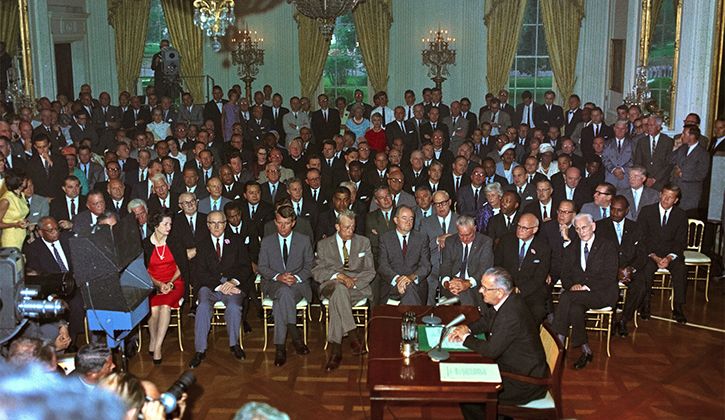
That Senate overcame our country’s legacy of racism by enacting the Civil Rights Act of 1964, probably the most consequential legislative accomplishment in American history, and the Voting Rights Act of 1965. The legislation would not have passed without the support of key Republicans in the Senate including Howard Baker, Hugh Scott, and Minority Leader Everett Dirksen, who helped write the legislation. Their support helped overcome the opposition of Southern Democrats such as Strom Thurmond and James Eastland.
The Senate at the time also attacked the premises of the Vietnam War, produced the Democratic challenges to President Lyndon Johnson, and ultimately, on a bipartisan basis, cut off funding for the war. The Senate battled Nixon’s efforts to the turn the Supreme Court to extremism, defeating two of his nominees in two years.
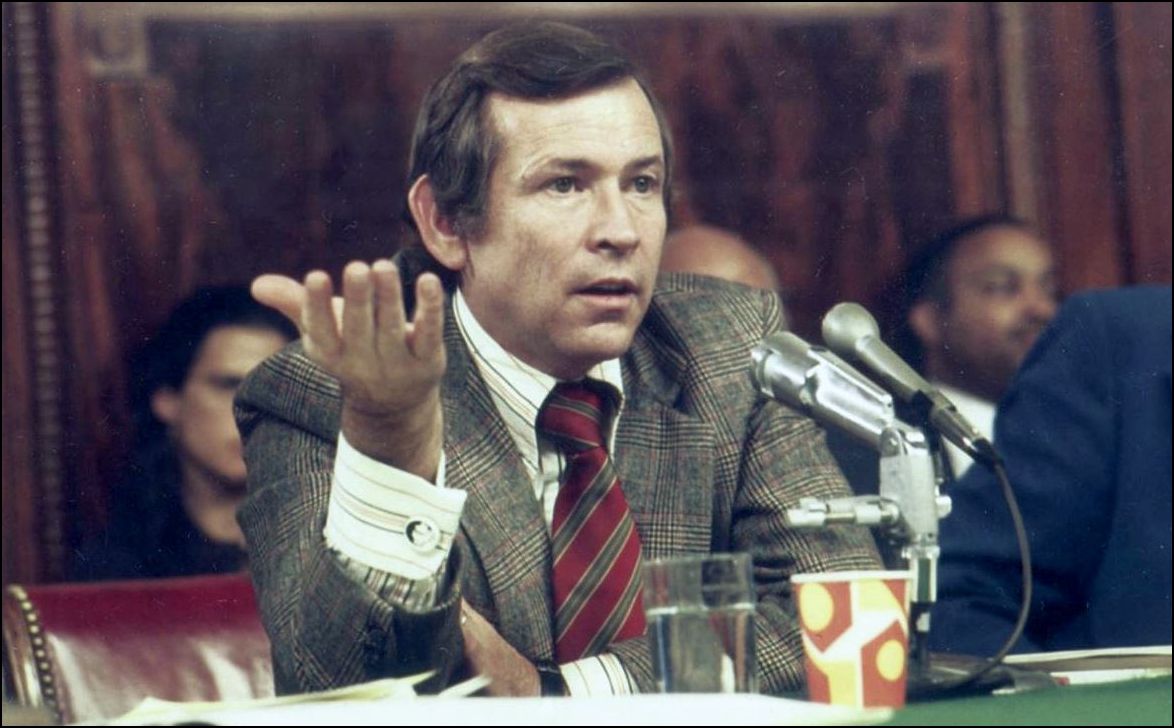
Through a summer of memorable televised hearings, the Senate made Watergate understandable to the nation and held Nixon accountable. Several years later, Committee Chairman Sen. Sam Ervin (D-NC) wrote to the ranking Republican on the committee Howard Baker (R-TN) to thank him again. "Investigating Watergate was not a pleasant experience for each of us
It conducted an extraordinary investigation into the abuses of the intelligence agencies, spearheaded new environmental and consumer protections, and expanded food stamps and nutrition programs, as well as civil rights for minorities and women. And, after Nixon resigned and the Vietnam War ended, the Senate kept on producing major accomplishments for the country: putting in place a new energy policy; preserving the beauty of Alaska's lands; and saving Chrysler Corporation and New York City from bankruptcy.
In Washington, D.C., and across our country, millions of Americans who were first drawn to politics because of John F. Kennedy, civil rights, or the Vietnam War remember the age when the Senate was great – the Senate of Democrats Hubert Humphrey, Ted Kennedy, Philip Hart, Edmund Muskie, Henry “Scoop” Jackson, Gaylord Nelson, Frank Church, Sam Ervin, Robert Byrd, Birch Bayh, and Eugene McCarthy, and Republicans Everett Dirksen, Howard Baker, Bob Dole, Jacob Javits, Margaret Chase Smith, John Sherman Cooper, Ed Brooke, Barry Goldwater, and countless other formidable legislators, whose names still resonate in Washington and in the states.
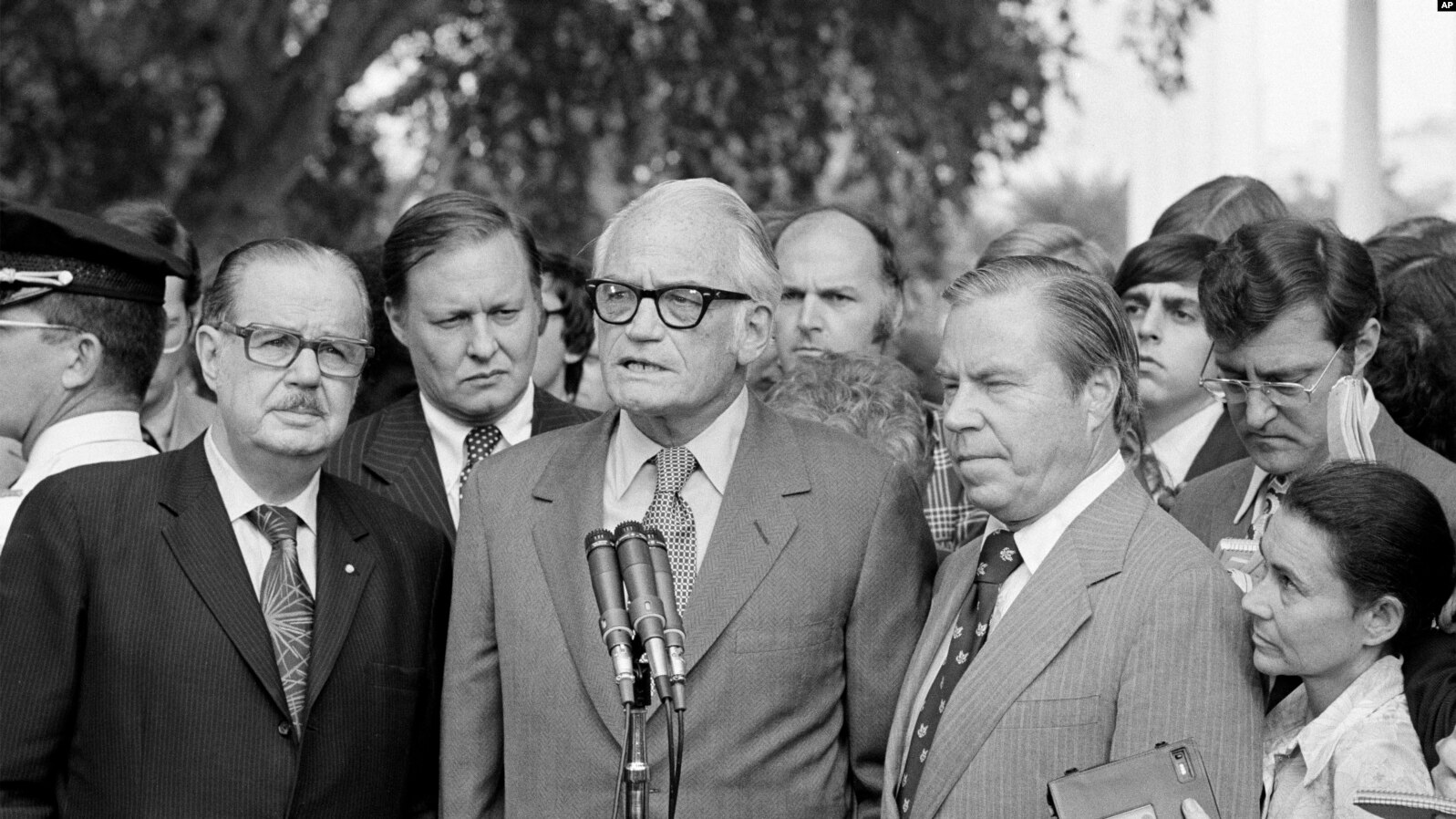
The Great Senate was hardly perfect. It gave President Lyndon B. Johnson the Gulf of Tonkin resolution in August 1964 because the Democrats wanted him to look strong against Barry Goldwater in the presidential campaign, and watched in horror as he used it as license to escalate the U.S. commitment to Vietnam from sixteen thousand troops to more than half a million.
But the Senate of that era remained powerful, despite its lapses. Dealing with civil rights, war and peace, and presidential power, the Senate seemed to have a special relationship to the Constitution. It had moral authority. It occupied a unique role in our country, just as the Founders had intended.
Around the world, there is no “upper house” comparable to the U.S. Senate. In other democracies, the “upper house” is either honorific, like the British House of Lords, or involved in legislation, but with constrained powers, like the upper house of the Japanese Diet. For that reason, the U.S. Senate became routinely known as the world’s “greatest deliberative body” (although not in recent decades.)
Despite the accolades, the painful truth is that in the past the Senate failed to measure up to the challenges of the times for long periods of American history. In his 2005 book, The Most Exclusive Club: A History of the Modern United States Senate, political historian Lewis L. Gould reached a depressing conclusion: “For protracted periods – at the start of the twentieth century in the era of Theodore Roosevelt, during the 1920’s, and again, for domestic issues in the post-World War II era – the Senate functioned … as a force to genuinely impede the nation’s vitality and evolution.”
The Senate of the 1960’s and 1970’s stands as an extraordinary exception to Gould’s gloomy analysis. For a period of nearly twenty years, the Senate came closer to the ideal set forth by the Founding Fathers than at any other time in our nation’s history. Men – and the Senate was at that time comprised of exclusively men, other than Margaret Chase Smith, who was an independent stalwart for most of the period, and Nancy Kassebaum, who arrived in 1979 – of intelligence, experience, and genuine wisdom came together to help steer the ship of state during a perilous period.
What made that Senate great?
It started with a unique group of people at a unique time in American history. As Tom Brokaw described in his book, The Greatest Generation, the experience that many members of the Great Senate shared by serving in World War II profoundly influenced their lives and shaped their public service. Men who fought at Normandy or Iwo Jima or the Battle of the Bulge weren’t frightened by the need to cast a hard vote now and then. Seeing Robert Dole or Daniel Inouye or Paul Douglas on the Senate floor, living with crippling injuries and pain, and other veterans fortunate enough to escape unscathed, set a standard of courage and character for those who followed them.
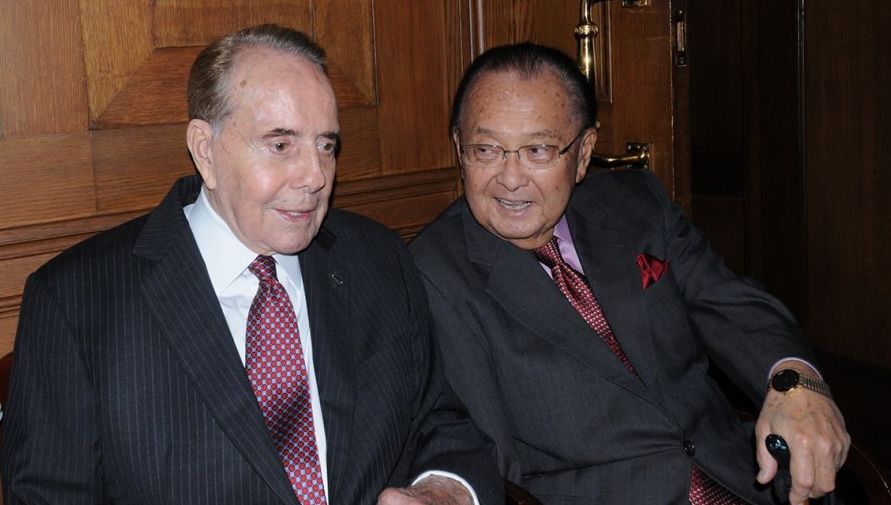
As Justice Oliver Wendell Holmes once wrote about those who had been young during the Civil War: “In their youth, to their great good fortune, their hearts were touched by fire.”
Those men returned from the war with confidence in themselves and their country. They became party builders. They believed in what America could accomplish, and most of them believed strongly that government had an indispensable role to play. Having seen America’s strength, they were also willing to confront, and rectify, its weaknesses. They also got to serve at a time when America’s economic prosperity was unquestioned, and its potential seemed unlimited. That allowed for ambitious legislative efforts to build the nation, expand opportunities, and right historic wrongs.
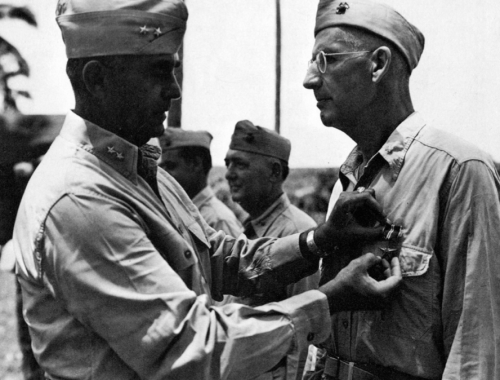
The Great Senate was also a magnet that drew talented, ambitious young men and women from all over the country, regardless of whether their fathers or mothers had been famous or obscure. They first flocked to Washington in the early to mid 1960’s, attracted by the idealism and excitement of John Kennedy’s presidency. Later, they came because of their commitment to civil rights, opposition to the war in Vietnam, or anger over Watergate. The Senate was the place to be: where a young man or woman could hitch his or her star to a major national figure, make a mark at a young age, and learn first-hand the skills needed to accomplish things in politics – above all, when to stand on principle, and when to compromise for the greater good.
It was no accident that the staff of the Great Senate included young men and women who would be future senators, congressional leaders, and Cabinet members: George Mitchell, Tom Daschle, Susan Collins, Mitch McConnell, Lamar Alexander, Fred Thompson, Chris Van Hollen, Leon Panetta, Tom Foley, Jane Harman, and Norm Dicks; future press and media luminaries: Tim Russert, Chris Matthews, George Will, Lawrence O’Donnell, Mark Shields, Jeff Greenfield, Colbert King, and Steven Pearlstein; and a future Secretary of State, Madeleine Albright; two Supreme Court justices, Stephen Breyer and Elena Kagan, and one president: Bill Clinton. They trained in the right place.
But it was not just the unique senators and staff members, nor the crisis times they faced, that made the Senate great. It was a concept of the Senate that they shared.
Senators take the oath of office to “preserve, protect, and defend the Constitution.” But there was also an unspoken oath that many senators came to understand. The people of their states had given them the incredible privilege and honor of being United States senators. They had received the most venerable of titles that a republic can bestow and a six-year term (usually leading to multiple terms) to serve. They would have the opportunity to deal with the full spectrum of issues, domestic policy and national security, and they would develop expertise and experience crucial to the Senate and the country.
In exchange, when they sorted out the competing pressures on themselves, they would serve their states and would not forget their party allegiance, but the national interest would come first. They would bring wisdom and independent judgment to bear to determine what was best for the national interest.
And part of the unspoken oath was an obligation to make the Senate work. As Mike Mansfield, the longest-serving Senate majority leader in history, memorably noted: “In the end, it is not the individuals of the Senate who are important. It is the institution of the Senate. It is the Senate itself as one of the rocks of the Republic.”
The Senate was an institution that the nation counted on to take collective action. Understanding that brought about a commitment to passionate, but not unlimited, debate; tolerance of opposing views; principled compromise; and the willingness to end debate, and vote up or down, even if it sometimes meant losing.
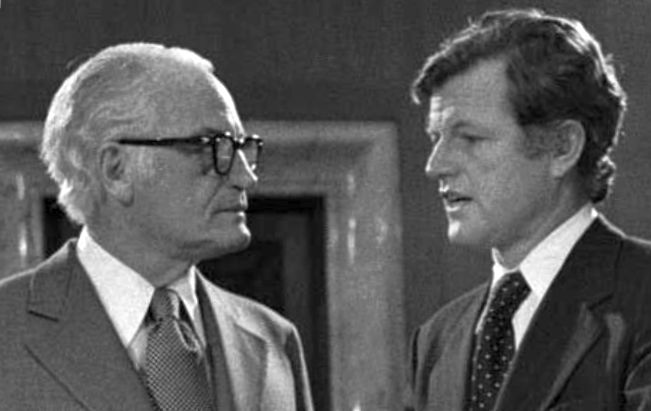
Those qualities characterized the great Senate and its members. The great liberal Democrat Hubert Humphrey and the great conservative Republican Barry Goldwater were poles apart politically, but no one doubted that they were both committed to the national interest and to the Senate as an institution. Because of those overriding commitments, the senators of the 1960’s and 1970’s competed and clashed, cooperated and compromised, and then went out to dinner.
The Great Senate worked on the basis of mutual respect, tolerance of opposing views, and openness to persuasion in the search for bipartisan solutions. The Senate has often been described as a club, but at its best, it actually functioned more like a great team, in which talented individuals stepped up and did great things at crucial moments, sometimes quite unexpectedly.
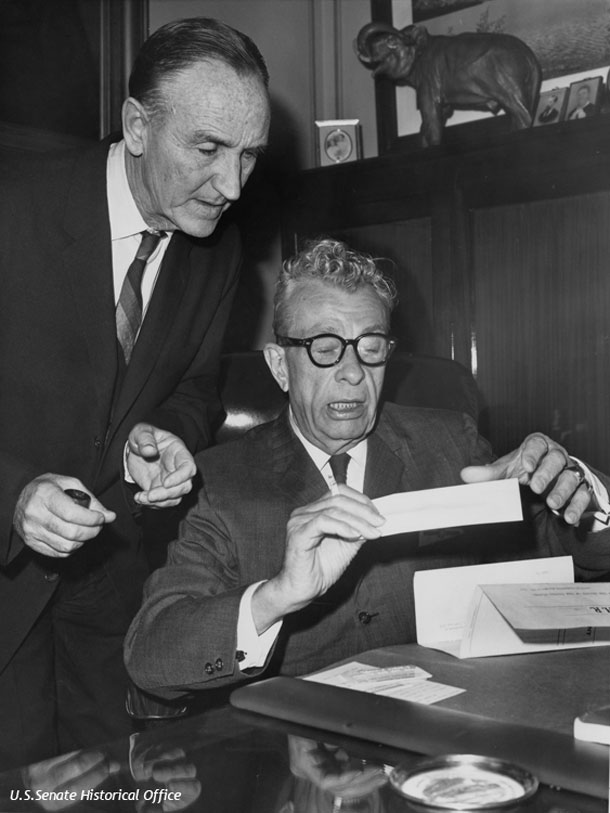
The commitment to pursing the national interest and making the Senate work acted as powerful constraints on partisanship. During most of the 1960’s and 1970’s, the Senate, although a political institution, was surprisingly free of partisanship. The herculean effort to give civil rights to black Americans, the tragedy of Vietnam, the crisis of Watergate, checking the imperial presidencies of Johnson and Nixon — these were not partisan issues, and the Senate responded in a bipartisan way. To meet key challenges, Democrats and Republicans would lead together: Hubert Humphrey and Everett Dirksen broke the Southern filibuster on the Civil Rights Act; Sam Ervin and Howard Baker exposed the Watergate cover-up. Democrats Frank Church and George McGovern worked with Republicans John Sherman Cooper and Mark Hatfield to cut off funding for the Vietnam War.
The Senate of that era was a healthy ecosystem in which trust among senators and staff was the coin of the realm. To a greater degree than is usually recognized, the Senate reflected the unique leadership of Mike Mansfield. Born in 1900, he became a professor of Asian history and served during World War I in all three branches of the military. He was an unlikely politician: laconic, intellectual, and averse to self-promotion. He didn’t seek to be a Senate leader, accepting the job very reluctantly at the request of his close friend, President-elect John F. Kennedy. He failed to inspire confidence initially, to the point that he offered the Senate his resignation near the end of his third year if it was unsatisfied with his light-touch approach to leadership.
“It is unlikely that he twisted one arm in his sixteen years in charge,” Tom Daschle and Trent Lott, Senate leaders between 1996 and 2004, would later write of Mansfield in admiration and amazement. In a period of agony for our nation, after the assassination of President Kennedy, he built a Senate based on trust and mutual respect, enabling the body to meet the challenges of a turbulent period in a bipartisan way.
Universally admired for his wisdom, honesty, and fairness, Mansfield worked with President Johnson and a Senate led by Hubert Humphrey and Everett Dirksen to break the Southern filibuster to pass the historic Civil Rights Act of 1964. Drawing on his deep knowledge of Asia, Mansfield presciently warned Presidents Kennedy, Johnson, and Nixon that the U.S. engagement in Vietnam was perilous. Under his leadership, the Senate became the forum for challenging, and ultimately ending, the war.
In October 1972, when Bob Woodward and Carl Bernstein uncovered the abuses of Richard Nixon’s presidential campaign, Mansfield immediately promised a full and fair Senate investigation. When the Senate convened in January 1973, it unanimously voted to create a select committee to investigate the abuses, by then known as “Watergate,” even though Nixon had won reelection in a 49-state landslide. The bombshell revelations of the committee’s memorable hearings in the summer of 1973, led by Democrat Sam Ervin and Republican Howard Baker, paved the way inexorably to Nixon’s resignation a year later.
Although Ronald Reagan’s landslide victory in 1980 changed the Senate of the 1960’s and 1970’s, producing the first Republican majority Senate since 1955, the Senate, under the leadership of Howard Baker and then Bob Dole, even though more conservative, continued to produce bipartisan legislative accomplishments through the 1980’s, such as shoring up the Social Security system; a major revision of the federal tax code; reorganization of the Joint Chiefs of Staff; comprehensive immigration reform; creating a balance between research pharmaceutical companies and the generic drug manufacturers; and the landmark legislation to improve the lives of Americans with disabilities.
The Senate’s long decline started more than thirty years ago. To a large extent, the decline reflected the Senate’s inability to overcome the centrifugal forces of our politics as the two parties grew further apart, aligning on regional, racial, and ideological lines. The trust, mutual respect, and bipartisanship that had characterized the Senate of the 1960’s and 1970’s, which had carried over through the 1980’s, vanished as the partisan divide became a chasm.
The rise of Newt Gingrich and the advent of 24/7 cable news combined to make our politics much harsher. The Senate, which had been almost a demilitarized zone where partisanship was concerned, became just another part of the “permanent campaign.” Compromise, the sine qua non of politics, became almost a dirty word. Moderates became fewer, and almost an endangered class; a record number of senators (14), including some of the most respected dealmakers on both sides of the aisle, chose to retire in 1996. Their farewell speeches, expressing despair about the Senate’s paralysis and the loss of civility in our politics, sound like they could be delivered today.
To a large extent, the decline reflected the Senate’s inability to overcome the centrifugal forces of our politics as the two parties grew further apart, aligning on regional, racial, and ideological lines.
The Senate, whose wisdom the nation relied on in times of crisis, produced the disgraceful confirmation hearings in which Republicans (and Joe Biden, the Chairman of the Judiciary Committee) brutalized Professor Anita Hill over her allegations that Judge Clarence Thomas had sexually harassed her.
A decade later, the Senate approved the costly tax cuts proposed by President George W. Bush and rushed to judgment to give him the authority to invade Iraq. Robert Byrd, the keeper of the Senate flame, ripped the “supine Senate” for allowing Bush to intrude on Congress’ authority to declare war and appropriate funds. In 2005, political historian Lewis L. Gould wrote that “a profound sense of crisis now surrounds the Senate and its members.”
The historic election of Barack Obama, coming to office at a time of absolute economic crisis, should have triggered a Senate comeback – if not to greatness, then at least to respectability. Astonishingly, exactly the opposite happened. Even a national economic emergency – 750,000 jobs disappearing in one month in January 2009 – was not enough to produce bipartisan cooperation. Mitch McConnell united his Republican caucus in opposition to Obama’s efforts to avert a second Great Depression, almost preventing the passage of the economic-stimulus legislation desperately needed to restart the economy. McConnell then led his caucus in scorched-earth opposition to the Affordable Care Act, which triggered the rise of the Tea Party and the Dodd-Frank legislation to strengthen regulation to prevent another meltdown of the financial system.
Overcoming the opposition, Obama and the Democrats enacted three momentous pieces of legislation, yet the Senate was universally regarded as dysfunctional. Carl Levin, then a thirty-two-year Senate veteran, was struck by the paradox. “It’s been the most productive Senate since I’ve been here in terms of major accomplishments,” Levin observed, “and by far the most frustrating. It’s almost impossible day to day to get anything done. Routine bills and nominations get bottled up indefinitely. Everything is stopped by the threat of filibusters – not real filibusters, just the threat of filibusters.”
In a widely read New Yorker article titled “The Empty Chamber,” George Packer wrote: “The two lasting legislative achievements of the Senate, financial regulation and health care, required a year and a half of legislative warfare that nearly destroyed the body.” The battles took their toll on Obama’s political standing, but also on that of Congress. In March 2009, 50% of Americans expressed a favorable opinion of Congress. A year later, in March 2010, it was 26%.
Obama had won the legislative fights, but McConnell and the Republicans would claim the political victory. In the 2010 elections, the Democrat suffered major losses across the country. Florida, Ohio, Pennsylvania, Michigan, Wisconsin, and Iowa – all states that Obama had carried in 2008 – would now be controlled by Republican governors and state legislators. The Republicans gained sixty-three seats to capture a majority in the House, and picked up six Senate seats, which put them in striking distance of a majority in the Senate.
Jonathan Alter would write: “Less than two years after arriving in Washington as a historic figure heralding a new era, Barack Obama was a wounded president fighting for his political life.” Obama would recover enough to win re-election, but it is fair to say that the bitter anger that propelled Donald Trump to the presidency originated in the Tea Party rage and the Senate obstruction of 2009-2010.
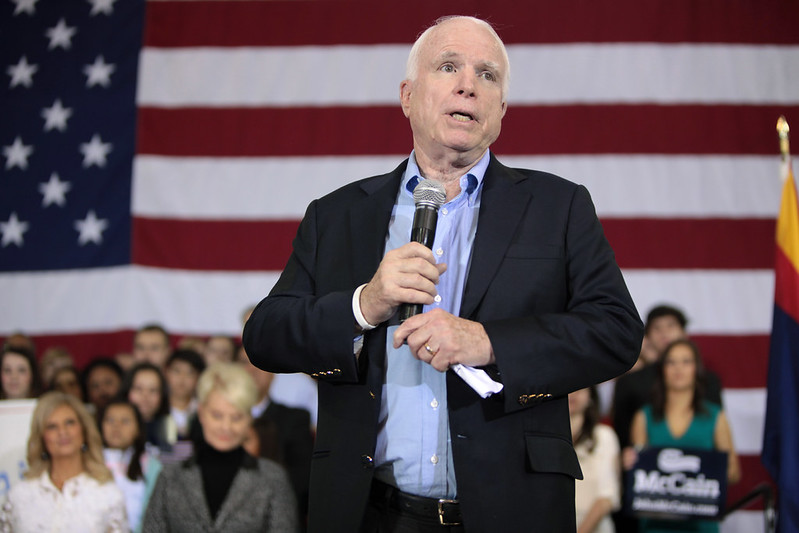
Many observers would look back wistfully to the time when the Senate’s guiding principle, as the late Senator John McCain said, was: “Country first.”